
 Ariana: Mullah Abdul Manan Niazi, deputy head of the Taliban splinter group in the western part of the country, was badly injured in a skirmish in Herat province, sources said. Provincial officials told Ariana News that Niazi was wounded in a skirmish with Taliban militants in the Guzara district of the province. Click here to read more (external link).
US Military Coy About Numbers of Troops Leaving Afghanistan
Jeff Seldin
VOA News
May 11, 2021
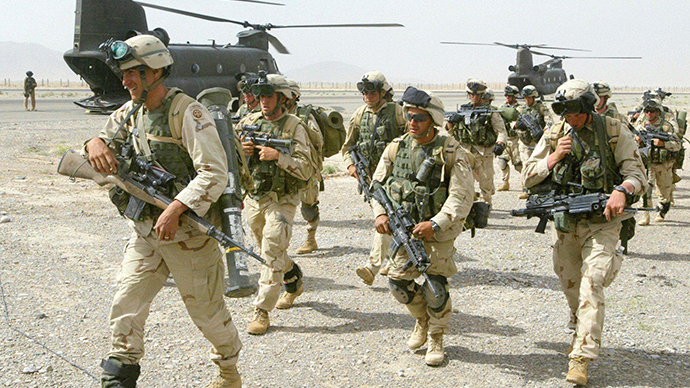
WASHINGTON – The United States’ military footprint in Afghanistan is shrinking at a steady pace, according to U.S. military planners, though they are refusing to say how many troops are still in the country.
U.S. Central Command announced Tuesday that it has completed “between 6-12% of the entire retrograde process,” removing the equivalent of more than 100 cargo planeloads of equipment from Afghanistan while turning over another 1,800 pieces of equipment to be destroyed.
But Central Command (CENTCOM) and the Pentagon declined to share information on how many of the 2,500 to 3,500 U.S. troops remain in Afghanistan, citing security concerns.
“We have an obligation to keep our people safe,” Pentagon Press Secretary John Kirby told reporters Tuesday.
“We have to assume that this is going to be an opposed retrograde,” he said. “If we assumed anything less it would be irresponsible of us.”
The U.S. has sent elements of an Army Ranger task force to Afghanistan to help protect withdrawing U.S. and coalition forces. It has also sent six B-52 long-range bombers and 12 F-18 fighter-bombers to the region, and officials extended the deployment of the USS Dwight D Eisenhower carrier strike group to the North Arabian Sea to provide additional firepower, if necessary.
In the weeks leading up to the official start of the U.S. withdrawal, Taliban officials repeatedly threatened to target U.S. and coalition forces, arguing the foreign troops needed to be gone by May 1 — the deadline under an agreement signed between the Taliban and the administration of former U.S. President Donald Trump.
Despite those threats, though, Taliban commanders have focused their attacks on Afghan government forces.
On Monday, Kirby told Pentagon reporters that while the level of violence in Afghanistan was “still too high,” U.S. commanders have not run into any problems that would slow down the U.S. pullout.
Following months of internal deliberations and consultation with allies, U.S. President Joe Biden announced last month that all U.S. forces would leave Afghanistan by September 11, the 20th anniversary of the terrorist attacks on New York’s World Trade Center and the Pentagon, which were planned by the al-Qaida terror group in Afghanistan.
U.S. military and intelligence officials have voiced concern about the impact the withdrawal will have on their ability to collect information on terrorist groups and counter plots emanating from Afghanistan.
U.S. military officials have said they will rely on “over-the-horizon” surveillance and strike capabilities once all U.S. troops have left Afghanistan. But so far, officials say there has been little progress on security needed basing agreements with other countries in the region.
“There are very active discussions going on now inside the department to better define what over-the-horizon counterterrorism capabilities we’ll be able to avail ourselves of,” the Pentagon’s Kirby said Tuesday.
Pakistan: No More Military Bases for US Afghan Mission

Pakistani Foreign Minister Shah Mahmood Qureshi
Ayaz Gul
VOA News
May 11, 2021
ISLAMABAD – Pakistan ruled out Tuesday the possibility of again providing its military bases to the United States for future counterterrorism operations in Afghanistan after U.S. troops leave the conflict-torn neighbor by September 11.
Foreign Minister Shah Mehmood Qureshi made the remarks to reporters in Islamabad, explaining that his government has adopted a policy that allows it to become “only partners in peace” and not join any future U.S. war.
“No sir, we do not intend to allow boots on the ground and no [U.S.] bases are being transferred to Pakistan,” Qureshi said when asked whether his government is under pressure to give military bases to the U.S.
President Joe Biden’s administration has acknowledged it is in talks with several Central Asian neighbors of Afghanistan to examine where it can reposition troops to prevent the landlocked country from once again becoming a terrorist base for groups like al-Qaida.
But U.S. officials have not named Pakistan, which shares a nearly 2,600-kilometers border with Afghanistan, nor have they commented on media speculation that the subject of bases might be under bilateral discussions.
Qureshi noted that Pakistan has also been consistently using its leverage over the Taliban, who have been waging a deadly insurgency against the U.S.-backed Afghan government, to encourage them to stop their violent campaign and negotiate a political settlement with Afghan rivals.
The foreign minister said “we feel” the Taliban’s engagement in the Afghan peace process would bring and enhance the “international respectability and recognition” that the group required.
“If they want to be acceptable, if they want delisting to take place, if they want recognition then engagement, giving up violence and looking for a political solution is in their political interest,” he said.
Qureshi referred to the Taliban’s demand for the United Nations and the U.S. to delist top insurgent leaders from their sanctions lists.
The chief Pakistani diplomat hailed as a positive development the Taliban’s declaration of a three-day cease-fire during this week’s Eid festival in Afghanistan. The Kabul government has responded by ordering Afghan forces to halt all offensive operations against the insurgents during the three-day festivities beginning Thursday.
Pakistan has long been accused of harboring Taliban leaders, but in recent years, Washington and other Western powers have hailed Islamabad’s efforts in bringing the insurgents to the negotiating table with U.S. interlocutors and subsequently with rival Afghan groups.
The commander of U.S. forces in the Middle East and parts of South Asia warned during recent congressional testimony that Washington would face substantial challenges to track new or growing terrorist threats once the military completes the planned Afghan withdrawal.
“We’re examining this problem with all of our resources right now to find a way to do it in the most intelligent, risk-free manner that we can,” said General Kenneth “Frank” McKenzie. “It’s going to be extremely difficult.”
Pakistani military bases and ground and air lines of communication played a vital role in facilitating and sustaining the U.S.-led military invasion of Afghanistan 20 years ago.
The punitive military action was undertaken to oust the Islamist Taliban from power days after the September 11, 2001, strikes on the U.S. that were plotted by al-Qaida leaders from Taliban-ruled Afghanistan at the time.
Pakistan has long retaken control of its bases, though its airspace and land routes are still being used to ferry nonlethal military supplies for international forces across the Afghan border and facilitating the ongoing U.S. troop drawdown process.
The ongoing drawdown of the last remaining around 2,500. U.S. and roughly 7,000 NATO troops from Afghanistan is the outcome of Washington’s peace-building agreement it signed with the Taliban in February 2020 to close what has become America’s longest war.
The landmark deal encouraged the Taliban to open peace talks with Afghan government representatives in Qatar last September, but the dialogue has mostly been deadlocked, with both sides blaming each other for stalling the process.
Observers remain skeptical whether Pakistan or any other country that has ties with the Taliban could pressure them into jump-starting the stalled intra-Afghan peace negotiations.
“Well, the Taliban has indicated that [they are] not going to be interested in participating in any type of peace conference or any type of effort dedicated to the peace process so long as U.S. troops continue to be in the country,” Michael Kugelman, a U.S. expert on South Asian affairs, told VOA’s Afghan Service.
“So, I do think that in the few months that we have before U.S. troops have left, it’s going to be a real long shot to get the Taliban back into the peace process,” said Kugelman.
VOA’s Afghan Service contributed to this report.
Afghan MMA star selling prized medals to help Barchi and Logar victims

Husain Bakhsh Safari (file photo)
Ariana: Afghanistan’s world-class MMA fighter Hussain Bakhsh Safari is selling two of his prized gold medals to raise money for the victims of Saturday’s deadly school bombing in Kabul city and the victims of last month’s guest house bombing in Logar province. Click here to read more (external link).
COVID-19: 370 New Cases, 12 Deaths Reported in Afghanistan
 Tolo News: The Ministry of Public Health Wednesday reported 370 new positive cases of COVID-19 out of 908 samples tested in the last 24 hours. The ministry reported that the cumulative total of known COVID-19 cases is 63,088, the total number of reported deaths is 2,725, and the total number of recoveries is 54,570. Click here to read more (external link).
Afghanistan: 255 Civilians Killed During Ramadan

Taliban militants (file photo)
Tolo News: The Ministry of Interior Affairs said on Tuesday that 15 suicide attacks and dozens of other attacks have been carried out “by the Taliban” since the start of Ramadan on April 13. The ministry said that 500 more civilians were wounded in the attacks during this period. The Interior Ministry said that the Taliban were responsible for 200 blasts and 15 suicide bombings during Ramadan. Click here to read more (external link).
Related
Saleh accuses US of legitimizing Taliban which he says are ‘terrorists’

Amrullah Saleh
Ariana: Saleh stated that the US “absolutely” legitimized the Taliban and that he does not trust the group. “The United States legitimized them. The [Taliban’s] Doha office is a creation of the United States. Getting Mullah Baradar out of the [Pakistan] jail is an invention of the United States. Click here to read more (external link).
1TV Afghanistan Dari News – May 11, 2021
Last ‘low-value’ Afghan detainee asks to be freed from Guantánamo Bay as U.S. troops leave Afghanistan
 Washington Post: A former Afghan militant who is one of the last 40 detainees held at the prison at Guantánamo Bay, Cuba, asked a U.S. judge for his freedom on Monday, arguing that President Biden’s recent troop withdrawal announcement amounted to a declaration that the U.S. war in Afghanistan is ending and that all prisoners of said war should be released. Click here to read more (external link).
305 New Cases of COVID-19, 3 Deaths Reported in Afghanistan
Tolo News: The Ministry of Public Health Monday reported 305 new positive cases of COVID-19 out of 2,439 samples tested in the last 24 hours. The ministry reported that the cumulative total of known COVID-19 cases is 62,718, the total number of reported deaths is 2,713, and the total number of recoveries is 54,503. Click here to read more (external link).