logo

Daily Updated Afghan News Service

  • Home
  • About
  • Opinion
  • Links to More News
  • Good Afghan News
  • Poll Results
  • Learn about Islam
  • Learn Dari (Afghan Persian/Farsi)

Recent Posts

  • Taliban say three civilians killed in new Pakistan shelling in Kunar May 4, 2026
  • Afghanistan’s passport remains world’s weakest, Henley Index shows May 4, 2026
  • Tolo News in Dari – May 4, 2026 May 4, 2026
  • Afghanistan National Team to Play in Maldives Four-Nation Tournament May 4, 2026
  • Ex-MP Fawzia Koofi calls Taliban raid on her Badakhshan home ‘cowardly’ May 3, 2026
  • Bost Region beats Mis-e-Ainak by 4 wickets in National T20 Cup May 3, 2026
  • Tolo News in Dari – May 3, 2026 May 3, 2026
  • National Resistance Front Claims Killing Two Taliban Fighters in Baghlan May 2, 2026
  • Painful Account of Ethnic Discrimination: Amiri Says His Father Was Removed from Operating Room Because He Is Hazara May 2, 2026
  • Taliban Members Criticise Leader, Say He Acts As Prophet May 2, 2026

Categories

  • Afghan Children
  • Afghan Sports News
  • Afghan Women
  • Afghanistan Freedom Front
  • Al-Qaeda
  • Anti-Government Militants
  • Anti-Taliban Resistance
  • AOP Reports
  • Arab-Afghan Relations
  • Art and Culture
  • Australia-Afghanistan Relations
  • Book Review
  • Britain-Afghanistan Relations
  • Canada-Afghanistan Relations
  • Censorship
  • Central Asia
  • China-Afghanistan Relations
  • Civilian Injuries and Deaths
  • Corruption
  • Crime and Punishment
  • Drone warfare
  • Drugs
  • Economic News
  • Education
  • Elections News
  • Entertainment News
  • Environmental News
  • Ethnic Issues
  • EU-Afghanistan Relations
  • Everyday Life
  • France-Afghanistan Relations
  • Germany-Afghanistan Relations
  • Haqqani Network
  • Health News
  • Heroism
  • History
  • Human Rights
  • India-Afghanistan Relations
  • Interviews
  • Iran-Afghanistan Relations
  • ISIS/DAESH
  • Islamophobia News
  • Japan-Afghanistan Relations
  • Landmines
  • Media
  • Misc.
  • Muslims and Islam
  • NATO-Afghanistan
  • News in Dari (Persian/Farsi)
  • NRF – National Resistance Front
  • Opinion/Editorial
  • Other News
  • Pakistan-Afghanistan Relations
  • Peace Talks
  • Photos
  • Political News
  • Reconstruction and Development
  • Refugees and Migrants
  • Russia-Afghanistan Relations
  • Science and Technology
  • Security
  • Society
  • Tajikistan-Afghanistan Relations
  • Taliban
  • Traffic accidents
  • Travel
  • Turkey-Afghanistan Relations
  • UN-Afghanistan Relations
  • Uncategorized
  • US-Afghanistan Relations
  • Uzbekistan-Afghanistan Relations

Archives

Dari/Pashto Services

  • Bakhtar News Agency
  • BBC Pashto
  • BBC Persian
  • DW Dari
  • DW Pashto
  • VOA Dari
  • VOA Pashto

US Not Seeking Pakistani Bases, ‘Nor Is it Possible,’ Pakistani Officials Tell VOA

8th June, 2021 · admin

Ayaz Gul
VOA News
June 8, 2021

ISLAMABAD – Pakistan has formally conveyed to the United States that Islamabad will not provide military bases to Washington for counterterrorism operations in Afghanistan after all international troops exit the war-torn country, and the U.S. side has stopped raising the issue, senior Pakistani officials said.

Several top Pakistani government officials, privy to a flurry of recent high-level bilateral talks, shared some details Tuesday of the discussions with VOA on condition of anonymity because they are not authorized to publicly engage with media.

“Yes, they [U.S. officials] have had conversations and we have told them we don’t want any terrorism whatsoever, but no bases possible. They have stopped raising bases issue with us,” said a Pakistani official, who deals with national security matters.

Since U.S. President Joe Biden announced in mid-April that all American troops will be out of Afghanistan by September 11, his national security team has been reaching out to regional allies to arrange for military facilities needed to gather intelligence and carry out counterterrorism strikes if the turmoil-hit nation descends into another round of civil war after U.S. and NATO troops pull out.

U.S. Central Intelligence Agency Director William Burns made a previously unannounced visit to Pakistan in late April, where he is said to have spent an entire day meeting with his Pakistani counterpart and the country’s military chief, General Qamar Javed, Pakistani officials confirmed Tuesday to VOA.

A security official with knowledge of the visit said that in meetings with the CIA chief, there was “no mention at all” of hosting American bases in Pakistan, “because it is next to impossible for us.”

The official said both sides discussed counterterrorism cooperation, however, and the Americans sought “our help, but we told them Pakistan would like to fight terrorism “in its own way.”

U.S. Defense Secretary Lloyd Austin and Secretary of State Antony Blinken also  repeatedly have spoken to Bajwa by phone, while National Security Adviser Jake Sullivan held a meeting late last month in Geneva with his Pakistani counterpart, Moeed Yusuf.

Negotiating regional help

Both sides have released few details of their high-level interactions, raising speculation about the nature of the talks and the fate of future bilateral ties. Some media reports have even asserted that Washington and Islamabad were on the verge of reaching a deal on military bases-related cooperation.

During Monday’s White House press briefing, VOA asked Sullivan about the engagements with Pakistan, but he declined to get into the details of the negotiations.

“We have had constructive discussions in the military, intelligence, and diplomatic channels with Pakistan about the future of America’s capabilities to ensure that Afghanistan never again becomes a base from which al-Qaida or ISIS, or any other terrorist group can attack the United States,” said Sullivan, using an acronym for the Islamic State terror group.

The U.S, national security adviser stressed, though, that Pakistan was not the only country the Biden administration was engaging with on the subject.

“What I will say is that we are talking to a wide range of countries about how to build effective over-the-horizon capacity, both from an intelligence and from a defense perspective to be able to suppress the terrorism threat in Afghanistan on a going-forward basis,” Sullivan said in response to VOA’s query.

U.S. officials also have discussed having bases in one of the Central Asian countries bordering Afghanistan, but Russia already has voiced opposition, saying those nations have assured Moscow they have no plans to allow such activities from their soil.

Fate of US-Pakistan ties

Officials in Islamabad dismiss suggestions their traditionally uneasy relationship with Washington could face another round of tensions over the issue of military bases.

“We believe in furthering our bilateral relationship based on mutual trust and understanding,” Pakistani Foreign Ministry spokesman Zahid Hafeez Chaudhri told VOA, when asked about the ongoing dialogue with Washington.

He said the Pakistani and the U.S. national security advisers in their Geneva meeting reiterated the need to further bilateral cooperation between the two countries.

“This cooperation is rooted in shared values and convergence of interest on regional and strategic issues including on the Afghan peace process and post-withdrawal development in Afghanistan,” said Chaudhri.

Pakistani Prime Minister Imran Khan, who took office some three years ago, has maintained his government will not become part of any future U.S. war but would rather assist in finding a negotiated settlement to the Afghan conflict.

While in opposition, Khan was among a few Pakistani politicians who vehemently opposed and even led protest rallies against the U.S.-led military invasion of Afghanistan 20 years ago. Pakistani Foreign Minister Shah Mehmood Qureshi last month issued a policy statement in the parliament, refuting reports of another bilateral military arrangement with the United States.

“Let this house and the Pakistani nation be a witness to my testimony that with [Prime Minister] Imran Khan around there will be no American base built on Pakistani soil. Forget about the past,” Qureshi said. “The government of Pakistan has categorically said that we will not allow kinetic use of drones, nor are we interested in the surveillance of your drones.”

The United States has for years used Pakistani ground routes and air space to ferry supplies to U.S. and NATO troops in Afghanistan. The fate of what are known as GLOCS and ALOCS (ground lines of communications and air lines of communications) also is unclear once foreign troops withdraw from the region.

“There is a demand building within Pakistan that we should now discontinue the GLOCS and ALOCS because once the troop withdrawal is complete, this facility will become redundant,” said a close political aide to the prime minister.

Pakistan-China ties

Separately, China has cemented its ties with close ally Pakistan in recent years, investing billions of dollars in building roads, ports and power plants as part of its global Belt and Road Initiative. Beijing also has provided substantial financial relief to Pakistan to help the country overcome its balance-of-payment crisis.

Allowing any U.S. combat activity from Pakistani soil would be “detrimental” to Islamabad’s relations with Beijing, said Khan’s aide.

“We have very close relations with China, and we would definitely not like to antagonize them, and Pakistan cannot afford that,” the aide told VOA on condition of anonymity.

Prime Minister Khan repeatedly has stated Pakistan’s economic future is “now connected to China.” That does not mean Islamabad is saying goodbye to any country, however, and nor do they want that, his aides say.

One Pakistani official insisted they are looking for “enhanced business and trade” partnership with U.S. counterparts.

“We are engaging with them on the basis of what do we want of each other rather than discussing or digging into the past. We are not going to accept financial assistance with strings,” the official asserted.

White House Bureau Chief Steve Herman contributed to this report.

Posted in Pakistan-Afghanistan Relations, Security, US-Afghanistan Relations |

US could close embassy in Kabul if future Afghan government requests so: US general

8th June, 2021 · admin

McKenzie (file photo)

1TV: The United States is planning to keep its embassy in Kabul open after US troops depart, but not if future Afghan government doesn’t want it, a top US general said on Monday. “The protection of any diplomatic mission in any country is first and foremost the responsibility of the host nation,” Gen. Kenneth McKenzie, head of US Central Command, told reporters on a Dubai media phone interview. Click here to read more (external link).

Related

  • US Withdrawal from Afghanistan More Than Half Complete
Posted in Security, US-Afghanistan Relations |

1TV Afghanistan Dari News – June 8, 2021

8th June, 2021 · admin

Posted in News in Dari (Persian/Farsi) |

Afghanistan Starts New Drive To Weed Out Poppies In Counternarcotics Campaign

8th June, 2021 · admin

Posted in Drugs, Economic News | Tags: heroin, opium, Poppy cultivation |

Turkey offers to run Kabul airport, but puts conditions in place

8th June, 2021 · admin

Ariana: Turkey has offered to guard and run Kabul’s airport after the United States and other NATO forces withdraw from Afghanistan, but U.S. officials say Ankara is imposing conditions which need to be resolved as their leaders prepare to meet next week, Reuters reported. Turkish Defence Minister Hulusi Akar said on Monday that Ankara’s offer was contingent on backup from those allies. Click here to read more (external link).

Posted in Turkey-Afghanistan Relations | Tags: Kabul Airport |

COVID-19: Afghanistan Reports 54 Deaths, 1,724 New Cases

8th June, 2021 · admin

Tolo News: The Ministry of Public Health on Tuesday reported 1,724 new positive cases of COVID-19 in the last 24 hours and 54 deaths. These high numbers come amid continued reports of a lack of medical oxygen in hospitals to treat infected patients. Click here to read more (external link).

Posted in Health News | Tags: Coronavirus (COVID-19) in Afghanistan |

Afghan, Iranian Refugees To Compete At Tokyo Olympics

8th June, 2021 · admin

Radio Free Europe/Radio Liberty
June 8, 2021

Three Afghans and three Iranians will be part of a refugee team of 29 athletes competing across 12 sports at next month’s Tokyo Olympics.

The team, which will compete under the Olympic flag and include athletes from countries also including Syria, South Sudan, and Eritrea, was unveiled at a virtual ceremony on June 8.

Kimia Alizadeh, Iran’s first female Olympic medalist when she won bronze in tae kwon do at the 2016 Rio Olympics, will be back for her second Olympic Games.

Alizadeh moved to Germany in early 2020 after she complained of being used by Iranian officials as a propaganda tool.

Also on the team are fellow Iranian canoe racer Saeid Fazloula, who reached Germany in 2015, and Hamoon Derafshipour, who won bronze at the 2018 Karate World Championships.

Derafshipour said he left for Canada in 2019 so that his wife could train him ahead of the Tokyo Games.

Three Afghan athletes -– Masomah Ali Zada (cycling), Nigara Shaheen (judo), and Abdullah Sediqi (tae kwon do) — will also be part of the team that International Olympic Committee President Thomas Bach said “will send a powerful message of solidarity, resilience, and hope to the world.”

Zada, Shaheen, and Sediqi are based in France, Russia, and Belgium, respectively.

The athletes will march into the stadium during the opening ceremony of the July 23-August 8 Tokyo Olympics immediately after the team from Greece.

They were selected from a pool of 56, supported by Olympic scholarships from 13 countries.

Copyright (c) 2021. RFE/RL, Inc. Reprinted with the permission of Radio Free Europe/Radio Liberty, 1201 Connecticut Ave NW, Ste 400, Washington DC 20036.
Posted in Afghan Sports News, Refugees and Migrants |

NATO Chief Admits Afghan Withdrawal ‘Entails Risks’

7th June, 2021 · admin

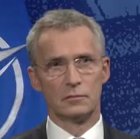
Jens Stoltenberg

Jeff Seldin
VOA News
June 7, 2021

WASHINGTON – There is no guarantee that Afghanistan’s government and security forces will succeed, or even survive, once the last U.S. and coalition troops leave the country, according to a blunt assessment from NATO’s top official.

“We have to face the reality there is, of course, a lot of uncertainty,” Secretary General Jens Stoltenberg told a virtual audience Monday before meetings at the Pentagon and the White House.

“The decision to leave entails risks,” he said.

According to U.S. Central Command (CENTCOM), which oversees American troops in the Middle East and South Asia, the U.S. withdrawal is nearing the halfway point, with the last U.S. forces, civilian contractors and equipment set to be out of Afghanistan by early September at the latest.

NATO’s own drawdown, involving approximately another 7,000 troops, is also “on track,” Stoltenberg said, defending the decision to send troops home after nearly two decades of battling the Taliban and terrorist groups like al-Qaida and Islamic State.

“You have to remember that in one way, this is a gradual development,” Stoltenberg said. “Not too many years ago, we had more than 100,000 troops in a big combat operation.”

“Over these years, we have been able to build, train Afghan security forces so they are now responsible for security in their own country,” he added.

Yet doubts about the ability of the Afghan security forces to function without substantial, on-the-ground support from U.S. and NATO forces persist.

Since U.S. troops began pulling out last month, Taliban forces have seized at least seven districts, taking some without meeting any resistance.

And a report issued last week by the United Nations Sanctions Monitoring Team for Afghanistan warned that Taliban commanders have increasingly positioned their forces to take by force what they cannot get through negotiations “when levels of departing foreign troops are no longer able to effectively respond.”

Top. U.S. military commanders have also voiced concern about “the ability of the Afghan military to hold on” once U.S forces and contractors leave.

Still, NATO’s secretary general emphasized Monday that even though NATO forces are departing Afghanistan, the alliance will continue to provide financial support and will also maintain a civilian presence in Kabul to advise Afghan security forces and help them build their capacity.

“We are not ending our support for the Afghans,” Stoltenberg said, adding that NATO is also continuing to explore ways to provide additional training for the Afghan special operation forces.

“We can train Afghan forces in other countries, and we are looking into how we can provide that kind of support,” he said.

But those plans are short on specifics, with much still to be worked out.

“We are now looking into the details and consulting closely on our next steps,” a NATO official told VOA when pressed for details.

Other plans, to maintain the U.S. and coalition’s ability to launch counterterrorism strikes, if needed, also remain unclear.

“We have had constructive discussions in the military, intelligence and diplomatic channels about the future of America’s capabilities,” White House National Security Advisor Jake Sullivan told reporters Monday, when asked about the possibility of opening bases for U.S. drones in Pakistan.

“In terms of the specifics of what that will look like, that will have to remain in those private channels as we work through them,” Sullivan said, adding the U.S. is talking to “a wide range of countries about how we build effective over-the-horizon capacity, both from an intelligence and from a defense perspective.”
In a separate phone briefing with reporters earlier Monday, the commander of U.S. forces in the Middle East and South Asia also defended the planning process.

“Our plans are very far advanced on what our posture is going to look like after we complete the withdrawal,” CENTCOM’s General Kenneth “Frank” McKenzie said, declining to elaborate.

“It’s not an appropriate time to share that information,” he said. “Those are tactical questions which could give advantage to those who would attack us.”

The U.S. has pledged to continue to provide Afghanistan’s security forces with financial support.

U.S. President Joe Biden’s proposed fiscal 2022 budget calls for $3.3 billion in military aid for Afghan forces — a slight increase over current funding levels.

On Sunday, an Afghan government spokesman said the U.S. has promised to sustain that level of funding through at least fiscal year 2023.

White House Bureau Chief Steve Herman contributed to this report.

Related

  • Afghan security forces suffer ‘shockingly high’ casualties
Posted in NATO-Afghanistan, Security, Taliban, US-Afghanistan Relations | Tags: Ashraf Ghani Government |

1TV Afghanistan Dari News – June 7, 2021

7th June, 2021 · admin

Posted in News in Dari (Persian/Farsi) |

Australian Afghan War Veteran Denies Allegations of War Crimes

7th June, 2021 · admin

By Phil Mercer
VOA News
June 7, 2021

SYDNEY – Australia’s most decorated Afghanistan veteran will deny alleged war crimes Monday at the start of his high-stakes defamation trial against one of the country’s biggest media companies. Ben Roberts-Smith will seek to prove he was unfairly portrayed in newspaper stories as having broken the moral and legal rules of war. He is seeking damages in Australia’s Federal Court from Nine Entertainment Co. and three journalists.

Newspaper reports in 2018 alleged Ben Roberts-Smith murdered a man in Afghanistan and encouraged his colleagues to drink beer from his victim’s prosthetic leg. He was also accused of killing an unarmed Afghan shepherd by kicking him off a cliff and ordering his fellow soldiers to shoot him.

The former Special Air Service Regiment (SAS) trooper, who received the Victoria Cross, Australia’s highest military honor, in 2011, has denied any wrongdoing. He said articles published by The Age, The Sydney Morning Herald and The Canberra Times newspapers portrayed him as a war criminal who disgraced his country by murdering Afghan civilians. Roberts-Smith said the stories were “baseless” and “flawed.”

His lawyer told the hearing Monday that he was “an exceptional soldier” but was the victim of “dishonest journalism” and “corrosive jealousy and lies.”

The trial in Sydney is expected to hear from about 60 witnesses over the next ten weeks.

Current and former members of Australia’s special forces are scheduled to give evidence anonymously. Other witnesses will testify via a video link from a law firm in Kabul.

Associate professor Ben Wadham, a military historian from Flinders University, told the Australian Broadcasting Corp., the case goes to heart of Australia’s conduct during times of conflict.

“It has brought into tension that question about: does everything and anything go in war, or do we actually have some responsibility to these higher values, and shouldn’t we be upholding them?” Wadham said.

Last November, a landmark inquiry into Australian special forces in Afghanistan found “credible evidence” of the “murder” of 39 prisoners, farmers, or other civilians.

A lengthy investigation examined claims of unlawful killings and other possible breaches by Australia’s elite special forces in Afghanistan between 2005 and 2016.

Ben Roberts-Smith left the army in 2013 and is currently the general manager of the Seven Network, a media company, in Brisbane and regional Queensland.

Posted in Australia-Afghanistan Relations, Civilian Injuries and Deaths, Crime and Punishment, Human Rights | Tags: War Crime |
Previous Posts
Next Posts

Subscribe to the Afghanistan Online YouTube Channel

---

---

---

Get Yours!

Peace be with you

Afghan Dresses

© Afghan Online Press
  • About
  • Links To More News
  • Opinion
  • Poll