
Taliban Said To Have Rearmed Tajik Militants And Moved Uyghur Fighters From Chinese Border

Mohammad Sharipov (aka Mahdi Arsalon)
By RFE/RL’s Tajik Service
October 4, 2021
KHATLON, Tajikistan — The Taliban has provided Tajik militants based along the border with Tajikistan with new military vehicles, weaponry, and other equipment over the past two weeks, security sources in Tajikistan and northeastern Afghanistan say, amid an ongoing military buildup on both sides of the frontier.
The sources also told RFE/RL on October 4 that the Taliban has also “removed” ethnic Uyghur fighters from an area close to Afghanistan’s small border with China.
Tajik militants based in Afghanistan’s northern province of Badakhshan have been seen with U.S.-made weaponry and vehicles, including Humvees, with some of them wearing American combat gear, according to an official with Tajikistan’s state border services.
A former Afghan military officer based in Badakhshan confirmed the allegation.
The militants, who were previously seen carrying Kalashnikov rifles and driving old pickup trucks, received the new supplies during the past two weeks, according to the Tajik official, who spoke under condition of anonymity because he wasn’t authorized to speak to the media.
The new equipment is thought to have been seized by the Taliban from the former Afghan National Army during the Taliban’s lightning offensive across the country that ended when the hard-line Islamist group seized Kabul in mid-August.
Tajik and Afghan sources say at least 200 militants from Tajikistan are currently based along the border of the two countries.
The Taliban takeover has triggered alarm among Central Asian states bordering Afghanistan over possible security threats emanating from the country and the potential for tens of thousands of refugees to cross the border.
Tajik officials have repeatedly called on the Taliban to form an inclusive government and warned that Dushanbe would not recognize the group as Afghanistan’s new rulers if it undermines “the interests of ethnic Tajiks and other minorities.”
In turn, the Taliban has warned Tajikistan against meddling in Afghanistan’s domestic affairs.
Amid rising tensions between the Taliban and Dushanbe, the group said in September it had deployed tens of thousands of fighters in Badakhshan and Takhar, a neighboring province that also borders Tajikistan, against “possible threats.”
Dushanbe had previously announced plans to deploy 20,000 additional troops along the more than 1,400-kilometer border it shares with Afghanistan.
Known in Afghanistan as the Tajik Taliban, the militants from Tajikistan are members of the Jamaat Ansarullah group, which was established by Tajik nationals a decade ago with the goal of overthrowing the secular government in Dushanbe.
In June, Tajik officials raised concern that one of the banned group’s commanders — Muhammad Sharifov (aka Mahdi Arsalon) had been put in charge of security in five border districts in Badakhshan after they were seized by the Taliban.
Last month, Tajik security officials said they were reviewing reports that the militants were planning to infiltrate into Tajikistan, an allegation rejected by the Taliban.
Uyghur Fighters Relocated
The two sources in Tajikistan and Afghanistan also told RFE/RL on October 4 that the Taliban had “removed” ethnic Uyghur fighters from Badakhshan — which also shares a 91-kilometer border with China.
The militants from the Turkestan Islamic Movement were relocated to other provinces, including Nangarhar in Afghanistan’s east, the former Afghan military official said.
The Al-Qaeda-linked Turkestan Islamic Movement is designated as a terrorist organization by Beijing and the United Nations. Beijing blames the group for unrest in its northwestern Xinjiang region.
Citing intelligence from the area, the Tajik border guard official said that Chinese fighters were present in Badakhshan until last week along with Tajiks, Uzbeks, and other foreign militants.
The allegations contradict a Taliban announcement in early September saying Uyghur fighters had left Afghanistan after the country’s new rulers purportedly told militant groups they could not use Afghan territory to target other countries.
During a visit to China in July, a senior Taliban delegation pledged that the group would “not allow anyone to use the Afghan soil against China.”
Beijing has expressed readiness to maintain communication with the Taliban-government in Kabul and pledged aid to the country.
Copyright (c) 2021. RFE/RL, Inc. Reprinted with the permission of Radio Free Europe/Radio Liberty, 1201 Connecticut Ave NW, Ste 400, Washington DC 20036.
Afghan Would-Be Refugee Said Killed By Taliban Near Tajik Border
 By RFE/RL’s Tajik Service
October 4, 2021
Taliban fighters have reportedly killed an Afghan man who tried to flee to neighboring Tajikistan and detained another man along the Afghan-Tajik border.
A source in the city of Ishkashim in Afghanistan’s northern province of Badakhshan, which borders Tajikistan, told RFE/RL on October 3 that the incidents occurred the previous day, when Taliban militants raided the area in an attempt to force about 2,000 Afghans seeking to leave the war-torn country to go back to their homes.
The Taliban-led administration in Badakhshan did not immediately comment.
Many Afghans have left the country and thousands have been trying to leave after the hard-line Islamist group seized control of most of Afghanistan in August.
The Taliban takeover triggered alarm among Central Asian states bordering Afghanistan over possible security threats emanating from the country and the potential for tens of thousands of refugees to pour over the border.
Would-be refugees along the Afghan-Tajik border in Badakhshan say they have been stranded there for two months, with Tajikistan’s border guards not allowing them to enter the Central Asian country.
“The militants gather people in groups and force them to return to Kabul on trucks. The militants are searching for natives of the Panjshir area mainly,” one of the men seeking to flee to Tajikistan told RFE/RL.
In mostly ethnic Tajik-populated Panjshir, a rugged mountain valley northeast of Kabul, an anti-Taliban resistance front remains active.
Copyright (c) 2021. RFE/RL, Inc. Reprinted with the permission of Radio Free Europe/Radio Liberty, 1201 Connecticut Ave NW, Ste 400, Washington DC 20036.
Taliban Destroy IS-Khorasan Base in Kabul Hours After Deadly Blast

Ayaz Gul
VOA News
October 4, 2021
ISLAMABAD — Afghanistan’s ruling Taliban said Monday their security forces had destroyed an Islamic State Khorasan Province cell in Kabul and killed all the militants there.
The overnight raid came just hours after a bombing outside the capital’s main Eid Gah mosque on Sunday killed at least eight Afghan civilians and wounded at least 20.
There was no claim of responsibility for the mosque attack nor did the Taliban say their operation against the Afghan affiliate of Islamic State, also known as IS-Khorasan, was a response to the deadly mosque bombing.
“The Daesh base was completely destroyed and all of Daesh members inside were killed as a result of this decisive and successful operation by (Taliban) special forces,” Zabihullah Mujahid, the chief Taliban spokesman, announced early Monday. He used the local name for IS-Khorasan.
Kabul residents had confirmed heavy clashes in the Khairkhana area, saying they had heard massive explosions and gunfire during the night.
Taliban sources claimed several suicide bombers were inside the IS-Khorasan cell and were “neutralized by their own vests” during the clashes.
IS-Khorasan has not commented on the Taliban’s claims. The terrorist outfit has claimed to have carried out a series of deadly bombings in recent days against Taliban fighters elsewhere in Afghanistan.
Sunday’s bombing in Kabul was apparently targeted at a gathering offering a memorial service for Mujahid’s mother but the Taliban spokesman and his colleagues escaped unhurt.
It was the first such attack in the Afghan capital since late August, when an IS-Khorasan suicide bomber killed around 200 people, including 13 U.S. service members, near the Kabul airport. The majority of the victims had crowded outside the airport gates to secure seats on U.S.-run evacuation flights following the Taliban takeover of the city on August 15.
The Taliban have since established their control over Afghanistan barring a few pockets of armed resistance in the northern Panjshir province led by an opposition leader, Ahmad Massoud.
The security challenges facing the new Taliban government come amid a worsening humanitarian and economic crisis in Afghanistan, with food prices jumping more than 50 percent for multiple reasons.
The international community has for now ignored Taliban calls for granting legitimacy to their rule, citing human rights and other concerns, which is discouraging countries from directly engaging with the Islamist group.
The Taliban do not have access to $9 billion held in frozen assets, mostly deposited with the U.S. federal reserve, while the World Bank and the International Monetary Fund have suspended Kabul’s access to their programs.
Moreover, the withdrawal of foreign forces and civilians from the country has deprived many Afghans of important sources of income.
“Afghanistan is experiencing a serious humanitarian crisis and a socio-economic collapse is looming, which would be dangerous for Afghans, the region and international security,” the European Union Foreign policy chief warned on Sunday.
“If the situation continues and with winter approaching, this risks turning into a humanitarian catastrophe,” Josep Borrell wrote in a blog post, adding that this could trigger mass migration into neighboring countries.
Borrell urged the Taliban to take steps that will enable the international community to assist the Afghan people, saying there are many signs the situation in Afghanistan is worsening.
“For instance, we have seen the formation of an interim government that is neither inclusive nor representative. And we have reports that women and girls are excluded from schools and universities, which goes against initial assurances from the Taliban,” he said.
Life under the Taliban mirrors Nazi occupation, Afghan residents lament

Taliban militants (file photo)
Washington Examiner: The Taliban’s claims of a new and improved ruling class is just a myth as terrorized residents find themselves living out scenes akin to Nazi Germany. Afghans have resorted to selling household items for survival, begging for food, and watching roving bands of Taliban members mete out any justice they see fit without a court of law. The residents now suspiciously eye neighbors and even close friends as possible spies who could instantly spell death at the hands of Taliban guards, the Washington Examiner has learned. Click here to read more (external link).
Bomb Blast Hits Entrance of Kabul Mosque
 VOA News
October 3, 2021
A bomb blast outside Kabul’s main mosque Sunday afternoon killed and injured several Afghan civilians, Taliban spokesman Zabihullah Mujahid said.
It was the first such assault in the capital since late August, when an Islamic State-Khorasan Province suicide bomber killed around 200 people, including 13 U.S. soldiers, near the Kabul airport.
There was no immediate claim of responsibility for Sunday’s assault on the Eid Gah mosque in the center of the city and it was apparently targeted at a gathering offering special prayers for Mujahid’s mother, who recently passed away.
Qatar-based Taliban spokesman Suhail Shaheen said Mujahid was “safe” along with other colleagues because the blast happened away from the place where they were located.
Hamidullah, a member of the Taliban, said he was a mere three meters away from the suicide bomber, in the mosque at the time of the blast.
“I was thrown back from the force of the blast,” he told journalists outside Kabul’s Emergency Hospital where some of the victims were treated.
The Afghan Islamic State affiliate, also known as ISIS-K, has claimed a series of attacks in the country’s eastern provinces of Nangarhar and Kunar in the last week, killing dozens of civilians and Taliban fighters.
Ayaz Gul contributed to this report and some information comes from AP.
Related
- Taliban says Daesh is not a threat to Afghanistan’s security
- https://twitter.com/AamajN/status/1444722942991081475?s=19
Tolo News in Dari – October 3, 2021
Afghan wheelchair basketball star debuts in Spain after fleeing Kabul
 Ariana: The captain of the Afghan women’s wheelchair basketball team made her debut for her new Spanish side on Saturday to cheers and applause just over a month after fleeing Kabul. Nilofar Bayat, 28, and her husband Ramesh Naik Zai, 27, were offered the chance to play for Bidaideak Bilbao BSR, a wheelchair basketball team in the northern city of Bilbao. Click here to read more (external link).
The Taliban’s Nonindigenous Ideology

Michael Hughes: When the Taliban first seized power in the 1990s they introduced a twisted Deobandi Sunni-based ideology, with a twist of Wahhabism, completely alien to Afghanistan and anathema to the country’s tradition and culture. As they now re-impose this barbaric creed some commentators are suggesting the doctrine is mixed with elements derived from the native Pashtun tribal code – which is a distortive narrative that needs to be shunned. Click here to read more.
The Untold Story of How Afghan President Ashraf Ghani Fled the Country
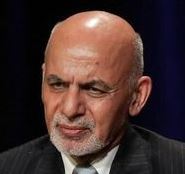
Ashraf Ghani
8am: Perhaps in their [Uzbek) eyes, we seemed like coward fugitives who had abandoned a country that had been supported by the international community and its people for 20 years. Even worse, none of the Uzbek soldiers and military officials knew our language, nor were we able to speak their language. Click here to read more (external link).