
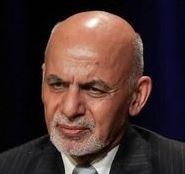
Ghani claims 10,000 militants entered from Pakistan in past month

Ghani
Ariana: Afghan President Ashraf Ghani singled out Pakistan during Friday’s session of the C5+1 meeting in Uzbekistan and said over 10,000 militant fighters had entered Afghanistan from Pakistan and other “places” in the past month. He also said the consensus among international observers is that the Taliban has not taken any steps to sever its ties to terrorist organizations. Click here to read more (external link).
Related
Daughter of Afghan envoy in Islamabad kidnapped, tortured, released
1TV: Daughter of Afghanistan’s ambassador in Islamabad was kidnapped on Friday and was tortured before being released, Afghan authorities said. Silsila Alikhel was kidnapped by unknown individuals on way to her home, Afghanistan’s foreign ministry said in a statement. Click here to read more (external link).

COVID-19: 378 New Cases, 49 Deaths Reported in Afghanistan
Tolo News: The Ministry of Public Health on Saturday reported 378 new positive cases of COVID-19 out of 1,759 samples tested in the last 24 hours. Data by the Public Health Ministry shows that the total number of cases is 140,602, total deaths stand at 6,147 and total recoveries are at 87,612. Click here to read more (external link).
Kabul’s Young Professionals, Students Watch Nervously As The Taliban Makes Gains
Farangis Najibullah
Radio Free Europe/Radio Liberty
July 16, 2021
With just a week left until Eid al-Adha, a four-day Islamic festival, it was supposed to be a busy season for dressmakers in Kabul.
But Ahmad Dawood’s tailor shop on the Afghan capital’s bustling Lycee Maryam shopping street is half-empty these days.
“It’s a tradition in Kabul that nearly everyone wears new clothes for Eid, so normally we’d be flooded with orders ahead of the festival,” Dawood says.
“Even on ordinary days, without Eid, we’ve never been short of customers. But it all ended abruptly with the rumors of the Taliban coming back,” he says. The 24-year-old is worried about the business and his own future.
Uncertainty and fear hang over Kabul as the last U.S. troops leave Afghanistan and the Taliban makes strides across the country.
Like Dawood, young people of Kabul — both men and women — anxiously watch as the ultraconservative militant group closes in on big cities in its quest to return to power after nearly two decades of fighting government forces.
Many fear the Taliban would bring back its strict interpretation of Islam and undercut people’s freedoms.
Roman Asrar, who graduated from Kabul University this year, says the new generation of Afghans grew up “accustomed to certain freedoms” such as going to secular schools, listening to music, wearing modern clothes, and sporting trendy hairstyles.
“I can’t imagine losing it all,” Asrar tells RFE/RL. “I’ve had more or less concrete plans about my future, working and living in Kabul. I can’t dream or make different plans anymore.”
Reports from the areas in Afghanistan recently seized by the Taliban suggest that the group has already banned women from leaving their homes without a male guardian. Men have reportedly been banned from shaving or even trimming their beards.
The Taliban denies the claims, saying “everything will stay the same” until the war is over.
But the group’s leaders have been vague about whether the Taliban has changed its draconian, oppressive policies from when it ruled most of Afghanistan from 1996-2001 or still holds the same views.
“I don’t know if the Taliban has changed since 2001, but what I know is that the Afghan people have changed since then,” says Bashir Forogh, a 25-year-old teacher in Kabul.
Teachers fear that high schools and universities might lose half of their students — the girls — if the Taliban comes back to power and again bans or severely limits girls’ education.
Forogh says taking away people’s freedoms would deal another blow to the Afghan people, already suffocated by extreme poverty, war, and violence.
‘Having An Open Mind’
The Taliban says it will respect women’s rights within Islamic norms and allow girls education as long as they wear the Islamic hijab.
“But it’s difficult to trust the Taliban, because their leaders say one thing and their local chiefs do completely different things,” says Mahjabin Ramz, a Kabul resident.
Ramz said she was horrified by reports that the Taliban allegedly forced single women to marry militants in the areas they captured.
“There is nothing Islamic in such actions,” she says.
A graduate of Kabul University with a degree in journalism, Ramz is looking for work. But she doesn’t know what the future will hold for her and millions of other educated women in Afghanistan.
She’s fearful of reports that female journalists in areas newly taken over by the Taliban have been told by representatives of the militant group not to return to work.
In the capital’s Macroyan 3 neighborhood, Razma Saad tried to stay optimistic about the future should the Taliban take power or join the government in some form of ruling partnership, as a peace deal forged by the United States last year promotes.
Saad has just completed her first semester at a private university where she studies finance and trade.
She has heard from her older relatives about the dark days of the Taliban’s short-lived rule that ended after the U.S.-led invasion in 2001.
But unlike many others, Saad says she believes the Taliban “might have changed” and might be willing to “make concessions to people.”
The young student hopes she will be able to continue her studies and that “the situation won’t be as bad as many people fear.”
But Saad says the Taliban must set aside its hard-line views, listen to people, and respect their wishes if it wants to govern them.
‘Small Details Of Freedom’
Shapoor, 34, owns two successful pharmacies that pay for his comfortable life in a newly built house in a plush quarter of Kabul’s Khairkhana neighborhood.
He often wears traditional Afghan clothes — a long, loose shirt reaching his knees, with matching wide pants. He has a short beard.
Shapoor’s wife stays at home to take care of the couple’s two children and do household chores.
Despite living a “traditional lifestyle,” Shapoor says he is concerned about the Taliban taking power in Afghanistan.
“I don’t want to be told what to wear. It has to be my own choice,” he says.
Shapoor, who first met his wife — a distant relative — at a wedding party, says even housewives like her stand to lose their freedom under the Taliban.
“We eat out sometimes, I buy [my wife] flowers for Valentine’s Day, and she likes going to the hair salon,” Shapoor says. “These are small details of our freedom, but they matter to us.”
Leaving Afghanistan is not an option for Shapoor. He lived most of his childhood in the Pakistani city of Peshawar, after his parents fled Taliban rule in the 1990s.
Shapoor doesn’t want his children to experience “becoming unwanted strangers in somebody else’s country.”
Running Out Of Options
At his tailor shop in downtown Kabul, Dawood listens to his favorite Afghan pop music as he puts the finishing touches on a customer’s red-and-black Eid dress.
Outside his window, Lycee Maryam Street is as busy as ever; cars and minivans honk loudly as pedestrians and cart-pushing ice-cream sellers cross the road with complete disregard to traffic.
On the surface it seems to be business as usual in the city of some 4 million where people still go to work and markets are packed with shoppers.
Afghanistan’s Cricket Board just appointed its world-famous star, Rashid Khan, as the national team captain for the Twenty20 World Cup in October.
But underneath the normal activity, people “are devastated about the future that will be either a continuing war or a miserable life under the Taliban,” says Dawood.
Most of the customers at his shop are women who order a wide range of clothes, from evening gowns and dresses to school uniforms and two-piece office wear.
Dawood “can’t picture the Taliban allowing men to make dresses for women.”
Under the Taliban, Dawood faces losing both his work and his hobbies — listening to music, copying Bollywood fashion and hairstyles, and having dinner with friends at the city’s trendy bistros.
Dawood wants to leave Afghanistan but doesn’t have much money and has nowhere to go. Like millions of Afghans, Dawood says he is left with no choice but to stay and hope for the best.
Radio Azadi correspondents in Kabul contributed to this report.
Copyright (c) 2021. RFE/RL, Inc. Reprinted with the permission of Radio Free Europe/Radio Liberty, 1201 Connecticut Ave NW, Ste 400, Washington DC 20036.
Related
Ghani at Int’l Summit Blasts Pakistan for ‘Supporting’ Taliban

Ashraf Ghani
Tolo News: President Ashraf Ghani at an international summit in Uzbekistan on Friday criticized Pakistan for what he called support to the Taliban, calling on the neighboring country to use its influence and leverage for peace and cessation of hostilities in Afghanistan. “Intelligence estimates indicate the influx of over 10,000 jihadi fighters from Pakistan and other places in the last month, as well as, support from their affiliates and the transnational terrorist organizations,” President Ghani said at the summit named “Central and South Asia: Regional Connectivity, Challenges and Opportunities.” Click here to read more (external link).
Related
1TV Afghanistan Dari News – July 16, 2021
‘Everything Is A Challenge:’ UN Official Appeals For $850 Million For Afghanistan
Radio Free Europe/Radio Liberty
July 16, 2021
The UN humanitarian chief in Afghanistan has appealed for $850 million to help the war-torn country cope with the impact of the Taliban offensive and a litany of other crises.
Ramiz Alakbarov said on July 15 that some 18 million Afghans are in need and the UN plans to provide help for at least 15.7 million of them.
Afghanistan has a population of some 38 million people.
He said the UN’s current appeal for Afghanistan was only 37 percent funded at $450 million and that the United States was the largest donor. He said the $850 million being sought was desperately needed.
Speaking to reporters at the UN in New York after a virtual briefing from Kabul, Alakbarov said that, beyond the need for money to recover from the Taliban offensive, Afghanistan needs funding to fight malnutrition, a severe drought, and the return of 627,000 Afghans this year, most of them deported from neighboring Iran.
Alakbarov said that in the current situation “everything is a challenge” and “COVID-19 hasn’t made it easier,” with deaths from the coronavirus doubling in the last 2 1/2 months.
Alakbarov said the second drought in three years and the Taliban’s offensive have led 270,000 people to flee their homes toward urban areas and regional centers, where they need food, water, shelter, and sanitation.
The UN is also seeing intensive movements of people in areas where the Iranian and Pakistan borders are largely closed as Afghans try to leave the country using paths away from official crossings, he said.
Alakbarov expressed hope that Afghanistan’s neighbors will view the situation in terms of human rights and their responsibility to protect people from suffering and allow Afghan refugees into their countries.
With reporting by AP and Tolo News
Copyright (c) 2021. RFE/RL, Inc. Reprinted with the permission of Radio Free Europe/Radio Liberty, 1201 Connecticut Ave NW, Ste 400, Washington DC 20036.
Kyrgyzstan Appeals For Help For Ethnic Kyrgyz Who Fled Afghanistan
By RFE/RL’s Kyrgyz Service
July 16,2021
BISHKEK — The Kyrgyz Foreign Ministry has appealed to authorities in neighboring Tajikistan to facilitate the passage to their common border of hundreds of ethnic Kyrgyz who fled Afghanistan amid a major Taliban surge that is raising security concerns in neighboring former Soviet republics.
The ministry also said on July 15 that it had turned to the United Nations for assistance in bringing to Kyrgyzstan ethnic Kyrgyz who entered Tajikistan from Afghanistan — many with livestock — on July 13-14.
According to the ministry, 91 Kyrgyz men, 77 women, and 177 children from the village of Andemin in Afghanistan’s Vakhon district in the Badakhshan region are currently in Tajikistan and require assistance to reach Kyrgyzstan.
While fleeing Afghanistan, the ministry said, two Kyrgyz children had died of unknown causes.
Semi-nomadic Kyrgyz have lived on the Afghan side of the Pamir Mountains since the 16th century. The number of ethnic Kyrgyz living in Afghanistan is believed to be just over 1,000.
In recent days, hundreds of Afghans, including soldiers and local police, have reportedly fled into neighboring Central Asia countries.
U.S. President Joe Biden has pledged that the withdrawal of U.S. forces from Afghanistan will be completed by early September. With that deadline nearing, the Taliban have unleashed an offensive and now control about one-third of the country’s 421 districts and district centers in Afghanistan.
Earlier this month, U.S. forces vacated their largest base in Afghanistan at Bagram, north of Kabul.
The rapid withdrawal of U.S. forces, and Taliban battlefield successes, are stoking concerns that the Western-backed government in Kabul may collapse.
Copyright (c) 2021. RFE/RL, Inc. Reprinted with the permission of Radio Free Europe/Radio Liberty, 1201 Connecticut Ave NW, Ste 400, Washington DC 20036.
Award-Winning Indian Photojournalist Killed in Afghanistan

Danish Siddiqui
Ayaz Gul
VOA News
July 16, 2021
ISLAMABAD – Officials in Afghanistan said Friday an international award-winning journalist from India had been killed during pre-dawn fighting in embattled southern Kandahar province.
Danish Seddiqi, a Reuters photojournalist and Pulitzer Prize winner, was covering clashes between Afghan government forces and the Taliban in Spin Boldak district, which fell to the insurgents earlier in the week.
“Deeply disturbed by the sad news of the killing of a friend, Danish Seddiqi in Kandahar last night,” tweeted Farid Mamundzay, Kabul’s ambassador to New Delhi.
“The Indian Journalist & winner of Pulitzer Prize was embedded with Afghan security forces. I met him 2 weeks ago before his departure to Kabul. Condolences to his family & Reuters,” added Mamundzay.
Seddiqi last tweeted from Kandahar on July 13, when Afghan forces launched a counteroffensive to try to retake Spin Boldak.
The slain photojournalist was based in the Indian city of Mumbai and won the Pulitzer Prize in 2018 for feature photography on the Rohingya refugee crisis.
“We are urgently seeking more information, working with authorities in the region,” Reuters President Michael Friedenberg and Editor-in-Chief Alessandra Galloni said in a statement.
“Danish was an outstanding journalist, a devoted husband and father, and a much-loved colleague. Our thoughts are with his family at this terrible time.”
Seddiqi told Reuters he had been wounded in the arm by shrapnel earlier on Friday while reporting on the clash. He was treated and had been recovering when Taliban fighters retreated from the fighting in Spin Boldak.
Among other major events he covered were the Hong Kong pro-democracy protests in 2019 and 2020, and the Nepal earthquake in 2015. At home, Seddiqi extensively reported on India’s COVID-19 pandemic.
Global and local media watchdogs list Afghanistan as one of the dangerous countries for journalists.
Spin Boldak is a major border crossing between landlocked Afghanistan and Pakistan, facilitating travel and trade activities.
The insurgents have recently captured Afghanistan’s seven trade routes with neighboring countries, including Tajikistan, Turkmenistan, China, Iran and Pakistan.
The Taliban have stepped up battlefield attacks since the United States and NATO-allied militaries formally began withdrawing from Afghanistan on May 1, overrunning scores of districts and dramatically expanding insurgent influence to wide swaths of the country.
Some information for this report came from Reuters.
