
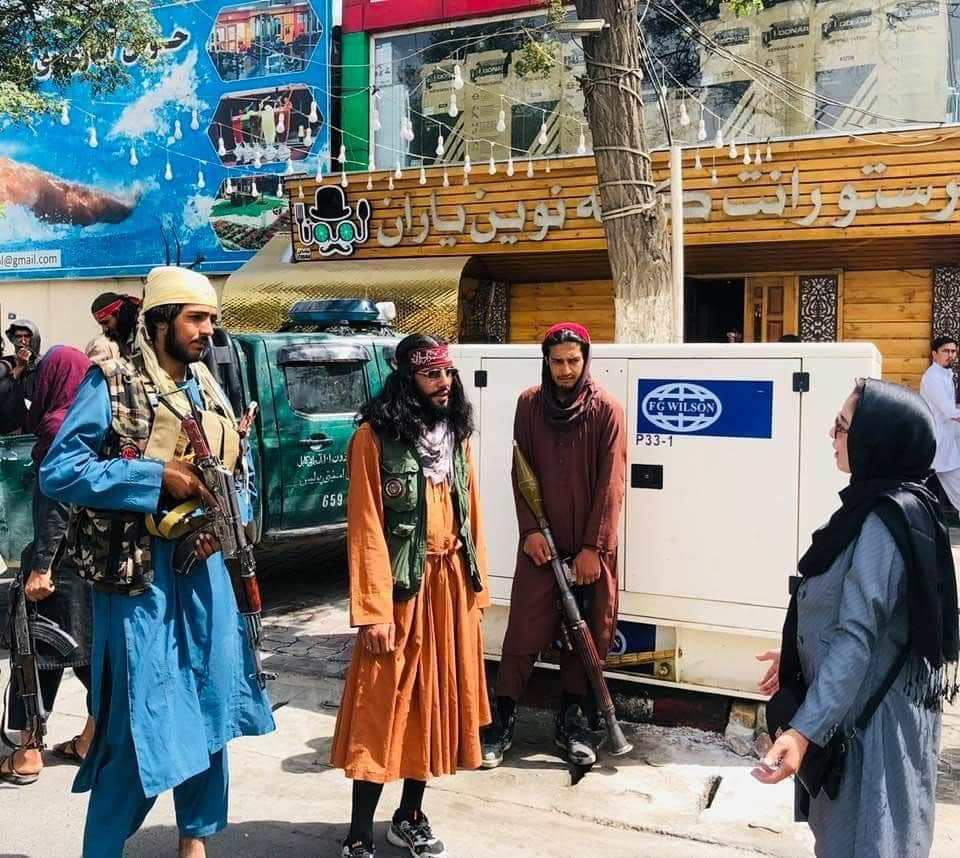
Taliban Militants in Kabul
Business Insider: The Taliban raped and beat a gay man after duping him into meeting them, a report from ITV says. The outlet said that Hanan, a pseudonym given to protect his identity, had been speaking to a man on social media who promised to help him find a safe way out of Afghanistan. Click here to read more (external link).
 Tolo News: Clashes between Taliban forces and the resistance front are ongoing with both sides claiming to have caused heavy casualties to the opposing side. The resistance front says the Taliban’s heavy attacks on Panjshir were pushed back and the Taliban forces suffered heavy casualties during the fighting.
  TNN: With Pakistan temporarily closing its borders with Afghanistan, fearing an influx of refugees, Afghan nationals arriving at India-Pakistan international border to migrate to India is next to impossible. Even if someone manages to do so, strict Covid-19 protocols and clearance from ministry of home affairs will be another hurdle. Immigration sources here say Attari international border is already closed for passengers due to the Covid-19 pandemic.
  Radio Free Europe/Radio Liberty
 Radio Free Europe/Radio Liberty
 CNN: US officials processing Afghan refugees abroad recently alerted the State Department to instances in which women and girls were forced into marriage or arrived with male partners posing as their husbands to be eligible for evacuation and escape the Taliban, according to two sources familiar with the matter.