
 Ariana: World Health Organization (WHO) Director General Tedros Adhanom Ghebreyesus has warned that the Afghanistan health sector is on the verge of collapse but that the organization would help as much as it could. Ghebreyesus, who visited hospitals in Kabul this week, said it was heartbreaking to hear from overworked nurses that they have not been paid in months. Click here to read more (external link).
‘The challenge for us now is drought, not war’: livelihoods of millions of Afghans at risk

The Guardian (UK): The war in Afghanistan might be over but farmers in Kandahar’s Arghandab valley face a new enemy: drought. It has hardly rained for two years, a drought so severe that some farmers are questioning how much longer they can live off the land. Click here to read more (external link).
Taliban Official Says Acting PM Meets With Russian, Chinese, And Pakistani Envoys In Kabul

Mullah Hassan Akhund
Radio Free Europe/Radio Liberty
September 21, 2021
The acting head of Afghanistan’s Taliban-led government, Mullah Muhammad Hassan Akhund, has met in Kabul with representatives from Russia, China, and Pakistan, Taliban official Ahmadullah Muttaqi tweeted on September 21.
Muttaqi also uploaded photos purportedly showing Russian envoy for Afghanistan Zamir Kabulov, Pakistan’s Special Representative for Afghanistan Mohammad Sadiq Khan, and China’s special envoy to Afghanistan Yue Xiaoyong.
Muttaqi also said the Taliban was represented by acting Foreign Minister Amir Khan Muttaqi and Acting Minister of Finance Hedayatullah Badri. No details of the meeting were immediately available.
Moscow and Beijing have shown a united front on Afghanistan in the run-up to last month’s hasty completion of the withdrawal of U.S.-led forces from the war-wracked country, with the Russian and Chinese leaders holding consultations on the situation following the power vacuum that resulted from the fall of the foreign-backed government and the Taliban’s subsequent seizure of Kabul.
In the latest such contact, Russian President Vladimir Putin held a telephone call with his Chinese counterpart, Xi Jinping, on August 25.
Chinese media said after the call that Putin told Xi he shares China’s positions and interests in Afghanistan and he is willing to work with China to “prevent foreign forces from interfering and destroying” Afghanistan.
With reporting by Reuters and TASS
Copyright (c) 2021. RFE/RL, Inc. Reprinted with the permission of Radio Free Europe/Radio Liberty, 1201 Connecticut Ave NW, Ste 400, Washington DC 20036.
Afghanistan’s Former Prosecutors Hunted By Criminals They Helped Convict
 By RFE/RL’s Radio Azadi
Abubakar Siddique
Ron Synovitz
September 21, 2021
KABUL — Afghanistan’s former prosecutors once worked to rid their country of its most dangerous criminals by building court cases to put them behind bars.
Now, former prosecutors are hiding themselves from those same criminals — the murderers and drug dealers who were freed by the Taliban when the militant group took over the country and released almost all convicted criminals from Afghanistan’s prisons.
For years before last month’s collapse of the Afghan central government, Humayun was tasked with investigating serious crimes in the southern province of Helmand. Working in a region where most of the world’s opium is grown and processed into heroin, his job often focused on those in Afghanistan’s illegal narcotics trade.
But now, Humayun says he is receiving threats from the criminals he helped to convict. He says they are demanding that he reimburse them for fines they’d paid and property that was confiscated from them as part of their sentencing.
Humayun, who like many Afghans goes by one name, cites the example of a former convict who called him recently from Helmand’s Nad-e Ali district.
“He told me I’m responsible for the confiscation of his car and that I should return it now,” Humayun told RFE/RL’s Radio Azadi.
Humayun says he is not alone in facing such demands.
“Many former inmates are now threatening me and my colleagues to demand that we return their money,” he said. “A responsible court [working under a legitimate government and constitution] imposed penalties or ordered their properties confiscated. Yet they are insisting that we are personally responsible for what happened to them.”
Jails Emptied Out
Former prosecutors from across Afghanistan tell similar stories about the threats they are receiving.
Many of those freed by the Taliban last month from Afghanistan’s prisons were Taliban fighters or members of other militant groups like the Islamic state or Tehrik-e Taliban Pakistan.
But the jails emptied out by the Taliban also included prisoners convicted for crimes that would have received severe punishments, even the death penalty, under the Taliban’s own interpretation of Islamic law.
Afghan lawyers tell RFE/RL that those former inmates already have targeted at least three former prosecutors in revenge killings.
Hayatullah Khan, a pseudonym for a former government attorney who requested anonymity because of security fears, says he knew those targeted.
“They included Ahmadi Shah, who was assassinated in Nangarhar Province on August 26,” he said. “The next day, another prosecutor was killed in [the western province of] Farah. On September 12, another former prosecutor Nusrat Ullah was killed. Every [former] prosecutor here now faces grave dangers.”
Although the Taliban has declared that its forces will not torment those who worked for the ousted Afghan government, reports of retribution and reprisal killings are common across Afghanistan.
The Taliban has said nothing about former government workers who are being targeted in revenge killings. The militant group also has said little about the structure of the future court system under their rule, or whether they will allow former Afghan justice officials to return to work.
‘No Need For Prosecution’
Haroun Rahimi, a self-exiled assistant law professor from the Kabul-based American University of Afghanistan, says he does not expect the Taliban to continue to employ any former prosecutors.
“The prosecution is basically an element of due process,” Rahimi told RFE/RL. “You need a government person to actually make a case that a person who is being accused of a crime is guilty.”
“But when I talked to prosecutors in Herat who have met with the Taliban’s top judge in the province, they said the Taliban feel they have no need for prosecution,” he said.
“They said the Taliban has not appointed anybody as a caretaker for the prosecution in Herat,” Rahimi noted. “They said the Taliban basically implied that they have no need for prosecutors — that the forces who will actually be arresting people and punishing people would just do the job of the prosecution themselves.”
“The element of the rule of law in legal terms — not the police investigators, but the due process of law — felt very strange to the Taliban,” Rahimi said.
“This suggests that the Taliban is going to continue to run the judiciary the way it has done so far as an insurgency with its shadow courts,” Rahimi said. “Often there is just one judge for a whole province, and that judge is the sole decision maker.”
Videos of the Taliban publicly punishing alleged criminals suggest the hard-line movement may formalize its shadow courts that had dispensed quick rulings under Taliban commanders or clerics.
“There’s no indication that the Taliban are thinking about incorporating the institutional setup of the previous government’s judicial and legal system,” Rahimi said. “They view that system with distain. They’d like to continue what they perceive as a more Islamic — authentically Islamic — simple version of the adjudication that they were doing with their shadow courts.”
Female prosecutors see no prospect for returning to their work. Some say they receive threats every day and worry about their safety.
Jamila, a pseudonym for a woman who’d worked as a prosecutor in Kabul, says she and her colleagues are desperate to leave the country.
She says their work for the ousted government means they are in danger along with their families.
“We want the media to convey our message to the world,” she told Radio Azadi. “The international community should help relocate us to a safe place, so we don’t suffer a complete nervous breakdown.”
Britain has already evacuated some prosecutors and judges of a Kabul-based special crimes tribunal to Manchester and other cities. That court dealt with serious criminal cases in Afghanistan.
With reporting by Radio Azadi correspondents on the ground in Afghanistan whose names are being withheld for their protection.
Copyright (c) 2021. RFE/RL, Inc. Reprinted with the permission of Radio Free Europe/Radio Liberty, 1201 Connecticut Ave NW, Ste 400, Washington DC 20036.
Taliban Expands Afghan Cabinet List But Again Fails To Include Women

Zabihullah Mujahid
By RFE/RL’s Radio Azadi
September 21, 2021
The Taliban-led government has expanded its interim cabinet, releasing a list of deputy ministers solely comprising men despite increasing international criticism that the hard-line Islamist group’s actions were failing to live up to its early pledges of inclusion for women.
Spokesman Zabihullah Mujahid presented the list of deputy ministers and agency heads on September 21, as three international human rights groups issued a report documenting a “litany of abuses” since the Taliban seized power in mid-August.
“In just over five weeks since assuming control of Afghanistan, the Taliban have clearly demonstrated that they are not serious about protecting or respecting human rights. We have already seen a wave of violations, from reprisal attacks and restrictions on women, to crackdowns on protests, the media and civil society,” Dinushika Dissanayake, Amnesty International’s Deputy Director for South Asia, said in a statement.
Speaking at a news conference in Kabul, Mujahid said that two veteran battlefield commanders were appointed as deputy defense and interior ministers, adding to the roster of hard-liners in the main group of ministers.
The newly nominated Mullah Abdul Qayyum Zakir and Sadr Ibrahim were identified in UN reports as being among battlefield commanders who were pressing the Taliban leadership to step up the war against the Western-backed government in Kabul.
Mujahid defended the latest nominations, saying they increase ethnic representation in the cabinet. Tajik businessman Haji Nooruddin Azizi was appointed acting trade minister, while his deputy Haji Mohammad Azim Sultanzada is an ethnic Uzbek businessman. Mohammad Hassan Ghiasi, deputy minister for public health, is a member of the mainly Shi’ite Hazara ethnic minority.
The spokesman said that women might be added at some time in the future, but that did little to allay growing fears that the government installed by the Taliban after it gained control of most of the war-torn country and ousted the Western-backed government on August 15 will return to the repressive rule it employed during when in power from 1996 to 2001.
The Taliban has sought to counter that image with promises of moderate policies and respect for rights, but the formation of an all-male government led by hard-line veterans composed of men who are mostly from the Pashtun ethnic group failed to back up the pledge.
The international community has warned it would judge the group by its actions, and that recognition of a Taliban-led government would be linked to issues including the treatment of women and minorities.
According to Mujahid, there is no reason for withholding recognition.
“It is the responsibility of the United Nations to recognize our government [and] for other countries, including European, Asian, and Islamic countries, to have diplomatic relations with us,” he said.
The cabinet list comes after the government excluded girls from returning to secondary school last week.
Mujahid suggested this was a temporary decision, saying: “We are finalizing things.”
“Soon it will be announced when they can go to school,” the spokesman said.
Last month, the Taliban-led government announced that female university students could continue their studies but only in gender-segregated classes and if they wore a niqab — an Islamic veil that covers the face — and abaya — a loose-fitting and all-covering robe.
In the Taliban’s previous rule of Afghanistan in the late 1990s, girls were not allowed to attend school and women were banned from work and education.
In their report published on September 21, Amnesty International, the International Federation for Human Rights (FIDH), and the World Organization Against Torture (OMCT) document how women’s rights are being repressed under the Taliban, including targeted killings of civilians, the repression of the rights of women and girls, and the intimidation of human rights defenders.
“Women who were in government prior to the Taliban’s takeover have by and large fled the country; however, there have already been several instances of reprisals against their employees, colleagues, and family members who have stayed in Afghanistan,” the report says.
It added that female judges and prosecutors have also come “under threat” from the Taliban, as well as from men who had been imprisoned on charges of murder or domestic violence and subsequently freed by the militants.
As a result of the climate of fear, many women are now dressed in burqas covering their whole bodies and leave their homes only a male guardian. Most have stopped other activities to avoid violence and reprisals.
“Why are boys allowed to study, when there is no such right for girls?” Rawanda Abraar, an Afghan student from Kabul, told RFE/RL’s Radio Azadi during a program on female leadership on September 20.
“I have studied hard for the past 11 years. I dreamed of studying journalism at university and being a voice for my people. All my dreams were destroyed. We can’t even leave our homes freely. I want to finish my education. We don’t deserve to be buried alive in our own homes,” she added.
The Taliban has also engaged in “large-scale door-to-door searches, forcing human rights defenders into hiding,” while others were beaten up by militants, the human rights groups said.
Other abuses included a “crackdown” on freedom of expression, with many protests being violently repressed by the Taliban, and “reprisals” on former government workers.
The report calls on the UN Human Rights Council to “take decisive action to establish a robust independent investigative mechanism to monitor and report on human rights abuses committed in violation of international human rights law, and to contribute to accountability for crimes under international law.”
“Human rights defenders, journalists, and others who are targeted for their work must be evacuated and given safe passage if they wish to leave Afghanistan; and women and girls, and ethnic and religious minorities who are targeted because of their gender, ethnic, and religious identity, must be guaranteed protection,” it says.
Afghanistan’s unsettled future under its new rulers is among the issues that are expected to feature prominently at the United Nations General Assembly starting on September 21 in New York.
With reporting by AP, AFP, and Reuters
Copyright (c) 2021. RFE/RL, Inc. Reprinted with the permission of Radio Free Europe/Radio Liberty, 1201 Connecticut Ave NW, Ste 400, Washington DC 20036.
Ethnic Cleansing: Kuchis Are Taking Advantage of Hazara Farmlands in Ghazni’s Nawur District
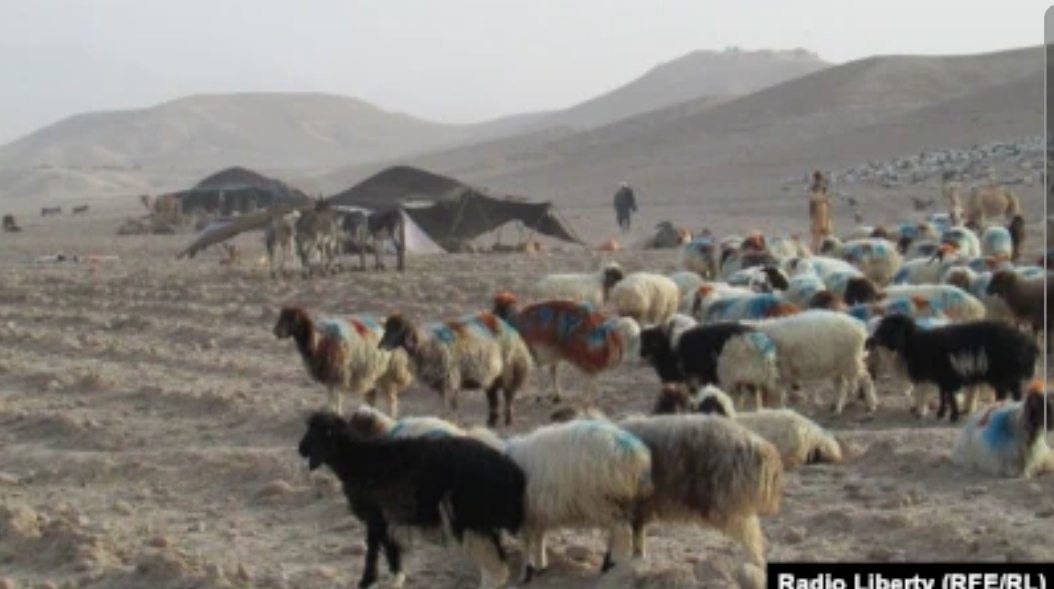
A Kuchi camp in southern Afghanistan. (file photo)
8am: “The Taliban recently evicted four Hazara families from their homes in the village of Qorban-Mordah,” he says. “These four families have taken refuge to our village – the Kuchis have now occupied their homes. They have also broken down the gates of mosques and houses.” Click here to read more (external link).
Related
Naseeb Khan appointed new CEO of ACB
Naseeb Khan, has been introduced as the new CEO of the Afghanistan Cricket Board (ACB), by board's Chairman Mr @AzizullahFazli. He hold master's degree and has knowledge of cricket as well. pic.twitter.com/07qDH1hQjW
— Afghanistan Cricket Board (@ACBofficials) September 20, 2021
NRF distributes publication
National Resistance Front begun its first periodical publication after 18 years.
5,000 pages of this Periodical were made available to the public in 18 districts in the center of Kabul city and were welcomed by many people.1/2 pic.twitter.com/kE7AgfdJEH
— Natiq Malikzada (@natiqmalikzada) September 20, 2021
Taliban: 40 suspects arrested in connection with Nangarhar explosions
 Ariana: Taliban’s head of intelligence directorate in Nangarhar said on Monday that 40 people have been arrested in connection with explosions that rocked Jalalabad city on Saturday and Sunday. The intelligence chief, Dr Bashir, also confirmed that four people had died and six others were wounded in the explosions – three on Saturday and one on Sunday. Click here to read more (external link).