
 Geo News: While fans in the stadium thoroughly rooted for their favourite sides to keep players’ spirits high, a conspiracy started brewing on Twitter regarding the disappointing performance of the Afghan side. The microblogging platform exploded with memes and claims that the Afghan cricket team had allegedly ‘fixed’ the match. Click here to read more (external link).
‘Empty Shell’: Extreme Depression, Suicidal Thoughts Haunt Afghan Women Under Taliban Rule
 By Ron Synovitz
RFE/RL’s Radio Azadi
November 4, 2021
Life has become a nightmare of despair for 22-year-old Maryam Rezaei since the Taliban seized power in Afghanistan less than three months ago.
In early August, before the Taliban stormed into her neighborhood in the western city of Herat, Rezaei was among more than 10,000 women who were studying at Herat University.
She also earned money as a journalist at a local radio station.
But now, despite Taliban promises to let women receive an education, there is still no word about when she might be allowed to go back to her university studies.
Confined to her home under the Taliban’s strict rules for women, Rezaei has given up hope of ever working again.
She told RFE/RL’s Radio Azadi that she feels the onset of extreme depression and often thinks about committing suicide to escape her plight.
“It is really hard for me when I think about the fact that I have no freedom, no security, and no basic rights,” Rezaei says.
“I have lost everything that I have worked for and all of my goals,” she says. “It makes me lose my temper. I feel like an empty shell of a human being. I am in captivity and I am just waiting for my death.”
After toppling the internationally recognized government in Kabul, the Taliban promised to show more moderation than during its brutal rule from 1996 to 2001, when girls were barred from attending school and women were prevented from working outside their homes.
But Afghan women accuse the new, all-male Taliban-led government of breaking its promises. The militants have banned many girls from attending secondary school. The vast majority of women have been ordered not to return to work. And Afghan women protesting their plight have been attacked or detained by Taliban fighters.
Many Afghan women say the return of Taliban rule feels like being sentenced to a life in prison.
Shayestah, a former employee of an Afghan government agency in Kabul, says she is also suffering from extreme depression.
The Taliban’s repressive rules have left many Afghan women unemployed. For Shayestah, the loss of her job has wreaked havoc on her family’s income in the midst of a worsening economic crisis.
Most disheartening, Shayesteh explains, is the feeling that she has lost all of her dreams about the future along with the values that she cherished.
“Our outlook has been destroyed,” Shayesteh tells RFE/RL. “I have lost my job and I am worried about my future. My spirit is in a very bad way.”
“Most Afghan women have been fired and their duties are unknown at the moment,” she says. “Since our future remains unclear, it has negatively affected our thoughts and emotions.”
Good Old Days?
Rezaei says she now looks back at the years before the Taliban’s return to power as “the good old days.”
But studies on mental health issues in Afghanistan during the past two decades suggest such feelings are only relative to the current plight of Afghan women.
Researchers note that improvements in the freedoms, rights, and quality of life for Afghan women were painfully gradual under previous governments.
They conclude that although there were positive developments for women’s rights and empowerment, progress was often constrained by socio-cultural impediments and conservative Islamic views about the role of women in Afghan society.
Meanwhile, ongoing war and poverty intensified depression and anxiety disorders among the highly traumatized population.
A study published last June as part of a mental health initiative of the World Health Organization (WHO) revealed that nearly half of all Afghans suffer from psychological stress and are impaired by mental health problems.
That national survey, led by McGill University psychiatry professor Viviane Kovess-Masfety, found that post-traumatic stress disorder (PTSD) is Afghanistan’s most prevalent mental health issue.
It also found that PTSD risk was higher for Afghan women than men, and that Afghan women who suffer from PTSD are “nine times more at risk of suffering from depression.”
“Curiously, PTSD diagnosis was not familiar to psychiatrists in Afghanistan,” Kovess-Masfety said. “When we were conducting our validity studies on cases, the [Afghan] psychiatrists did not find any PTSD cases in their outpatient clientele, whether depressed, anxious, or cases with substance-use disorders.”
Kovess-Masfety concluded that trauma has been so common among Afghans for so long that having symptoms of PTSD “did not cause mental health consultation, whereas sadness, loss of pleasure, and the other depressive symptoms were considered as abnormal.”
Her survey found that only 12 percent of Afghans mentioned the “consequences of trauma events” to describe why they sought help for mental health problems.
That compared to 65 percent who have sought help in recent years because of “sadness” and 27 percent because of “anxiety.”
Now, since the Taliban’s return to power, Afghan psychiatrists say they are seeing an increase in the number of women who seek help for depression.
“Most of our patients lately are women — women’s rights activists, former government employees, journalists, and women who were actively employed under the previous Afghan government but have now lost their jobs,” says Wahid Nourzad, head of the mental health department at Herat District Hospital.
“These days, we really have many patients,” Nourzad told RFE/RL. “Some of them are suffering from poverty and unemployment. There also has been an increase in domestic violence against women and children.”
Kabul-based psychiatrist Walid Hussainkheil says he thinks the main causes of increased depression among Afghan women are poverty, unemployment, and isolation under the Taliban’s new rules.
“Their social connections are broken,” he explained. “They move away from social gatherings and they think of suicide, which is very dangerous.”
Suicidal Tendencies
Even before the Taliban’s return to power, nearly 2 million Afghan women had been diagnosed with severe depression.
Studies based on the records of the previous government’s Health Ministry confirm that major depressive disorder (MDD) and domestic violence were the main causes of attempted suicide by Afghan women.
Ayesha Ahmad, an expert on global mental health at St. George’s University in London, notes that Afghanistan has long been the only place in the world where the suicide rate for women is higher than for men.
In a 2017 essay based on her research into a nationwide trend of Afghan women committing suicide by setting themselves on fire, Ahmad warned that 80 percent of the country’s estimated 3,000 suicides each year were women.
She noted that the rate of domestic violence against women and girls in Afghanistan was among the highest in the world.
“Eighty percent of marriages take place without the consent of the bride, who is often a child,” Ahmad said. “An estimated 10 percent of all marriages are a result of ‘baad’ practice,” an Afghan tribal custom where a girl or woman from a convicted criminal’s family is given as compensation to the victim’s relatives as a servant or a bride.
Ahmad found that Afghan women who attempted suicide and survived were often abandoned by their families because of the taboo that suicide carries.
She also found that “socio-cultural beliefs and taboos” have created a barrier that prevents many Afghan women from disclosing their mental health issues to medical professionals and seeking help.
“Afghan women would not be setting themselves alight unless the pain they have inside is more than the pain of flames,” Ahmad said. “The lack of space for a woman’s narrative, and limited modes of written and spoken expression, mean that a woman’s suffering or sadness is confined to her body and mind.”
“The flames are a symbol of the fire she is experiencing within herself and her home,” Ahmad concluded. “The vivid sacrifice of life through self-immolation is, ultimately, the only form of defense she holds. Her only agency is her decisions around her death.”
Psychiatrists say patients who suffer from extreme depression often respond positively to changes in their environment, recreation, and travel.
Kovess-Masfety’s study concluded last June that education also was an effective choice of intervention for clinically depressed Afghan women.
But those treatment options have vanished under the restrictions imposed on women by Afghanistan’s new Taliban-led government.
That has Afghan psychiatrists bracing for further increases in the number of women with depressive disorders — including those who attempt suicide.
Written and reported by Ron Synovitz with reporting by RFE/RL’s Radio Azadi.
Copyright (c) 2021. RFE/RL, Inc. Reprinted with the permission of Radio Free Europe/Radio Liberty, 1201 Connecticut Ave NW, Ste 400, Washington DC 20036.
Related
Tolo News in Dari – November 4, 2021
WFP Distributes Cash to Poor Families in Kabul
 Tolo News: The World Food Program (WFP) started distributing cash to poor families, with each receiving 3,500 Afghanis (approx. 33 US dollars) per month in Afghanistan. It is reported that more than 4,000 families will receive this emergency cash for the next four months. The WFP has started this program to decrease poverty as the country’s economy is crumbling. Click here to read more (external link).
Related
Russia Concerned by Daesh Activities in Afghanistan

Maria Zakharova
Tolo News: The Russian Federation is concerned by the activities of Daesh in Afghanistan following a recent complex attack conducted by Daesh affiliates on a military hospital in the city of Kabul. “I can confirm that the terrorist and drug threats coming from Afghanistan’s territory, as well as the general situation in these areas in that country, are still a pressing problem for us. I can state with regret that the situation has not changed after the Taliban came to power,” said Maria Zakharova, spokesperson for the Russian Foreign Ministry. Click here to read more (external link).
Russia to the Resistance Front: Avoid Actions That Lead to Civil War

Massoud
8am: Russia’s Foreign Ministry has warned of a possible civil war in Afghanistan, calling on the National Resistance Front (NRF) led by Ahmad Massoud to refrain from actions that could lead to a civil war. Russian Foreign Ministry spokeswoman Maria Zakharova said in a news conference in Moscow on Wednesday, (November 3) that the National Resistance Front, led by Ahmad Massoud, was preparing to resume fighting the Taliban. Click here to read more (external link).
Afghan refugees in Uzbekistan live in uncertainty, facing deportation
 DW: Rights groups say hundreds of Afghans fled to neighboring Uzbekistan to escape the Taliban. But, without official refugee status in the Central Asian country, they are vulnerable and could face deportation. Click here to read more (external link).
Watchdog finds no misconduct in mistaken Afghan airstrike

Pentagon
AP: An independent Pentagon review has concluded that the U.S. drone strike that killed innocent Kabul civilians and children in the final days of the Afghanistan war was not caused by misconduct or negligence, and it doesn’t recommend any disciplinary action, The Associated Press has learned. Click here to read more (external link).
Pakistan, Tehrik-e Taliban Hold Secret Talks Over Cease-Fire
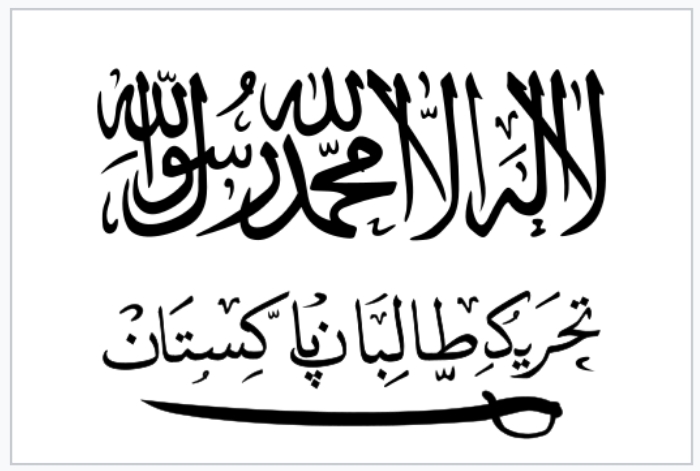
TTP Flag
By Daud Khattak
Radio Free Europe/Radio Liberty
November 3, 2021
Pakistan is holding secret talks with the Tehrik-e Taliban Pakistan (TTP) extremist group over a cease-fire, sources have told RFE/RL’s Radio Mashaal.
That is despite the TTP, also known as the Pakistani Taliban, publicly denying a claim by Islamabad last month that the sides were in negotiations.
Pakistani military officials and representatives of the TTP have been meeting in neighboring Afghanistan to negotiate a truce, said sources with knowledge of the TTP’s policies.
The talks have been mediated by the Taliban’s Interior Minister Sirajuddin Haqqani, the head of the notorious Haqqani network, the lethal arm of the Taliban, the sources added. The network is a U.S.-designated terrorist organization and Haqqani is among the FBI’s most-wanted fugitives.
The Afghan militants, who seized power of the war-torn country in August, have links with both Islamabad and the TTP.
A cease-fire agreement could pave the way for formal talks over a negotiated end to the TTP’s 14-year insurgency in Pakistan, where thousands of people have been killed in militant attacks and clashes between the TTP and the military.
“They have been engaged in talks for two weeks,” said a source familiar with the negotiations, describing the talks as “hectic.”
Pakistan’s ambassador to Kabul, Mansour Ahmad Khan, told RFE/RL on November 2 that he did not know of any talks. But he did not reject the possibility of talks with the TTP.
The negotiations come as the TTP has intensified its attacks in recent months in northwestern Pakistan, its former stronghold. A massive Pakistani Army offensive in 2014 drove out the militants from the country’s tribal belt and across the border to Afghanistan.
Forced from its strongholds, debilitated by the death of successive leaders, and riven internally, the TTP was seen as a largely spent force. But the militant group has reemerged over the past year, unifying squabbling factions and unleashing a spate of deadly attacks in Pakistan.
Pakistani Prime Minister Imran Khan said on October 1 that his government was in talks with “some” factions of the TTP on a “reconciliation process.”
Khan told Turkish state broadcaster TRT that his government was willing to “forgive” TTP militants if a cease-fire deal was reached.
When asked if the Afghan Taliban was facilitating the process, Khan said that “the talks are taking place in Afghanistan, so in that sense yes.”
One the same day, a faction of the TTP ordered its fighters to observe a cease-fire until October 20. The Hafiz Gul Bahadar faction directed its fighters to observe a cease-fire for 20 days and halt all their operations against the Pakistani government and security forces.
But the TTP leadership quickly issued a statement rejecting Khan’s claims. The militant group said it was united and there were no divisions in its ranks. The TTP’s spokesperson also called on the group’s fighters to continue attacks.
Sources told RFE/RL that representatives of the TTP have held several meetings with Pakistan intelligence officials in Afghanistan in recent weeks. The TTP has been represented by close associates of Noor Wali Mehsud, who has headed the group since 2018.
“The two sides are fine-tuning their demands and conditions for a cease-fire,” said one of the sources.
Among the TTP’s demands is the release of 100 fighters in Pakistani prisons. In return, the government has demanded a nationwide truce.
“Once the cease-fire is agreed, the Pakistani security forces will not take action against the TTP and the TTP will not carry out attacks on the security forces or civilians,” one source said.
The source said that government negotiators had told the TTP that they could visit their homes in Pakistan but would have to be unarmed. Many members of the TTP are Pashtuns from the northwestern province of Khyber Pakhtunkhwa, which straddles the border with Afghanistan.
The TTP has also demanded the implementation of Islamic Shar’ia law in Pakistan’s tribal region, a demand that observers say is unlikely to be met.
Since the emergence of the TTP in 2007, Islamabad has signed peace deals with several factions. But none of the agreements has lasted, and most were followed by an uptick in violence.
This is the not the first time that Khan, whose Tehrik-e Insaf (PTI) party came to power in 2018, has reached out to the TTP.
In 2013, when Khan was part of the opposition, he urged the government to launch talks with the TTP and allow the militants to open an office in Pakistan just as the Afghan Taliban had opened an office in the Gulf state of Qatar.
In 2014, the TTP demanded Khan be included in the committee formed by then-Prime Minister Nawaz Sharif for holding talks with the militant group. Khan declined the offer.
With peace efforts breaking down, the Pakistani Army in June 2014 launched a large-scale offensive against TTP militants, many of whom fled to Afghanistan.
In December that year, the TTP attacked a military-run school in the northwestern city of Peshawar in December 2014, killing 147 people, most of them students. It was one of the deadliest militant attacks in Pakistan’s history.
Copyright (c) 2021. RFE/RL, Inc. Reprinted with the permission of Radio Free Europe/Radio Liberty, 1201 Connecticut Ave NW, Ste 400, Washington DC 20036.
Afghanistan loses cricket match against India
The Indian Express: India beat Afghanistan by 66 runs in their Super 12 match of T20 World Cup here on Wednesday to keep their slim chance of reaching semifinals alive. Openers Rohit Sharma and KL Rahul hit half centuries to help India post 210 for 2 after being invited to bat and then restricted Afghanistan to 144 for 7 in their 20 overs. Click here to read more (external link).