
Taliban Not Allowing the Displaced Villagers in Daikundi to Return Home

Daikundi
8am: A public source, speaking on condition of anonymity, told Hasht-e Subh that the Taliban district governor had told Pato residents that the land should be occupied by Pashtuns and that Kindir residents had no right to return to their land. Click here to read more (external link).
UN Prepares Polio Vaccination Campaign for Children in Afghanistan

Child getting polio drops (file photo)
VOA News
October 23, 2021
U.N. agencies are preparing to launch a polio vaccination campaign for all children under 5 in Afghanistan, a country where the potentially crippling disease persists despite a more than three-decade-long campaign that has nearly eradicated it worldwide.
Vaccine doses will begin to be administered in Afghanistan on November 8 for the first time in three years, now that the country’s new Taliban government has granted approval.
“This is a huge development that now we can go all across Afghanistan and deliver the vaccine house to house,” Dr. Hamid Jafari, the World Health Organization’s director of polio eradication for the Eastern Mediterranean region, told VOA.
Jafari described the upcoming campaign as “a real combination of excitement and extreme fear — excitement because it looks like a real opportunity to eradicate wild polio virus finally.”
Warning that the virus might still be “lurking in some hard-to-reach populations,” he said it’s critical that the WHO “maintain this momentum to vaccinate our children so that the virus has nowhere to go.”
“Both Afghanistan and Pakistan really actually need to switch gears,” Jafari declared.
Polio’s presence in Afghanistan and in neighboring Pakistan, where a U.N. polio vaccination effort begins in December, means the disease can still spread globally. Rotary International, which coordinates a global polio eradication program, predicts “hundreds of thousands of children could be paralyzed” if polio is not eliminated within 10 years.
The WHO announced the vaccination campaign on Tuesday, five days before the observance of World Polio Day, part of Rotary International’s Global Polio Eradication Initiative (GPEI).
Since the GPEI began in 1988, when there were 350,000 cases in 125 countries every year, polio cases have been cut by 99.9%, according to Rotary International.
The Taliban prohibited teams organized by the U.N. from conducting door-to-door vaccinations in parts of Afghanistan under their control over the past three years.
The ban and the recently ended war in Afghanistan prevented vaccines from being administered to 3.3 million of the country’s 10 million children over that period.
Taliban support
The Taliban did not comment on the agreement, but Jafari said, “The Taliban have always been supportive of polio eradication. … In fact, the polio education program started in Afghanistan when they were in government” previously from 1996 to 2001.
Jafari said the Taliban vaccination restriction “was imposed purely for considerations of security and the nature of conflict at the time, and that has now obviously changed drastically. So their commitment to support polio education remains, and this is an expression of that.”
He said the WHO has always “maintained dialogue” with the Taliban, in keeping with its “very neutral and impartial program” that enables children to be vaccinated “wherever they are.”
Carol Pandak, head of the PolioPlus program at Rotary International, said in an interview with VOA that GPEI continues to be successful, noting only two cases of polio have been detected in the recent past, one in Afghanistan and the other in Pakistan.
“We have gone the longest time ever since detecting a case of the wild poliovirus. We’ve reached almost nine months, but now is not the time to be complacent,” she cautioned. “We need to build on this progress. We need to continue immunizing children against polio, and we need to intensify our disease detection systems so that with so few cases we’ll be able to tell and prove that there is no polio circulating.”
Pandak said that while Rotary International was “cautiously optimistic” about the progress made this year, “we need to also focus on other diseases, especially for children, because some of their immunization campaigns have been canceled due to COVID. So we really need to be able to protect children from diseases such as polio, even during the COVID-19 pandemic.”
Earlier this month, WHO Director-General Tedros Adhanom Ghebreyesus celebrated Henrietta Lacks, a woman whose cervical cells were used to develop the polio vaccine, by acknowledging her “contribution to revolutionary advancements in medical science.”
The “HeLa cells” from Lacks, an African American, are the oldest and most used human cell line in existence. They were taken from her without permission at Johns Hopkins University in 1951 before her death, and their use has resulted in many other medical breakthroughs and research involving maladies such as AIDS and cancer.
Some information for this report came from Reuters.
US nearing a formal agreement to use Pakistan’s airspace to carry out military operations in Afghanistan

US Drone (file)
CNN: The Biden administration has told lawmakers that the US is nearing a formalized agreement with Pakistan for use of its airspace to conduct military and intelligence operations in Afghanistan, according to three sources familiar with the details of a classified briefing with members of Congress that took place on Friday morning. Click here to read more (external link).
Pakistan Kept On Terrorism Financing Watchlist Despite Progress
 By Radio Mashaal
October 22, 2021
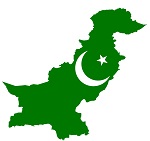
A global money-laundering watchdog has called on Pakistan to “continue to make progress as soon as possible ” to address the one remaining recommendation that is preventing the country from being removed from a so-called gray list of terrorism financing.
The Paris-based Financial Action Task Force (FATF) placed Pakistan on its watchlist in 2018 amid accusations that the country’s powerful military harbors Islamist militants to use them as proxies against India and neighboring Afghanistan.
Being placed on the list can scare away investors and creditors, and make global banks wary of doing business with a country.
Following a three-day plenary session on October 21, FATF hailed Pakistan’s “continued political commitment” since June 2018 to address its counterterrorist financing-related “deficiencies,” which has allowed the country to completed 26 of the 27 recommendations made by the watchdog to prevent terrorism financing and money laundering.
However, FATF President Marcus Pleyer told a press conference that the authorities need to “further demonstrate that investigations and prosecutions are being pursued against the senior leadership of UN designated terror groups.”
The international watchdog also said Pakistan still needs to demonstrate that it “actively seeks to enhance the impact of sanctions beyond its jurisdiction by nominating additional individuals and entities for designation at the UN.”
Hammad Azhar, Pakistan’s energy minister who is also involved in FATF-related matters, welcomed the watchdog’s acknowledgement that his country has made progress as “good news.”
“26/27 items already complete. Majority of countries believe that we have completed the Action Plan,” Azhar tweeted.
FATF also decided on October 21 to add Turkey, Jordan, and Mali to its watchlist, and to remove Botswana and Mauritius.
The organization also announced a new strategy for combatting corruption through anonymous entities such as shell companies. The proposed rules would force countries to set up a registry listing who actually owns an entity.
With reporting by AP
Copyright (c) 2021. RFE/RL, Inc. Reprinted with the permission of Radio Free Europe/Radio Liberty, 1201 Connecticut Ave NW, Ste 400, Washington DC 20036.
The Supreme Council of National Resistance Establishes in Afghanistan

National Supreme Council
8am: Afghanistan’s military and political figures announced the formation of a coalition called the “Supreme Council of National Resistance of the Islamic Republic of Afghanistan.” Abdul Rab al-Rasul Sayyaf, Mohammad Mohaqiq, Atta Mohammad Noor, Marshal Abdul Rashid Dostum, and other political figures are said to be members. Click here to read more (external link).
Tolo News in Dari – October 22, 2021
The Supreme Council of National Resistance Announced
شورای عالی مقاومت ملی با گزینههای صلح و جنگ به میدان آمد
شورای عالی مقاومت ملی جمهوری اسلامی افغانستان با حضور چهرههای سیاسی همچون عبدرب الرسول سیاف، محمد یونس قانونی، عطا محمد نور، عبدالرشید دوستم و محمد محقق اعلام موجودیت کرد.https://t.co/ZFz1M42YdR pic.twitter.com/hB0dxcDuz3
— Aamaj News (@aamajnews24) October 22, 2021
شورای عالی مقاومت ملی با گزینههای صلح و جنگ به میدان آمد
شورای عالی مقاومت ملی جمهوری اسلامی افغانستان با حضور چهرههای سیاسی همچون عبدرب الرسول سیاف، محمد یونس قانونی، عطا محمد نور، عبدالرشید دوستم، محمد محقق، عبدالهادی ارغندیوال و انجنیر محمد خان اعلام موجودیت کرد.
در خبرنامهی شورای عالی مقاومت ملی آمده که «دولت در اثر بیکفایتی، تکروی، انحصارگری، فساد و در نتیجه یک معاملهی نامردانه و خائنانه از هم پاشید»
در خبرنامه این شورا نگاشته شده که که برنامه کاری این شورا به دو بخش عمده سیاسی و نظامی تدوین گردیده است، اما ترجیح این شورا رسیدن به یک صلح پایدار از راه سیاسی است.
شورای عالی مقاومت ملی جمهوری اسلامی افغانستان میگوید که این شورا در نظر دارد قضاياى كشور از طريق سياسى حل و فصل گردد. اما میگویند «در صورتیكه جانب مقابل و حامیان شان به چنین راه حل تن ندهند، ناچار به بخش دوم مبارزه فعالیتهای نظامی متوسل خواهیم شد و مسؤولیت و پیامدهای آن به دوش جانب مقابل خواهد بود.»
Aamaj News
October 22, 2021
The Supreme Council of National Resistance came up with options for peace and war
The Supreme Council of the National Resistance of the Islamic Republic of Afghanistan announced its presence in the presence of political figures such as Abdul Rab Rasul Sayyaf, Mohammad Younis Qanuni, Atta Mohammad Noor, Abdul Rashid Dostum, Mohammad Mohaqiq, Abdul Hadi Arghandiwal and Engineer Mohammad Khan.
“The government collapsed due to incompetence, monopoly, monopoly, corruption and, as a result, a cowardly and treacherous deal,” the National Resistance Council newsletter said.
The council’s newsletter states that the council’s work program is divided into two main political and military parts, but the council’s preference is to achieve a lasting peace through politics.
The Supreme Council of National Resistance of the Islamic Republic of Afghanistan says that this council intends to resolve the country’s issues through politics. But they say, “If the other side and their supporters do not accept such a solution, we will have to resort to the second part of the struggle for military action, and the responsibility and consequences will be on the other side.”
Women Prefer To Die Than Live Like Slaves’: Kabul Protest Sparks Taliban Violence
 By Amos Chapple
Radio Free Europe/Radio Liberty
October 22, 2021
Locals say a protest that took place in Kabul on October 21 shows the increasing desperation of Afghans women, whose freedoms have been stripped away by the Taliban since the hard-line Islamists seized power on August 15.
Photographs taken by several news agencies on October 21 captured a high-risk protest in Kabul that ended in violence as the Taliban stopped the women marchers and attacked journalists covering the event.
A woman journalist in Kabul, whose name is being withheld for security reasons, told Gandhara that the October 21 protest is a sign of women rapidly running out of options after the Taliban stripped them of their freedoms. “Some families have no son or their father is really weak or they have lost their husbands in suicide bombs,” she explains. “Some women have the responsibility of their families on their shoulders.”
High-school girls have been kept out classes for more than a month, and many women have been banned from returning to work since the Taliban took control of Afghanistan in mid-August.
“Even though they know [the protest] is a huge risk, the women have no choice,” the Kabul journalist told Gandhara. “Because they can’t see their family suffering, so the only option is to take action even if that means the Taliban eliminates them. Because women here have already lost what they had, like their job, access to education. Right now they have nothing left so they wanted to show the world that they wouldn’t be quiet.”
The women’s march was allowed to continue for around 90 minutes before the Taliban began attacking journalists covering the event.
Another local in Kabul who saw coverage of the protest shared online told Gandhara that when Taliban members attacked the press they used shocking, sexually explicit language as they chased and beat the journalists.
He says the atmosphere in the Afghan capital is one of increasing gloom as the Taliban cracks down on even children in the street. On October 22, he says, members of the Taliban attacked three boys playing the popular mobile game PlayerUnknown’s Battlegrounds, slapping the children and seizing their phones, calling the game “haram” or forbidden under Islam.
One of the protest organizers, Zahra Mohammadi, told AFP, “My message to all girls and women is this: Don’t be afraid of the Taliban, even if your family doesn’t allow you to leave your home. Don’t be afraid. Go out, make sacrifices, fight for your rights.”
“This time, women prefer to die than live like slaves or prisoners,” the unnamed local woman told Gandhara, adding, “When I see this [protest] I am really happy because I see if my family needs my help and I’m a young woman who is able to then I will not just sit down and watch my old father die or my mother suffer. For sure I will stand, even if they kill me.”
Copyright (c) 2021. RFE/RL, Inc. Reprinted with the permission of Radio Free Europe/Radio Liberty, 1201 Connecticut Ave NW, Ste 400, Washington DC 20036.
HRW: Afghan Hazaras, Ex-Civil Servants Targeted By ‘Collective Punishment,’ Land-Grabbing
 Radio Free Europe/Radio Liberty
October 22, 2021
Human Rights Watch (HRW) accuses the Taliban of forcibly displacing hundreds of families across Afghanistan, mainly as a form of “collective punishment” against ethnic Shi’ite Hazaras and people associated with the former government.
Since the hard-line Sunni group came to power in August, the Taliban has ordered Hazaras and other residents in four provinces across Afghanistan to leave their homes and farms, in many cases with only a few days’ notice and without an opportunity to present their legal claims to the land, the New York-based human rights group said in a statement on October 22.
In a fifth province, the Taliban seized property that had been distributed by the previous government to civil servants.
“The Taliban are forcibly evicting Hazaras and others on the basis of ethnicity or political opinion to reward Taliban supporters,” said Patricia Gossman, associate Asia director at HRW.
“These evictions, carried out with threats of force and without any legal process, are serious abuses that amount to collective punishment.”
HRW reported forcible evictions by the Taliban and “associated militias” in September and October in the provinces of Helmand, Balkh, Daikundi, Uruzgan, and Kandahar.
The largest displacements took place in 15 villages in Daikundi and Uruzgan provinces, where the group said at least 2,800 Hazara residents were evicted last month.
The families were relocated to other districts, leaving their belongings and crops behind.
HRW quoted an activist from Helmand as saying that the property seized in the southern province in early October was being redistributed to Taliban members holding official positions.
In Kandahar Province, also in the south, the Taliban in mid-September gave residents of a government-owned residential complex three days to leave.
HRW noted that the forced evictions took place at a time of “record” internal displacement driven by drought, economic hardship, and conflict, with 665,000 people newly displaced in 2021. Overall, about 4 million people are displaced in the country.
Gossman urged the Taliban to cease such evictions and to adjudicate land disputes “according to the law and a fair process,” saying it is “particularly cruel to displace families during harvest and just before winter sets in.”
The mainly Shi’ite Hazara community is Afghanistan’s third-largest ethnic group. Its members have faced long-term discrimination and persecution in predominantly Sunni Afghanistan.
Earlier this month, Amnesty International said Taliban forces unlawfully killed 13 ethnic Hazaras, including a 17-year-old girl, two weeks after the militant fighters toppled the internationally recognized government in Kabul in mid-August.