logo

Daily Updated Afghan News Service

  • Home
  • About
  • Opinion
  • Links to More News
  • Good Afghan News
  • Poll Results
  • Learn about Islam
  • Learn Dari (Afghan Persian/Farsi)

Recent Posts

  • National Resistance Front Claims Killing Two Taliban Fighters in Baghlan May 2, 2026
  • Painful Account of Ethnic Discrimination: Amiri Says His Father Was Removed from Operating Room Because He Is Hazara May 2, 2026
  • Taliban Members Criticise Leader, Say He Acts As Prophet May 2, 2026
  • Tolo News in Dari – May 2, 2026 May 2, 2026
  • Taliban Seize More Than 2,500 Hectares of Land in Khost May 2, 2026
  • Women in Badghis report rising deaths amidst lack of maternal care May 2, 2026
  • Afghanistan’s wushu team to compete in Asian championships in Japan May 2, 2026
  • Border clashes leave 136,000 cut off for weeks in eastern Afghanistan, ICRC says May 1, 2026
  • Tolo News in Dari – May 1, 2026 May 1, 2026
  • Karzai warns continued ban on girls’ education will deepen Afghanistan’s foreign dependence April 30, 2026

Categories

  • Afghan Children
  • Afghan Sports News
  • Afghan Women
  • Afghanistan Freedom Front
  • Al-Qaeda
  • Anti-Government Militants
  • Anti-Taliban Resistance
  • AOP Reports
  • Arab-Afghan Relations
  • Art and Culture
  • Australia-Afghanistan Relations
  • Book Review
  • Britain-Afghanistan Relations
  • Canada-Afghanistan Relations
  • Censorship
  • Central Asia
  • China-Afghanistan Relations
  • Civilian Injuries and Deaths
  • Corruption
  • Crime and Punishment
  • Drone warfare
  • Drugs
  • Economic News
  • Education
  • Elections News
  • Entertainment News
  • Environmental News
  • Ethnic Issues
  • EU-Afghanistan Relations
  • Everyday Life
  • France-Afghanistan Relations
  • Germany-Afghanistan Relations
  • Haqqani Network
  • Health News
  • Heroism
  • History
  • Human Rights
  • India-Afghanistan Relations
  • Interviews
  • Iran-Afghanistan Relations
  • ISIS/DAESH
  • Islamophobia News
  • Japan-Afghanistan Relations
  • Landmines
  • Media
  • Misc.
  • Muslims and Islam
  • NATO-Afghanistan
  • News in Dari (Persian/Farsi)
  • NRF – National Resistance Front
  • Opinion/Editorial
  • Other News
  • Pakistan-Afghanistan Relations
  • Peace Talks
  • Photos
  • Political News
  • Reconstruction and Development
  • Refugees and Migrants
  • Russia-Afghanistan Relations
  • Science and Technology
  • Security
  • Society
  • Tajikistan-Afghanistan Relations
  • Taliban
  • Traffic accidents
  • Travel
  • Turkey-Afghanistan Relations
  • UN-Afghanistan Relations
  • Uncategorized
  • US-Afghanistan Relations
  • Uzbekistan-Afghanistan Relations

Archives

Dari/Pashto Services

  • Bakhtar News Agency
  • BBC Pashto
  • BBC Persian
  • DW Dari
  • DW Pashto
  • VOA Dari
  • VOA Pashto

Afghanistan’s Opium Production Continues To Rise, UN Report Says

17th November, 2021 · admin

Radio Free Europe/Radio Liberty
November 17, 2021

Afghanistan’s illegal opium production increased by 8 percent in 2021 compared to last year, the United Nations said, as the opiates from the war-torn country continue to dominate the international black market, supplying 8-in-10 users worldwide.

Afghanistan harvested 6,800 tons of opium in 2021, the UN Office on Drugs and Crime (UNODC) said in a report on November 16.

Income from Afghan opiates have amounted to between $1.8 billion and $2.7 billion so far this year domestically, the report said. But “much larger sums are accrued along illicit drug supply chains outside Afghanistan,” it added.

Around one-tenth of the Afghan economy is propped up by the opium trade, according to the UNODC findings.

Opium prices almost doubled in August compared to May, the UN agency said. The report’s authors blamed the price rise on increased political uncertainty following the hard-line Taliban’s takeover of the country.

Afghan media cited a farmer from the southern province of Kandahar who claimed he had turned to opium cultivation because there are no other alternatives for farmers like him.

“There is no work, all the families are in debt, and everyone’s hope is opium,” Mohammad Wali told TOLOnews earlier this week.

Meanwhile, the Taliban-led government in Kabul says that it’s trying to find alternatives for the poppy farmers.

The UNODC report predicts that the 2022 opium harvest “will be based on decisions that farmers will make in November 2021, when they are starting to sow opium poppy.”

It called for international aid to support local programs to reduce opium production.

Afghanistan is the world’s largest opium producer, accounting for nearly 90 percent of the global production.

Based on reporting by dpa and TOLOnews.com

Copyright (c) 2021. RFE/RL, Inc. Reprinted with the permission of Radio Free Europe/Radio Liberty, 1201 Connecticut Ave NW, Ste 400, Washington DC 20036.
Posted in Drugs, Economic News | Tags: opium, Poppy cultivation |

Taliban ‘Open Letter’ Appeals to US Congress to Unfreeze Afghan Assets

17th November, 2021 · admin

Ayaz Gul
VOA New
November 17, 2021

ISLAMABAD — The Taliban foreign minister Wednesday penned an “open letter” to the U.S. Congress, warning of a mass refugee exodus from Afghanistan unless the United States unblocks more than $9 billion in Afghan central bank assets and ends other financial sanctions against the country.

Amir Khan Muttaqi wrote that the sanctions “have not only played havoc” with trade and business but also with humanitarian aid to millions of desperate Afghans. Muttaqi’s office in Kabul released copies of the letter in several languages, including English.

Muttaqi maintained that his government has managed to bring political stability and security to Afghanistan since returning to power last August but growing economic troubles are worsening humanitarian challenges.

“Currently the fundamental challenge of our people is financial security and the roots of this concern lead back to the freezing of assets of our people by the American government,” said the Taliban’s chief diplomat.

“We are concerned that if the current situation prevails, the Afghan government and people will face problems and will become a cause for mass migration in the region and world,” Muttaqi said.

Last week, the Norwegian Refugee Council reported that around 300,000 Afghans have fled to Iran since August and up to 5,000 continue to illegally cross the border into the neighboring country daily.

Washington and Europe have blocked Kabul’s access to more than $9 billion in Afghan central bank assets largely held in the U.S. Federal Reserve after the Islamist Taliban takeover in Afghanistan last August.

The World Bank and International Monitory Fund also have suspended about $1.2 billion in aid money they were supposed to release for Afghanistan this year.

“We hope that the members of the American Congress will think thoroughly in this regard and the American officials will view from [the] prism of justice the problems of our people arising from sanctions and unjust partisan treatment, and not approach this humanitarian issue in a superficial manner,” Muttaqi said.

The Taliban are struggling to pay doctors, teachers and other government employees. The international sanctions have also made it challenging for the United Nations and other aid groups to pay their staff and sustain Afghan relief operations.

The U.S. administration has frozen the Afghan money over human rights and terrorism concerns under Taliban rule. The Islamist group is also being pressed to govern the country through an inclusive political system, where the rights of Afghan women and minorities are protected.

The U.N. World Food Program has warned that years of conflict, and a prolonged drought, threaten more than half of the country’s estimated population of 40 million people with starvation this winter.

The Taliban issued the letter ahead of Wednesday’s debate in the United Nations Security Council on the unfolding humanitarian crisis in Afghanistan and ways to address it.

No country has so far recognized the Taliban as the legitimate government in Kabul. But the unfolding Afghan humanitarian crisis has prompted all major powers, including the U.S., to remain in touch with the new rulers to ensure delivery of urgently needed aid to millions of Afghans to prevent a humanitarian catastrophe.

Analyst Torek Farhadi, a former Afghan official, said Muttaqi’s letter fell short of what Kabul will do in the face of U.S. conditions set for granting the Taliban much-needed diplomatic recognition.

Farhadi cautioned the Taliban would be locked in an unending “war of logic with the world” unless they address international concerns.

“From a diplomatic standpoint, to show a positive development, new appointments need to occur in the [acting] government in Kabul. The world needs concrete changes in governance. Steps that are needed to give the U.S. and the world a solid argument for recognition,” he said.

Afghanistan was isolated under the previous Taliban rule from 1996 to 2001 for human rights abuses, including barring women from leaving home unaccompanied and girls from receiving an education.

Since their return to power in August, the Taliban have been repeatedly pledging that they intend to do things differently this time, although girls are still barred from returning to secondary school in most provinces.

The United States risks further damaging its reputation in Afghanistan “and this will serve as the worst memory ingrained in Afghans at the hands of America,” Muttaqi said.

“I request the government of the United States of America take responsible steps…so that doors for future relations are opened, assets of Afghanistan’s Central Bank are unfrozen and sanctions on our banks are lifted.”

Posted in Economic News, Refugees and Migrants, Taliban, US-Afghanistan Relations |

Man arrested for selling 130 women in Afghanistan

17th November, 2021 · admin

The New Arab: Mohammad Sardar Mubariz, a district police chief in Jawzjan, told AFP the man would target poor women desperate to improve their circumstances. Crime, nepotism and corruption are not new in Afghanistan but rising poverty is undermining the Taliban government’s claim to legitimacy. Click here to read (external link).

Other Crime News

  • A Doctor Kidnapped in Kunduz Province
  • A Woman Mysteriously Tortured and Killed in Bamiyan
Posted in Afghan Women, Crime and Punishment, Security, Taliban | Tags: Increase in crime, Taliban Security Failure |

Official Sparks Reactions for Criticizing Former Leaders

17th November, 2021 · admin

Tolo News: An official of the Islamic Emirate described some top Afghan leaders as “criminals,” referring to the general amnesty, and reassured the public that if the Islamic Emirate granted protection to these leaders the rest of the citizens should not be concerned about their lives. “Is there any bigger criminal than (Hamid) Karzai, is there any bigger criminal than(Abdullah) Abdullah? If the Islamic Emirate gives them amnesty, will it not give protection to the others? Is there a bigger criminal than (Abdul Hadi) Muslimyar?” he said.  Click here to read more (external link).

Posted in Crime and Punishment, Taliban | Tags: Dr. Abdullah, Fazilhadi Muslimyar, Hamid Karzai |

‘No Water And Nothing To Eat’: Afghans Suffer Extreme Shocks From Global Climate Change

16th November, 2021 · admin

By RFE/RL’s Radio Azadi
Ron Synovitz
November 16, 2021

When Qudratullah lost his family’s farm in northern Afghanistan earlier this year, it was not because of war.

It was due to a severe drought — one of the extreme weather conditions in Afghanistan that is blamed on global climate change.

The displaced 58-year-old once supported an extended family of 18 with the crops and cattle he raised on his land in the village of Beto in the Darzab district of Jowzjan Province.

Unemployed, he is now desperately seeking work in the provincial capital of Sheberghan.

“Due to the drought, we had to leave our farm,” Qudratullah tells RFE/RL’s Radio Azadi. “We had no other income. Our field became barren and the crops we had planted were destroyed. We had no water and nothing to eat.”

“There is nothing left of my cattle,” he says. “I had to sell them off. Even if we had one or two left, the situation is so bad that we couldn’t have kept them.”

Qudratullah is not alone.

The former farmer says many people in the area have moved to the district center.

“Hunger and thirst have forced people to leave their homes,” he says. “Children are starving. People have nothing to eat.”

Underscoring the acute climate conditions in Afghanistan, heavy floods have sometimes struck the same areas that are now grappling with severe drought.

Just a few years ago, torrential rains in Qudratullah’s district flooded the homes of many of his neighbors.

There was no infrastructure to hold the floodwaters back or to capture it in a reservoir for later use.

The district of Darzab has been under Taliban control for years and the militant group has done little to help locals deal with the extreme weather conditions since seizing power in Afghanistan in August, Qudratullah says.

Life for his family has now become one of constant upheaval, he says.

“Only a person who is displaced knows what displacement means,” he says. “It is very difficult. I have only God to rely upon. We have no one to help us.”

Millions At Risk

Climatologists predict that life for many of Afghanistan’s 38 million people is likely to resemble Qudratullah’s in the coming years due to changing weather patterns they link to global warming.

Average temperatures in Afghanistan rose 1.8 degrees Celsius from 1950 to 2010, about twice the global average.

Rainfall in Afghanistan has varied for decades, with most of the country being dry and hot for much of the year. But climate experts say rainfall patterns increasingly appear to be shifting there.

They expect worsening droughts to wreak havoc on the 85 percent of Afghans who rely on agriculture to survive.

Climatologists have measured 40 percent less annual rainfall in vital farming regions in Afghanistan.

They warn that global climate change also means there will be brief spells of heavier rains in some parts of the country during the spring when the soil is less able to absorb it.

That is leading to more flash floods that destroy homes and even entire villages.

Combined with the COVID-19 pandemic, war, and an economic crisis that has struck Afghanistan since the Taliban takeover, severe weather has contributed to pushing millions of Afghans to the brink of starvation.

Farhan Haq, the deputy spokesman for United Nations Secretary-General Antonio Guterres, warned in early November that an estimated 23 million Afghans are already in crisis or will experience “emergency levels of food insecurity between November 2021 and March 2022.”

‘Sell off Our Organs’

Among them is Mohammad, a 25-year-old farmer in the western province of Farah.

“Drought has greatly affected my wheat crop and livestock,” he tells Radio Azadi. “My wheat harvest greatly decreased this year compared to the past. [My cattle] have nothing to eat. So, we have had to sell livestock at a low price.”

“This drought is worse than previous years,” Mohammad adds. “Our annual rainfall is decreasing. Many people have dug wells that are hundreds of meters deep. But the well-water table is going down now, day by day.”

Radio Azadi has documented several cases in which impoverished residents of western Afghanistan have sold one of their kidneys as an organ transplant to help their family survive.

“Thank God, it hasn’t affected us to the extent that we’ve had to sell off our organs, like our kidneys, as others have had to do,” Mohammad says.

Silenced Afghan Delegation

Before the Taliban seized power, Afghanistan’s National Environmental Protection Agency (NEPA) had planned to send six delegates to COP26, the recent UN climate conference in Glasgow, Scotland.

The team intended to ask for more financial assistance to improve water management and help Afghan farmers deal with drought.

But the entire Afghan delegation — five men and one woman — fled to neighboring countries when the Taliban stormed Kabul on August 15.

The delegates were informed just days before the start of COP26 that their applications to represent Afghanistan had been rejected, leaving the country unrepresented at the global summit.

Ahmad Samim Hoshmand, NEPA’s chief ozone specialist who headed the previous Afghan government’s delegation at the UN’s 2019 Climate Change Conference in Madrid, had been slated to lead the Afghan team in Glasgow.

Instead, Hoshmand could only argue Afghanistan’s case through media interviews that he gave from Tajikistan, where he fled for his safety.

Hoshmand says Afghanistan is “among the most vulnerable countries in the world” to climate change, citing its geography, sensitivity to changing weather patterns, and an infrastructure that is unable to cope with global warming.

“I’m 100 percent sure that when you add conflict to those criteria, Afghanistan is the most vulnerable country,” Hoshmand told the U.S.-based online news outlet Vox.

“Various data shows that the country is facing food insecurity, water scarcity, drought, and flash floods,” he says. “All these issues are connected to climate change, and in recent years, we have witnessed the situation get even worse.”

Hoshmand says there are also indirect impacts of climate change on Afghan society.

“Violence, conflict, human rights abuses, and underage marriage are linked with climate change,” he says. “When farmers lose their livelihoods, they will do whatever they can to survive.”

On a broader scale, the charity Christian Aid estimates that heavy losses and humanitarian disasters caused by climate change could amount to 20 percent of GDP for some of the world’s poorer countries by 2050.

But the Glasgow climate pact agreed at COP26 on November 13 did not address the concerns of Afghanistan or other poor countries over the damage caused by climate change.

Twelve donor governments, including the United States, pledged $413 million in climate financing under the UN’s Least Developed Countries Fund (LDCF).

But delegates at COP26 rejected the creation of financial mechanisms based on the idea of “compensation” to cover the costs of climate change damages.

Hoshmand said that at the very least, there should have been space for Afghanistan at COP26 rather than “an empty chair,” arguing the country desperately needs financial support to cope with climate change shocks.

Written by Ron Synovitz based on reporting by RFE/RL’s Radio Azadi.

Copyright (c) 2021. RFE/RL, Inc. Reprinted with the permission of Radio Free Europe/Radio Liberty, 1201 Connecticut Ave NW, Ste 400, Washington DC 20036.
Posted in Economic News, Environmental News | Tags: Climate Change, drought, Flood |

Facebook says hackers in Pakistan targeted Afghan users amid government collapse

16th November, 2021 · admin

Reuters: Hackers from Pakistan used Facebook to target people in Afghanistan with connections to the previous government during the Taliban’s takeover of the country, the company’s threat investigators said in an interview with Reuters. Click here to read more (external link).

Posted in Pakistan-Afghanistan Relations, Science and Technology, Security, Taliban | Tags: Pakistan takeover of Afghanistan via Taliban, Taliban - Pakistani asset |

‘If I can get a plane into the sky, I can do anything’: female Afghan pilot refuses to be grounded

16th November, 2021 · admin

The Guardian (UK): Months after Mohadese Mirzaee became Afghanistan’s first female commercial airline pilot, the Taliban took Kabul. Now a refugee in Bulgaria, she is determined to fly again. Click here to read more (external link).

Posted in Afghan Women, Refugees and Migrants, Taliban | Tags: Escape from the Taliban |

Movie on Afghanistan exit with Channing Tatum and Tom Hardy is an insult to Afghans

16th November, 2021 · admin

NBC News: It’s been only 2½ months since the last U.S. soldier left Afghanistan after a grueling two-decade war. Yet, perhaps sensing an opportunity to profit from the global attention garnered by the U.S. military’s withdrawal, Universal Pictures has reportedly already launched a cinematic retelling of American heroics during the evacuation. Hollywood tropes routinely brush over American crimes and focus on U.S. soldiers acting as saviors in the Middle East. Click here to read more (external link).

Posted in Entertainment News, Taliban, US-Afghanistan Relations |

Afghanistan’s Shiite Minority Cautiously Embraces Taliban Rule, Seeking Protection

16th November, 2021 · admin

WSJ: The Taliban’s new outreach to the Shiite minority goes only so far. Hundreds of Hazara families were displaced by Pashtuns in parts of the Daikundi province in September. The community’s sole representative in Afghanistan’s new government, dominated by Pashtun Sunni clerics, is a deputy minister of health. In Bamiyan province, overwhelmingly populated by Shiites, the most senior Shiite official is Mawlawi Mahdi, the provincial director of intelligence. That is a far cry from the prominent role that Shiites enjoyed in the U.S.-backed Afghan republic. Click here to read more (external link).
Posted in Ethnic Issues, Taliban | Tags: Bamiyan, Daikundi, Hazaras, Life under Taliban rule, Pashtun Taliban, Shiites |

Emirati Company Won the Airport Security Contract with Ghani’s Interference

16th November, 2021 · admin

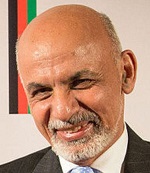
Ashraf Ghani

8am: According to information provided to Hasht-e Subh, Afghanistan has signed a new contract “against the principles and procurement policies” with an Emirati company by the order of Mohammad Ashraf Ghani after the cancellation of the contract with Olive Group, which was responsible for securing Afghanistan’s airports. The company had no experience in aviation security and worked in the field of information technology. Click here to read more (external link).

Posted in Corruption, Economic News | Tags: Ashraf Ghani, Corrupt Ghani |
Previous Posts
Next Posts

Subscribe to the Afghanistan Online YouTube Channel

---

---

---

Get Yours!

Peace be with you

Afghan Dresses

© Afghan Online Press
  • About
  • Links To More News
  • Opinion
  • Poll