
A power crisis in the central Afghan province of Ghor is making life there even more difficult. Since the Taliban took over Afghanistan in mid-August, the state electricity company Breshna has been unable to keep diesel power generators going in the provincial capital of Feroz Koh due to a lack of funds. The generators are the only source of electricity for thousands of homes and businesses.
Taliban will put us to death, Afghan boxers say
تیم ملی بوکس: افغانستان برای ما امن نیست، طالبان باعث کشتن ما خواهند شد
شماری از اعضای تیم ملی بوکس کشور که در صربستان به سر میبرند، میگویند که ۵ روز به ختم ویزههای شان باقیمانده است. آنان میافزایند که «نمیخواهیم به افغانستان برگردیم، چون طالبان ما را قبول ندارند.» pic.twitter.com/TGs0HEWacX
— Aamaj News (@aamajnews24) November 23, 2021
Aamaj: Some members of Afghan boxing team who are now in Serbia, say that there are only five days to their visas expiry date, adding, “we do not want go back to Afghansitan, Taliban do not accept us. They will torture and put us to death.” Click here to read more (external link).
NRF introduces its new spokesperson

Sibghatullah Ahmadi
Aamaj: Sibghatullah Ahmadi has been appointed as new spokesperson for National Resistance Front (NRF), and the head of strategic relations. Earlier Fahim Dashti was the spokesman, but he died in Panjshir war. Click here to read more (external link).
Afghanistan is the saddest country in the world
 Ariana: According to the latest report from the World Population Survey on the happiest countries in the world, Afghanistan was ranked the saddest country in the world for the second year in a row. The survey includes 146 countries, with Afghanistan at the bottom of the list. Click here to read more (external link).
3,000 Drug Addicts Taken to Treatment Centers in 2 Weeks
 Tolo News: The drug addicts praised the efforts of the government but said there are people appointed as team leaders who are also affected by drugs and do not treat other patients properly. “We are happy that we are under treatment here but we are not being treated with proper behavior. Those are appointed above us, they are also addicted to drugs. But the staff and doctors of the hospital have a fair behavior towards us,” said Shah Agha, a drug addict. Click here to read more (external link).
Pakistan’s Truce With Militants Holds Amid Skepticism About Future Progress
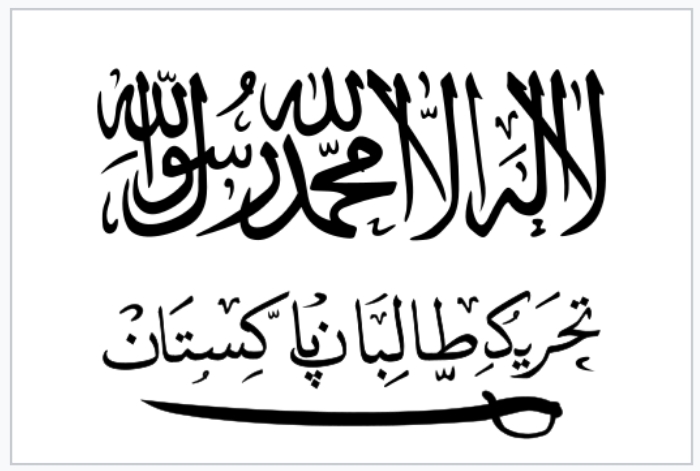
TTP Flag
Ayaz Gul
VOA News
November 23, 2021
ISLAMABAD — A month-long truce between Pakistan and the outlawed militant alliance known as the Tehrik-i-Taliban Pakistan (TTP) largely held into a 15th day Tuesday as the two adversaries negotiate a peace deal, with neighboring Afghanistan’s ruling Taliban mediating the talks.
The TTP, commonly known as the Pakistani Taliban, comprises about two dozen banned militant groups and has been waging deadly terrorist attacks against security forces as well as civilians in Pakistan for many years.
Leaders and fighters of the militant outfit have taken refuge in Afghanistan after fleeing army-led counter militancy operations against their strongholds in Pakistani border areas. Thousands of militants were also killed in the process.
Officials in Islamabad say TTP continues to pose a threat from its sanctuaries on the Afghan side and approached the neighboring country’s new Taliban government to help contain the threat.
Amir Khan Muttaqi, the foreign minister of the Afghan government, confirmed during his official visit to Islamabad earlier this month his government had brokered the peace talks and the ensuing temporary truce. Muttaqi did not elaborate further but said they were hopeful the process would produce a settlement.
Pakistani officials privy to the meetings with TTP insisted the talks “are still at a very early stage” and “it is too soon” to expect any progress or discuss possible outcomes.
A security official told VOA the government has initiated the process only to determine whether TTP militants are willing to “surrender to Pakistan’s constitution, submit themselves to the National Database Registration Authority (NADRA) to obtain national identification cards” and lay down their arms.
“These are the red lines for advancing the dialogue,” emphasized the official who spoke on condition of anonymity because he was not authorized to publicly discuss the status of the peace effort.
TTP has long demanded the government withdraw troops from northwestern districts lining the border with Afghanistan and restore the traditional semiautonomous status of the region that once served as strongholds for local and foreign militants, including the Afghan Taliban. TTP has also called for implementing an Islamic system in Pakistan in accordance with the group’s own interpretation of Islamic law.
But Pakistani officials have long rejected as unacceptable those demands, ruling out any discussions on the constitution, the status of the troops or the border districts that once served as TTP strongholds and also provided sanctuary to the Afghan Taliban.
“The aim of the 30-day cease-fire is to see whether or not they (TTP) are serious and want to carry the process forward,” Moeed Yusuf, Pakistan’s national security advisor, told a local television channel last Saturday. “But there is nothing significant that can be shared at this stage in terms of progress in the talks,” he said.
“The red lines are very much clear; no-one would be allowed to challenge the Pakistani constitution, impose their own system of governance or law and resume violent activities,” Yusuf added.
Pakistan maintains that hardcore TTP members who are involved in serious crimes against the state will have to face legal proceedings, but “foot soldiers” of the group could be offered an amnesty in the event of a deal to encourage them to reconcile and restart living peacefully in Pakistani society.
The temporary truce went into effect from November 9 – December 9 after the government reportedly freed an unknown number of prisoners of the militant outfit. TTP spokesman Muhammad Khurasani announced at the time that both sides had agreed to set up negotiating committees to try to advance the dialogue process.
In a brief statement Tuesday, Khurasani rejected as incorrect media reports the government had freed their 100 prisoners. He also denied his group has already placed any demands on the negotiating table.
“Negotiations committees have not sat at the table, so it would be premature to discuss the terms and conditions. The TTP has not yet offered any conditions,” Khurasani said.
Role of Afghan Taliban
A senior Afghan Taliban cabinet member in Kabul has offered some details about the role they are playing in facilitating Pakistan’s peace talks with TTP but he requested anonymity to protect their neutrality.
“Our role is exclusively that of a mediator and a mediator cannot take sides. We have urged both parties to demonstrate sagacity and be patient while conducting these negotiations,” he added.
“Both sides are happy that we are mediating the talks. Sometimes we sit between the two negotiating sides and sometimes we talk to both separately,” said the Taliban official.
“We have already made it clear to the TTP that whether or not they accept (Pakistan’s terms) they can no more use our (Afghan) soil against anyone,” he stressed. The Taliban cabinet member said there was a need “at this stage for tactfully” moving the process forward.
“It is not appropriate for the mediator to threaten them (TTP) with consequences like ‘we will expel you, we will crackdown on you’,” the Taliban leader said when asked if Kabul would be willing to use force at the request of Pakistan to evict TTP from Afghanistan in case the talks failed.
“The negotiations have just begun and already made remarkable progress in the shape of the month-long cease-fire,” he said.
He added the Afghan Taliban hopes the peace process would “gradually strengthen” and lead to an extension of the cease-fire. The Taliban leader said that all conflicts ultimately are brought to an end through talks because “blood cannot be washed away with blood.”
For their part, Pakistani officials remain skeptical about the future progress and whether the Afghan Taliban would crack down on TTP fighters if the peace process collapsed because of the long partnership between the two groups in their 20-year war in Afghanistan against the United States and its allies.
The officials also acknowledge that the nascent Taliban government lacks the capacity to take on militant groups like TTP as they deal with a deepening humanitarian and economic crisis facing Afghanistan.
“We cannot completely rely on the Afghan Taliban being the guarantor of any possible peace with TTP because they themselves are fighting for the survival in the wake of economic sanctions and the possibility of Afghanistan descending into chaos again is very much there,” cautioned the Pakistani official.
The United States and the United Nations have designated TTP as a global terrorist organization.
Since regaining power in Afghanistan last August, Taliban rulers have repeatedly assured neighboring countries and the world at large that no terrorist groups would be allowed to operate and threaten others from Afghan soil.
The counterterrorism pledge is part of a set of international demands the Taliban have to meet to claim a much-needed diplomatic recognition for their nascent government in Kabul.
Taliban Appoints 27 Senior Officials

Zabihullah Mujahid
Tolo News: Zabiullah Mujahid, spokesman for the Islamic Emirate, said these people have been appointed to these positions based on an order by Mullah Hebatullah Akhundzada, the leader of the Taliban. Based on a list which Mujahid posted on Twitter, Mawlawi Shahabuddin Delavar has been selected as the acting minister of mines and petroleum, and Mullah Mohammad Abbas Akhund has been named the acting minister of disaster management. Click here to read more (external link).
Former Members Of Afghan Special Forces, Commandos Issue Plea To U.S. For Help
 November 23, 2021
By RFE/RL’s Radio Azadi
A former high-ranking member of Afghan special forces and commando units has issued a plea urging U.S. officials to move remaining members of the force to the United States to avoid a “humanitarian catastrophe.”
The former high-ranking member, who ask not to be identified by name, sent a statement to RFE/RL on November 23.
The United States and its allies evacuated tens of thousands of at-risk Afghans after the Taliban toppled the Western-backed government in Kabul in August following the withdrawal of U.S. and other coalition troops.
As of late October, there were some 53,000 Afghans staying at eight military bases in the United States and receiving medical care and other assistance before resettlement around the country.
But thousands more people want to leave the war-torn country, with those who worked closely with Western militaries seen to be in particular danger from potential Taliban retaliation.
In their statement to RFE/RL, the special forces and commandos said the troops, part of “an elite military force and the best fighting force in Afghanistan,” worked with U.S. and NATO special forces and international partners for common goals and “to eliminate international terrorism for the past 20 years.”
“We fought side by side against the Taliban and other terrorist groups in Afghanistan, and we lost hundreds of our elite comrades in the fight against the Taliban.”
The statement added that after the “escape of political leaders” and the fall of Afghanistan to the Taliban, the organization disintegrated, with many members left destitute and in danger.
It said the Taliban is seeking out members of the force and is likely to execute those who are caught.
The statement urged U.S. officials to help move those remaining in Afghanistan “to the United States with their families and fulfill your historic responsibility to your Afghan colleagues.”
It warned that a “humanitarian catastrophe” could occur if the forces in Afghanistan are not transferred to the United States, where many of their family members have already been transported.
On November 19, the German Foreign Ministry said that its special representative for Afghanistan, Jasper Wieck, and Ambassador-designate Markus Potzel met with high-ranking officials from the Taliban government in Kabul.
German officials said the Taliban committed to a previously announced general amnesty for anyone affiliated with the toppled internationally backed government and former security forces. They also repeated a pledge for free passage for all Afghans who want to leave the country.
“We have taken note of the pledges. Further engagement depends on their implementation,” the Foreign Ministry said.
Copyright (c) 2021. RFE/RL, Inc. Reprinted with the permission of Radio Free Europe/Radio Liberty, 1201 Connecticut Ave NW, Ste 400, Washington DC 20036.
Red Cross Official: Sanctions, Freeze in Donations Add to Afghan Humanitarian Crisis
 VOA News
November 23, 2021
A senior Red Cross official has voiced anger at the continuation of sanctions and freezes in international aid to Afghanistan, preventing basic services from being delivered to the population.
Dominik Stillhart, the director of operations for the International Committee of the Red Cross, said in a statement Monday that he is “livid” after a six-day day visit to field hospitals, where he said he witnessed first-hand suffering of Afghans.
“When you’re standing in the pediatric ward in Kandahar’s largest hospital, looking into the empty eyes of hungry children and the anguished faces of desperate parents, the situation is absolutely infuriating,” Stillhartsaid.
Earlier this month, the United Nations warned that more than half of Afghanistan’s estimated 40 million population is likely to go hungry this winter unless more funds are forthcoming from donors. The World Food Program said that fuel costs are up, food prices are soaring, fertilizer is more expensive, and all of this feeds into the unfolding Afghan crisis.
Stillhart said the situation is angering, given that civilians’ suffering is “man-made” and the result of the international community’s choice to impose sanctions on the Taliban regime, which assumed power in Afghanistan in August.
The return to power of the Islamist Taliban after the withdrawal of U.S.-led foreign troops has plunged the country into an economic crisis and increased Afghan humanitarian needs to unprecedented levels, which stem from years of war and a prolonged widespread drought.
The international community has refused to grant diplomatic recognition to the Taliban government mainly over human rights concerns, especially those of women and girls, under the Islamist movement’s rule. The Taliban have banned women from most employment opportunities and restricted education for most women and girls.
The absence of legitimacy led to suspension of several billions of dollars in annual foreign assistance to Kabul and blocked the Taliban’s access to about $10 billion in Afghan assets, mostly held in the U.S. Federal Reserve. The sanctions have made it extremely difficult for the Taliban to pay salaries or import essential goods.
Stillhart said that recent resolutions from the U.N. and general economic sanctions are causing donors to rethink, and pause, their contributions to humanitarian efforts in Afghanistan, which can deny live-saving assistance to civilians.
In order to prevent the collapse of Afghanistan’s public health system, the ICRC on Monday began supporting 18 regional and provincial medical facilities, including running costs and medical supplies. The ICRC is planning to support the facilities for six months.
The agency also began paying employees’ salaries on Monday, Reuters reported.
In his statement, Stillhart said cases of malnutrition, pneumonia and dehydration at the Mirwais Regional Hospital in Kandahar have doubled from mid-August to September.
Stillhart said the future of medical care and education in Afghanistan are dependent upon international support.
“States must engage with Afghanistan. This is the only way to prevent a total collapse of essential services like health care and education. Political considerations should not interfere with humanitarian action,” Stillhart said.
Analysts say Washington and other Western governments have few good options in Afghanistan: They can either try to work with the Taliban, and in effect collude with human rights violations, or watch the worsening crisis from afar and see 20 years of development work reversed.
Stillhart pushed donors to find “creative solutions” to save the lives of millions of Afghans.
He warned that the economic sanctions “meant to punish those in power in Kabul are instead freezing millions of people across Afghanistan out of the basics they need to survive,” according to an Agence France-Presse report.
He told AFP that “sanctions on banking services are sending the economy into free-fall and holding up bilateral aid.”
In October, the heads of government and foreign ministers from the world’s 20 leading economies — the G-20 — agreed at a video summit to examine how to inject more aid into Afghanistan, while preventing funds being controlled by the Taliban and used for political purposes rather than humanitarian.
The European Union announced during the summit a $1.15 billion aid package for Afghanistan “to avert a major humanitarian and socio-economic collapse.”
However, earlier this month, Jan Egeland, secretary general of the humanitarian organization Norwegian Refugee Council (NRC), said, “The international response to the suffering, immense suffering in Afghanistan and for Afghans and neighboring countries is really pitiful.
“There must be an immediate scale up of aid both inside Afghanistan and in neighboring countries like Iran, before the deadly winter cold,” he said.
(Ayaz Gul and Jamie Dettmer contributed to this report. Some material for this report came from Reuters and Agence France-Presse.)
Related
More Than 100 Afghans Arrive in Greece
 VOA News
November 23, 2021
A flight carrying more than 100 Afghans arrived Monday in northern Greece.
According to Greek officials, the group of 119 people included Mohibullah Samim, Afghanistan’s former minister of border and tribal affairs, as well as a lawyer who prosecuted Taliban fighters, women’s rights activists and a female judge.
The evacuees are expected to remain in Greece until arrangements are made for them to travel on to other countries, including the United States and Canada.
Since the Taliban takeover of Afghanistan in August, Greece has flown in about 700 Afghans.
Some information for this report came from the Associated Press.
Related