logo

Daily Updated Afghan News Service

  • Home
  • About
  • Opinion
  • Links to More News
  • Good Afghan News
  • Poll Results
  • Learn about Islam
  • Learn Dari (Afghan Persian/Farsi)

Recent Posts

  • Afghans Must Unite Beyond Ethnic & Language Differences, Says NRF Leader April 6, 2026
  • Taliban claim seizure of Pakistani border post as clashes continue April 6, 2026
  • Heavy Rainfall Expected In Central & Eastern Afghanistan, Says UN April 6, 2026
  • Taliban Blocks “Mazari” Name from Omid Shaheed Mazari Futsal Team April 6, 2026
  • Tolo News in Dari – April 6, 2026 April 6, 2026
  • Afghanistan Ranked World’s Unhappiest Country Again in Global Report April 5, 2026
  • Taliban health minister’s home raided in corruption probe April 5, 2026
  • Armed Robberies in Kabul: Where Is the Promised Security April 5, 2026
  • Tolo News in Dari – April 5, 2026 April 5, 2026
  • Taliban say Pakistani strikes have killed over 750 civilians April 5, 2026

Categories

  • Afghan Children
  • Afghan Sports News
  • Afghan Women
  • Afghanistan Freedom Front
  • Al-Qaeda
  • Anti-Government Militants
  • Anti-Taliban Resistance
  • AOP Reports
  • Arab-Afghan Relations
  • Art and Culture
  • Australia-Afghanistan Relations
  • Book Review
  • Britain-Afghanistan Relations
  • Canada-Afghanistan Relations
  • Censorship
  • Central Asia
  • China-Afghanistan Relations
  • Civilian Injuries and Deaths
  • Corruption
  • Crime and Punishment
  • Drone warfare
  • Drugs
  • Economic News
  • Education
  • Elections News
  • Entertainment News
  • Environmental News
  • Ethnic Issues
  • EU-Afghanistan Relations
  • Everyday Life
  • France-Afghanistan Relations
  • Germany-Afghanistan Relations
  • Haqqani Network
  • Health News
  • Heroism
  • History
  • Human Rights
  • India-Afghanistan Relations
  • Interviews
  • Iran-Afghanistan Relations
  • ISIS/DAESH
  • Islamophobia News
  • Japan-Afghanistan Relations
  • Landmines
  • Media
  • Misc.
  • Muslims and Islam
  • NATO-Afghanistan
  • News in Dari (Persian/Farsi)
  • NRF – National Resistance Front
  • Opinion/Editorial
  • Other News
  • Pakistan-Afghanistan Relations
  • Peace Talks
  • Photos
  • Political News
  • Reconstruction and Development
  • Refugees and Migrants
  • Russia-Afghanistan Relations
  • Science and Technology
  • Security
  • Society
  • Tajikistan-Afghanistan Relations
  • Taliban
  • Traffic accidents
  • Travel
  • Turkey-Afghanistan Relations
  • UN-Afghanistan Relations
  • Uncategorized
  • US-Afghanistan Relations
  • Uzbekistan-Afghanistan Relations

Archives

Dari/Pashto Services

  • Bakhtar News Agency
  • BBC Pashto
  • BBC Persian
  • DW Dari
  • DW Pashto
  • VOA Dari
  • VOA Pashto

Envoy: US Concerned About Worsening Humanitarian Crisis in Afghanistan

24th November, 2021 · admin

Nike Ching
VOA News
November 24, 2021

STATE DEPARTMENT — A senior State Department official said the United States is “extremely concerned about the worsening humanitarian crisis in Afghanistan,” adding the country was suffering such a crisis before the military takeover by the Taliban in August.

Last week, Taliban Foreign Minister Amir Khan Muttaqi wrote an “open letter” to the U.S. Congress, warning of a mass refugee exodus from Afghanistan unless the United States unlocks more than $9 billion in Afghan central bank assets and ends other financial sanctions against the country.

“Unfortunately, even before the change that took place in the middle of August, Afghanistan was already suffering a horrific humanitarian crisis. The reason we saw it worsen had a lot to do with the evaporation of international aid, on which the Afghan economy depended enormously over a period of 20 years,” U.S. Special Representative for Afghanistan Thomas West told VOA in an interview on Tuesday, his first on-camera interview since taking the new position.

“We made clear that if they (the Taliban) chose a military path to power, that that aid would disappear, and that is what occurred,” he said.

West, who is also a deputy assistant secretary for South and Central Asian Affairs at the State Department, participated in the so-called “Troika Plus” meetings earlier this month where Pakistan hosted China, Russia and the U.S. for talks on Afghanistan, bringing them to Islamabad at the same time as a Taliban delegation led by Muttaqi also arrived.

In a joint statement, the four countries said they agreed to “continue practical engagement with the Taliban to encourage the implementation of moderate and prudent policies that can help achieve a stable and prosperous Afghanistan as soon as possible.”

“I do not see moves by Russia and China, in particular, to recognize the Taliban. I think the Pakistanis are engaging more actively and in a more forward-leaning manner than certainly we are comfortable engaging at the moment. But the answer to your question, since it’s a hypothetical, is no,” West said when asked whether the U.S. would follow suit if other members in the Troika Plus group move ahead to formally recognize the Taliban.

The following are excerpts from the interview. It has been edited for brevity and clarity.

VOA: On access to frozen reserves, what are the specific conditions and steps to release those assets? What is the U.S. response to the Taliban’s warning about the worsening humanitarian situation? What does the Taliban’s appeal to unfreeze those assets say to you?

WEST: The United States is extremely concerned about the worsening humanitarian crisis in Afghanistan. I think, if you step back, you have to take a nuanced and reasonable view about the reasons for this worsening humanitarian crisis. Unfortunately, even before the change that took place in the middle of August, Afghanistan was already suffering a horrific humanitarian crisis. The reason we saw it worsen had a lot to do with the evaporation of international aid, on which the Afghan economy depended enormously over a period of 20 years. Some 75% of the former government’s public expenditures were foreign donor funded, some 40% of the country’s GDP was foreign donor funded. And so really, in our engagement, and frankly, in our allies’ and partners’ engagement with the Taliban over a period of years, we made clear that if they chose a military path to power, that that aid would disappear, and that is what occurred.

VOA: What is your response to the Taliban’s appeal to release those assets?

WEST: At the moment, the reason that those assets are not moving is not because there is some executive branch action to freeze them, so to speak. That’s a misnomer that I know has gotten a lot of attention in the press. There are very complicated legal reasons, as well as judicial reasons, for why that money is not moving from particular banks into other places. I think it’s important also to recognize that there are an additional $2 billion worth of foreign reserves located outside of the United States. That money, likewise, has not moved for similar reasons.

VOA: Earlier this month, you had participated in the Troika Plus meeting with counterparts from China, Russia and Pakistan. You also met with the Taliban’s foreign minister in Pakistan. What are your takeaways in these meetings? What role can China and Russia play to stabilize Afghanistan and to counter terrorism, as they are also members of the Shanghai Cooperation Organization?

WEST: So, this was the first time on, I guess it was the 11th of this month, that the so-called Expanded Troika met since August 11th or so. This is a format that the United States supports.

I think we see an important role for the countries of the region, including Russia, including China, including Pakistan, in achieving stability in Afghanistan. That is a format that bridges East and West. We’ve certainly been encouraged, even by our allies in the West who do not participate in this format, to represent their views. I thought we landed on a responsible, common statement out of those meetings, and I was very glad to see that my Russian, Chinese and Pakistani counterparts share a commitment that we share: to move toward fundamentally more inclusive governance, on the protection of women, minority rights and on moves to permit access by humanitarian aid workers to all aspects of delivery. So, it was a good meeting, I think, a positive outcome where we demonstrated unity, and I appreciated Pakistan’s effort to host.

VOA: Could you please elaborate on counterterrorism, including countering Islamic State Khorasan, and what roles does the U.S. want to see China and Russia play?

WEST: (President Joe Biden) has made clear that the United States will maintain an unwavering commitment to ensure that Afghanistan never again represents a threat to the United States or its allies. Certainly central to our discussions with the Taliban on October 9 and 10 and, frankly, even going back to August when I was in Kabul as a part of our efforts to support the evacuation. Fulfillment of the Taliban’s terrorism commitments has been just a bedrock gating issue for us, and it will remain so. As far as Russia and China are concerned, I think they share our depth of concern over the possibility that terrorists will present a threat to their countries and to their neighbors. And so, it’s a common point of concern for the entire international community when it comes to engaging with the Taliban.

VOA: An American is being held hostage in Afghanistan: Mark Frerichs. Do you have anything on his condition?

WEST: I’ll tell you that Mark’s release is an essential issue for us with the Taliban, essential issue that we raise on virtually every occasion. Responsible states do not hold hostages. That’s just a fact. And so, if they want to be treated as a responsible state going forward, then we will see Mark’s return as soon as possible.

VOA: How do you assess Pakistan’s role, given its support for the Taliban in the past 20 years? Is Pakistan’s support for the Taliban a point of contention in the U.S.-Pakistan relationship? Or could it be a leverage over the Taliban to make concessions on women’s rights, girls’ education, and to form an inclusive government, et cetera?

WEST: You know, we will continue intensive discussions at all levels of the Pakistani bureaucracy on Afghanistan. They do still hold considerable leverage, I think, in the region and in Afghanistan, just by dint of their history, their linguistic and cultural ties, and the strong ties between communities across the border. Is it a point of contention? Sometimes yes, and it’s a two-way dialogue. I think the Pakistanis have concerns about U.S. policy in Afghanistan, and we’ve long had concerns about Pakistan’s policy in Afghanistan. I think the important part is that it is a two-way dialogue, and we are not shutting down channels of communication, as evidenced by their good effort to host the last expanded Troika meeting.

Related

  • U.S. Envoy To Travel To Qatar Next Week For Talks With Taliban
  • We Strive to Inject Cash into the Banking System of Afghanistan, Say US Officials
Posted in Economic News, Taliban, US-Afghanistan Relations |

Yalda Hakim: My return to Afghanistan

23rd November, 2021 · admin

Yalda Hakim

BBC: BBC presenter Yalda Hakim was born in Afghanistan. Her family fled in the 1980s, during the Soviet occupation, but she has regularly reported from the country since. Now she has returned for the first time since the Taliban seized power 100 days ago.
I knew that my first return to the country of my birth since the Taliban swept to power in August would raise many questions for me. Click here to read more (external link).

Posted in Economic News, Everyday Life, Taliban | Tags: Life under Taliban rule |

War-weary Afghan refugees no more welcome in Pakistan, says report

23rd November, 2021 · admin

Press TV
November 23, 2021

Pakistan has refused to accept new batches of Afghan refugees since the Taliban’s takeover of the war-ravaged South Asian country in August, a report in an American news publication reveals.

Foreign Policy (FP), in a report published on Tuesday, said Pakistan, which has accepted nearly 3.5 million Afghans over the past three decades, has “pushed back against new arrivals from Afghanistan.”

It says the Pakistani authorities have tightened the country’s border control and deported some people who attempted to cross over without legal documents in recent months.

According to the report, the new measures adopted against fresh Afghan arrivals indicate “the fears of a state burdened by the cost of hosting refugees and paranoid about its national security.”

About 28,000 people have arrived in Pakistan from Afghanistan since the start of the year, according to the United Nations High Commissioner for Refugees (UNHCR).

The FP report said most of them likely entered Pakistan after the Taliban took control of Afghanistan in August, with no official statistics of arrivals in the last three months.

Since August, when the US-led coalition forces beat a hasty retreat from the country, allowing the Taliban to take over Kabul, a new wave of refugees have left for Pakistan as well as Iran, the two biggest hosts of the world’s refugee population

In September, Pakistan’s Interior Minister Sheikh Rasheed Ahmad said his country would not set up new refugee camps, in an indication that the Pakistani government was not prepared to take in more refugees from across the border.

According to the FP, Pakistan’s policy towards new arrivals has been ambiguous and only few official statements regarding the issue have been made so far.

“Nobody knows what the policy is,” Afrasiab Khattak, a veteran Pakistani politician and former senator, is quoted as saying, adding “Afghans are being thrown to the wolves.”

‘Very serious pressures’

According to refugee rights advocates, Pakistan’s lack of policy on new Afghan arrivals has made it difficult for aid groups to support them, pushing the refugees to rely on informal networks in the communities they settle in to meet their basic needs.

“This time, the situation is a bit different, and there is chaos for humanitarian organizations,” Rukhshanda Naz, a board member of a civil society group, Women’s Regional Network, is quoted as saying in the report.

Pakistan hasn’t registered new refugees since 2007, and the United Nations High Commissioner for Refugees, which is issuing certificates that recognize new arrivals as asylum-seekers, is still negotiating with the Pakistani government about their rights, the report stated.

“We are under very serious pressures,” Tammi Sharpe, a UNHCR representative, said during a panel last week about the unfolding crisis in the country.

The FP report also said that undocumented Afghans in Pakistan, which is not a party to the 1951 Refugee Convention and has no domestic asylum laws, “have limited access to work, housing, and education, and without legal protections, they are targets of discrimination and harassment by law enforcement.”

The report also referred to growing anti-refugee sentiment in the country, saying some provinces have in recent months penalized local residents who host Afghans.

Taliban announced the formation of a caretaker government on September 7, but the group’s efforts to bring peace and normalcy have so been undermined by US sanctions, as banks are running out of cash and civil servants are going unpaid.

The new rulers have warned Western diplomats that insisting on sanctions as a means to pressure their governance could undermine security and trigger a fresh wave of economic refugees.

Taliban first ruled Afghanistan from 1996 to 2001, when the United States and its allies invaded the country and toppled the Taliban-run government on the pretext of fighting terrorism.

However, the 20-year long military occupation of the country only brought misery to the war-weary people and destroyed their lives and livelihood.

Posted in Pakistan-Afghanistan Relations, Refugees and Migrants, Taliban | Tags: Escape from the Taliban |

1TV Afghanistan Dari News – November 23, 2021

23rd November, 2021 · admin

Posted in News in Dari (Persian/Farsi) |

The Taliban Takes Power And The Lights Go Off In Central Afghanistan

23rd November, 2021 · admin

A power crisis in the central Afghan province of Ghor is making life there even more difficult. Since the Taliban took over Afghanistan in mid-August, the state electricity company Breshna has been unable to keep diesel power generators going in the provincial capital of Feroz Koh due to a lack of funds. The generators are the only source of electricity for thousands of homes and businesses.

Posted in Economic News, Everyday Life, Taliban | Tags: Electricity, Ghor, Taliban government failure |

Taliban will put us to death, Afghan boxers say

23rd November, 2021 · admin

تیم ملی بوکس: افغانستان برای ما امن نیست، طالبان باعث کشتن ما خواهند شد

شماری از اعضای تیم ملی بوکس کشور که در صربستان به سر می‌برند، می‌گویند که ۵ روز به ختم ویزه‌های‌ شان باقی‌مانده است. آنان می‌افزایند که «نمی‌خواهیم به افغانستان برگردیم، چون طالبان ما را قبول ندارند.» pic.twitter.com/TGs0HEWacX

— Aamaj News (@aamajnews24) November 23, 2021

Aamaj: Some members of Afghan boxing team who are now in Serbia, say that there are only five days to their visas expiry date, adding, “we do not want go back to Afghansitan, Taliban do not accept us. They will torture and put us to death.” Click here to read more (external link).

Posted in Afghan Sports News, Refugees and Migrants, Taliban | Tags: Boxing, Escape from the Taliban |

NRF introduces its new spokesperson

23rd November, 2021 · admin

Sibghatullah Ahmadi

Aamaj: Sibghatullah Ahmadi has been appointed as new spokesperson for National Resistance Front (NRF), and the head of strategic relations. Earlier Fahim Dashti was the spokesman, but he died in Panjshir war. Click here to read more (external link).

Posted in NRF - National Resistance Front, Political News | Tags: Sibghatullah Ahmadi |

Afghanistan is the saddest country in the world

23rd November, 2021 · admin

Ariana: According to the latest report from the World Population Survey on the happiest countries in the world, Afghanistan was ranked the saddest country in the world for the second year in a row. The survey includes 146 countries, with Afghanistan at the bottom of the list. Click here to read more (external link).

Posted in Health News, Other News, Society |

3,000 Drug Addicts Taken to Treatment Centers in 2 Weeks

23rd November, 2021 · admin

Tolo News: The drug addicts praised the efforts of the government but said there are people appointed as team leaders who are also affected by drugs and do not treat other patients properly.  “We are happy that we are under treatment here but we are not being treated with proper behavior. Those are appointed above us, they are also addicted to drugs. But the staff and doctors of the hospital have a fair behavior towards us,” said Shah Agha, a drug addict.  Click here to read more (external link).
Posted in Drugs, Health News | Tags: Drug Addiction |

Pakistan’s Truce With Militants Holds Amid Skepticism About Future Progress

23rd November, 2021 · admin

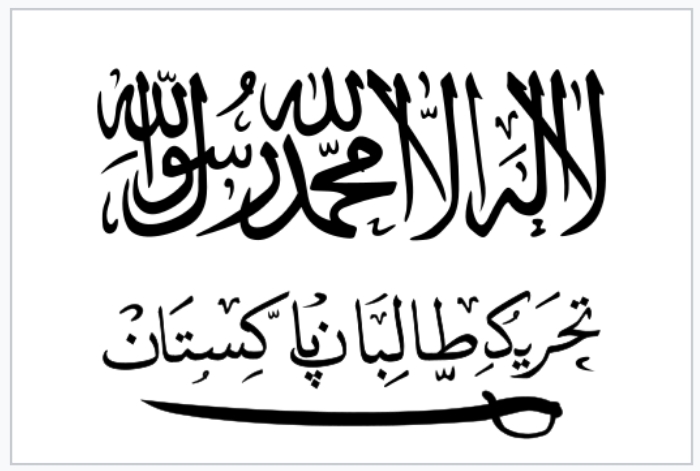
TTP Flag

Ayaz Gul
VOA News
November 23, 2021

ISLAMABAD — A month-long truce between Pakistan and the outlawed militant alliance known as the Tehrik-i-Taliban Pakistan (TTP) largely held into a 15th day Tuesday as the two adversaries negotiate a peace deal, with neighboring Afghanistan’s ruling Taliban mediating the talks.

The TTP, commonly known as the Pakistani Taliban, comprises about two dozen banned militant groups and has been waging deadly terrorist attacks against security forces as well as civilians in Pakistan for many years.

Leaders and fighters of the militant outfit have taken refuge in Afghanistan after fleeing army-led counter militancy operations against their strongholds in Pakistani border areas. Thousands of militants were also killed in the process.

Officials in Islamabad say TTP continues to pose a threat from its sanctuaries on the Afghan side and approached the neighboring country’s new Taliban government to help contain the threat.

Amir Khan Muttaqi, the foreign minister of the Afghan government, confirmed during his official visit to Islamabad earlier this month his government had brokered the peace talks and the ensuing temporary truce. Muttaqi did not elaborate further but said they were hopeful the process would produce a settlement.

Pakistani officials privy to the meetings with TTP insisted the talks “are still at a very early stage” and “it is too soon” to expect any progress or discuss possible outcomes.

A security official told VOA the government has initiated the process only to determine whether TTP militants are willing to “surrender to Pakistan’s constitution, submit themselves to the National Database Registration Authority (NADRA) to obtain national identification cards” and lay down their arms.

“These are the red lines for advancing the dialogue,” emphasized the official who spoke on condition of anonymity because he was not authorized to publicly discuss the status of the peace effort.

TTP has long demanded the government withdraw troops from northwestern districts lining the border with Afghanistan and restore the traditional semiautonomous status of the region that once served as strongholds for local and foreign militants, including the Afghan Taliban. TTP has also called for implementing an Islamic system in Pakistan in accordance with the group’s own interpretation of Islamic law.

But Pakistani officials have long rejected as unacceptable those demands, ruling out any discussions on the constitution, the status of the troops or the border districts that once served as TTP strongholds and also provided sanctuary to the Afghan Taliban.

“The aim of the 30-day cease-fire is to see whether or not they (TTP) are serious and want to carry the process forward,” Moeed Yusuf, Pakistan’s national security advisor, told a local television channel last Saturday. “But there is nothing significant that can be shared at this stage in terms of progress in the talks,” he said.

“The red lines are very much clear; no-one would be allowed to challenge the Pakistani constitution, impose their own system of governance or law and resume violent activities,” Yusuf added.

Pakistan maintains that hardcore TTP members who are involved in serious crimes against the state will have to face legal proceedings, but “foot soldiers” of the group could be offered an amnesty in the event of a deal to encourage them to reconcile and restart living peacefully in Pakistani society.

The temporary truce went into effect from November 9 – December 9 after the government reportedly freed an unknown number of prisoners of the militant outfit. TTP spokesman Muhammad Khurasani announced at the time that both sides had agreed to set up negotiating committees to try to advance the dialogue process.

In a brief statement Tuesday, Khurasani rejected as incorrect media reports the government had freed their 100 prisoners. He also denied his group has already placed any demands on the negotiating table.

“Negotiations committees have not sat at the table, so it would be premature to discuss the terms and conditions. The TTP has not yet offered any conditions,” Khurasani said.

Role of Afghan Taliban

A senior Afghan Taliban cabinet member in Kabul has offered some details about the role they are playing in facilitating Pakistan’s peace talks with TTP but he requested anonymity to protect their neutrality.

“Our role is exclusively that of a mediator and a mediator cannot take sides. We have urged both parties to demonstrate sagacity and be patient while conducting these negotiations,” he added.

“Both sides are happy that we are mediating the talks. Sometimes we sit between the two negotiating sides and sometimes we talk to both separately,” said the Taliban official.

“We have already made it clear to the TTP that whether or not they accept (Pakistan’s terms) they can no more use our (Afghan) soil against anyone,” he stressed. The Taliban cabinet member said there was a need “at this stage for tactfully” moving the process forward.

“It is not appropriate for the mediator to threaten them (TTP) with consequences like ‘we will expel you, we will crackdown on you’,” the Taliban leader said when asked if Kabul would be willing to use force at the request of Pakistan to evict TTP from Afghanistan in case the talks failed.

“The negotiations have just begun and already made remarkable progress in the shape of the month-long cease-fire,” he said.

He added the Afghan Taliban hopes the peace process would “gradually strengthen” and lead to an extension of the cease-fire. The Taliban leader said that all conflicts ultimately are brought to an end through talks because “blood cannot be washed away with blood.”

For their part, Pakistani officials remain skeptical about the future progress and whether the Afghan Taliban would crack down on TTP fighters if the peace process collapsed because of the long partnership between the two groups in their 20-year war in Afghanistan against the United States and its allies.

The officials also acknowledge that the nascent Taliban government lacks the capacity to take on militant groups like TTP as they deal with a deepening humanitarian and economic crisis facing Afghanistan.

“We cannot completely rely on the Afghan Taliban being the guarantor of any possible peace with TTP because they themselves are fighting for the survival in the wake of economic sanctions and the possibility of Afghanistan descending into chaos again is very much there,” cautioned the Pakistani official.

The United States and the United Nations have designated TTP as a global terrorist organization.

Since regaining power in Afghanistan last August, Taliban rulers have repeatedly assured neighboring countries and the world at large that no terrorist groups would be allowed to operate and threaten others from Afghan soil.

The counterterrorism pledge is part of a set of international demands the Taliban have to meet to claim a much-needed diplomatic recognition for their nascent government in Kabul.

Posted in Pakistan-Afghanistan Relations, Taliban | Tags: Amir Khan Muttaqi, Taliban - Pakistani asset, Tehreek-e-Taliban Pakistan |
Previous Posts
Next Posts

Subscribe to the Afghanistan Online YouTube Channel

---

---

---

Get Yours!

Peace be with you

Afghan Dresses

© Afghan Online Press
  • About
  • Links To More News
  • Opinion
  • Poll