
logo

Daily Updated Afghan News Service

  • Home
  • About
  • Opinion
  • Links to More News
  • Good Afghan News
  • Poll Results
  • Learn about Islam
  • Learn Dari (Afghan Persian/Farsi)

Recent Posts

  • Hidden Tears, Silent Cries: Citizens Recount Life Under Taliban Rule November 7, 2026
  • ISIS Operates From Safe Havens In Pakistan, Says Taliban November 7, 2026
  • Tolo News in Dari – November 7, 2026 November 7, 2026
  • Pakistan Seeks US Deal to Transfer 150 Afghans Through Its Territory November 7, 2026
  • Afghanistan U-19 crush Malaysia by 10 wickets for second straight Asia Cup win November 7, 2026
  • Taliban Government Fails To Follow Sharia, Says Interior Minister November 6, 2026
  • Tolo News in Dari – November 6, 2026 November 6, 2026
  • Afghanistan trail Zimbabwe by 391 runs at stumps on day two of first test November 6, 2026
  • France confirms ‘technical discussions’ with Afghanistan’s Taliban November 5, 2026
  • More than half of Afghan primary school-age children out of school: UN report November 5, 2026

Categories

  • Afghan Children
  • Afghan Sports News
  • Afghan Women
  • Afghanistan Freedom Front
  • Afghanistan United Front
  • Al-Qaeda
  • Anti-Government Militants
  • Anti-Taliban Resistance
  • AOP Reports
  • Arab-Afghan Relations
  • Art and Culture
  • Australia-Afghanistan Relations
  • Book Review
  • Britain-Afghanistan Relations
  • Canada-Afghanistan Relations
  • Censorship
  • Central Asia
  • China-Afghanistan Relations
  • Civilian Injuries and Deaths
  • Corruption
  • Crime and Punishment
  • Drone warfare
  • Drugs
  • Economic News
  • Education
  • Elections News
  • Entertainment News
  • Environmental News
  • Ethnic Issues
  • EU-Afghanistan Relations
  • Everyday Life
  • France-Afghanistan Relations
  • Germany-Afghanistan Relations
  • Haqqani Network
  • Health News
  • Heroism
  • History
  • Human Rights
  • India-Afghanistan Relations
  • Interviews
  • Iran-Afghanistan Relations
  • ISIS/DAESH
  • Islamophobia News
  • Japan-Afghanistan Relations
  • Landmines
  • Media
  • Misc.
  • Muslims and Islam
  • NATO-Afghanistan
  • News in Dari (Persian/Farsi)
  • NRF – National Resistance Front
  • Opinion/Editorial
  • Other News
  • Pakistan-Afghanistan Relations
  • Peace Talks
  • Photos
  • Political News
  • Reconstruction and Development
  • Refugees and Migrants
  • Russia-Afghanistan Relations
  • Science and Technology
  • Security
  • Society
  • Tajikistan-Afghanistan Relations
  • Taliban
  • Traffic accidents
  • Travel
  • Turkey-Afghanistan Relations
  • UN-Afghanistan Relations
  • Uncategorized
  • US-Afghanistan Relations
  • Uzbekistan-Afghanistan Relations

Archives

Dari/Pashto Services

  • Bakhtar News Agency
  • BBC Pashto
  • BBC Persian
  • DW Dari
  • DW Pashto
  • VOA Dari
  • VOA Pashto

UN-supported Survey Finds Pakistan Hosts 1.3 Million Afghan Refugees

3rd June, 2022 · admin

Ayaz Gul
VOA News
June 3, 2022

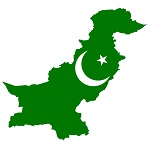
ISLAMABAD — A new United Nations-supported survey has concluded that 1.3 million Afghan refugees are residing in neighboring Pakistan, about 100,000 fewer than the figure officially used until now.

An official statement said Friday the government had completed the survey, officially known as the Documentation Renewal and Information Verification Exercise (DRIVE), with the help of the U.N. refugee agency.

Officials explaining the revised figures said that some Afghan families either did not seek to renew refugee status for unknown reasons, or might have simply returned to Afghanistan.

“The data of Afghans was not updated in the last 10 years, therefore it was imperative to verify and update records which will enable us to better understand existing needs in the refugee communities,” said Saleem Khan, the chief commissioner for Afghan refugees in Pakistan.

As part of the verification exercise, documenters gave so-called smart identity cards to close to one million Afghans. Officials said the cards, which are valid until June 30th of next year, are meant to protect and safeguard the displaced population’s interests as legitimate refugees in Pakistan, enabling them to access humanitarian aid and other benefits.

“They provide proof of identity, entitlement to temporary stay in Pakistan, and freedom of movement. They facilitate access to certain essential services, including education, healthcare, banking, property rental and allied facilities,” explained Noriko Yoshida, UNHCR’s representative to Pakistan.

The survey found that more than half of the 1.3 million registered Afghan refugees reside in the northwestern border province of Khyber Pakhtunkhwa.

The DRIVE exercise found that more than half (52%) of the registered refugee population are children, including 197,428 (15%) being four years of age or under. Only 4% of those registered are 60 years of age or older. Women, children and older people represent 76% of the population, according to the statement.

The exercise also allowed for the registration of some 267,000 newborn children of registered Afghan refugees, describing it as an important step for the protection of the youngest members of the refugee community.

The survey, officials said, would facilitate support for those refugees who decide to return home when conditions in Afghanistan allow. The smart cards, meanwhile, allow Afghans to open accounts in Pakistani banks and receive remittances from relatives working in Persian Gulf and Western countries to meet their economic needs.

The Afghan refugees in Pakistan are among several million people who fled decades of conflict and persecution in Afghanistan, starting with the Soviet Union’s invasion of the country in 1979.

Many returned to Afghanistan soon after the United States-led Western military alliance invaded Afghanistan in October 2001 and dislodged the country’s repressive Taliban rulers.

The fundamentalist Islamist group regained power last August just before the final U.S.-led foreign troops chaotically withdrew from the county, prompting hundreds of thousands of Afghans to flee for fear of Taliban reprisals.

Pakistani officials and the UNHCR report more than 300,000 Afghans have entered Pakistan since the Taliban takeover. Around 100,000 of them arrived on valid visas while the rest crossed over the border illegally.

Islamabad refuses to treat these Afghans as refugees and wants them to leave Pakistan, saying the country already hosts one of world’s largest and oldest refugee populations and its troubled economy cannot sustain the pressure of new refugees.

The U.N. has repeatedly warned that humanitarian conditions have worsened in Afghanistan since the Taliban takeover and financial sanctions on Kabul have pushed the country’s war-hit national economy to the brink of collapse.

Posted in Pakistan-Afghanistan Relations, Refugees and Migrants, UN-Afghanistan Relations |

Taliban Fighters Storm the Office of Afghanistan’s Prominent Shiite Cleric in Ghazni Province, Arrest Two

3rd June, 2022 · admin

8am: Taliban fighters have attacked the office of Ayatollah Mohaqeq Kabuli, a prominent Shiite cleric. A local source in Ghazni province said on Friday (3 June) that the Taliban had stormed the office of the Shiite Authority in the provincial capital yesterday (Thursday, 2 June). According to the source, the Taliban tore up the photos, banners and equipment in the office. Click here to read more (external link).

Posted in Human Rights, Taliban | Tags: Ghazni, Life under Taliban rule, Shiites |

Heavy storms and drought damage fresh fruits in Kandahar

3rd June, 2022 · admin

Ariana: According to Kandahar Chamber of Commerce officials, fruit trees, including apricots, plums, peaches and others, have been badly damaged, reducing their summer yield.  Officials said farmers sell their produce to local markets around the country and export abroad.  However, this year, their harvests have been reduced significantly which has become a cause for concern. Click here to read more (external link).

Posted in Economic News, Environmental News | Tags: Kandahar |

TV Channel Complex Converted to Religious Seminary in Balkh

3rd June, 2022 · admin

Tolo News: Media watchdogs called on the Islamic Emirate [Taliban] to avoid changing the media complex into a religious seminary. “Replacing a media outlet complex with a religious seminary is considered an unfair action for journalists. We call on the Islamic Emirate to help in reopening media outlets that were closed after the fall of the former government,” said Ahmad Yar Mujroh, a member of the Afghanistan Independent Journalists Association (AIJA). Click here to read more (external link).

Posted in Media, Taliban | Tags: Afghan Journalists, Balkh, Life under Taliban rule |

Taliban Rebels Shot Dead 12 Innocent Civilians in Baghlan

3rd June, 2022 · admin

8am: Sources have reported that the Taliban rebels have shot dead 12 innocent civilians at a checkpoint in Nahrin district of Baghlan province while they were returning home from a party. The rebels killed them on Thursday night, June 2. According to sources, the Taliban fighters killed them for allegedly attending night parties, adding Sharia Law does not allow night parties. Click here to read more (external link).

Posted in Civilian Injuries and Deaths, Human Rights, Taliban | Tags: Baghlan, Life under Taliban rule, War Crime |

‘Unprecedented Differences’: Rifts Within The Taliban Come Out In The Open

2nd June, 2022 · admin

Sher Mohammad Abbas Stanikzai

By Abubakar Siddique
Radio Free Europe/Radio Liberty
June 2, 2022

During its nearly 20-year insurgency, the Taliban remained a largely coherent fighting force despite succession crises, competition from Islamic State-Khorasan, and a deadly war against foreign and Afghan forces.

But as the Taliban has attempted to transform from a guerrilla force into a functional government after seizing power in August, there have been mounting reports of infighting within the militant group.

A senior Taliban official last week became the first to openly criticize the Taliban leadership for its repressive policies in Afghanistan. Experts say the rare public rebuke has lifted the lid on widening rifts in the hard-line Islamist group.

“There are unprecedented differences within the Taliban leadership,” says Michael Semple, a former European Union and United Nations adviser in Afghanistan.

Experts say the Taliban, made up predominately of Pashtuns, is divided along ethnic, regional, and tribal lines. There are also differences among the militant over policy, they say.

There is believed to be growing competition between the Haqqani network — a Taliban faction based in the east — and a faction of Taliban co-founders in the south of the country. There is also a smaller and less powerful faction of ethnic Tajik and Uzbek Taliban commanders who are based in northern Afghanistan.

There have also been rifts between the Taliban’s relatively pragmatic political figures, hard-line field commanders, and radical clerics who are bent on implementing their fundamentalist interpretation of Islamic law.

“The differences in matters of policy and moderation are really secondary,” says Semple, a professor at Queen’s University Belfast. “The more serious differences are squabbles over the division of powers and privilege. These are the real divisions that the Taliban worry about.”

But Sami Yousafzai, a veteran Afghan journalist and commentator who has tracked the Taliban since its emergence in the 1990s, says most of the rifts within the Taliban are merely differences of opinion and do not amount to factional infighting.

“The Taliban are very serious about their unity and cohesion,” he said. “If someone works or talks against their policies, they are isolated, pushed out, and even killed.”

Yousafzai cites the examples of former Taliban ambassador Abdul Salam Zaeef, ex-foreign minister Abdul Wakeel Muttawakil, and moderate Taliban leader Agha Jan Motassim, all of whom were demoted for showing dissent. Meanwhile, Mullah Abdul Manan Niazi, who formed a splinter group in 2015, was killed in a suicide bombing last year.

“The Taliban are a complete dictatorship, and everyone within its ranks must accept this fact,” said Yousafzai.

Ruling With A ‘Baton’

Last week, the Taliban’s deputy foreign minister, Sher Mohammad Abbas Stanikzai, publicly criticized the Taliban leadership for banning girls from attending secondary school.

“We must aim for winning the hearts of our people rather than ruling over them with batons,” Stanikzai, the former head of the Taliban’s political office in the Gulf state of Qatar, said in a televised speech on May 22.

Semple says political figures like Stanikzai who support ties with the West and the inclusion of non-Taliban political figures in the government do not “have guns” and “don’t command the loyalty of fighters.”

Since returning to power, the Taliban has imposed a series of restrictions on women, including on their appearance, access to work and education, and freedom of movement. The rules are reminiscent of the Taliban’s first stint in power in the 1990s, when the militant Islamists deprived women of their most basic rights.

In March, the Taliban dramatically backtracked on its pledge to reopen high schools for girls. It came after repeated promises to allow all girls access to education, a key demand from the international community for any future recognition of the Taliban-led government.

Observers said the policy reversal reflected rifts in the Taliban leadership. The U-turn was made by Taliban spiritual leader Mullah Haibatullah Akhundzada, who has the final say under the clerically led system. Akhundzada likely opted to appease ultraconservatives within the Taliban, experts said.

‘Talib On Talib’ Violence

Ibraheem Bahiss, an Afghanistan expert, says it is unusual for Taliban officials to publicly oppose the policies of the spiritual leader.

“The public opposition [from Taliban officials] to recent government decisions could be partly a way to figure out how to navigate intra-movement differences and influence policies,” he said.

Bahiss says Taliban leaders are divided into two groups: relative pragmatists who see the militant group’s policies as an obstacle to gaining international recognition and securing the removal of sanctions, and extremists who are bent on monopolizing power and imposing a strict form of Shari’a law.

“The Taliban appear divided in reemploying policies similar to their emirate of the 1990s or treading a new path still in line with their ideology,” he said.

But Semple says the infighting within the Taliban has moved beyond bickering over policies. He says he has documented regular cases of “Talib on Talib” violence in Afghanistan.

“Any idea that they are so united that they could never fight against each other is complete nonsense,” he said.

Copyright (c) 2022. RFE/RL, Inc. Reprinted with the permission of Radio Free Europe/Radio Liberty, 1201 Connecticut Ave NW, Ste 400, Washington DC 20036.
Posted in Haqqani Network, Taliban | Tags: Pashtun Taliban, Sher Mohammad Abbas Stanakzai, Taliban Factions - Haqqanis versus Kandaharis, Taliban government failure |

Taliban forces kill four NRF members in Afghanistan’s Tagab

2nd June, 2022 · admin

ANI: Taliban forces killed four members of the National Resistance Front during the clearing operation in Afghanistan’s Badakhshan province, a local media reported. The incident took place on Tuesday morning in Tagab district, Khaama Press reported citing Bakhtar state news agency. Taliban’s Director of Information and Culture in Badakhshan, Moizuddin Ahmadi, confirmed the news and also said that their air force has also participated in the operation.  Click here to read more (external link).

More Resistance News

  • Clashes in Baghlan: 9 Taliban Fighters and 2 NRF Forces Killed
Posted in NRF - National Resistance Front, Security, Taliban | Tags: Afghan resistance against Taliban, Badakhshan, Baghlan |

Afghanistan dominates global opium production. The Taliban is shutting that down

2nd June, 2022 · admin

AP: During the years-long Taliban insurgency, the movement reportedly made millions of dollars taxing farmers and middlemen to move their drugs outside Afghanistan. Senior officials of the U.S.-backed government also reportedly made millions on the flourishing drug trade. Today, Afghanistan’s opium output is greater than all other opium-producing countries combined.  Click here to read more (external link).

Posted in Drugs, Economic News, Taliban | Tags: opium, Poppy cultivation, Taliban and Drugs |

Tolo News in Dari – June 2, 2022

2nd June, 2022 · admin

Posted in News in Dari (Persian/Farsi) |

Indian Officials in Afghanistan for First Meeting with Taliban

2nd June, 2022 · admin

Anjana Pasricha
VOA News
June 2, 2022

NEW DELHI — India has sent a team of foreign ministry officials to Afghanistan for the first time following the Taliban takeover of the country last August.

Taliban Foreign Minister Amir Khan Muttaqi hosted the Indian delegation for a meeting focusing on bilateral diplomatic relations, trade and humanitarian aid, said a Taliban post-meeting statement Thursday.

Muttaqi stressed “the resumption of projects by India, their diplomatic presence in Afghanistan and the provision of consular services to Afghans, particularly to Afghan students & patients.”

Analysts say the visit is significant because it signals India’s decision to engage with Taliban leadership, which, like most countries, it has not recognized.

India said the officials will oversee the delivery operations of humanitarian assistance to Afghanistan and meet international organizations involved in the distribution of the aid.

In recent months, India has sent aid consignments of 20,000 tons of wheat, medicine, half-a-million doses of COVID-19 vaccine and winter clothing to Afghanistan. It has also sent vaccine to Iran to be administered to Afghan refugees.

India is in the process of shipping more medical assistance and food grains to Afghanistan, according to the foreign ministry.

The statement said the Indian team is also “expected to visit various places where Indian programs and projects are being implemented.”

India was the region’s largest provider of development aid to Afghanistan before the Taliban takeover last August and had invested around $3 billion in projects that included schools, roads, dams and hospitals in the country since 2001 in a bid to build “soft power.” The Taliban takeover had posed a strategic setback for India and a reversal of those gains.

Now analysts say India wants to rebuild some ties with the country where its arch-enemy, Pakistan, wields considerable influence.

“India is likely to pick up the threads of some of the development projects it had invested in. It would like to continue some of them,” said Manoj Joshi at the Observer Research Foundation in New Delhi. “New Delhi has decided to play on the front foot and engage the Taliban.”

India had allocated about $25 million as aid for the country in the federal budget in February.

“India’s development and humanitarian assistance has received a widespread appreciation across the entire spectrum of Afghan society,” the foreign ministry said.

Analysts say that sending an official delegation to Afghanistan could be a precursor to India reopening a small mission in Kabul in coming months. India had shut down its embassy after the Taliban takeover of Afghanistan and evacuated all its diplomats and staff.

“This is a pragmatic approach by New Delhi,” according to Joshi. “If we are not there, then Pakistan will be the predominant player in the country. India has to respond to its own regional imperatives.”

Among regional countries, India alone was left without representation in Afghanistan after the Taliban takeover. China, Iran, Pakistan and Russia had not shut down their embassies in Kabul.

Ayaz Gul contributed to this report from Islamabad

Posted in India-Afghanistan Relations |
Previous Posts
Next Posts

Subscribe to the Afghanistan Online YouTube Channel

---

---

---

Get Yours!

Peace be with you

Afghan Dresses

© Afghan Online Press
  • About
  • Links To More News
  • Opinion
  • Poll