logo

Daily Updated Afghan News Service

  • Home
  • About
  • Opinion
  • Links to More News
  • Good Afghan News
  • Poll Results
  • Learn about Islam
  • Learn Dari (Afghan Persian/Farsi)

Recent Posts

  • 19 Afghan migrants killed as boat capsizes off Turkish coast April 2, 2026
  • Afghanistan falls 5–1 to Syria in Asian Cup qualifier April 2, 2026
  • Floods, rainfall kill 48 in Afghanistan over past week, ANDMA says April 1, 2026
  • US eases asylum freeze for vetted migrants, keeps Afghanistan ban April 1, 2026
  • Tolo News in Dari – April 1, 2026 April 1, 2026
  • More Than 28,000 Afghans Return From Iran As Crisis Deepens April 1, 2026
  • From Rotor Drones to Kamikaze UAVs: Tracking the Taliban’s Five-Year Shift March 31, 2026
  • Nearly 1,500 Afghans died on migration routes in 2025, IOM says March 31, 2026
  • From Pressuring Staff to Embezzling Donor Funds: Complaints Against Taliban Environmental Chief in Herat March 31, 2026
  • Tolo News in Dari – March 31, 2026 March 31, 2026

Categories

  • Afghan Children
  • Afghan Sports News
  • Afghan Women
  • Afghanistan Freedom Front
  • Al-Qaeda
  • Anti-Government Militants
  • Anti-Taliban Resistance
  • AOP Reports
  • Arab-Afghan Relations
  • Art and Culture
  • Australia-Afghanistan Relations
  • Book Review
  • Britain-Afghanistan Relations
  • Canada-Afghanistan Relations
  • Censorship
  • Central Asia
  • China-Afghanistan Relations
  • Civilian Injuries and Deaths
  • Corruption
  • Crime and Punishment
  • Drone warfare
  • Drugs
  • Economic News
  • Education
  • Elections News
  • Entertainment News
  • Environmental News
  • Ethnic Issues
  • EU-Afghanistan Relations
  • Everyday Life
  • France-Afghanistan Relations
  • Germany-Afghanistan Relations
  • Haqqani Network
  • Health News
  • Heroism
  • History
  • Human Rights
  • India-Afghanistan Relations
  • Interviews
  • Iran-Afghanistan Relations
  • ISIS/DAESH
  • Islamophobia News
  • Japan-Afghanistan Relations
  • Landmines
  • Media
  • Misc.
  • Muslims and Islam
  • NATO-Afghanistan
  • News in Dari (Persian/Farsi)
  • NRF – National Resistance Front
  • Opinion/Editorial
  • Other News
  • Pakistan-Afghanistan Relations
  • Peace Talks
  • Photos
  • Political News
  • Reconstruction and Development
  • Refugees and Migrants
  • Russia-Afghanistan Relations
  • Science and Technology
  • Security
  • Society
  • Tajikistan-Afghanistan Relations
  • Taliban
  • Traffic accidents
  • Travel
  • Turkey-Afghanistan Relations
  • UN-Afghanistan Relations
  • Uncategorized
  • US-Afghanistan Relations
  • Uzbekistan-Afghanistan Relations

Archives

Dari/Pashto Services

  • Bakhtar News Agency
  • BBC Pashto
  • BBC Persian
  • DW Dari
  • DW Pashto
  • VOA Dari
  • VOA Pashto

Afghan tradition allows girls to experience the freedom of boys

14th January, 2022 · admin

Afghan girl (file photo)

AP: In Afghanistan’s heavily patriarchal, male-dominated society, where women and girls are usually relegated to the home, bacha posh, Dari for “dressed as a boy,” is the one tradition allowing girls access to the freer male world. Click here to read more (external link).

Posted in Afghan Children, Afghan Women, Society, Taliban | Tags: bacha poshi, Life under Taliban rule |

1TV Afghanistan Dari News – January 14, 2022

14th January, 2022 · admin

Posted in News in Dari (Persian/Farsi) |

Central Bank says ATM to get operational in Afghanistan

14th January, 2022 · admin

Ariana: Da Afghanistan Bank (Central Bank of Afghanistan), said Thursday, said that Automated Teller Machine (ATM) services by commercial banks will be resumed in the country. Da Afghanistan Bank, so far, has not disclosed the amount of money people can withdraw from the ATMs. Click here to read more (external link).

Posted in Economic News | Tags: Da Afghanistan Bank |

Young Girl Shot, Killed at Checkpoint in Kabul by Taliban: Relatives

14th January, 2022 · admin

Tolo News: Zainab, a young girl was shot dead at a security checkpoint while she was on her way home from a wedding party along with other relatives, her family claimed.  Zainab’s family said their car was stopped at a checkpoint by the Islamic Emirate forces. The forces of the Islamic Emirate opened fire on Zainab and killed her, the family claimed. Click here to read more (external link).

Posted in Afghan Children, Civilian Injuries and Deaths, Taliban | Tags: Life under Taliban rule |

Clashes Among Taliban in Faryab: One Civilian Killed and Another Wounded

14th January, 2022 · admin

8am: Sources in Maimana confirmed that a civilian named Parwiz was killed and a woman was wounded during the clash among Taliban members in the city. Family members of the slain man stated that Parwiz has been killed by Pashtun Taliban. Click here to read more (external link).

Posted in Civilian Injuries and Deaths, Ethnic Issues, Security, Taliban | Tags: Faryab, Pashtun Taliban, Uzbeks |

UN Chief Calls on International Community to Rescue Afghan Central Bank

13th January, 2022 · admin

Michael Hughes
AOPNEWS
January 13, 2022

UN Secretary-General Antonio Guterres urged the international community to immediately inject liquidity into the Afghan economy and ensure the country’s central bank is preserved as millions face starvation and death.

The global community, led by the United States, since the collapse of Kabul has made extensive efforts to bypass the Taliban in delivering humanitarian funding in Afghanistan as the economy implodes. However, many have argued that standing by while the central bank falls is not an option with inflation soaring and the country’s GDP in a nosedive. 

Meanwhile, the World Health Organization recently warned that some one million Afghan children could die without aid.

“The function of Afghanistan’s central bank must be preserved and assisted, and a path identified for conditional release of Afghan foreign currency reserves,” Guterres said in remarks to the press in New York on Thursday. “We must do even more to rapidly inject liquidity into the economy and avoid a meltdown that would lead to poverty, hunger and destitution for millions.”

Earlier, Afghan central bank board member Shah Mehrabi in an interview with Al Bawaba slammed U.S. sanctions he said have helped exacerbate the financial crisis.

“It’s critical to allow the central bank of Afghanistan to bring price stability and reduce the volatility and increase the appreciation of the Afghani currency versus the dollar,” Mehrabi said. “[Also] to allow businesses access to reserves to pay for essential imports. Limited, monitored and conditional access to $150 million per month will allow the [Afghan] Central Bank to maintain its main objective of price stability.”

U.S. sanctions have also led to Afghani currency falling out of print, according to the report. A Polish company contracted to print the notes ceased operations out of fear of getting hit with the Biden administration’s sanctions, the Middle East news site said.

The UN chief during his remarks noted that the organization launched its largest ever humanitarian appeal for a single country – the size reflecting Afghanistan’s “scale of despair.”

“Babies being sold to feed their siblings. Freezing health facilities overflowing with malnourished children. People burning their possessions to keep warm… More than half the population of Afghanistan now depends on life-saving assistance,” Guterres said. “This situation, without a more concerted effort from the international community, will mean that virtually every man, woman and child in Afghanistan could face acute poverty.”

The UN humanitarian and refugee response for Afghanistan, he added, will require over $5 billion this year alone. The aid is sorely needed to ramp up life-saving food and agriculture support, health services, and emergency shelter, among other urgent needs.

Guterres also called for lifting restrictions on aid, alluding to the U.S. and Western countries’ attempts to make sure the Taliban regime is circumvented and assistance reaches Afghans.

“Rules and conditions that prevent money from being used to save lives and the economy must be suspended in this emergency situation,” Guterres said. “This kind of support for essential state functions will give Afghans hope for the future and reason to stay in their country.”

The UN chief said he welcomes the Security Council’s adoption of a “humanitarian exception” to the United Nations sanctions regime for Afghanistan.

“This provides financial institutions and commercial actors with legal assurances to engage with humanitarian operators, without fear of breaching sanctions,” he said.

Last month, as the UN chief pointed out, the World Bank unfroze $280 million in Afghan government funding and transferred it to UNICEF and the World Food Program. Guterres hopes the remaining $1.2 billion will become available to help the Afghan people survive the winter.

He did say the UN stands ready to work with member states and NGOs to put accountable systems in place to ensure funds are not improperly diverted.

“The United Nations stands ready to cooperate and support the Afghan de facto authorities in making this possible with the greatest urgency,” Guterres said.

The UN leader also called on the Taliban leadership to protect fundamental human rights including the rights of women and girls. In addition, he said every effort must be made to build inclusive government institutions that “promote security and fight terrorism.”

“Without creative, flexible and constructive engagement by the international community, Afghanistan’s economic situation will only worsen,” Guterres warned. “Despair and extremism will grow.”

After his prepared remarks, when asked about the United States’ “moral duty” with respect to aid distribution, the UN leader said the U.S. has a very important role to play because most of the global financial system operates in dollars and a meaningful volume of funds are frozen in the United States.

Evidence has emerged, however, that the Taliban might have an opportunity to, once again, exploit American taxpayer dollars. One nonprofit group, Save Our Allies, told FOX News that some $300 million in USAID funding will be “going into the wrong hands.”


Posted in Economic News, Taliban, UN-Afghanistan Relations, US-Afghanistan Relations | Tags: Da Afghanistan Bank |

Clash between Uzbek and Pashtun Taliban in Faryab

13th January, 2022 · admin

Taliban's most senior Uzbek commander Makhdoom Alam has been arrested in Mazar-e-Sharif Wednesday based on an order by Mullah Fazel, Taliban's deputy defense minister.
Following his arrest, hundreds of disgruntled people took to the streets of Faryab's Maimana city in protest. pic.twitter.com/aA9pw14Wq6

— Afghanistan Times (@AfghanistanTime) January 13, 2022

Taliban fighters of the Uzbek nation took control of Maymana district in Faryab province in protest against the arrest of their Uzbek leader Rumi Makhdoom Alam Rabbani and they disarmed all Pashtun Taliban. All Taliban flags were also removed in the Maymana. Taliban armed people. pic.twitter.com/Px0pDU7jcZ

— Frenkie Mark (@FrenkieMark) January 13, 2022

Posted in Ethnic Issues, Security, Taliban | Tags: Faryab, Pashtun Taliban, Uzbeks |

US Afghanistan aid going directly to Taliban, nonprofits warn

13th January, 2022 · admin

Taliban militants (file photo)

Fox News: The hundreds of millions of dollars that the United States Agency for International Development (USAID) has pledged to send to Afghanistan will be going into the wrong hands, nonprofit rescue groups warn. The funds, over $308 million in all, “are not going to go in the hands of the average Afghan, it is going to go in the hand of the Taliban for food supply,” Sean Kilbrane, the programs manager for Save Our Allies, told Fox News.  Click here to read more (external link).

Posted in Economic News, Taliban, US-Afghanistan Relations | Tags: Life under Taliban rule, Taliban looters |

Taliban Takeover In Afghanistan Bolsters Pakistan’s Insurgency

13th January, 2022 · admin

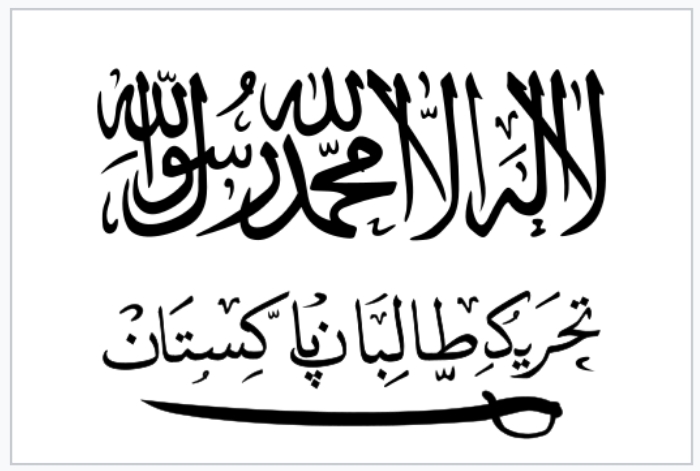
TTP Flag

Daud Khattak
Radio Free Europe/Radio Liberty
January 13, 2022

When the Taliban seized control of Afghanistan, government officials, retired military officers, and hard-line clerics in neighboring Pakistan celebrated the militant group’s return to power.

Pakistani Prime Minister Imran Khan said the Taliban had broken the “shackles of slavery” by toppling the Western-backed Afghan government.

But even amid the celebrations, observers warned that the Taliban’s forcible takeover of Afghanistan in August could galvanize Pakistan’s own violent insurgency.

Those fears have now been realized as the Tehrik-e Taliban Pakistan (TTP), also known as the Pakistani Taliban, has intensified its attacks in recent months.

In a further blow to Islamabad, the Afghan Taliban has been unwilling to crack down on the TTP, a close ideological and organizational ally. A major Pakistani military offensive in 2014 drove many of the militants from the country’s tribal belt across the border to Afghanistan.

The Afghan Taliban facilitated a monthlong cease-fire between the TTP and Islamabad. But the truce ended on December 9 after peace talks broke down, triggering a new wave of TTP attacks in Pakistan. The Afghan militants have links with both Islamabad and the TTP.

Analysts say the Taliban takeover in Afghanistan has emboldened and strengthened the TTP. The withdrawal of foreign troops from Afghanistan in August has significantly reduced U.S. air strikes in the region, allowing the TTP to operate more freely.

TTP fighters have also obtained sophisticated weaponry, including U.S.-made firearms, which their Afghan allies seized from Afghanistan’s defeated armed forces.

Sharp Uptick In Attacks

Pakistan recorded at least 294 militant attacks in 2021, a 56 percent increase compared to the previous year, according to the Islamabad-based Pakistan Institute for Conflict and Security Studies (PICSS).

The think tank attributed the sharp rise in attacks — the majority carried out by the TTP — to the Taliban’s takeover of Afghanistan.

At least 395 people — more than half of them security personnel — were killed during 2021, added the report, which was released on January 1.

The TTP claimed 45 attacks in December, the highest of any month last year.

The TTP carried out most of its attacks in the tribal belt in northwest Pakistan, its former stronghold, and in the restive southwestern province of Balochistan.

The uptick in violence coincided with the end of the monthlong cease-fire between the TTP and Islamabad. The truce was announced on November 10 after weeks of secret talks between Pakistani military officials and representatives of the TTP in Afghanistan that were mediated by the Afghan Taliban, sources told RFE/RL’s Radio Mashaal.

The cease-fire was intended to pave the way for formal talks over a negotiated end to the TTP’s 14-year insurgency in Pakistan, where thousands of people have been killed in militant attacks and clashes between the TTP and the military.

But the talks broke down after disagreements over terms. The TTP demanded the release of 100 fighters in Pakistani prisons, while Islamabad only released a dozen. In return, the government demanded a nationwide truce. The TTP also demanded the implementation of Islamic Shar’ia law in Pakistan’s tribal region, a demand that observers said the government would likely reject.

Since the talks collapsed, the TTP has carried out a spate of deadly attacks against Pakistani security forces. The militant group claimed responsibility for the killing of four Pakistani soldiers in the North Waziristan tribal district on December 30. A day earlier, one police officer was killed in the same district by armed militants on motorcycles who managed to escape.

‘TTP A Long-term Threat’

Abdul Basit, a Pakistani counterterrorism and security expert, says the TTP is sending a signal to Islamabad that it is negotiating from a position of strength.

Riven internally, debilitated by the death of successive leaders, and forced from its strongholds, the TTP was seen for years as a largely spent force. But the group has reemerged over the past two years, unifying squabbling factions and unleashing a wave of deadly attacks.

But the TTP is no longer the same militant outfit that wreaked havoc in Pakistan from 2007 to 2014. Under the leadership of Noor Wali Mehsud, more of a religious figure than a fighter, who has been in charge since 2018, the TTP has retained its close links with Al-Qaeda, the U.S.-designated terrorist network.

But it has also become organizationally decentralized and reduced indiscriminate attacks against civilians, observers say.

Basit says the TTP mostly targets Pakistani security forces and has moved away from a global to local jihadist narrative.

“The group’s change in focus and rhetoric coupled with the sanctuaries at its disposal in Afghanistan under the Taliban regime makes the TTP a long-term threat for Pakistan,” he says.

Abdul Sayed, a Sweden-based researcher who tracks militant groups in the region, says the Afghan Taliban is unlikely to bow to Islamabad’s demand that it expel the TTP or prevent it from using Afghan territory from carrying out attacks in Pakistan.

“Because of the sympathy and support in the Afghan Taliban rank and file for the TTP, it is not only difficult but impossible for their leadership to initiate action against the TTP,” he says.

Sayed says Pakistan could target TTP sanctuaries in Afghanistan. But that, he says, will likely strain Islamabad’s ties with the Afghan Taliban.

Last month, a suspected Pakistani drone strike targeted Faqir Mohammad, a senior TTP leader, in Afghanistan’s eastern province of Kunar. But the missile fired by the drone failed to explode. The incident triggered condemnation by the Taliban regime in Kabul.

Observers say the TTP has also been boosted by the pullout of foreign troops from Afghanistan in August and the reduced number of U.S. drone strikes in the region. Over the years, U.S. air strikes were successful in eliminating successive TTP leaders and commanders.

But with the U.S. counterterrorism capability in the region severely diminished, TTP fighters have been allowed to move and operate relatively freely, observers say.

The militants often shifted weapons and held meetings during the night to avoid detection, a source in Pakistan’s tribal belt with knowledge of the TTP’s military strategy told Radio Mashaal. But that, he says, has now changed.

In early December, the TTP released a video that it claimed showed its leader, Mehsud, traveling in a convoy of cars and visiting different training camps and commanders inside Afghanistan in broad daylight.

The Pakistani source added that the TTP, which has mostly used light arms, mortars, and homemade improvised explosives devices (IEDs), has obtained modern weapons. That includes, he said, U.S.-made M16 machine guns and M4 assault rifles fitted with night vision.

That has coincided with an increase in nighttime sniper attacks by the TTP, the source added.

Observers say the weapons are likely from the stockpiles amassed by the Afghan Taliban, which seized millions of dollars in American-made weapons and equipment from Afghan security forces.

Civilians caught up for years in TTP attacks and Pakistani Army offensives are bracing for more violence, with their hopes of peace dashed.

“The real problem is that the government and the TTP want to secure their own interests,” says Abdul Salam, a tribal elder from the South Waziristan tribal district. “The result is trouble and destruction for the common people.”

Copyright (c) 2022. RFE/RL, Inc. Reprinted with the permission of Radio Free Europe/Radio Liberty, 1201 Connecticut Ave NW, Ste 400, Washington DC 20036.
Posted in Pakistan-Afghanistan Relations, Taliban | Tags: Tehreek-e-Taliban Pakistan |

Afghanistan’s Former Central Bank Chief on the Dire State of the Country’s Economy

13th January, 2022 · admin

Ajmal Ahmadi

Bloomberg: The Afghanistan economy was already in bad shape, with heavy reliance on foreign dollars, prior to the collapse of the government and the takeover by the Taliban. Since the fall, things have gotten even worse, with inflation accelerating and GDP plunging. There are multiple factors driving the leg lower, though the main one is the cutting off of outside sources of dollars. On this episode we speak with Ajmal Ahmady, the former head of Afghanistan’s central bank, on the difficult situation, and how the economy might operate going forward. Click here to read more (external link).

Posted in Economic News, Interviews | Tags: Ajmal Ahmadi, Ajmal Ahmady, Da Afghanistan Bank |
Previous Posts
Next Posts

Subscribe to the Afghanistan Online YouTube Channel

---

---

---

Get Yours!

Peace be with you

Afghan Dresses

© Afghan Online Press
  • About
  • Links To More News
  • Opinion
  • Poll