
واقف حکیمی، عضو رهبری حزب جمعیت اسلامی، شاخه عطا، تایید می کند که رئیس استخبارات پاکستان با عطا محمدنور و برخی دیگر از رهبران سیاسی مخالف طالبان دیدار کرده است.
ظاهراً، در این دیدار موضوع تشکیل حکومت فراگیر در افغانستان بحث شده است. pic.twitter.com/wJsdVJwUjO
— افغانستان اینترنشنال – خبر فوری (@AFIntlBrk) February 14, 2022
Journalists Face Extraordinary Problems in Afghanistan: GIJN Report
 8am: The Global Investigative Journalism Network (GIJN) has reported since political upheaval in Afghanistan in August, there has been an extraordinary disruption in the country’s journalistic community, adding that some newsrooms have been moved out of Afghanistan. Contrary to promises made, GIJN has stressed human rights and freedom of the press, independent media outlets inside Afghanistan have ceased to function. Click here to read more (external link).
Britain to co-host Afghanistan aid summit, hoping to raise $4.4 billion
 Reuters: Britain said on Tuesday it would co-host an international aid conference with the United Nations next month to help alleviate the humanitarian crisis in Afghanistan, where poverty and hunger have spiralled since the Taliban took power last year. The virtual pledging conference will aim to help the United Nations raise $4.4 billion for Afghanistan, the largest amount it has ever requested for a single country. Click here to read more (external link).
Mullah Yaqoob: We Have Not Allowed More Fencing on Durand Line
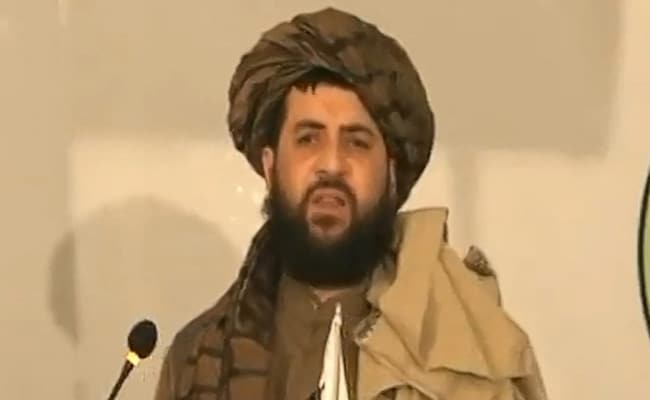
Yaqoob
Tolo News: Acting Defense Minister Mawlawi Mohammad Yaqoob Mujahid said that the Islamic Emirate has not allowed Pakistan to continue fencing along the Durand Line. Mr. Mujahid said that consultations are currently ongoing among high-ranking officials within the Islamic Emirate. Click here to read more (external link).
Six Months And An Eternity: Afghans Lose Hope Under Taliban Rule
 By RFE/RL’s Radio Azadi
Abubakar Siddique
February 15, 2022
Following a lightning military advance on Kabul, Taliban militants seized power on August 15. The hard-line Islamists celebrated their victory as the end of more than four decades of war in Afghanistan, and promised a new era of peace and prosperity.
But six months later, few in the country are content with their new rulers. More than a million Afghans have fled reprisals, persecution, and a worsening humanitarian and economic crisis. Some 23 million people, the majority of the country’s population of 39 million, face starvation. More than 1 million children are in danger of dying by malnutrition. And despite an end to the fighting, 3.5 million Afghans remain internally displaced.
The situation has cast a pall on the idea that the freedoms and rights enshrined in Afghanistan’s partially defunct constitution will ever be honored under the Taliban, whose government remains unrecognized worldwide. And with international aid and trade dwindling to a trickle, the aspirations of many Afghans have turned from hope of a better life to mere survival.
RFE/RL’s Radio Azadi spoke to people around the country about their day-to-day lives with the Taliban in power.
Humanitarian Catastrophe
Mohammad Mansuri has been stranded in his village of Lolash for weeks because of heavy snowfall in the remote Kohistan district in the northern province of Faryab. The farmer says his family of six is starving, and he has no money to seek treatment for his two sick children.
He says that residents of Lolash and hundreds of other villages in Kohistan were already on the brink of starvation even before the Taliban takeover due to a drought that has lasted for three years.
“Without swift action to help us, we are very close to a humanitarian catastrophe,” he told RFE/RL by telephone.
Abdul Ahad, a 30-year-old farmer in Lolash, says that many in his village will not make it through the winter without immediate emergency aid.
“It is like we are in prison with no way out,” he told RFE/RL by phone. “The prices have simply skyrocketed.”
Ahad says that a 10-liter container of cooking oil he used to buy for $5 now costs more than $20. Similarly, the prices of flour and sugar have soared.
Before the Taliban takeover, Afghanistan was already one of the world’s most impoverished and aid-dependent countries. Ahead of the withdrawal of foreign forces, many foreign companies and aid agencies also pulled out, and foreign funding to the government ceased entirely after the Taliban restored its hard-line Islamic emirate.
International donors have since pledged billions in humanitarian aid designated to restore health care, education, and to provide food aid, but there are significant hurdles when it comes to delivering on those promises.
“The deserving people are not getting anything,” says Abdullah Khan, a resident of Baraki Barak, a district in the southeastern province of Logar, which abuts the capital, Kabul.
He says that some $200 in cash aid distributed to some of the most vulnerable families across Afghanistan is being misappropriated. “People who do not merit receiving this money are getting it,” he said.
These cash grants are part of international efforts to provide financial aid to the most vulnerable Afghans while bypassing the Taliban. Aid agencies are also paying the salaries of teachers and health-care workers to provide essential services. The World Food Program is providing food aid to vulnerable Afghans.
Nevertheless, the United Nations warns that more than 97 percent of Afghans will fall into poverty before summer, and the Afghan economy appears to be in free fall.
The country’s trade has dramatically shrunk as international markets for Afghan produce have dried up. This week, hope for an injection of cash to keep the Afghan economy afloat suffered a major blow after U.S. President Joe Biden issued an executive order to split $7 billion of frozen Afghan national bank reserves into humanitarian aid and payments for the victims of the September 11, 2001, terrorist attacks in the United States.
Repression
The Taliban announced a general amnesty soon after seizing Kabul. “I would like to assure the international community, including the United States, that nobody will be harmed,” Taliban spokesman Zabihullah Mujahid told journalists on August 17. “We don’t want any internal or external enemies.”
But a half-year later, the United Nations and human rights watchdogs continue to report grave abuses. The UN Assistance Mission in Afghanistan “continued to receive credible allegations of killings, enforced disappearances, and other violations,” UN Secretary-General Antonio Guterres said in a report to the Security Council late last month.
The experiences of Afghans echo the UN assessment.
“My brother has been missing for three months,” an Afghan man said of his sibling, a senior former Afghan army officer. “We don’t know whether he is alive or dead,” he added, while requesting anonymity to avoid reprisals by the Taliban.
The man claimed this week that the Taliban detained his brother three months ago. “Where is the general amnesty they promised?”
Afghan women have endured the brunt of Taliban restrictions and discrimination. Most teenage Afghan girls are still waiting to return to school, while women have lost jobs, businesses, and the expanded societal roles they had gained over the past two decades.
“Women have been completely marginalized politically,” Zahra Rahnavard, a resident of Kabul, told RFE/RL. “[The Taliban] had promised to preserve women’s rights, but we see nothing…. Everyone is in a state of despair and hopelessness.”
Women campaigners have endured excessive Taliban crackdowns, and many have been detained, questioned, or even forcefully disappeared. Earlier this week, the Taliban released four women activists. They disappeared last month soon after participating in an anti-Taliban rally.
Disappearing Freedoms
Afghanistan’s once-vibrant media is rapidly declining since the Taliban takeover. Reporters Without Borders, a global media watchdog, estimates that more than 8,000 Afghan media workers have lost their jobs in the past six months. Hundreds of journalists have fled the country, and those who remained have faced intimidation, threats, and beatings.
Mina Habib, a freelance journalist in Kabul, says she was harassed and beaten while covering a women’s anti-Taliban protest in September. “Several Taliban fighters hit me and threw me on the ground,” she recalled. “They grabbed my camera and threw it on the ground to break it into pieces. They told me to go home and even questioned why a woman was reporting.”
Khaleda Tahsin, 51, another Afghan journalist, is giving up on journalism after 22 years spent chasing her country’s evolving story nonstop. She braved suicide attacks, threats, and intimidation from both the government and the insurgents.
But the sole breadwinner for the family is calling an end to her career. She resigned from her job as the editor in chief at Radio Killid, a private station, this month because the conditions for women’s work had so rapidly deteriorated under the Taliban.
“Conditions for work, particularly for women, have become tough,” she told RFE/RL. “I don’t have any peace of mind because of all the security threats.”
Tahsin says that while women journalists can still work in theory, they have no protections. “Our major challenge is that we do not have access to information while the authorities remain unaccountable,” she said.
Survival is clearly on the minds of most Afghans.
Qasim, a taxi driver in Kabul, says he used to earn $10 a day. But some days now, he has no income.
“[The Taliban militants] promised that they will improve the lives of the people,” he said. “But they have not fulfilled any of their promises.”
Copyright (c) 2022. RFE/RL, Inc. Reprinted with the permission of Radio Free Europe/Radio Liberty, 1201 Connecticut Ave NW, Ste 400, Washington DC 20036.
1TV Afghanistan Dari News – February 15, 2022
Afghanistan U19 Futsal Team Beats Tajikistan
 Tolo News: Afghanistan’s U-19 futsal team beat Tajikistan today in the Futsal Championship 2022 organized by the Central Asia Football Association (CAFA) and held in Bishkek, Kyrgyzstan. The match started today at 2:30pm (Kabul time) Afghanistan’s players beat Tajikistan’s team 5-1. Click here to read more (external link).
IEA marks 33rd anniversary of the Soviet pullout from Afghanistan

Soviet Troops (file photo)
Ariana: Today, 15 February 2022 marks the 33rd anniversary of the defeat and withdrawal of the former Soviet Army from Afghanistan. Islamic Emirate of Afghanistan (IEA) on Tuesday acknowleged the victory in a statement and said it was “a glorious day in the history of Afghanistan”. Click here to read more (external link).
Taliban Warns It Will ‘Reconsider’ Policy Towards US If It Does Not Receive Frozen Assets
VOA News
February 15, 2022
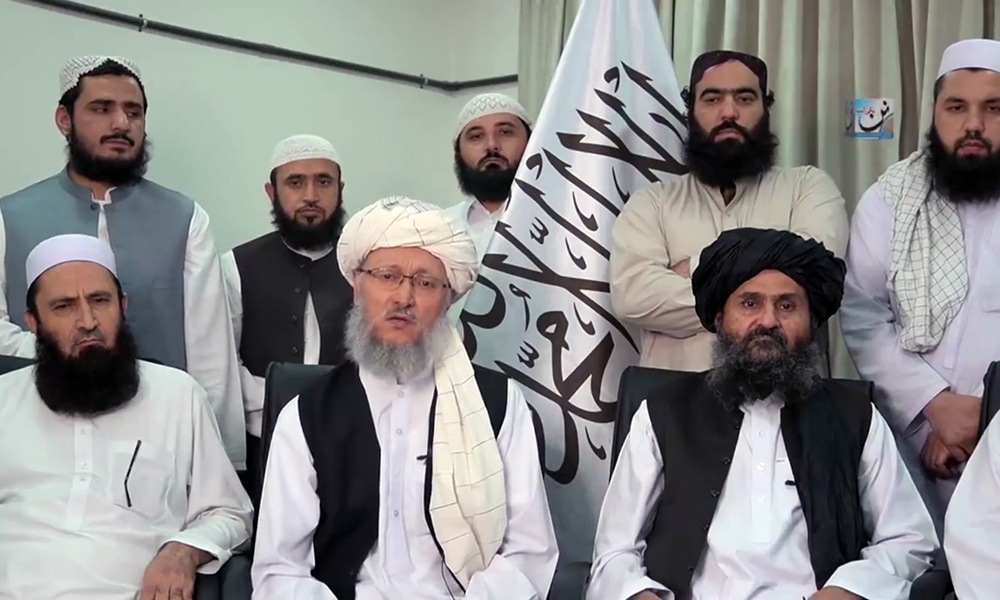
Afghanistan’s hardline Islamic rulers say they plan to “reconsider” their policy towards the United States if the administration of President Joe Biden refuses to return the full $7 billion in assets that have been frozen in the United States.
President Biden issued an executive order last Friday calling on banks to set aside $3.5 billion of the frozen assets in a trust fund slated for humanitarian assistance in Afghanistan. The remaining $3.5 billion would stay in the United States to finance payments from lawsuits by U.S. victims of terrorism, specifically the September 11, 2001 attacks on Washington, D.C. and New York City, that are still working their way through the courts.
A spokesman for the Taliban issued a statement Monday saying the September 11 attacks “had nothing to do with Afghanistan.” The spokesman said if the United States “does not deviate from its position and continues its provocative actions, the Islamic Emirate will also be forced to reconsider its policy towards the country,” referring to Afghanistan’s official name.
The Taliban ruled Afghanistan at the time of September 11 attacks, and harbored Osama bin Laden, the head of the al Qaida terrorist network and mastermind of the U.S. attacks. A U.S.-led invasion of Afghanistan weeks after the attacks overthrew the Taliban after they refused Washington’s demands to surrender bin Laden.
The U.S. withdrawal from Afghanistan last August ended the nearly 20-year war, but the United Nations and other international relief groups say Afghanistan faces one of the world’s worst humanitarian crises, which stems from more than four decades of conflict and natural calamities.
More than half of the country’s poverty-stricken population, or an estimated 24 million Afghans, face an acute food shortage and some one million children under five years of age could die from hunger by the end of this year, according to U.N. estimates following the U.S. withdrawal from the country.
Some information for this report came from Reuters and Agence France-Presse.
Afghan Interpreter Escapes Taliban Only To Face Russian Invasion Threat In Ukraine
 Radio Free Europe/Radio Liberty: KYIV — Born during the Afghan-Soviet War, Jawed Ahmad Haqmal lost five relatives in the 1979–1989 conflict that turned his homeland into a smoldering ruin of a country. But now the 33-year-old former interpreter for the Canadian military in Afghanistan is horrified by the possibility of a Russian invasion of Ukraine. Click here to read more (external link).