
 Ariana: Badghis provincial officials said that more than 90 percent of farmers in the province have been badly affected by droughts but recent rain and snowfalls have been a welcome development for them. “Badghis relies on agriculture. People have suffered losses because of the [droughts affecting] agriculture. Fifty percent of the people have left the districts, and gone to other cities or other provinces,” said Saleh Pordal, head of Qadis district. Click here to read more (external link).
Shaheen Appointed Head of Doha Office

Taliban Sohail Shaheen
Tolo News: Shaheen Appointed Head of Doha Office Suhail Shaheen, the Islamic Emirate’s designated permanent representative to the UN, has been appointed head of the Islamic Emirate’s political office in Doha. A source from the Islamic Emirate told TOLO news that Shaheen will simultaneously hold the post of the Kabul-designated permanent representative to the UN. Click here to read more (external link).
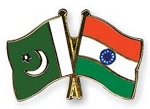
Indian Wheat Heads To Afghanistan After Transit Deal With Pakistan
 Radio Free Europe/Radio Liberty
February 23, 2022
India has sent tons of wheat to help relieve food shortages in Afghanistan after it reached a deal with bitter rival Pakistan to allow shipments across their common border.
India’s Foreign Ministry said on February 23 that about 50 trucks packed with the first 2,500 tons of wheat donated by India have begun crossing into Pakistan.
Authorities said they expect to eventually send about 50,000 tons of wheat.
A ceremony was held in Amritsar near the border with Pakistan marking the passage of the first vehicles.
“I thank the Indian government for the generosity displayed at a time when more than 20 million Afghans are facing crisis or the worse levels of food insecurity in more than 3 decades,” Farid Mamundzay, Afghanistan’s ambassador to India for the former government, said on Twitter.
Western nations slashed aid to Afghanistan after the Taliban takeover of the country last summer.
According to the United Nations, Afghanistan is facing a “devastating” humanitarian crisis with a majority of the 28 million population in need of assistance.
In a rare move last week, Pakistani authorities said the country would allow New Delhi to deliver wheat to Afghanistan through its heavily militarized border with India.
Pakistan has allowed trucks from Afghanistan to collect wheat from India by way of the frontier crossing at Attari-Wagah.
The vehicles will proceed to the Afghan city of Jalalabad through Pakistan’s Torkham border, officials said.
India has said it will provide assistance to the Afghan people — but not to the Taliban government — through aid agencies and other organizations.
Based on reporting by RFE/RL’s Radio Azadi, AP, and AFP
Copyright (c) 2022. RFE/RL, Inc. Reprinted with the permission of Radio Free Europe/Radio Liberty, 1201 Connecticut Ave NW, Ste 400, Washington DC 20036.
Afghan Beauty Parlors Take A Cut After Taliban Takeover
 By RFE/RL’s Radio Azadi
Abubakar Siddique
February 22, 2022
Three years ago, Nida, a young Afghan entrepreneur, established a modern beauty parlor in Shahr-e Nau, an upscale neighborhood in Kabul.
Business steadily grew as she attracted a loyal clientele for beauty and hair treatments in the capital. And as profits rose, the salon expanded, eventually employing half a dozen beauticians and hair stylists.
Nida recalls coming to work with enthusiasm and taking pride in feeling she was providing a welcomed service for Afghan women.
But she closed her salon shortly after the Taliban swiftly seized Kabul in August, well aware that businesses like hers were being defaced with spray paint to cover posters of women models and brides used to attract customers. Some salon owners removed the pictures themselves or painted them over to avoid trouble with the new authorities.
After repeated closures, Nida recently obtained a trade license from the Taliban. But her clientele and peace of mind have disappeared.
“We women are terrified of the Taliban and worried about our future,” she told RFE/RL’s Radio Azadi. “Now, we often wait for just one customer to show up during an entire day.”
Losing An ‘Oasis’
In Kabul, beauty salon owners estimate that most shops have lost more than 90 percent of their business. High-end shops that used to rake in thousands of dollars a month now must live on a few hundred. Most have massively slashed prices for their services, yet fewer customers are showing up.
Nida describes her salon as an oasis where the staff often celebrated with those preparing for occasions such as weddings or engagements. Now, she says, “we are struggling to just put food on the table.”
Fatima, a pseudonym given by a beauty parlor owner in the western city of Herat, agrees. Fatima closed her shop for a week after the Taliban takeover on August 15. But the thought of her family going hungry forced her to overcome her fear of the militants and she opened up shop again.
“I want the Taliban to let women work in all sectors and refrain from forcing them to sit at home,” she told Radio Azadi. “We do not expect anything more.”
Women have borne the brunt of the Taliban’s restrictions. After seizing power, the militants restricted women’s access to education and work and their general presence and role in society. Six months into Taliban rule, teenage girls have yet to return to school.
Women everywhere are either required or encouraged to wear the Islamic hijab. Female students returning to university are made to attend gender-segregated classes. At the same time, many women working for government departments have either been laid off or are receiving little pay. A male guardian must accompany women whenever they leave their homes. And those who demonstrate for greater rights have been arrested and, in some cases, disappeared.
Beauty parlors are a rare venue where women can socialize outside their homes. But Fatima says the Taliban takeover has wrecked her business. She says many of her clients fled Taliban rule and those remaining have lost jobs and livelihoods. Some women are so terrified of the Taliban that they do not want to risk going to the salon.
Fleeing Clients
An estimated 1.5 million Afghans have left their country since the Taliban seized power. A large majority of them were government workers and military officers who formed the backbone of the fallen pro-Western Afghan republic, and their departures have eroded the middle class. Many professionals, entrepreneurs, and those working for aid agencies also left in the chaotic weeks leading up to the final withdrawal of U.S. and Western forces on August 31.
Maryam, a young woman in Kabul, says fewer women she knows can now afford to visit salons. “The economic difficulties have a role in this, but people are mostly afraid [of the Taliban],” she said.
Radio Azadi attempted to reach the Taliban for comment. But Zabihullah Mujahid, the top Taliban spokesman, and his deputies Bilal Karimi and Ahmadullah Wasiq did not respond to repeated requests.
While the Taliban has not said anything about closing or regulating beauty salons, the Taliban’s religious police have issued orders banning men from shaving their beards and trimming their hair in some parts of Afghanistan. Taliban officials say the Taliban’s Ministry for the Promotion of Virtue and Prevention of Vice now only advises Afghans on how best to follow Islamic injunctions, but does not enforce them as it did during the Taliban’s first stint in power from 1996 to 2001.
Copyright (c) 2022. RFE/RL, Inc. Reprinted with the permission of Radio Free Europe/Radio Liberty, 1201 Connecticut Ave NW, Ste 400, Washington DC 20036.
To Preserve Its Own Stability, Pakistan Must Stabilize Afghanistan First

Taliban leader Mullah Baradar with Pakistan’s ISI Chief Faiz Hameed
NYT: The euphoria felt by many in Pakistan over a Taliban victory in Kabul six months ago is subsiding. The government had hoped that a friendly — some would say proxy — regime in Kabul would ease its concerns about the Pakistani Taliban. But instead, there has been a spike in terror attacks in recent months, which Pakistani officials say were planned by militants hiding inside Afghan territories. Click here to read more (external link).
Taliban to create Afghanistan ‘grand army’ with old regime troops

Taliban militants (file photo)
Al Jazeera: The Taliban is creating a “grand army” for Afghanistan that will include officers and troops who served the old regime, says the official tasked with overseeing the military’s transformation. Click here to read more (external link).
Afghanistan name Noor-ul-Haq Malekzai as chief selector
 ESPN: Former middle-order batter Noor-ul-Haq has been named chief selector of the senior national team by the Afghanistan Cricket Board (ACB). He was serving in the role on a temporary basis for over three months and was officially handed over the responsibilities on Monday, an ACB statement said. Click here to read more (external link).
Taliban Publicly Flogs Afghan Man Accused Of Adultery
 By RFE/RL’s Radio Azadi
February 22, 2022
A man accused of adultery has been publicly whipped by the Taliban in Afghanistan’s southern Uruzgan Province.
Several residents of provincial capital Tarin Kowt told RFE/RL’s Radio Azadi that the man was flogged in the city’s central square on February 21 in the morning.
Tarin Kowt resident Noor Agha, who witnessed the public flogging, told Radio Azadi that the Taliban brought a man to the town square in a military vehicle.
They later announced the man’s name and location over loudspeakers, saying they had arrested him in the Chora district for allegedly having extramarital sexual relations with a woman.
According to Agha, the Taliban said the “public punishment is meant as a lesson.”
Sultan Muhammad, a 65-year-old eyewitness, told Radio Azadi about the humiliation of the victim.
“The accused was humiliated, and I do not think he would be able to live a dignified life like anyone else in society after this,” Muhammad said.
Photos and videos obtained by Radio Azadi show hundreds of people attended the flogging.
Such public punishments were common during the Taliban’s previous period in power from 1996 to 2001. But this is the first time since the militant group regained power in August that they meted out such a punishment in public.
No information was available about the fate of the woman allegedly involved in the case.
Copyright (c) 2022. RFE/RL, Inc. Reprinted with the permission of Radio Free Europe/Radio Liberty, 1201 Connecticut Ave NW, Ste 400, Washington DC 20036.
1TV Afghanistan Dari News – February 22, 2022
Taliban Tells Working Women To Cover Up — Even With A Blanket
 Radio Free Europe/Radio Liberty
February 22, 2022
The Taliban’s religious police have told working women in Afghan government departments that they must cover up or they may face losing their jobs.
The Ministry for the Promotion of Virtue and Prevention of Vice on February 22 said in a proclamation that women should not report to work unless they were properly covered.
It was not immediately clear why the statement was issued at this time. Most women in Afghanistan have always covered their heads in public.
They can wear “any other sort of hijab. It is up to them, but they must [cover up] properly…even wear a blanket,” a ministry spokesman told AFP.
Most women have been banned from their government jobs since the Taliban retook power in mid-August.
But Taliban leaders have claimed they will be allowed to return to work when what they call proper conditions have been established, such as segregated office space.
Since the Taliban seized power, Western officials and activists, along with some inside Afghanistan, have expressed concerns about women’s rights under the extreme conservative rule of the Islamist Taliban leadership.
Women’s rights were severely restricted during the Taliban’s first stint in power until they were driven from government by a U.S.-led invasion in 2001.
Based on reporting by AFP
Copyright (c) 2022. RFE/RL, Inc. Reprinted with the permission of Radio Free Europe/Radio Liberty, 1201 Connecticut Ave NW, Ste 400, Washington DC 20036.
Related
- Teachers and Students Must Obey Sharia Law: Higher Education Ministry – The Ministry of Higher Education has released new guidelines on how professors and students should attend and dress in classrooms