
Taliban Detains at Least 10 Local Commanders of the Former Government in Samangan
 8am: The Taliban Intelligence has arrested more than 10 former local commanders in Samangan province over the past three days, local sources have reported. In the past three days, more than 100 former local commanders have been displaced in the province to prevent from being detained by the Taliban Intelligence, according to sources. Click here to read more (external link).
Related
Explosion At Kabul Mosque Kills At Least 10, Injures 30
 By RFE/RL’s Radio Azadi
April 29, 2022
At least 10 people died on April 29 in a bomb blast at a mosque in Kabul, said a spokesman for the Taliban-led government police force.
More than 30 people were injured in the blast in the Afghan capital’s Darul Aman district at around 4 p.m. local time. A Taliban official said earlier that seven were killed and 15 were injured but warned the numbers would probably increase.
“The death toll from the blast has risen to 10 and the number of injured to 30. Detectives and security forces have launched a serious investigation into the incident,” Khalid Zadran, the Taliban’s police spokesman in Kabul, said in a text message to RFE/RL’s Radio Azadi.
Hundreds of worshippers had gathered for prayers at the mosque on the last Friday of the Muslim holy month of Ramadan.
The source of the explosion was not immediately known and no one has claimed responsibility for the blast.
Taliban spokesman Zabihullah Mujahid released a statement condemning the blast and saying the perpetrators would be found and punished.
Eyewitnesses told Radio Azadi that they had seen dozens of dead and injured at the site of the blast and that the number of dead was higher than what security authorities had indicated.
A similar blast one week ago at a Sufi monastery in Kunduz’s Imam Sahib district killed at least 30 people and wounded dozens more.
Afghan Hazaras, predominantly Shi’ite Muslims, and several Sunni Sufi groups have been the target of a series of attacks and bombings in Afghanistan recently. Islamic State-Khorasan (IS-K) has claimed responsibility for many bombings against Afghan Shi’a.
Copyright (c) 2022. RFE/RL, Inc. Reprinted with the permission of Radio Free Europe/Radio Liberty, 1201 Connecticut Ave NW, Ste 400, Washington DC 20036.
Related
Medical Supplies and Personnel Shortage in Logar Province
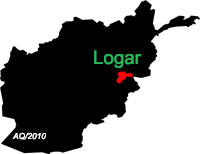 8am: This resident of Logar stated that they have raised the issue with Logar’s health officials several times, but no one has paid attention. Click here to read more (external link).
Supreme Leader Urges International Recognition Of Taliban-Led Government

Mullah Hibatullah Akhundzada
By RFE/RL’s Radio Azadi
April 29, 2022
The supreme leader of Afghanistan’s Taliban has called again on the international community to recognize the government of the radical militant group that swept to power in August amid the withdrawal of the U.S.-led international forces.
Mullah Haibatullah Akhundzada, the group’s reclusive supreme leader, said in a written message on April 29 ahead of the Eid al-Fitr holiday that marks the end of the Muslim holy month of Ramadan that proper diplomatic relations would help solve the country’s problems.
No country has formally recognized the Taliban-led government, as the international community linked recognition and much needed humanitarian aid to the restoration of women’s rights.
After returning to power, the Taliban sought to present a more tolerant image than during its previous stint in power between 1996 and 2001, when it became notorious for its abuses, particularly against women and girls.
But shortly after taking over in August, the Taliban fired tens of thousands of women from their government jobs and barred them from leaving the country — or even traveling between cities — unless accompanied by a male relative.
In March, the group closed all secondary schools for girls just hours after allowing them to reopen, prompting a wave of international criticism.
Akhundzada urged the international community to refrain from calls that the group reinstate rights for women, claiming that the issue was being used as a political “tool” by the West.
“We respect and are committed to all the Shari’a rights of men and women in Afghanistan…do not use this humanitarian and emotional issue as a tool for political ends,” he said.
He said the world should recognize the Taliban-led government “so that we may address our problems formally and within diplomatic norms and principles.”
“Afghanistan has its role in world peace and stability. According to this need, the world should recognize the Islamic Emirate of Afghanistan,” wrote Akhundzada, who has not been seen in public for years and is thought to be based in Kandahar, the Taliban’s spiritual heartland.
Afghanistan has been recently confronted with several bomb attacks — some claimed by the Islamic State militant group and targeting the minority Shi’ite Hazara community.
Akhundzada made no mention of the eroding security situation in Afghanistan, claiming instead that the Taliban had managed to build “a strong Islamic and national army” and “a strong intelligence organization.”
With reporting by AIP and AFP
Copyright (c) 2022. RFE/RL, Inc. Reprinted with the permission of Radio Free Europe/Radio Liberty, 1201 Connecticut Ave NW, Ste 400, Washington DC 20036.
Afghan ‘Fighting Season’ Ushers in New Anti-Taliban Groups
 VOA News
Masood Farivar
April 28, 2022
With the onset of the “fighting season” in Afghanistan, small pockets of anti-Taliban resistance appear to be forming across much of the country.
The development, coupled with a spike in deadly attacks by the Islamic State terrorist group, could threaten the Taliban’s hold on power eight months after their takeover of Afghanistan.
In recent weeks, about a half-dozen previously unknown “resistance” groups have announced their existence, vowing to fight the Taliban alongside the National Resistance Front, the only prominent anti-Taliban group.
The new groups have names such as the Afghanistan Freedom Front and the Afghanistan Islamic National & Liberation Movement. But beyond claims made on social media, little is known about their kinetic power.
Researchers who have studied the groups say while they all share the goal of toppling the Taliban’s eight-month-old government, they are hobbled by a lack of unity and coordination.
“It will take some coordination and unity to be able to have a more decisive effect in terms of contesting Taliban governance,” said Peter Mills, Afghanistan researcher at the Institute for the Study of War, who recently published a study of anti-Taliban groups.
As a result, the anti-Taliban groups have been unable to coalesce into a broader resistance movement, said Jonathan Schroden, director of the Countering Threats and Challenges Program at the Center for Naval Analyses (CNA), a nonprofit research and analysis organization.
“In that regard, they still retain relatively low levels of capability overall,” Schroden said.
But lack of coordination is not the only weakness preventing them from becoming an effective fighting force. Among other things, insurgent groups require external support. Yet in contrast to the 1990s, when Russia, Iran and India all backed the Northern Alliance against the Taliban, no country has rushed to the new anti-Taliban cause.
Consequently, in the short term, Schroden said, the groups will likely represent little more than “low-level annoyance” for the much-better-armed and numerically larger Taliban.
For their part, since routing the National Resistance Front from the Panjshir Valley in September, the Taliban have largely dismissed these groups as opposition propaganda.
But insurgencies have a way of persisting for many years, experts say, and what may be a small, inchoate patchwork of cells today could turn into a full-blown, bloody insurgency.
In the long term, several factors could tip the scales in the fight, Schroden said: the anti-Taliban groups’ success in finding a “state sponsor,” their ability to coalesce under a “common banner” and growing popular discontent with the Taliban regime.
Here is a look at the anti-Taliban groups:
National Resistance Front of Afghanistan
Led by Ahmad Massoud, the son of the late Northern Alliance commander Ahmad Shah Massoud, the National Resistance Front of Afghanistan (NRF) is the “most well-developed” of all the anti-Taliban outfits, said Mills, who estimates it has a few thousand fighters.
In addition to its homebase of the Panjshir Valley north of Kabul, the group operates in the nearby Andarab valley through an affiliate known as the Andarab Resistance Front, a collection of small cells headed by local commanders who have declared loyalty to Massoud.
The two fronts sometimes “interoperate,” Mills said.
“We know, for example, that the NRF was providing support and sending forces to work with the Andarab Resistance Front and fighting in the Andarab,” he said.
The NRF claims to operate in at least a dozen provinces, including Panjshir and Baghlan. In a recent interview with the London-based Afghanistan International Radio, Ali Maisam Nazary claimed the Taliban had “suffered repeated defeats in Panjshir, Andarab and other parts of the Hindu Kush mountains.”
The claim could not be independently verified. But Mills said the NRF has demonstrated that “they’re able to hold some rural, remote kind of valley, some of this remote, rural mountainous terrain in places like Baghlan, parts of Takhar, Panjshir, parts of Badakhshan.”
Afghanistan Freedom Front
This group popped up on March 11 when it announced its launch on Twitter and Facebook with the goal of “fighting for freedom of the country from occupation.”
It has not disclosed its leadership, but recent reports have indicated that General Yasin Zia, a former defense minister and chief of general staff, is one of the Front’s leaders.
Zia, who served as an aide to the late Ahmad Shah Massoud in the 1990s, could not be reached for comment.
In the weeks since the March announcement, the group has claimed attacks on Taliban targets in several provinces, from Badakhshan in the north to Kandahar in the south, offering as proof nighttime videos of fighting.
While the dark videos are not always easy to verify, “we know at least some of these attacks that are being claimed and discussed are real and are happening,” Mills said.
One incident Mills said he was able to confirm was an April 8 video of a daytime hand grenade attack on a police station in Kandahar.
“We were able to see someone actually throwing a grenade into this police station in Kandahar,” Mills said.
Afghanistan Islamic National & Liberation Movement
This is believed to be the only major Pashtun anti-Taliban group. Led by Abdul Mateen Sulaimankhail, a former Afghan Army special forces commander, the group launched on February 16. Sulaimankhail has said he set up the group in response to the Taliban’s alleged killings of former military personnel, calling their amnesty a “lie.”
In an April 13 interview with the Afghanistan International TV network, Sulaimankhail claimed his group was engaged in “military and political activities” in 26 of Afghanistan’s 34 provinces, a claim questioned by researchers. Citing security reasons, he declined to say how many members his group has.
The group has claimed responsibility for attacks in its home base of Nangarhar and several other provinces, but it has offered little proof of the attacks, with videos posted on the group’s Facebook page showing armed masked men indoors vowing to fight the Taliban.
While the group’s recent claim of killing a Taliban commander in Helmand appears credible, Mills said its “actual capability seems to be limited.”
Other groups
In recent weeks, small cells of self-styled anti-Taliban fighters affiliated with Tajik warlord Ata Mohammad Noor have appeared in videos purportedly shot in northern Afghanistan.
In a recent video, one of several masked armed men describes them as members of the “high council of resistance,” led by Noor, former Balkh province governor. The man then vows the group is prepared to launch “guerrilla attacks” as soon as they receive orders from Noor, who is believed to be living in exile in the United Arab Emirates.
Noor’s nephew Sohail Zimaray was killed in a shootout with Taliban forces in the northern city of Mazar-e-Sharif late Thursday, police said.
While the so-called “Noor guerillas” claim to be operating in every province in northern Afghanistan, Mills said he had “not seen them carry out any attacks or claim any attacks.”
Other groups that have publicized their efforts in recent weeks include Freedom Corps, Liberation Front of Afghanistan, Liberation Front of Afghanistan, Soldiers of Hazaristan, Freedom and Democracy Front.
Little is known about their leadership or capabilities.
Editor’s note: This story was updated to correct the abbreviation for the National Resistance Front of Afghanistan, and to correct the spelling of Ali Maisam Nazary’s middle name.
Afghan women footballers who fled Taliban want to be a voice for the voiceless
 CNN: “They were beating our parents, our family members, our teammates,” Fatima, who is spokesperson for the Afghanistan Women’s National Football team, told CNN Sport. “You didn’t know if you’ll be alive, or dead soon.” The scene being described is the fall of Kabul in 2021 and the frantic rush to exit Afghanistan before the Taliban seized full control of the country. Click here to read more (external link).
Other Sports News
Afghanistan among the ‘worst of the worst’ in violating religious freedom: US panel
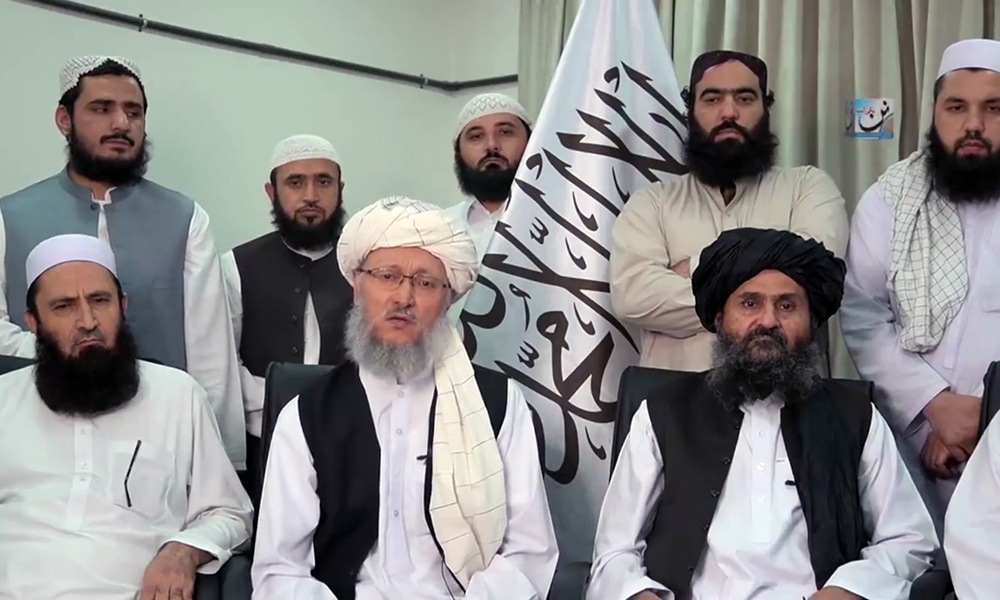
Ariana: The report said that in Afghanistan, many minority Jewish, Hindu and Sikh residents have fled the country after the IEA [Taliban] returned to power. It said many members of other religious minorities, such as Ahmadiyya Muslims, Baha’is and Christian converts are worshipping in secret for fear of persecution. Click here to read more (external link).
US left behind $7 billion of military gear after troops withdrew: Pentagon

Pentagon
Ariana: A new Pentagon report has revealed that the US left $7 billion of military gear – including 78 aircraft, 12,000 Humvees and thousands of air-to-ground weapons – in Afghanistan after President Joe Biden’s chaotic 2021 withdrawal. According to the report, seen by CNN, the US Defense Department has no plans to return to Afghanistan to “retrieve or destroy” the equipment. Click here to read more (external link).