
 8am: Sources in Versaj district of Takhar province have confirmed that the Taliban rebels had previously warned the local residents in Versaj of forced displacement. Based on that warning, the rebels have started harassing the people and forcefully expelling the residents from their houses and areas. Yesterday, the Taliban fighters evacuated the houses of Mohammad Alam and Rahimullah by force and violence and made them a military base, according to sources. Click here to read more (external link).
Despite Taliban Disunity, Rebels Face Uphill Battle Without External Aid – Experts

Massoud
Michael Hughes
AOPNEWS
May 21, 2022
Although intense infighting has complicated Taliban efforts to quash the resistance in northern Afghanistan, the fragmented opposition will be hard-pressed to expand nationwide without more external assistance, especially as Pakistan steps up support for the radical movement, experts told Afghan Online Press.
The Taliban 2.0, in power now for only about nine months, is a regime deeply divided between a Kandahari faction led by Mullah Omar’s son, Mohammad Yaqoob, and one led by Sirajuddin Haqqani, leader of the Haqqani Network (HQN), who remains the favorite asset of Pakistan’s spy agency, the Inter-Services Intelligence (ISI).
The Taliban have struggled against pockets of resistance since the day the radical movement seized power in August of last year – most notably the National Resistance Front (NRF) in the Panjshir led by Ahmad Massoud, son of the legendary rebel commander who successfully defended the valley against the first Taliban regime (1996-2001) and during the anti-Soviet jihad.
About a half-dozen other factions have escalated attacks against the Taliban, especially since the Spring fighting season started, including the Afghanistan Freedom Front (AFF) in addition to a group led by former warlord-politician Atta Mohammad Noor. Not to mention, the Taliban has so far failed to effectively contain the Islamic State-Khorasan (IS-K).
LONG UPHILL STRUGGLE
The NRF, the most well-known of the resistance groups, is also led by first vice president Amrullah Saleh, who has referred to himself as the Acting President of Afghanistan since Ghani fled Kabul. Saleh has vowed that the NRF will not stop fighting until Afghans are “given the right to choose their leaders and government system.” However, despite solid leadership and a will to fight, the NRF must overcome significant obstacles before it can seriously threaten Taliban rule.
“Mighty oaks grow from small acorns, as the saying goes, but this resistance movement has a very steep mountain to climb, no pun intended, and it’s difficult to see how the West could assist it besides providing financial support to its leadership in Tajikistan,” U.S. Army War College professor Chris Mason, a retired Foreign Service Officer, told AOP.
To even begin to be a viable resistance movement, Mason explained, the NRF would have to be able to expand beyond the Panjshir and control access to the valley – something they were unable to do when the Afghan government fell. And, according to Mason, the resistance had far more fighters and resources than they do now.
In a piece for Real Clear Defense published about two weeks after the Taliban recaptured Kabul, Mason argued that the U.S. should have helped the resistance. At the time Mason estimated that the NRF had 10,000 men, including 6,000 commandos, at least five operational helicopters and a number of armored vehicles – along with ammunition and other supplies they had been stockpiling for four years.
But now, Mason is doubtful the NRF will get the support they need including from neighboring states.
“Tajikistan has been staunch in its opposition to the Taliban over the years, and will continue to provide asylum for their ethnic Tajik brethren, but I don’t know how far Dushanbe is willing to go to visibly support armed resistance in Afghanistan,” Mason said.
Another possibility, the professor added, is the flaring resistance elsewhere in Afghanistan, such as Herat and perhaps Nangarhar Province, which has historically been very independent of Kabul.
“The problem of course is the famous fractiousness of the Afghans, and the unlikelihood of such pockets of resistance uniting under some sort of common umbrella organization,” Mason said.
PAKISTAN AND THE YAQOOB-HAQQANI DIVIDE
Pakistan, for its part in all of this, has both enabled the Taliban – primarily by providing resources to help the Haqqani wing fight the resistance in the north, while at the same time acting as a source of division within the movement.
In fact, the faction led by Mullah Omar’s son, which has come to resent Pakistan’s meddling, may even be rooting for Haqqani to fail in his assignment to counter the northern rebels.
“Haqqani’s rival group led by Mullah Yaqoob wants Haqqani to come under pressure from the resistance so that his military capabilities can be questioned,” journalist Manish Rai told AOP.
If the Haqqanis cannot subdue the resistance on their own it will give Mullah Yaqoob an opportunity to mobilize his forces in the north, Rai, editor of the geo-political news agency ViewsAround, said.
However, Rai added, Pakistan can deploy its own special forces in support of HQN as it did last year to quell resistance in Panjshir.
“Pakistan has already trained HQN in the use of some sophisticated technologies like UAVs,” Rai said. “Also, there have been reports that Pakistan special forces are already training HQN fighters at the Bagram base.”
In terms of Pakistan’s role, Mason believes Islamabad will continue to support the Taliban to maintain “strategic depth” on its northern border, but the radical movement the ISI created could prove difficult to manage.
“The radical Islamic Frankenstein monsters created by ISI have a long history of getting up off the lab table and turning on their ISI masters, and I think this is rapidly proving true of the Haqqani Network inside the Afghan Taliban as well,” Mason said. “I think the Haqqani Network has already grown beyond ISI control.”
Rai in an op-ed for The Daily Times published earlier this month said the Haqqanis now want to move the Taliban’s center of power to Kabul from its traditional Kandahari base. He also said Kabul is under the firm control of over 6,000 cadres of the Haqqani network supervised by Anas Haqqani, brother of Sirajuddin Haqqani.
However, Rai also wrote that the Saudi-funded son of Mullah Omar has now in his camp veterans like Mullah Baradar, who believe Yaqoob is the only one who can effectively counter the Haqqanis.
Rai warned that the Taliban, like the mujahideen after the Soviet withdrawal, could soon start turning on one another in open battles.
Mason agrees that Haqqani right now has all the power, especially in his role as the Minister of Interior, but doubts the infighting will lead to a Taliban implosion.
“The possibility of a schism inside the Taliban leading to an existential crisis within the group I think is very small,” Mason said. “The organizational architecture of the Taliban – which is very similar to medieval Christian armed orders like the Knights Hospitaller – is structured to prevent it.”
Taliban’s Acting Defense Minister Leads the Fight Against NRF Forces in Panjshir
Yaqoob
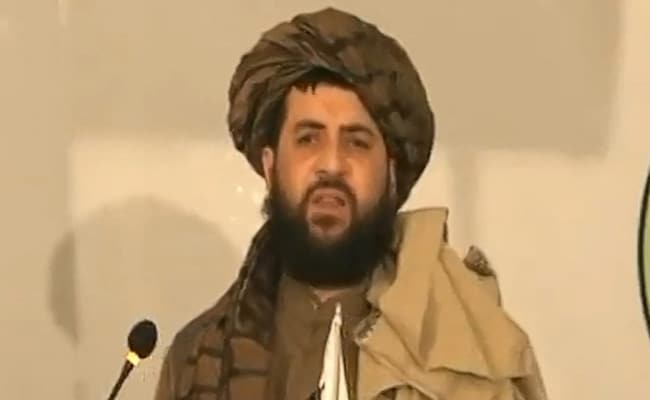
8am: Defense, Mullah Mohammad Yaqoob has traveled to the province to lead the fight against the National Resistance Front. It is said that he arrived in Panjshir on Friday, May 20. According to reports, during this period of fights, the Taliban have not only failed to repel the forces of the Resistance Front, but the group has suffered heavy casualties too. Click here to read more (external link).
Related
Worst Fears Of Iranian Dissidents In Afghanistan Realized After Arrests, Killing
 RFE/RL’s Radio Azadi: After the U.S.-led invasion in 2001, Afghanistan became an unlikely refuge for a small number of dissidents from neighboring Iran. The Western-backed Afghan government granted asylum to the Iranian nationals, who were allowed to live freely without the fear of political persecution. But after the Taliban seized power in August 2021, some Iranian dissidents expressed fear that they could be targeted by the militant group. Those worries have been realized after the Taliban allegedly arrested two Iranian dissidents. Another was mysteriously killed earlier this year. Click here to read more (external link).
Taliban Restarts House-to-House Search Operations in Herat
 8am: The residents and citizens have raised a serious matter of concern over the issue, complaining that the rebels do not respect the issues of privacy and usually harass the house owner. It is said that the Taliban are looking for former army soldiers and residents from the Northern provinces of the country, including Panjshir. Click here to read more (external link).
1TV Afghanistan Dari News – May 21, 2022
Resistance Fronts in Baghlan Call on Exiled Afghan Politicians to Fight Against Taliban on Battle Grounds Instead of Begging for Mercy

Dostum
8am: On Thursday, May 19, a number of exiled Afghan politicians gathered and met at the residence of Abdul Rashid Dostum, including Mohammad Mohaqiq, Abdu Rab Rasool Sayyaf, Atta Mohammad Noor, Karim Khalili, Ahmad Wali Masoud, Mir Rahman Rahmani, and Mohammad Alam Ezidyar in Turkey’s capital Ankara. Click here to read more (external link).
Karzai Tells CNN Burqa is Not Afghan Tradition

Hamid Karzai
Tolo News: Former President Hamid Karzai in an interview with CNN said that covering faces is not Hijab and the use of the Burqa is not Afghan tradition but “Burqa has come to Afghanistan probably 200-300 years ago, and countryside women don’t wear” it. Karzai was also critical of the Islamic Emirate’s decision to ban female students in grade 7-12 and said that the Afghan people will never accept the decision to ban girls from going to the school. Click here to read more (external link).
Related
Afghanistan: The Taliban’s first fall and an opening for Tajik journalists

Ahmad Shah Massoud
Euraisanet: The year was 2001, the month was September and Tajik reporter Khurshed Nazarov was a man on a mission. His bosses at Russia’s state-funded RTR broadcaster had dispatched him to northern Afghanistan to get the interview that every journalist traveling there wanted: Ahmad Shah Massoud. The legendary anti-Soviet turned anti-Taliban commander was a figure of global renown. He even overshadowed ally Burhanuddin Rabbani, the man who was recognized by much of the world as Afghanistan’s president, even as the hardline Taliban controlled the vast bulk of the country’s territory. Click here to read more (external link).
Tahreek-e-Azadi Afghanistan claims responsibility over Mazar-i-Sharif blast
 ANI: According to Khalid Pasoon, spokesman for the Tahreek-e-Azadi Afghanistan, ten civilians lost their lives in the blast while twelve people sustained serious injuries. The spokesperson further stated that the targeted truck, transporting civilian personnel of the Taliban forces was completely ruined by the blast, reported The Khaama Press. A magnetic mine explosion was attributed to the cause of the attack. Click here to read more (external link).