
 8am: Sources in Kabul have confirmed that the Taliban group has arrested Wali Ahmad Sarih, a spokesperson of the former Nangarhar Police Command. The motive behind his arrest is not yet clear, sources said. According to the sources, this is the 10th young man from Andarab who has been detained by the Taliban in Kabul over the past month. Click here to read more (external link).
1TV Afghanistan Dari News – June 30, 2022
The fundamental problem of Afghanistan is the ethnic one: Pedram
 Aamaj:Leader of National Congress Party of Afghanistan, Abdul Latif Pedram, stated that the fundamental problem of Afghanistan is the ethnic problem. “Now, the leaders of the biggest countries have realized and admit it the fundamental problem of Afghanistan is the ethnic problem, the issue which we have said and wrote for hundred times,” he tweeted. He added that the ethnic issue in Afghanistan has been the all-time issue for quarrel in the history so that from the very establishment of the country until now the diplomacy is based on ethnicity and ideologies were at the service the of ethnicity. Click here to read more (external link).
One NRF Commander and Five Taliban Rebels Killed in Clashes in Andarab Baghlan
 8am: Local sources in Baghlan province have reported the attack of the Taliban fighters on the National Resistance Front (NRF) forces’ base in the Andarab valley of this province. The attacks were carried out in Qasan Valley this Thursday morning, sources added. As a result of this clash, a local commander of the NRF named Shah Wali and five Taliban members are killed and the clash still continues, according to sources. Click here to read more (external link).
US Argues Against ‘Pure Isolation’ to Advancing Interests in Afghanistan

Ayaz Gul
VOA News
June 30, 2022
ISLAMABAD — The United States has defended revival of its diplomatic engagement with Afghanistan’s Taliban rulers, saying “pure isolation” cannot help Washington achieve its objectives there.
Special Representative for Afghanistan Thomas West is leading the U.S. delegation to the first talks being held in person with senior Taliban representatives in more than three months, in Doha, Qatar.
The U.S. administration halted the dialogue in March when the hardline Islamist group abruptly decided against allowing all teenage Afghan girls to resume secondary school education.
A State Department spokesperson told VOA ahead of the Doha meeting that the U.S. administration is “focused on advancing U.S. interests” in Afghanistan, including counterterrorism, economic stabilization, human rights, the reopening of all schools and safe passage for Afghans who worked with U.S,-led international forces before the August Taliban takeover.
“We are advancing these interests through engagement. We cannot achieve our objectives with a policy of pure isolation,” the spokesperson said. “None of these engagements should be seen as ‘legitimizing’ the Taliban or its so-called government but are a mere reflection of the reality that we need to have such discussions in order to advance U.S. interests.”
Senior officials from the Treasury Department and the U.S. Agency for International Development will accompany West in the talks with the Taliban.
Foreign Minister Amir Khan Muttaqi, accompanied by senior Finance Ministry officials and representatives of Afghanistan’s central bank, will lead the Taliban delegation.
$7 billion still frozen in US
The Doha meeting comes amid reports American officials are working with the Taliban on a mechanism to allow the Afghan central bank to use $7 billion in frozen funds, held in the United States, to deal with a hunger crisis stemming from years of war and persistent drought in the country.
U.S. President Joe Biden issued an executive order in February that was aimed at freeing half the $7 billion, to be used to benefit the Afghan people. The rest would be held for ongoing terrorism-related lawsuits in U.S. courts against the Taliban.
The State Department spokesperson confirmed to VOA that the Biden administration is “working to help find an appropriate mechanism that can serve as a steward of the $3.5 billion that President Biden set aside.” The spokesperson added that Washington is “urgently working to address complicated questions about the use of these funds to ensure they benefit the people of Afghanistan and not the Taliban.”
The Taliban takeover prompted foreign governments, led by the United States, to suspend development and security aid to the country. The strict enforcement of long-running sanctions on Taliban leaders has debilitated the Afghan banking sector and fueled economic troubles.
The United Nations warns more than half of the country’s estimated 40 million population needs emergency humanitarian assistance.
During talks in Doha, officials said, the U.S. delegation will also discuss with Taliban representatives ways to help people in Afghanistan in the aftermath of last week’s earthquake.
The powerful June 22 quake killed some 1,150 Afghans, including at least 155 children, and destroyed or damaged hundreds of homes in hardest-hit southeastern Paktika and Khost provinces, according to Taliban officials and global aid agencies.
The Biden administration announced Tuesday it will give nearly $55 million in immediate humanitarian assistance to people in Afghanistan affected by the calamity, including essential food items, clothing, cooking utensils, blankets, jerry cans, and sanitation supplies to prevent waterborne diseases in the disaster-hit areas.
The United States has been the largest humanitarian donor to the conflict-torn country and has committed more than $774 million in relief assistance over the past year.
The Taliban seized power in Afghanistan last August as American and NATO troops withdrew from the country and subsequently installed an all-male government. No foreign government has yet recognized the Taliban rule, citing its lack of inclusivity and concerns about terrorism and human rights, particularly restrictions on women’s rights to education and work.
In addition to suspending secondary education for most teenage girls, the Taliban have ordered women to wear face coverings in public and barred them from traveling beyond 70 kilometers without a close male relative.
Taliban leaders have rejected calls for removing the restrictions on women, insisting they are in accordance with Afghan culture and Islamic Shariah law.
VOA’s State Department Bureau Chief Nike Ching contributed to this report.
EU Envoy For Afghanistan Says Taliban Has Still Not Explained Decision On Girls’ Education
 By RFE/RL’s Radio Azadi
June 30, 2022
The European Union’s special envoy for Afghanistan says girls’ access to secondary education has been on the agenda in recent talks he’s had with members of the Taliban-led government, but they have not explained why girls have been excluded or indicated when schools might reopen for girls.
Tomas Niklasson, speaking in an interview on June 29 with RFE/RL’s Radio Azadi, said he has participated in conversations with acting ministers as recently as May and many of the ministers agreed that the issue of girls’ education needed to be clarified, but there was no proposed action.
“Some of the acting ministers said they hoped, and then wished, and they thought that schools would open relatively soon, but no one gave a date and no one was more specific either about why they couldn’t open and why they did not open in March, or what would be needed for them to open in the near future,” Niklasson said.
The international community, many Afghans, and the girls themselves were stunned a last-minute reversal by the Taliban meant they were turned away from schools. The radical group that seized control of the country in August gave no reason for the turnaround, which sparked national and international outcries.
The Taliban-led government has remained largely isolated internationally as a result of its hard-line Islamist policies toward women and girls. The government sparked further outrage last month when it issued a decree telling women to wear the head-to-toe burqa in public.
Niklasson said the reason the EU continues to engage with the Taliban is that Western governments learned when the Taliban ruled Afghanistan in the 1990s that isolating it “may not have been conducive to our wish to stay engaged with and support the Afghan people.”
He said the issue of girls’ access to education remains a matter of human rights and living up to the standards of other Muslim-majority countries.
“We could, of course, decide that until [girls are allowed to attend secondary school] we will not engage with the Taliban,” he said. “But I find it difficult to see what would be achieved by that. I think there are elements within the Taliban movement, perhaps within the leadership, that would like to see schools open.”
He declined to name the ministers who have been more open to loosening restrictions on girls’ education but said some of the acting ministers “who have perhaps a lesser religious background” are more willing to see that happen.
Niklasson also said the EU has assessed that very little progress has been made on five benchmarks that the EU set for deeper engagement with the Taliban, and this is the reason the EU does not engage in any way beyond dialogue and humanitarian assistance.
The EU has said the five benchmarks — including respect for human rights, guarantees for media freedom, and ensuring that Afghanistan does not again become breeding ground for terrorism — must be met before it will resume regular development aid.
The EU has had a humanitarian assistance presence in Kabul since September and Niklasson said through that “massive” assistance has been provided through international partners, including after the recent earthquake.
Copyright (c) 2022. RFE/RL, Inc. Reprinted with the permission of Radio Free Europe/Radio Liberty, 1201 Connecticut Ave NW, Ste 400, Washington DC 20036.
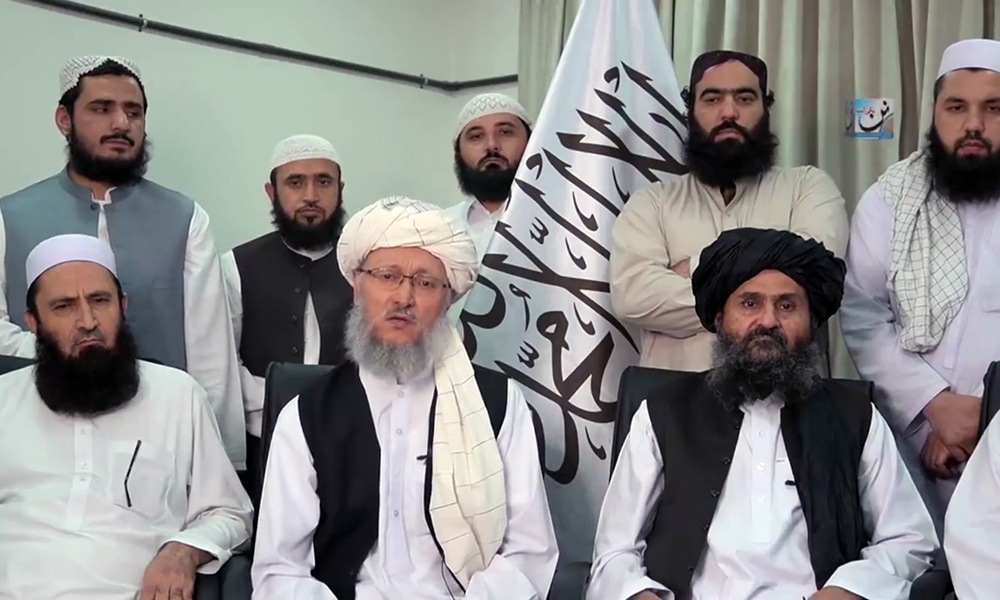
Taliban to Convene All-Male Meeting of Clerics, Elders for Afghan Unity Debate
 Ayaz Gul
VOA News
June 29, 2022
ISLAMABAD — Afghanistan’s Islamist Taliban have invited about 3,000 religious scholars and tribal elders from across the country to a meeting Thursday in Kabul, where officials said national unity would be discussed.
The men-only session in the Afghan capital is the first of its kind and is seen as an attempt to promote domestic legitimacy for the insurgent-turned-ruling group so it can secure much-needed international recognition.
The Taliban seized power from the internationally backed Afghan government last August, when the United States and NATO partners withdrew their final troops from the country after almost 20 years of military intervention.
Taliban Acting Deputy Prime Minister Abdul Salam Hanafi said Wednesday that prominent university professors, national businessmen and influential personalities would also attend the gathering, saying an Islamic system of governance and economics, as well as social issues facing Afghanistan, would be discussed.
‘We respect them a lot’
“This will be a positive step for stability in Afghanistan and strengthening national unity,” Hanafi told state broadcaster RTA.
“The women are our mothers, sisters. We respect them a lot. When their sons are in the gathering, it means they are also involved, in a way, in the gathering,” he said when asked whether female delegates had been invited to Thursday’s event.
No country has yet recognized the Taliban as legitimate rulers of Afghanistan, mainly because of their harsh treatment of women and girls. The Islamist rulers have suspended secondary education for most teenage girls, ordered women to wear face coverings in public and barred them from traveling beyond 70 kilometers without a close male relative.
The Taliban are also being pressed to govern the country inclusively and give all Afghan groups proper representation to ensure long-term national stability.
Critics questioned the legitimacy of Thursday’s grand meeting in the absence of women, who make up almost 50 percent of the country’s estimated 40 million population.
“An allegiance from 3,000 selected guests by [the] Taliban in a meeting will not help fix any of the problems [facing the country], nor confer any internal or external legitimacy to [the] Taliban,” said Torek Farhadi, a former Afghan official and political commentator.
“The book of God in Islam is gifted to women and men equally. Depriving women to have a voice in society is going against the precepts of Islam,” Farhadi told VOA.
The Taliban takeover and their subsequent installation of an all-male interim government prompted Washington and other Western countries to immediately halt financial assistance to largely aid-dependent Afghanistan, seize its foreign assets — worth more than $9 billion, mostly held by the U.S. — and isolate the Afghan banking system.
Economic upheaval
The action and long-running terrorism-related sanctions on senior Taliban leaders have thrown the cash-strapped country into a severe economic upheaval, worsening an already bad humanitarian crisis blamed on years of war and persistent drought.
The U.S. and the world at large have been urging the hardline group to reverse some of its curbs on women and ensure inclusive governance if it wants the global community to consider the Taliban’s demand for diplomatic recognition.
Taliban leaders have rejected calls for removing the restrictions on women, insisting they are in accordance with Afghan culture and Shariah, or Islamic law.
“Durable peace and reconciliation also require inclusive administration, represented by all political, religious and ethnic groups,” said Richard Bennett, the U.N. special rapporteur on the situation of human rights in Afghanistan.
“It is vital that national ethnic, religious and linguistic minorities, including minority women in Afghanistan, are included in all decision-making processes,” Bennett remarked at an online seminar Tuesday.
Rina Amiri, the U.S. special envoy for Afghan women, girls and human rights, while addressing the seminar, suggested rights-related issues would require engagement with the new rulers in Kabul.
“We try to identify very specific measures that the international community can consider and can try to move forward and also how we can press the Taliban to do more because they are right now the reality in the country,” Amiri said
Washington-based Freedom House, a pro-democracy organization dedicated to the expansion of freedom around the world, organized the seminar.
Taliban-US Huddle in Doha on Afghan Frozen Funds, Economic Issues
Ayaz Gul
VOA News
June 29, 2022
ISLAMABAD — The United States and the Taliban are scheduled to hold talks in Qatar later this week that are expected to focus on economic and banking sanctions on Afghanistan, where last week’s devastating earthquake has worsened a humanitarian crisis.
Taliban Foreign Minister Amir Khan Muttaqi, along with senior Finance Ministry officials and representatives of the Afghan central bank, traveled to Doha Wednesday to attend the meeting.
Muttaqi’s office said U.S. special envoy for Afghanistan Thomas West, accompanied by Department of Treasury officials, will lead the U.S. delegation at the talks in the Qatari capital.
U.S. officials are reportedly working with the ruling Islamist group on a mechanism to allow the Afghan central bank to use its frozen foreign funds, worth billions of dollars, to deal with a hunger crisis stemming from years of Afghan war and persistent drought, according to a report this week in The Washington Post.
The proposed framework would have to ensure the Taliban insurgent group-turned-rulers do not benefit from the money and it is used only to avert a humanitarian disaster in a country where the United Nations says more than half its estimated 40 million people is in need of emergency aid.
Western countries froze around $9 billion in Afghan central bank assets, mostly held in the U.S., after the Islamist Taliban seized power from the internationally backed Afghan government last August as American and NATO troops withdrew from the South Asian nation.
Western countries also suspended financial assistance to largely aid-dependent Afghanistan, isolating the country’s banking sector in the wake of long-running terror-related sanctions on the Taliban.
Last week, U.S. President Joe Biden’s administration acknowledged that efforts were underway to seek a resolution to the Afghan funding problem and get funds moving.
“We are urgently working to address complicated questions about the use of these funds to ensure they benefit the people of Afghanistan and not the Taliban,” White House Press Secretary Karine Jean-Pierre told reporters on Saturday.
Biden issued an executive order in February that was aimed at freeing half the $7 billion in frozen Afghan central bank assets on U.S. soil. The money would be used to benefit the Afghan people while the rest would be held for the ongoing terrorism-related lawsuits in U.S. courts against the Taliban.
But humanitarian challenges have intensified in parts of Afghanistan. A powerful earthquake on June 22 killed some 1,150 people, including at least 155 children, and destroyed or damaged hundreds of homes in hardest-hit southeastern Paktika and Khost provinces, according to Taliban officials and global aid agencies.
The disaster reportedly prompted Biden aides to begin talks to allow Afghanistan at least partial use of the frozen funds, while keeping them out of the hands of the Taliban.
“So, in signing an executive order several months ago, the president took a significant step to preserve these funds and ensure they go toward benefiting the people of Afghanistan. If the president hadn’t taken this action, the funds would have remained tied up for years,” Jean-Pierre reiterated on Saturday.
The Biden administration announced on Tuesday the United States will give nearly $55 million in immediate humanitarian assistance to people in Afghanistan impacted by the earthquake.
The State Department said the funds will be used to deliver essential food items, clothing, cooking utensils, blankets, jerry cans, and sanitation supplies to prevent waterborne diseases in the disaster-hit Afghan areas.
“The United States has an enduring commitment to the people of Afghanistan, and we welcome and encourage support from our international partners in this time of great need,” Secretary of State Antony Blinken said in a statement on Tuesday.
U.S. officials noted that Washington has been the largest humanitarian donor to Afghanistan and committed more than $774 million in humanitarian assistance over the past year.
No country has yet recognized the Taliban’s interim government, citing concerns over terrorism and human rights, particularly restrictions on women’s rights to education and work.
Taliban Arrests Former Government Soldiers and Youths in Kapisa
 8am: Sources told Hasht-e Subh Wednesday that the Taliban rebels have detained dozens of young men and ex-soldiers in Kapisa province since the last week. According to sources, the Taliban have taken into custody most of these individuals from the Hesa Awal and Duwum districts of Kapisa province. Click here to read more (external link).
Related
1TV Afghanistan Dari News – June 29, 2022