
logo

Daily Updated Afghan News Service

  • Home
  • About
  • Opinion
  • Links to More News
  • Good Afghan News
  • Poll Results
  • Learn about Islam
  • Learn Dari (Afghan Persian/Farsi)

Recent Posts

  • Two Taliban Members Killed In Badakhshan Attack, Says NRF April 9, 2026
  • World Bank: Afghanistan’s per capita GDP falls 5.6% despite economic growth April 9, 2026
  • Afghanistan weather disasters kill 148, injure 216 in two weeks April 9, 2026
  • Tolo News in Dari – April 9, 2026 April 9, 2026
  • Afghans will never accept Durand Line fencing, says Borders Minister April 9, 2026
  • Rashid Khan to limit Test appearances to prolong Afghanistan career April 9, 2026
  • Should Western influencers promote Taliban‑run Afghanistan? April 8, 2026
  • China says Taliban, Pakistan agree to seek early easing of tensions April 8, 2026
  • Children Begging in Kabul: Severe Poverty and Organized Exploitation April 8, 2026
  • Snooker fever grows as Kabul prepares for Ariana Championship April 8, 2026

Categories

  • Afghan Children
  • Afghan Sports News
  • Afghan Women
  • Afghanistan Freedom Front
  • Al-Qaeda
  • Anti-Government Militants
  • Anti-Taliban Resistance
  • AOP Reports
  • Arab-Afghan Relations
  • Art and Culture
  • Australia-Afghanistan Relations
  • Book Review
  • Britain-Afghanistan Relations
  • Canada-Afghanistan Relations
  • Censorship
  • Central Asia
  • China-Afghanistan Relations
  • Civilian Injuries and Deaths
  • Corruption
  • Crime and Punishment
  • Drone warfare
  • Drugs
  • Economic News
  • Education
  • Elections News
  • Entertainment News
  • Environmental News
  • Ethnic Issues
  • EU-Afghanistan Relations
  • Everyday Life
  • France-Afghanistan Relations
  • Germany-Afghanistan Relations
  • Haqqani Network
  • Health News
  • Heroism
  • History
  • Human Rights
  • India-Afghanistan Relations
  • Interviews
  • Iran-Afghanistan Relations
  • ISIS/DAESH
  • Islamophobia News
  • Japan-Afghanistan Relations
  • Landmines
  • Media
  • Misc.
  • Muslims and Islam
  • NATO-Afghanistan
  • News in Dari (Persian/Farsi)
  • NRF – National Resistance Front
  • Opinion/Editorial
  • Other News
  • Pakistan-Afghanistan Relations
  • Peace Talks
  • Photos
  • Political News
  • Reconstruction and Development
  • Refugees and Migrants
  • Russia-Afghanistan Relations
  • Science and Technology
  • Security
  • Society
  • Tajikistan-Afghanistan Relations
  • Taliban
  • Traffic accidents
  • Travel
  • Turkey-Afghanistan Relations
  • UN-Afghanistan Relations
  • Uncategorized
  • US-Afghanistan Relations
  • Uzbekistan-Afghanistan Relations

Archives

Dari/Pashto Services

  • Bakhtar News Agency
  • BBC Pashto
  • BBC Persian
  • DW Dari
  • DW Pashto
  • VOA Dari
  • VOA Pashto

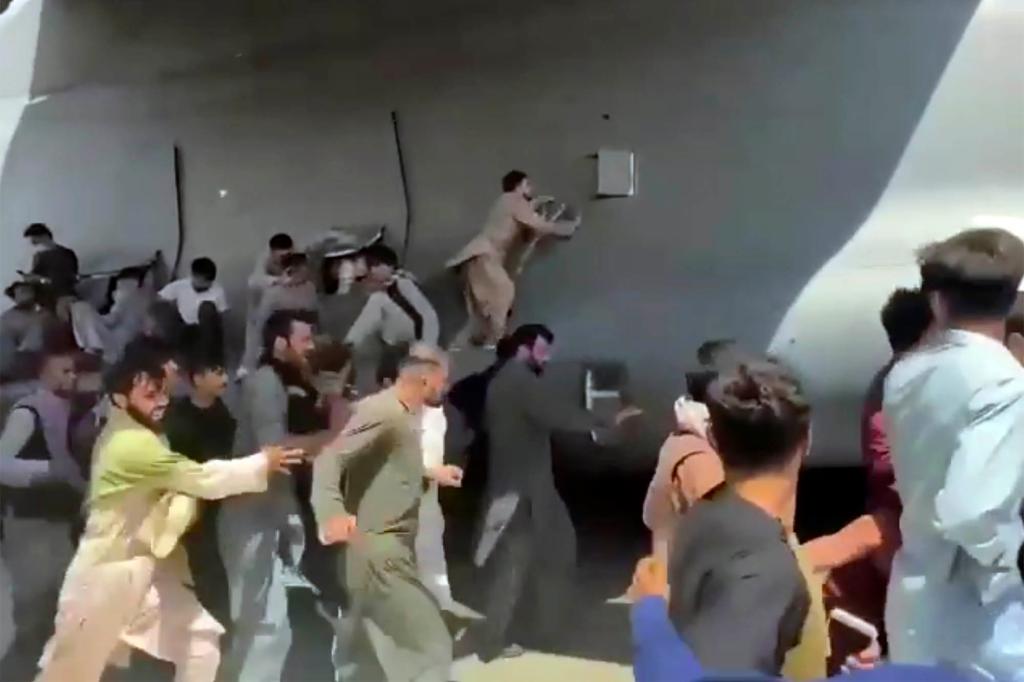
Afghan father whose teen fell from US cargo plane: ‘I blame the Americans’

13th August, 2022 · admin

NYP: As the first anniversary of the disastrous US pullout from Afghanistan approaches, a victim of one of its most gruesome tragedies finally has a name. Zabi Rezayee, 17, was one of the desperate civilians who clung to the landing gear and wheel covers of a US Air Force C-17 as it taxied down the runway of Kabul’s Hamid Karzai International Airport on Aug. 16, 2021 — only to fall to his death on the tarmac, his father told the Sunday Times of London. Click here to read more (external link).

Posted in Other News, Refugees and Migrants, US-Afghanistan Relations | Tags: Escape from the Taliban |

4 Taliban Killed, 6 Wounded in NRF Ambush in Baghlan’s Khost District

13th August, 2022 · admin

8am: As a result of the ambush launched by the National Resistance Front (NRF) forces in the Khost district of Baghlan Province, 4 Taliban members have been killed and 6 others were injured. Local sources in Baghlan Province said on Saturday (August 13th) that the Taliban were trying to deploy their reinforcements from Landaki Kotal to Farzo Kotal in Panjshir when the NRF launched its offensive. Click here to read (external link).

Posted in NRF - National Resistance Front, Security, Taliban | Tags: Afghan resistance against Taliban, Baghlan, Panjshir |

1TV Afghanistan Dari News – August 13, 2022

13th August, 2022 · admin

Posted in News in Dari (Persian/Farsi) |

Blast in West Kabul Leaves 3 Killed, 4 Wounded, Including 2 Taliban Members

13th August, 2022 · admin

8am: A blast hit the Dasht-e Barchi neighborhood in the west of Kabul, leaving at least 3 civilians killed and 4 others, including 2 Taliban members injured. The west of Kabul, which is mainly a Hazara-dominated neighborhood, witnessed two deadly blasts last week on the eve of the Muharram ceremony, leaving dozens of civilians killed and injured. Click here to read more (external link).

Posted in Civilian Injuries and Deaths, Security, Taliban | Tags: Hazaras, Taliban Security Failure |

Taliban Fire Shots, Beat Protesters as Women Rally in Kabul

13th August, 2022 · admin

Afghanistan: Amnesty international is concerned by the reports of the Taliban using excessive force to disperse women, who are peacefully protesting today to demand their human rights. https://t.co/fOn9Qrrw17

— Amnesty International South Asia (@amnestysasia) August 13, 2022

Ayaz Gul
VOA News
August 13, 2022

ISLAMABAD — Security forces in Kabul fired shots into the air and beat women protesting Taliban rule Saturday as dozens demanded the right to education, work and political participation on the eve of the first anniversary of the Islamist group’s takeover of Afghanistan.

Rally participants chanted “we want work, bread, and freedom” as they marched toward the Education Ministry in the Afghan capital before Taliban forces responded violently to the rare anti-government rally.

“August 15 is a black day,” read a banner protesters were carrying as they demanded the right to work and political participation, chanting “Justice, justice.”

Witness accounts and social media documented many women at the rally not wearing face veils.

Some of the female protesters who took refuge in nearby shops were chased and beaten by security forces with their rifle butts, witnesses said.

Heavy gunfire could be heard in social media video of the rally, with Taliban men assaulting female protesters. They also violently prevented Afghan journalists from covering the rally.

Amnesty international expressed concern on Twitter about reported use of “excessive force” by the Taliban to disperse women who were protesting peacefully.

Taliban officials did not immediately comment on the allegations.

The Taliban seized control of Afghanistan last August 15 from the internationally backed Afghan government as U.S.-led and NATO allies withdrew their troops from the country after almost 20 years of war with the Taliban.

The hardline group’s all-male interim government in Kabul has since significantly rolled back women’s rights to work and education, barring most teenage girls from resuming secondary school in a breach of promises the Taliban made to respect rights of all Afghans.

Women employed in the public sector have been told to stay at home, except for those who work for the ministries of education, health and a few others, and must use face coverings in public.

They have also banned women from traveling alone on long trips and require them to fully cover themselves, including their faces, in public.

The restrictions angered female activists and they initially staged small demonstrations against them, but the Taliban used violence and detained organizers, effectively deterring such rallies for months.

The Taliban defend their policies as being in line with Afghan culture and Shariah or Islamic law.

Related

  • Taliban Arrests 10 Journalists During Rare Women’s Protests in Kabul
  • An Afghan girl’s despair over school ban: ‘We are wilting away at home’
Posted in Afghan Women, Censorship, Human Rights, Media, Taliban | Tags: Afghan Journalists, Freedom of Speech, Life under Taliban rule, Press Freedom, Protest |

Turkey’s Engagement With Afghanistan Has Grown Since Taliban Takeover

12th August, 2022 · admin

Ezel Sahinkaya
VOA News
August 12, 2022

WASHINGTON — While many countries cut diplomatic ties with Afghanistan after the Taliban’s return to power last year, Turkey, the only NATO member with a diplomatic presence in the war-torn country, has been active on many fronts.

Recently, the second phase of the Kajaki hydroelectric dam in Helmand province was completed by the Turkish company 77 Construction, which has invested $160 million in the project.

Several senior Taliban officials attended the opening ceremonies for the dam, including Abdul Ghani Baradar and Abdul Salam Hanafi, acting deputy prime ministers of the Taliban government. Turkey’s ambassador in Kabul, Cihad Erginay, also was present.

“Although the Kajaki dam is an important investment in economic relations between our country and Afghanistan, our relations are more diverse and deeper,” Erginay said during the ceremony, adding that total trade volume between the countries increased 23% in the first six months of 2022.

‘Positive legacy’

Some experts think that Turkey’s engagement with Afghanistan derives from the countries’ shared diplomatic legacy, which dates back to modern Turkey’s founder Mustafa Kemal Ataturk and Afghanistan’s modernist king Amanullah Khan in the 1920s.

“That positive legacy has throughout all these years never been interrupted,” Alper Coskun, a senior fellow at the Carnegie Endowment for International Peace, told VOA.

From 2001 until the Taliban returned to power in August 2021, Turkey had taken part in NATO-led forces in Afghanistan.

“Turkey took a very deliberate position in ensuring that Turkish forces were not involved in [active warfare or lethal force] against the Afghan population in any way whatsoever,” Coskun said. “That, I believe, is something that the current regime in Afghanistan, the Taliban, are also cognizant of.”

Turkey withdrew its troops from Afghanistan before the Taliban’s August 2021 deadline for foreign forces to leave the country.

Kabul airport

According to Turkey’s Defense Ministry, one of the Turkish soldiers’ final assignments in Afghanistan was to provide “operational and force protection services” in Kabul at what was then known as the Hamid Karzai International Airport, since renamed the Kabul Airport.

Senior Turkish authorities have repeatedly shown interest in running the airport.

Last August, U.S. State Department spokesperson Ned Price said that “a secure, operational airport we feel is integral to our ability to have a functioning diplomatic presence on the ground. So, the safety, the security, the continuing operation of that airport — it is of high importance to us.”

“We are grateful that our Turkish partners have indicated a willingness to play a role in protecting that,” Price added.

Turkish President Recep Tayyip Erdogan said during a NATO summit in Madrid in June that Turkey had offered to operate the airport with Qatar and the United Arab Emirates but was awaiting the group’s response.

On July 7, however, Reuters quoted sources familiar with the negotiations saying the Taliban was close to handing all airport operations to the United Arab Emirates.

Some experts say Turkey’s proposal was significant even though the bid fell through.

“It’s no small matter that Turkey was one of just a few countries in a position to be negotiating an accord to provide security at the Kabul Airport,” said Michael Kugelman, the deputy director of the Asia Program at the Wilson Center.

“That accord didn’t work out, but the fact that Turkey was even involved was significant, especially as the Taliban have made clear that they won’t allow any foreign security presence on their soil,” he told VOA.

Recognition

Turkey has not formally recognized the Taliban, and Kugelman thinks that Turkey does not want to be the first to do so, considering “some reputational costs.”

On the other hand, Turkey hosted Amir Khan Muttaqi, the Taliban’s acting foreign minister, for high-level talks in October and the Antalya Diplomacy Forum, organized by the Turkish Foreign Ministry, in March.

On the sidelines of the forum, Thomas West, U.S. special representative for Afghanistan, met Muttaqi and Qatar’s Foreign Minister Sheikh Mohammed bin Abdulrahman Al Thani to talk about Washington’s Afghanistan policy.

West on Twitter thanked Turkey for hosting the event and said that “I look forward to discussions with important partners regarding international engagement with Afghanistan.”

Turkish Foreign Minister Mevlut Cavusoglu said after his meeting with Muttaqi, “We have told the international community about the importance of engagement with the Taliban administration. In fact, recognition and engagement are two different things.”

Turkey has advised the Taliban to form an inclusive government and ensure girls’ education under its rule. Ankara has also repeatedly talked about the importance of stability in Afghanistan to prevent additional refugee flow into Turkey.

“Our country, which is currently hosting around 5 million foreigners — 3.6 million of whom have come from Syria — cannot shoulder a new migration burden originating from Afghanistan,” Erdogan said at the G-20 meeting on Afghanistan in October.

According to figures from Turkey’s Presidency of Migration Management, Turkish authorities arrested around 70,000 irregular Afghan migrants in 2021.

Humanitarian aid

Speaking at the 15th annual summit of the Economic Cooperation Organization in November, Erdogan also said that the Afghan economy should be revitalized to prevent a refugee crisis, adding that Turkey supports “efforts aimed at keeping basic state structures, including critical sectors such as health care and education, functioning.”

Since the Taliban’s return to power a year ago, Turkey’s state-run Disaster and Emergency Management Authority has sent five charity trains with 5,570 tons of humanitarian aid to the war-torn country. The Turkish Red Crescent, which has been operating in Afghanistan, has delivered aid assistance to people affected by the 6.1 magnitude earthquake on June 22.

Active in Afghanistan since 2005 and with offices in Kabul, Herat and Mazar-e-Sharif, Turkey’s state-run Turkish Cooperation and Coordination Agency has recently delivered 2,000 aid kits to help malnourished Afghan children.

Turkey also exerts soft power in Afghanistan via the Yunus Emre Institute, a cultural center owned by the Turkish government; Diyanet, the Turkish Directorate of Religious Affairs; and at least 46 Afghan-Turk Maarif Schools in seven provinces.

Twelve of these schools had been owned by the Gulen movement, a group Turkey blames for a failed coup attempt in 2016, but the Afghan government transferred the schools to the Turkish government’s Maarif Foundation in 2018.

Azarakhsh Hafizi, former head of the international relations committee at Afghanistan’s Chamber of Commerce and Industries, calls the Turkey-run schools “near to international standards,” adding, “The youth of Afghanistan need these services.”

Some analysts say, however, that one of the reasons Ankara has active public diplomacy in Afghanistan is because it wants to boost its domestic popularity.

“Ankara likes to see itself as a world player, and so having its foundations and education apparatuses participating in Afghanistan is a good … domestic political checkmark to show that it has an active foreign policy,” said Aaron Stein, director of research at the Foreign Policy Research Institute.

But Stein thinks Ankara’s Afghanistan policy does not resonate with the Turkish public.

“They care about the cost of living rather than foreign policy in that sense,” he told VOA. “They are a lot like everybody else around the world, like, ‘Our cost of living is skyrocketing. Take care of that. We don’t care about what’s going on in Afghanistan.’”

This story originated in VOA’s Turkish Service.

Posted in Economic News, Refugees and Migrants, Taliban, Turkey-Afghanistan Relations |

Survey: Journalism Is ‘Decimated’ in Taliban-Ruled Afghanistan

12th August, 2022 · admin

Ayaz Gul
VOA News
August 12, 2022

ISLAMABAD — A survey finds that Afghanistan has lost nearly 60 percent of its journalists, especially women reporters, and 40 percent of its national media outlets since the Taliban regained control of the country a year ago.

“All this has happened amid a deep economic crisis and crackdown on press freedom,” according to the survey published by Reporters Without Borders, a global media monitor group known by its French acronym RSF.

The findings have been released in connection with the radical Islamic group’s first year in power in Kabul.

The impoverished, war-torn South Asian nation has lost 219 of the 547 media outlets it used to have prior to August 15, 2021, when the Taliban seized the Afghan capital and subsequently installed an all-male interim government, RSF said. However, it noted that four new media outlets have since been created.

Of the 11,857 journalists tallied prior to the Taliban takeover, a total of 7,098 of them, 55 percent of whom were males, are no longer working in Afghanistan.

The survey noted that women have suffered most in “the carnage inflicted on Afghan journalism.” More than 76 percent of them have lost their jobs and disappeared completely from the media landscape in 11 of the country’s 34 provinces.

“Accusations of ‘immorality or conduct contrary to society’s values’ are widely used as pretexts for harassing women journalists and sending them home,” the report stated. Women TV presenters have been made to cover their faces while on camera.

“Journalism has been decimated during the past year in Afghanistan,” said RSF Secretary-General Christophe Deloire.

“Media and journalists are being subjected to iniquitous regulations that restrict media freedom and open the way to repression and persecution,” he lamented.

Deloire urged the Taliban to end the violence and harassment inflicted on media workers, and he said they must allow them to do their job unmolested.

Allegations denied

Abdul Qahar Balkhi, the Taliban foreign ministry spokesman, refuted allegations his government is cracking down on dissent or suppressing media freedom in the country.

“In line with international practices, all reporters and networks operating inside a country have to respect and follow the media laws of that country,” Balkhi told VOA.

“The new government of Afghanistan has not requested anything extra nor has it used heavy-handedness in dealing with the media,” he argued.

Last month, the Taliban supreme leader, Hibatullah Akhundzada, issued a new decree warning that “defaming and criticizing government officials without proof” and “spreading false news and rumors” are forbidden under Islam. It promised unspecified punishment for those who “slander” government employees.

The announcement by the highest Taliban official “is indicative of the determination to suppress press” Afghan media freedom, RSF said.

The survey also cited new economic constraints, such as the termination of international or national funding and the decline in advertising revenue as a result of the economic crisis, for some Afghan media to cease operating.

Of the 2,756 women journalists and media workers employed in Afghanistan prior to August 15, only 656 are still working, with 84.6 percent of them based in the Kabul region.

A large number of Afghan male and female journalists fled the country after the Taliban takeover and as the United States and NATO allies withdrew their troops in mid-August of last year.

Some women journalists, however, decided against leaving the country, RSF said. They include Mean Habib, the director of RouidadNews, a news agency based in the Afghan capital that she created after the August 15 leadership change in Kabul.

“I preferred to stay in my country to report the news and to defend what women had achieved during the past 20 years,” Habib told RSF.

She said living and working conditions for women journalists in Afghanistan had always been difficult, but they are experiencing an “unprecedented situation” under Taliban rule. Female media workers who have the opportunity to work are doing so for a “wretched salary,” Habib lamented.

“They do their duty to report the news on an empty stomach. They work in conditions that are physically and mentally violent and tiring, without any protection. Today, all the associations defending journalists’ rights are made up entirely of men, and work for men!”

Hafizullah Barakzai, who heads the Council of Journalists in Afghanistan, told RSF that the economy was the most important problem facing media outlets and workers. He noted that “the number of cases of violence has decreased compared with recent years, despite the increase in threats during the first months after August 15.”

In 2012, Afghanistan was ranked 150th out of 179 countries in RSF’s Press Freedom Index.

The global monitor group said that the country had risen to 122nd out of 180 countries by 2021, citing a dynamic media landscape and the adoption of legislation protecting journalists. “And in 2022, after losing nearly 40% of its media and more than half of its journalists, it has fallen to 156th.”

Related

  • Taliban Show ‘No Commitment to Press Freedom’
Posted in Censorship, Media, Taliban | Tags: Afghan Journalists, Freedom of Speech, Life under Taliban rule, Press Freedom |

Brain Drained: Exodus Of Professionals Since Taliban Takeover Leaves Afghanistan Starting From Scratch Again

12th August, 2022 · admin

By Michael Scollon
RFE/RL’s Radio Azadi
August 12, 2022

Ahmad Ghani Khosrawi dedicated two decades of his life to restoring Afghanistan’s education system, only to find himself rebuilding his career abroad following the country’s return to Taliban rule.

In leaving for Germany, Khosrawi, who headed the Faculty of Literature and Humanities at Herat University, joined the exodus of professionals that has left Afghanistan depleted of some of its best and brightest minds as the country once again adjusts to new rulers in Kabul.

Many left ahead of the withdrawal of U.S. and foreign forces a year ago, anticipating that an era of democratic and social reform was coming to an end. Others, like Khosrawi, joined the exodus only after the Taliban seized power in August 2021 and filled the professional ranks with often unqualified loyalists.

“They came and appointed their own people,” Khosrawi said of the situation in the education sector. “Naturally, this was a fatal blow to the universities and caused a large number of professors to leave the country.”

A year on, the Taliban government is reeling from the brain drain that has hampered its ability to provide basic services and deal with a devastating economic and humanitarian crisis.

The loss of skilled workers has particularly affected the health, education, security, and judicial sectors, according to Weeda Mehran, co-director of the Center for Advanced International Studies (CAIS) at the University of Exeter in Britain.

“While hard data about the exact numbers is not available, it is safe to say that thousands of highly skilled and educated Afghans have left the country,” the professor said.

Many who left had pursued an education abroad or trained at elite foreign military academies under the previous, Western-backed government that took power following the U.S.-led invasion of Afghanistan in 2001.

“Doctors, engineers, judges, and lawyers were among those who had the financial means, education, and skills that could facilitate emigration,” Mehran said. “Losing such human capital, simply put, is disastrous for Afghanistan.”

The Taliban is already dealing with formidable obstacles that would test any government. Its rule remains officially unrecognized by any country, and the delivery of promised international aid intended to help the country deal with a humanitarian crisis brought on by famine, drought, and insecurity has been complicated in part by international sanctions imposed on the militant group.

In turn, the Taliban’s return to its notorious restrictions on women and ban on girls’ education, combined with its failure to live up to its own promises to uphold free media and share power, have contributed to its international isolation.

‘Starting From Scratch’

Sima Stanekzai was appointed a deputy governor of Jowzjan Province in 2021 after working as a reporter and activist for 15 years. Hers was the highest-ranking position ever held by a woman in the northern province under the previous government. But the Taliban’s return to power led her to flee with her family to Germany out of fear of retaliation.

Now, she feels that 20 years of effort and service in Afghanistan were wasted overnight.

“We always have to start from scratch in Afghanistan to make some progress, if at all,” Stanekzai told RFE/RL’s Radio Azadi. “And then everything gets messed up again.”

Women had virtually no rights during the Taliban’s first stint in power from 1996 to 2001. During the 20 years of foreign military presence that followed the U.S.-led invasion in 2001, women still faced major obstacles in exercising their newfound rights.

The latest report by the U.S. Special Inspector-General for Afghanistan Reconstruction, issued on July 30, noted that “while the opportunities available to Afghan women slowly increased under the Islamic Republic as compared to the preceding years of Taliban rule, women’s rights and gender-mainstreaming efforts in Afghanistan failed to achieve the structural change the U.S. and international partners had envisioned.”

Behnaz Rasuli was among the women who bought into the post-Taliban system that had allowed women to work and take part in public life. She opened a sewing business in the city of Herat, running two stores that employed only women, before her hopes were dashed.

“Unfortunately, with the arrival of the Taliban, I had to close the shops in a hurry because I was afraid the saleswomen might be harmed,” Rasuli told Radio Azadi. “Little by little, the women’s motivation dropped, some of them moved away, and luck was not on our side, and I closed the shop.”

After collecting what was left of her meager savings, Rasuli, too, left for abroad.

Observers believe the departure of qualified female educators in Afghanistan will significantly hinder the future of girls’ education — a prospect that was discussed at a major sit-down of religious scholars organized by the Taliban in Kabul in June.

“Should the Taliban allow secondary and high school girls to return to classes, there will be a shortage of female teachers,” the CAIS’s Mehran told RFE/RL in written comments. “This might be compounded by the fact that male teachers will not be allowed to teach girls. Likewise, many universities are already facing a shortage of female staff, particularly female professors, as the Taliban’s policy has been complete gender segregation in higher-education institutions.”

Not The First Time

Afghanistan has been through this before, having suffered major departures of skilled workers after the Soviet invasion in 1979, as well as during the 1992-96 civil war that resulted in the Taliban first taking power.

Each time, the exodus left a vacuum of talent that set the country back years or decades and required its leaders to start anew in training new people to fill the void.

Even as more than 1 million Afghans have left the country — some by crossing into neighboring countries such as Pakistan and Iran, and others seeking official refugee status in Europe, the United States, and elsewhere in the West — some have come back.

According to the UN Refugee Agency (UNHCR), more than 1,430 Afghan refugees have voluntarily returned to Afghanistan since the beginning of this year, of whom nearly 300 have settled in Kabul.

UNHCR senior communications officer Peter Kessler told RFE/RL in written comments that those numbers are slightly more than the figures for the same time last year and more than double those of two years ago.

Ever since the Taliban overran Kabul on August 15, 2021, its leadership has tried to encourage civil servants, military and security personnel, educators, and others to remain or return to the country of around 40 million people.

The Taliban promised an amnesty for security forces and others who had worked for the previous government and claimed that for those who had already left “all would be forgiven” and professionals would be treated as “heroes” upon their return to the country.

In May, the Taliban put those promises in writing when it announced the objectives and duties of its new Commission for Contact With Afghan Personalities that aimed to recruit prominent professionals to return to Afghanistan.

The Taliban offered assurances to former politicians and soldiers who feared for their security, saying they would be given temporary shelter and protection. Regarding the private sector, the Taliban promised that “if someone creates a problem for returnees, they will be dealt with.”

On its Twitter feed, the commission has openly extended an olive branch to those who emigrated, inviting “academic, political and intellectual figures, experts, intellectuals, and all Afghans who live outside the country” to return.

But few politicians, security personnel, and officials who served the former government have taken up the Taliban’s offer. The militant group has been accused by international rights groups of carrying out hundreds of human rights violations since seizing power, including extrajudicial killings, arbitrary detentions, and torture of those associated with the ousted government along with human rights defenders and journalists.

Irreparable Damage?

Serious doubts remain about the Taliban’s commitment to living up to its promises and ability to compensate for the brain drain on its own.

Faisal Karimi, a former journalism professor at Herat University and former head of the Afghanistan Media Studies Center who now lives in the United States, said that the loss of skilled workers “is irreparable, at least in the next century.”

To retrain and form such a workforce, Karimi told Radio Azadi, would require the establishment of facilities and the investment of “millions and billions of dollars.”

Hameed Hakimi, an associate fellow at Chatham House in London and a senior fellow at the Atlantic Council in Washington, noted that even before the Taliban takeover, Afghanistan was already one of the worst performing countries in terms of human development and other measures.

The loss of professionals, he said, would “certainly impact the country’s long-term difficult journey to socioeconomic and societal prosperity.” Compensating for the departures, he told RFE/RL in written comments, would require not only money but confidence-building, both of which he said “are absent at present.”

“If families and new generations feel the only way they can become successful in life is to leave the country, building a talented workforce and an educated class of men and women will become impossible,” Hakimi said.

Copyright (c) 2022. RFE/RL, Inc. Reprinted with the permission of Radio Free Europe/Radio Liberty, 1201 Connecticut Ave NW, Ste 400, Washington DC 20036.
Posted in Afghan Women, Economic News, Everyday Life, Human Rights, Refugees and Migrants, Society, Taliban | Tags: Afghan brain drain, Escape from the Taliban, Taliban government failure |

A Year After US Withdrawal From Afghanistan, Some Frustrated at Lack of Lessons Learned

12th August, 2022 · admin

A file photo of American soldiers at an unknown location in Afghanistan.

Patsy Widakuswara
VOA News
August 12, 2022

WHITE HOUSE — On July 21st, 41 consular and diplomatic security officers of the U.S. State Department were given the agency’s prestigious Award for Heroism for assisting in the relocation of 124,000 people from Kabul in August 2021, including American citizens, legal permanent residents and tens of thousands of Afghan allies.

“They worked closely with the Department of Defense, and other key agencies, and provided the leadership structure that underpinned and facilitated the department’s operations at Hamid Karzai International Airport between August 15-30,” a State Department spokesperson told VOA.

One of the recipients, who is no longer with the department and spoke to VOA on condition of anonymity, likened the award ceremony to “group therapy” that helped put in context his feeling of helplessness during the grueling and dangerous two weeks of airlifting Americans and Afghans as Kabul swiftly fell to the Taliban.

“We really beat ourselves up,” he said. “You disproportionally look at what you couldn’t do, the lives you couldn’t save.”

The former officer said that after the operation ended, he worked through post-traumatic stress disorder therapy and spent much of the past year processing the sequence of events that capped the 20-year war with a chaotic withdrawal — bloodied by a suicide attack that killed 180 people, including 13 American troops — and left tens of thousands of Afghan allies behind.

He and others involved in the massive airlift expressed frustration at what they see as the administration’s lack of transparency on the lessons learned from the U.S. military pullout after the country fell so swiftly into the hands of the Taliban.

“I’m really angry that we did that. We put so many people in harm’s way,” he said. “How did that happen? There are so many things that failed leading up to it.”

After-action reports

The State and Defense departments are still conducting internal after-action reports on the withdrawal, according to U.S. officials.

“Once they’re done, we will give you the full — have the full picture in a way that will help inform future operations,” White House press secretary Karine Jean-Pierre told reporters Tuesday. “It’s just still underway. Once we have that, we will — we will share our lessons.”

It’s unclear how much of the reports will be unclassified.

“We expect that the agencies will be able to share lessons learned, in a manner consistent with operational classification and security,” John Kirby, coordinator for strategic communications at the National Security Council, told VOA during an August 5 briefing with reporters.

Ahead of the upcoming November midterm elections, the Biden administration appears reluctant to delve into details of what went wrong in the last phase of America’s longest war. The administration has largely stonewalled calls for more transparency, including from congressional Republicans who are demanding a full committee, unclassified hearing open to the public.

“We strongly believe the American people deserve to hear the significant amount of unclassified information about the relevant and important events before and after the disastrous withdrawal,” House Foreign Affairs Committee Republicans said in a June statement.

Republicans have also accused the administration of not cooperating with the Special Inspector General for Afghanistan Reconstruction (SIGAR), an agency that provides oversight on the $150 billion Afghanistan reconstruction funds and produces congressionally mandated quarterly audits.

“The Biden administration’s decision to withhold critical information from SIGAR based on shaky legal interpretations is just another transparent attempt to sweep President Biden’s chaotic and deadly withdrawal from Afghanistan under the rug,” House Foreign Affairs Committee lead Republican Michael McCaul said in a June statement.

In response, State Department spokesperson Ned Price said SIGAR’s latest report on the collapse of the Afghan forces “does not reflect the consensus view” of the administration.

“Many parts of the U.S. government, including the State Department, have unique insights into developments in Afghanistan last year that were not captured in the report. And we don’t concur with many aspects of the report,” Price said.

Lessons from Afghan war

More broadly, there is a general disappointment from the rank-and-file members of the military that “there hasn’t been a more dedicated and resourced effort” to learn from the Afghan war, said Jonathan Schroden, director of the Countering Threats and Challenges Program at the Center for Naval Analyses, a nonprofit military research group.

“It’s more important for long-term systemic learning and organizational learning. Revisiting in detail how did we end up in a situation where we had to do that withdrawal, to do an evacuation, is critically important,” he told VOA. “Right now, beyond what SIGAR is doing, there is no effort inside the U.S. government to do that systematically.”

The war in Afghanistan killed more than 2,400 U.S. troops and cost taxpayers $300 million every day for 20 years. A holistic, interagency study that identifies best practices and challenges at various U.S. government entities as well as across the entire operation is crucial, said Mark Jacobson, who helped organize evacuees during the withdrawal and served as a deputy NATO representative in Afghanistan.

Jacobson told VOA there is no interagency lessons-learned process from current and previous administrations, and when individual agencies conduct internal reviews, they are reluctant to share the findings. Often, he said, “avoiding embarrassment is more important than learning the right lessons.”

With the Afghan war spanning Democratic and Republican administrations, the U.S. loss there is “a bipartisan failure,” Schroden said, which means there may not be much appetite for either side to drive review efforts.

“This is a war we lost,” he said. “And it stings both sides of the political aisle pretty badly. And so, some amount of time is likely required to pass before people who were directly involved in the war are no longer in positions of power and it becomes less sensitive to actually look back at what happened and examine it critically.”

In December 2021, Congress established the Afghanistan War Commission, a nonpartisan, independent body tasked with examining all military, intelligence, diplomatic and development activities of the U.S., its allies and partners, from June 2001 to August 2021.

The commission’s 16 members, appointed in April, must submit their final report to appropriate congressional committees within three years of their first meeting and must make public an unclassified version of the undertaking.

Over-the-horizon capability

Administration officials said they will mark the anniversary by honoring “the service and sacrifice of those we lost as well as recognize the many people we saved” and focusing on how the “U.S. is on a stronger strategic footing” by ending the war. They highlighted the recent operation that killed al-Qaida leader Ayman al-Zawahiri as proof of Washington’s over-the-horizon capabilities.

The strike gave the administration a powerful counterterrorism-focused talking point, said Michael Kugelman, deputy director of the South Asia Program at the Wilson Center. It enables them to say that “we’ve left, we’ve brought our troops home, we’ve removed them from harm’s way, but we continue to do everything we can to protect Americans the world over from the threat of terrorism,” he told VOA.

Kugelman said with no known U.S. counterterrorism operation in Afghanistan before the strike that killed al-Zawahiri, the perception was that Washington did not yet have over-the-horizon capacity.

“But we know that it is there now because of what happened with Zawahiri,” he said.

Another factor the White House can leverage to mitigate the political impact of the withdrawal anniversary is President Joe Biden’s “real leadership and deft alliance management” against the Russian invasion of Ukraine, said Aaron David Miller, senior fellow at the Carnegie Endowment for International Peace.

“That would lay to rest growing doubts about Biden’s judgment and competence in foreign policy and restored allies’ faith in U.S. leadership,” he told VOA. “Had Ukraine not occurred, it would have been a very difficult, a much more difficult anniversary.”

For their part, humanitarian groups are using the anniversary of the withdrawal to draw attention to the plight of the Afghan people facing staggering levels of poverty and desperation.

“Afghanistan stands at a precipice, with its people being punished for the Taliban’s takeover of the country,” Neil Turner, the Norwegian Refugee Council’s country director, said in a statement. “Despite repeated calls from humanitarian actors, nothing seems to have changed. Afghanistan’s foreign reserves remain frozen, the Afghan Central Bank is still not functional, and development assistance remains withdrawn.”

Refugee groups are also pushing the administration to speed up the relocation of Afghan allies still left in the country. Biden officials said in July there were 74,274 applicants in the Special Immigrant Visa pipeline, excluding their spouses and children.

VOA’s Cindy Saine and Aline Barros contributed to this report.

Posted in History, Taliban, US-Afghanistan Relations | Tags: Escape from the Taliban, US betrayal of Afghans |

1TV Afghanistan Dari News – August 12, 2022

12th August, 2022 · admin

Posted in News in Dari (Persian/Farsi) |
Previous Posts
Next Posts

Subscribe to the Afghanistan Online YouTube Channel

---

---

---

Get Yours!

Peace be with you

Afghan Dresses

© Afghan Online Press
  • About
  • Links To More News
  • Opinion
  • Poll