
Weather service issues another warning to flood-stricken Afghanistan
 Ariana: Afghanistan’s Meteorological Directorate has once again issued flood warnings for at least 20 provinces across the country valid Friday and Saturday. This comes as Afghans battle an increasing humanitarian crisis made worse by the ongoing floods, which have left over 180 people dead in the past two weeks. On Thursday, the weather service warned that heavy rains and flash floods can be expected across eastern, south-eastern and north-eastern provinces. Forecasters warned that up to 60mm of rain is likely to fall in some already water-logged provinces, including Ghazni, Uruzgan, Paktia, Paktika, Khost, Zabul, Logar, Maidan Wardak, Parwan, Kapisa, Panjshir, Nuristan, Kabul and Kunar. Click here to read more (external link).
Related
Residents in Logar Complain Over Taliban’s Interference in Aid Distribution
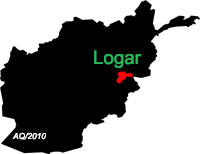 8am: The residents of Logar province have reported that an internal aid organization has distributed empty envelopes to the flood victims of this province, instead of cash. A number of residents of Logar province told Hasht-e Subh that a foundation under the name of “Cash Aid” has distributed empty envelopes to the victims of the recent flood. In the meantime, it is said that corruption in the process of providing assistance to the victims is not limited only to Logar province. Sources in Maidan Wardak province have reported that the Taliban have distributed the aid packages to their family members and relatives instead of the deserving people of the province. Click here to read more (external link).
Over 23 Million ‘Immoral’ Websites Blocked in Afghanistan: Minister
 Tolo News: The ministry of communications and information has blocked more than 23 million websites that were posting immoral content in Afghanistan, the acting minister said on Thursday. “We have blocked 23.4 million websites. They are changing their pages every time. So, when you block one website another one will be active,” acting Minister Najibullah Haqqani said. Click here to read more (external link).
Taliban Make Millions From Passports Issued to Fleeing Afghans
 Akmal Dawi
VOA News
August 24, 2022
Since taking power last year, the Taliban have issued more than 700,000 passports to Afghan nationals inside the country, earning about $50 million in revenue, according to officials.
“We are issuing up to 4,000 passports daily and we aim to increase the number to 10,000,” Shirshah Quraishi, deputy director of Afghanistan’s passport department, told reporters Tuesday in Kabul.
Fearing the Taliban’s repressive rule, with many enduring hunger and poverty since their return to power, hundreds of thousands of Afghans have fled the country over the past year.
The U.S. government, which evacuated more than 120,000 Afghans last year, plans to resettle thousands of additional Afghans to the U.S. through the Special Immigration Visa and Priority-2 programs.
About half a million Afghans are estimated to have left their country in the months immediately after the Taliban’s takeover, according to the U.N. refugee agency.
While the Taliban have banned women from work, except in the health and education sectors, and have closed secondary schools for girls, passports have been issued both for male and female applicants, a Taliban official said.
The Taliban leadership also made more than $1 million in visa fees paid by more than 4,100 foreign nationals who have visited Afghanistan over the past year.
Passport and visa income is a small portion in the Taliban’s budget of about $2 billion for 2022 that reportedly is incurring a $500 million deficit.
Foreign donors have stopped all nonhumanitarian aid to Afghanistan following the Taliban’s takeover of the country, contributing to massive unemployment, heightened poverty and a widespread humanitarian crisis. Afghanistan received $4.2 billion in developmental assistance in 2020.
Corruption
While some observers say that the Taliban have tackled corruption, particularly in revenue-generating sectors such as customs, getting a new passport remains mired in bribery and administrative corruption.
“I paid $800 in bribes and illicit commissions to get a passport,” said Farzana, an Afghan woman who has applied for a U.S. visa in Pakistan and preferred not to use her surname in this article.
Two other Afghans who recently got their passports in Kabul gave similar accounts of outright graft in the process.
Even Taliban officials acknowledge the corruption.
“We have arrested more than 350 corrupt individuals, including tens of [passport department] employees,” said Quraishi, who urged the media to help report corruption in the passport department.
Passports of nonexistent government
To meet the high demand from Afghans who want to leave the country, Taliban authorities have finalized plans to print 2 million new passport booklets.
Lacking the print technology inside the country, the Taliban have sought assistance from the U.N. to produce the new passports in Lithuania, officials said.
A spokesperson for the U.N. Assistance Mission in Afghanistan was not available to answer questions about helping the Taliban print new Afghan passports abroad.
“The new passports will carry the logo of the republic,” said Quraishi, referring to the former Afghan government.
More than a year since the collapse of the former Afghan government, no country has officially recognized the Taliban’s Islamic emirate, which has annulled the Afghan constitution and changed the national flag, emblem and other official logos.
“Taliban cannot introduce new passports until their regime is recognized internationally,” Ali Ahmad Jalili, a former Afghan interior minister and ambassador, told VOA.
Afghanistan’s passport is ranked the least powerful travel document in the world by the 2022 Henley Passport Index, facilitating entry to no country without a visa.
Senior Clerics Caught In The Crossfire Of The Taliban’s Intensifying War With IS-K
 By Abubakar Siddique
Radio Free Europe/Radio Liberty
August 24, 2022
As the Taliban intensifies its war against Islamic State-Khorasan (IS-K), religious clerics associated with the rival militant groups are being caught in the crossfire.
IS-K militants have been blamed for the assassination of several pro-Taliban clerics in Afghanistan in recent weeks. The Taliban has also been accused of killing religious figures with alleged links to IS-K.
Many IS-K fighters are members of Afghanistan’s small Salafist community, an ultraradical sect under Sunni Islam. Most Taliban fighters are followers of the Hanafi school of Islam, a rival Sunni denomination. The Salafists, also known as Wahhabis, see other branches of the faith as heretical.
Since seizing power in August 2021, the Taliban has waged a brutal crackdown on Salafists, who are believed to number several hundred thousand and are mainly concentrated in the eastern provinces of Nangarhar, Kunar, and Nuristan.
Salafists accuse the Taliban of detaining and killing members of the community, and raiding and closing their mosques and religious seminaries. The Taliban’s clampdown has coincided with its intensifying war with IS-K militants.
Observers say the rising number of killings of rival Hanafi and Salafist clerics has recently become the main feature of the Taliban’s escalating war with IS-K militants.
“In the coming months, we might see more assassinations of religious figures, claimed by IS-K or unclaimed,” said Riccardo Valle, the co-founder of The Khorasan Diary, an online platform that tracks militant groups in Afghanistan and Pakistan. “The group wants to terrorize its enemies and fuel sectarian clashes.”
Spate Of Killings
On August 17, an explosion ripped through a mosque in Kabul that killed prominent Hanafi cleric Mullah Amir Mohammad Kabuli. At least 20 worshippers were also killed and dozens more wounded in the attack. No group claimed responsibility for the attack, although observers say it bore the hallmarks of similar attacks carried out in the past by IS-K.
The attack followed the August 11 killing of Rahimullah Haqqani, a prominent Hanafi cleric and Taliban ideologue. IS-K claimed responsibility for the bomb attack on Haqqani’s religious seminary in Kabul that also killed the cleric’s brother, son, and several close associates. Haqqani was known for having heated religious discussions with Salafi religious scholars.
In an August 21 statement, IS-K threatened to carry out more attacks on clerics who “slander” the militant group.
Last month, a top Salafist cleric who had pledged allegiance to the Taliban was mysteriously killed in his home in Kabul. Sardar Wali Saqib was stabbed to death just days after attending a gathering of pro-Taliban clerics. The Taliban blamed IS-K for the killing, although others blamed anti-Salafist figures within the Taliban’s ranks.
In November, a little-known IS-K ideologue Abu Mustafa Darveshzadeh was killed. He had written a highly critical book about the Taliban’s approach to implementing Islamic Shari’a law.
In September, one of Afghanistan’s most prominent Salafist clerics, Abu Obaidullah Mutawakil, was kidnapped in Kabul. His mutilated and burned corpse was found days later. He had been previously jailed for alleged links to IS-K. But his supporters deny that he had any affiliation with the group. The Taliban denied it had killed Mutawakil and pledged to investigate his death.
‘Resistance To The Taliban’
Clerics have not been the only members of the Salafist community to be targeted. Rights groups have said that civilians with no links to IS-K have been allegedly arrested, tortured, or killed by the Taliban.
In a July report, Human Rights Watch said that residents of Kunar and Nangarhar had discovered some 100 corpses in rivers and canals. Many of them were Salafists and alleged IS-K members who had been arrested by the Taliban.
Qari Eisa Mohammadi, an exiled Afghan cleric, says the Taliban’s alleged killing of Salafist clerics and other members of the community are pushing many into the hands of IS-K.
“The Salafists are thinking that if they fail to unite to put up resistance against the Taliban, the group will keep on killing its religious scholars one after another,” he said.
Andrew Mines, a research fellow at George Washington University, says the Taliban’s violence makes it “much easier for IS-K to mobilize fence-sitters and potential supporters to action.”
Observers say the Taliban sees IS-K as a direct threat to its rule and legitimacy, leading it to deal ruthlessly with IS-K and Salafists more generally.
“The Taliban [wants] to silence any opposing voices and discourage others from following in the same footsteps,” said Mines.
Since it first emerged in neighboring Pakistan in the early 1990s, the Taliban has allied itself with Al-Qaeda, a Salafist terrorist network, and absorbed smaller Salafist groups.
But the Taliban has opposed IS-K since its emergence in 2015, when turf wars erupted between the two groups. U.S. drone strikes and Afghan special forces also targeted IS-K strongholds in eastern Afghanistan.
Since the Taliban takeover of Afghanistan, there has been a surge in IS-K attacks against the Taliban.
Experts say the extremist Islamic State-Khorasan has been bolstered by the diminished U.S. counterterrorism presence in Afghanistan and the Taliban’s inadvertent release of hundreds of IS-K inmates from prisons during its sweep of the country last summer.
Observers predict a bloody and protracted war between the Taliban and IS-K.
“This war is not easy to contain,” says Sami Yousafzai, a veteran Afghan journalist and commentator who has tracked the Taliban since its emergence in the 1990s. “Both sides have their sectarian vision, which they want to impose on the other.”
Copyright (c) 2022. RFE/RL, Inc. Reprinted with the permission of Radio Free Europe/Radio Liberty, 1201 Connecticut Ave NW, Ste 400, Washington DC 20036.
Afghanistan refugees protest in UAE over stalled resettlement
 ME Monitor: Hundreds of Afghan refugees and migrants held a protest in the UAE where they have been living in limbo since they were evacuated from Afghanistan following the Taliban takeover in August 2021. On Monday and Tuesday demonstrators carried banners and called for reprieve inside an Abu Dhabi facility, according to Reuters, citing two Afghans who reside there, where thousands are said to be awaiting resettlement to the US and other countries. “Nearly one year, we have been here in detention and the camp is like a modern prison. No one is allowed to go out, they don’t know when [we] will be settled permanently to any country,” one of them told Reuters. Click here to read more (external link).
3 Taliban Fighters Killed in NRF Attack in Kapisa
 8am: A source in the NRF, who does not want to be named, told Hasht-e Subh that the attack was carried out on Tuesday night (August 23rd) on a Taliban outpost in Panahkhel village of the first district of Kapisa province. In this attack, 3 Taliban fighters were killed and 3 others were wounded. Click here to read more (external link).
Related
Tolo News in Dari – August 24, 2022
Flood death toll rises to at least 182 people in past month
 Ariana: The Ministry of State Disaster Management said Wednesday at least 182 people have died and more than 250 have been injured in flash floods in different parts of the country in the past month. According to the ministry, floods have destroyed hundreds of houses, damaged thousands of acres of agricultural land and killed thousands of livestock. In addition, thousands of families have been affected and are in need of urgent humanitarian assistance. Click here to read more (external link).
Related