

Taliban Sohail Shaheen
Ayaz Gul
VOA News
August 25, 2022
ISLAMABAD — Afghanistan’s Taliban on Thursday called for ending the travel ban on some of their leaders to help advance diplomacy, as the U.N. Security Council remains divided over whether to grant the exemption.
A Security Council waiver allowing 13 Taliban leaders, including Foreign Minister Amir Khan Muttaqi, to travel abroad expired last Friday, after member states failed to agree on a possible extension in the exemptions.
“[The] travel ban is tantamount to the closing of the door of engagement and talks. It is a hurdle in the way of resolving issues through peaceful means,” Suhail Shaheen, who heads the Taliban’s political office in Qatar, told VOA.
A total of 135 Taliban officials are subject to sanctions, including asset freezes and travel bans, under a 2011 Security Council resolution. The 13, though, were granted exemptions from the travel ban to allow them to conduct peace talks with officials from other countries, including the United States, and the Security Council regularly renewed the exemptions.
The waiver ended last Friday, though, after objections from Western nations to its automatic renewal, citing the Taliban’s failure to uphold their commitments that they would respect human rights of all Afghans, including women, form an inclusive government, and fight terrorism.
The United States and allied nations have proposed granting the travel waiver to a lower number of Taliban officials and limiting their travel only to Qatar, where U.S. officials have routinely held talks with Muttaqi-led Taliban delegates in recent months.
China and Russia, however, advocated allowing all 13 officials of the Islamist group, which seized power in Afghanistan a year ago, to continue to travel. Chinese officials have argued against linking human rights to travel issues, deeming it “counterproductive.”
“In this critical time, I hope it is dawned on all that it is a need for diplomacy and dialogue. It is worth mentioning that we greatly appreciate the efforts of all those who are supporting the travel ban waiver,” Shaheen told VOA.
Until Security Council members reach a deal, none of the Taliban officials on the sanctions list can travel abroad.
Despite the split over whether to extend the travel ban waiver, a U.S. State Department spokesperson in Washington stressed the need for engagements with the Taliban.
“The exemption expired on August 19, and discussions on whether to grant an exemption remain ongoing, and a decision requires consensus among other members of the Security Council,” said Vedant Patel.
“Generally, we see the need to continue limited engagement with the Taliban to help the Afghan people, and have found that face-to-face discussions in third countries have proven to be useful to advance our interests, to advance our national security interests,” Patel added.
In June, the Security Coucil’s Afghanistan Sanctions Committee had removed two Taliban education ministers from the exemption list to protest the continued ban on secondary school education for girls across most of the country.
Late last month, the United States announced the killing of al-Qaida leader Ayman al-Zawahiri in a drone strike against his safe house in the heart of Kabul. The presence of one of Washington’s most wanted men in the Afghan capital called into question the Taliban’s counterterrorism pledges.
Analysts say the Taliban’s reneging on their pledges is making it difficult for the U.S. and allied nations to push for an early release of billions of dollars in frozen Afghan central bank assets, held internationally.
“Unfortunately, the Taliban have not done anything to make it politically easier for the U.S. to unfreeze the assets, given the facts that they are still banning girls from going to secondary schools, that the leader of al-Qaida was found right in the middle of central Kabul,” said Barnet Rubin, a former senior advisor at the U.S. State Department.
“All of those things indicate that improving their relations with the outside world is not important priority for them,” Rubin told an online discussion this week on how to deal with the Afghan humanitarian crisis. China’s state television organized the event in partnership with an Afghan news channel.
Meanwhile, chief Taliban spokesman Zabihullah Mujahid reiterated Thursday they had not found the body of al-Zawahiri and investigations into the U.S. claims of the slain al-Qaida leader’s presence in Kabul were continuing.
Speaking at a news conference, Mujahid also demanded the U.S. stop flying drones over Afghanistan’s airspace in breach of their country’s sovereignty, saying the Taliban had taken up the issue with U.S. officials. “If they the U.S. government has any concerns they should share them with us,” the spokesman insisted.
The Taliban reaction came in response to reports that U.S. drones had been seen flying over southern Kandahar province and surrounding areas Wednesday.
VOA’s State Department Bureau Chief Nike Ching contributed to this report.
 ME Eye: Tehran seems to be supporting the NRF in a limited fashion. Massoud is reportedly close to senior figures in the Iranian leadership, including Qods Force commander Esmail Qaani, and his group is said to receive funding from the government. In backing Massoud, Iran is continuing its old hedging strategy in Afghanistan. The Taliban has so far not proven to be a reliable partner for Tehran, so it makes sense to keep another option in its back pocket. For now there is little appetite in any foreign capital to patronise Massoud and foment resistance against the regime, given the chaos that might ensue. But if the Taliban’s grip on power weakens, Iran will want to get behind the winning horse. Tehran’s ties to the NRF are about more than Afghan politics, though. They are also a consequence of popular feeling in Iran, which is strongly supportive of Massoud and his late father.
  Blockworks: Crypto became critical for some in Afghanistan following the Taliban takeover last year, but authorities are now coming down hard on the local scene, reportedly shuttering at least 16 crypto exchanges in the country’s western Herat province. The move comes three months after Afghanistan banned crypto trading in the country, noted local independent outlet Ariana on Wednesday. It didn’t mention which crypto exchanges were affected by the closures. Google trends data shows web searches for “bitcoin” and “crypto” had risen just before the takeover. Afghanistan even entered the top 20 countries in Chainalysis’ Global Crypto Adoption Index in 2021, which maps the prevalence of digital assets across the world.
  Ariana: Afghanistan’s Meteorological Directorate has once again issued flood warnings for at least 20 provinces across the country valid Friday and Saturday. This comes as Afghans battle an increasing humanitarian crisis made worse by the ongoing floods, which have left over 180 people dead in the past two weeks. On Thursday, the weather service warned that heavy rains and flash floods can be expected across eastern, south-eastern and north-eastern provinces. Forecasters warned that up to 60mm of rain is likely to fall in some already water-logged provinces, including Ghazni, Uruzgan, Paktia, Paktika, Khost, Zabul, Logar, Maidan Wardak, Parwan, Kapisa, Panjshir, Nuristan, Kabul and Kunar.
 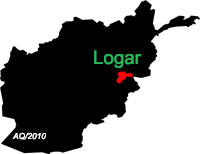 8am: The residents of Logar province have reported that an internal aid organization has distributed empty envelopes to the flood victims of this province, instead of cash. A number of residents of Logar province told Hasht-e Subh that a foundation under the name of “Cash Aid” has distributed empty envelopes to the victims of the recent flood. In the meantime, it is said that corruption in the process of providing assistance to the victims is not limited only to Logar province. Sources in Maidan Wardak province have reported that the Taliban have distributed the aid packages to their family members and relatives instead of the deserving people of the province.
  Tolo News: The ministry of communications and information has blocked more than 23 million websites that were posting immoral content in Afghanistan, the acting minister said on Thursday. “We have blocked 23.4 million websites. They are changing their pages every time. So, when you block one website another one will be active,” acting Minister Najibullah Haqqani said.
  Akmal Dawi
 By Abubakar Siddique
 ME Monitor: Hundreds of Afghan refugees and migrants held a protest in the UAE where they have been living in limbo since they were evacuated from Afghanistan following the Taliban takeover in August 2021. On Monday and Tuesday demonstrators carried banners and called for reprieve inside an Abu Dhabi facility, according to Reuters, citing two Afghans who reside there, where thousands are said to be awaiting resettlement to the US and other countries. “Nearly one year, we have been here in detention and the camp is like a modern prison. No one is allowed to go out, they don’t know when [we] will be settled permanently to any country,” one of them told Reuters.