
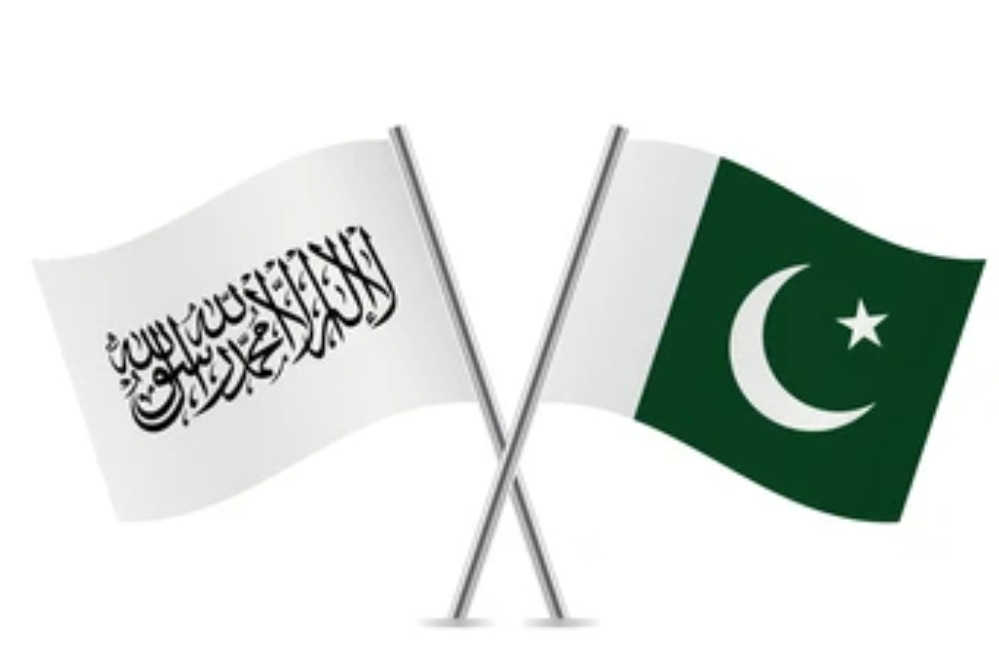
 Michael Hughes: Although the Taliban at the moment may not need weapons from Rawalpindi due to the gifts left behind by the U.S. military, Afghanistan needs Pakistan as an export market, while Islamabad, for its part, needs the regime in Kabul to deny the Pakistani Taliban (TTP) sanctuary. However, despite these mutual strategic necessities, tensions between Kabul and Islamabad are seeming to rise by the day because of other diverging interests. A major driver of the cleavage is the Afghan Taliban’s egoistic need to no longer be seen as Pakistan’s “proxy” warriors. This goes hand-in-hand with a strong interest in maintaining its Islamist bonafides when it comes to dealing with TTP. Afterall, what kind of hardcore Islamic radical movement throws Muslim insurgents under the bus? Click here to read more.
Tolo News in Dari – October 8, 2022
Explosion injures three in Kabul: officials
 Ariana: As a result of an explosion in Kabul’s Dewan Begi area PD5 Saturday morning, three civilians were injured, sources said. Khalid Zadran, Kabul police spokesman confirmed the blast in a tweet, saying it was due to a mine placed in a roadside flowerpot. No group has claimed responsibility for the incident yet. Click here to read more (external link).
Four Taliban Members Killed and Wounded in NRF Offensive on Military Bases in Baghlan Province
 8am: Four Taliban members were killed and wounded in the NRF attack on military bases in Baghlan province. Sources claimed that this attack was carried out on Friday night, October 7th, at a Taliban camp in Charkh Wa Falak village, Khost district, Baghlan province. Click here to read more (external link).
Afghanistan beat Mongolia 5-0 in AFC U-17 Asian Cup Qualifiers
 Ariana: Afghanistan U-17 team thrashed Mongolia 5-0 in the Asian Cup Qualifiers in Tajikistan capital Dushanbe on Friday. Hakim Khan Niazi claimed a hat-trick as he scored three goals in the first half of the play. Afghanistan will next take on Tajikistan on Sunday. Click here to read more (external link).
Pakistani Army Chief’s US Visit Seen as Bid to Redefine Ties

Bajwa
Sarah Zaman
VOA News
October 7, 2022
WASHINGTON — A recently concluded six-day visit to Washington by Pakistan’s powerful military head, Chief of Army Staff Gen. Qamar Javed Bajwa, is being seen in both countries as a sign that Islamabad is seeking to mend sometimes-strained relations with the West.
Public statements released by officials from both countries emphasized finding areas to cooperate on, following years of mistrust and suspicion during the two-decade-long U.S.-led war in Afghanistan.
Bajwa, whose second three-year term ends in a few weeks, was welcomed at the Defense Department by U.S. Secretary of Defense Lloyd Austin for a meeting Tuesday with senior American military officials.
In a brief statement highlighting the 75-year history of relations between the U.S. and Pakistan, the Pentagon said, “This long-standing partnership continues today with discussions focused on opportunities to address key mutual defense interests.” A day later, Austin tweeted a picture of himself greeting Bajwa (seen above).
According to a statement issued by ISPR, the Pakistani military’s media wing, Gen. Bajwa also discussed deepening ties beyond security and intelligence. It said U.S. officials agreed that the historic ties between both countries “shall continue improving through economic ties, trade and investment” and the Bajwa stressed the need for continued assistance to Pakistan for flood relief and rehabilitation after this summer’s devastating monsoon rains.
During his tour, Bajwa also met with White House National Security Adviser, Jake Sullivan and Deputy Secretary of State Wendy Sherman, according to the Pakistani military’s media wing. The State Department declined to comment on “the specifics of private diplomatic conversations.”
Afghanistan factor
This visit, Bajwa’s first since 2019, came more than a year after the U.S. withdrawal from Afghanistan.
Islamabad’s former ambassador to Washington, Husain Haqqani, told VOA, however, that while Pakistan does not want to be ignored by the global power, the U.S. now has a more modest need for Pakistan.
Kamran Bokhari, a security affairs expert and director of analytical development at New Lines Institute, a Washington-based think tank, told VOA the visit “is a sign that the state of Pakistan, not any particular government, wants to re-establish ties with the West.”
Following the U.S. withdrawal from Afghanistan and the Taliban back in power, Bokhari said Washington and Islamabad are assessing “how Pakistan [will] help the U.S. keep a check on Afghan Taliban activity with regards to transnational jihadism and terrorism.”
“Related to it is Pakistan’s concern that the U.S. help with its efforts against the TTP,” he said.
TTP or Tehreek-e-Taliban Pakistan, is a terrorist group that has mounted hundreds of deadly attacks on Pakistani military and civilian targets since 2007. Pakistani military operations have pushed the TTP leadership into Afghanistan, but its fighters remain on both sides of the border.
Bilateral relations between the United States and Pakistan have been troubled by mutual distrust, including the refusal of the previous administration in Islamabad to allow the U.S. access to its military bases for post-withdrawal counterterrorism operations in Afghanistan.
But Bokhari noted that cooperation between the two countries’ military and intelligence services never stopped and said he expects that cooperation to continue.
China factor
Tamanna Salikuddin, director of the South Asia program at the U.S. Institute of Peace and an Obama-era National Security Council member, told VOA that since the conclusion of the Afghan war, relations between Washington and Islamabad will largely be determined by “the geopolitical competition, global competition, between U.S. and China.”
“So, where does Pakistan fit into that, especially given their strong military, security, economic ties with China — but also, I think, trade ties, longstanding security ties with the U.S.?” she asked.
America is Pakistan’s largest bilateral trade partner, with an annual trade volume of almost $6 billion. Neighboring China is the biggest state investor, with close to $60 billion in infrastructure projects through the China-Pakistan Economic Corridor (CPEC) segment of Beijing’s Belt and Road Initiative.
Pakistani civilian and military leaders have said they don’t want to choose between a “China camp” or a “U.S. camp,” and Haqqani said the U.S. neither can nor wants to replace China for Pakistan.
“Thirty percent of Pakistan’s debt is currently owed to China. That means the United States would have to somehow pump billions of dollars into Pakistan to replace China. Considering that there is lack of trust between Pakistan and the United States, I don’t see any appetite in the U.S. for putting that kind of money into Pakistan,” he said.
India factor
Just a few weeks before the Pakistani military chief’s visit to Washington, the Biden administration asked Congress to approve a $450 million foreign military sale to Pakistan to service the country’s F-16 fighter jets, most of which are decades old.
Despite this proposal, “The United States has not resumed large-scale bilateral security assistance to Pakistan,” the State Department told VOA. Such assistance has been suspended since 2018.
Nevertheless, the move irked India, which fears Pakistan could use the fighter planes against it, even though the sale agreement requires that the jets be used only for counterterrorism purposes.
“Now that India is closer to the United States than Pakistan is, they would like to keep it that way,” Haqqani said.
Domestic factor
Gen. Bajwa’s arrival in Washington a few weeks before his term ends in late November fueled speculation he might be seeking U.S. support for a bid to extend his term for a second time.
According to Dawn News, Bajwa dispelled rumors he’s seeking an unprecedented third term, and analysts that spoke to VOA rejected the notion that Washington would get involved in the matter.
Salikuddin pointed out that Austin extended the invitation at the beginning of this year, long before Bajwa’s term was drawing to a close, and she said the delays were largely caused by Pakistan’s internal political turmoil.
Given that the army has ruled Pakistan for much of its existence, civilian governments remain unstable and anti-American sentiment is prevalent among the public, experts say the U.S. sees Pakistan’s military as a stable actor with which it can build a long-term relationship, regardless of who leads it.
As Bokhari put it, “the Americans know that they’re not dealing with Gen. Qamar Javed Bajwa as the person who’s going to step down on November 29. They’re dealing with the current chief of the Army staff, and they will continue with the office of the Chief of the Army Staff and everything that comes with it.”
Tribal Figure Disappears After Being Arrested by Taliban in Ghor Province

8am: Sources told Hasht-e Subh today (Friday, October 7th) that the Taliban had arrested Ahmad Khan Rasooli and his son a week ago in the center of Ghor province. Relatives of this tribal figure say that they have no information on the whereabouts of the detainees. Ahmad Khan Rasooli was previously one of the supporters of the Taliban and played a key role in handing over areas in Ghor to the Taliban. Click here to read more (external link).
Tolo News in Dari – October 7, 2022
Hazaras fear a new genocide by the Taliban
 Atalayar: The Hazara community, one of the ethnic groups in Afghanistan that have suffered the most persecution throughout its history, stands out in this regard. Life for the Hazaras has never been easy due to their differences with the rest of the Afghan communities, in particular with the Pashtuns, one of the main ethnic groups in the country. The Taliban, while condemning these attacks, do not investigate them. “Many see no difference between the Taliban and Daesh,” says Najafizada, who complains that the current regime has taken no practical steps to end discrimination and attacks. Click here to read more (external link).
Related
Amnesty International Calls for the Release of Afghan Protesters by Indian Government
 8am: Yesterday, the Indian police prevented the protests of Afghan citizens in Delhi by arresting a number of protesters. In response to the New Delhi Police, Amnesty International asked India on Twitter on Thursday (October 6th) to release the Afghan protesters. Amnesty International has added that the protestors of the deadly attack on the Kaj Education Center were arrested by the Indian police despite having a permit to hold the protest. Click here to read more (external link).
Related