
THREAD: 1/10
I lived & worked in #Afghanistan for 4 years.
I travelled to most provinces; made dear friends; learned the language.
Right now,I can’t go back. Here’s why:
Over the past years, journos working in AF have largely been operating freely.This has drastically changed.— Stefanie Glinski (@stephglinski) October 10, 2022
Akmal Dawi
VOA News
October 13, 2022
After imposing a series of restrictions on Afghan journalists, including mandatory face masks for female television anchors, the Taliban now appear to be targeting foreign journalists they deem biased and critical of their governance.
In the latest move, Taliban authorities banned Stefanie Glinski, a freelance journalist, from returning to Afghanistan. Glinski had covered Afghanistan for various international media outlets over the past four years and recently reported on the desire of some Afghan women to flee Taliban rule.
“The Taliban contacted me regarding my work. I was told that ‘relevant [Taliban] departments have a few concerns’ & that they want ‘details.’ I was also accused of making allegations when I had clearly stated that it’s others making these allegations; I was simply reporting,” Glinski wrote on her verified Twitter account on October 10.
Glinski said the Taliban sought information, via WhatsApp, about her sources, but she refused, fearing doing so would put her contacts at jeopardy and compromise her journalistic integrity.
“They told me that the government will be holding all sides accountable from now onwards, and anyone found breaking the law or unable to substantiate reports […] will be dealt with according to the law, which includes cancellation of visas & non-entry to Afghanistan,” Glinski said on Twitter.
VOA reached out to Taliban chief spokesperson Zabihullah Mujahid and foreign ministry spokesperson Abdul Qahar Balkhi for comment, but neither answered his phone.
Lynne O’Donnell, a columnist for Foreign Policy magazine who was briefly detained by the Taliban in July, says she was “threatened, abused, detained, interrogated and forced to make false confessions, on Twitter & on video.”
Speaking to VOA, O’Donnell condemned the Taliban as “liars, fantasists, murderers, drug dealers, and terrorists.”
“Why would they want the truth of their method of staying in power through violence, arbitrary detention, torture and killing with impunity to be revealed to the world by journalists with integrity when their biggest aspiration is to gain the diplomatic recognition that would give them legitimacy?” she asked.
Rejecting O’Donnell’s allegations, Taliban authorities have accused her of openly supporting anti-Taliban forces and “falsifying reports of mass violations” by Taliban forces.
In August, the Taliban also detained a Pakistani journalist working for an Indian channel when he was seen filming the site of a U.S. drone strike in Kabul where al-Qaida leader Ayman al-Zawahiri was killed.
An Indian journalist who did not want to be named told VOA she was fearful of the Taliban’s new vetting and security procedures and had therefore delayed her return to Afghanistan.
Not surprising, no coincidence
“If visas have been stopped or withdrawn, it’s hardly surprising,” said Yvonne Ridley, a British journalist and author who was detained for 11 days by the Taliban in 2001 for illegally entering Afghanistan.
She said many countries, including the United States, deny visas to journalists suspected of biased reporting. U.S. officials have occasionally barred entry to journalists in recent years, such as a Yemeni journalist who was denied entry for a Pulitzer Prize ceremony in 2019.
Ridley said she recently visited Afghanistan without facing any restrictions.
“I managed to get access to all key ministers, and a main focus of my last trip was interviewing ordinary Afghan women who had never been given the chance to voice their opinions or views, ever,” she told VOA.
The Taliban are widely condemned for their restrictions on women’s education, livelihood and rights, but some Taliban officials, including high-profile Interior Minister Sirajuddin Haqqani, have sat for exclusive interviews with foreign female journalists.
Most foreign media outlets left Afghanistan immediately after the Taliban seized power last year. An exodus of Afghan journalists has ensued as hundreds of Afghan media personnel have left the country over the past year.
At least 215 of the country’s 540 media outlets have closed because of financial, social and political problems since last year, according to Reporters Without Borders.
“Two female foreign journalists have been targeted [by the Taliban], and we don’t think it’s a coincidence,” Pauline Adès-Mével, editor in chief of Reporters Without Borders, told VOA. “We consider it a big problem.”
Holding power to account
Backed by foreign donors, Afghanistan had a vibrant media landscape and progressive press laws prior to the return of the Taliban to power last year.
While Taliban officials say they are committed to a free press within the boundaries of Islam, independent observers point to their actions in limiting media freedoms and the many restrictions the Taliban have imposed on journalists.
As access to facts becomes more difficult in Afghanistan, rumors and misinformation often distort descriptions of actual events in the country.
“Access to information is [a] basic and internationally recognized right of every human being, and that doesn’t exempt Afghanistan,” said Adès-Mével. She said an information blackout will not serve the Taliban.
From O’Donnell’s perspective, journalists should hold groups like the Taliban accountable for their actions.
“Those who are not doing that are not doing their job,” she said.
 By Omid Zahirmal
 Khaama: Qari Salahuddin Ayubi, an Uzbek commander of the Taliban, has severed ties with the Taliban group in objection to what he refers to as “ethnicist policies, and monopoly of power.” The disaffected Taliban commander has reportedly left Kabul, the Afghan capital, and is now at his base in Faryab province in northern Afghanistan, BBC reported. Salahuddin Ayubi, according to the BBC report, has brought up the issues for the Taliban to realize “inclusive governance, women’s full access to education, and cessation of forced usurpation of people’s lands.”
  8am: Sources report that the Taliban group arrested another Panjshiri resident in Kabul and then shot him dead. The body of the victim whose name was Abdul Hamid was found by his family members at a hospital in Kabul on Wednesday, according to sources. The Taliban had reportedly arrested the victim 11 days ago in Kabul’s Kolola Poshta area.
  Ayaz Gul
 8am: In a newsletter, the Central Bank of Afghanistan under Taliban control said Wednesday it had received another cash package of 40 million dollars from the international community which was deposited in a commercial bank. Over the past ten days, this is the fourth package of 40 million dollars that reaches Kabul. Other packages worth 40 million dollars also arrived in Kabul on the 11th, 12th and 19th of this month.
  ANI: Afghanistan’s economy is already in shambles. The international community has not recognized the Taliban-led government in power. Afghanistan’s overseas funds are also frozen. Under these circumstances, Chinese investment is a ray of hope for the Taliban. However, promising is one thing and actually investing in the country is another.
  Espncricinfo: The Afghanistan Cricket Board (ACB) is staring at a financial crisis, with ICC funds not able to reach the board after July 2021. Since the Taliban’s return to political power in August 2021, international sanctions have made it increasingly difficult to send money into the country. ESPNcricinfo understands that while the ACB has completed pending payments to players at all levels as well as the coaching staff, it will be able to pay only 30% of the salaries to employees and other staff working in Afghanistan.
 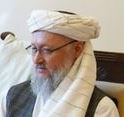 Khaama: Abdul Salam Hanafi, the deputy prime minister of the Taliban, stated during a meeting with Richard Bennett, the UN special rapporteur on the situation of human rights in Afghanistan, that human rights violations in Afghanistan are mere “Facebook rumors.” The UN special rapporteur on the situation of Afghanistan, Richard Bennett, whose mandate was extended for another 12 months, visited the Taliban Deputy Prime Minister on Tuesday, October 11.