
UNGA: Depriving Girls, Women Stunts Afghanistan’s Development

Tolo News: At the United Nations General Assembly meeting held on November 10 on Afghanistan, several attendees criticized the policy that keeps Afghan women and girls from education and the workplace, highlighting that Afghanistan is the only country where girls are banned from going to school. The attendees reiterated that such a policy severely stunts development within the country. Click here to read more (external link).
Related
Afghanistan, the Taliban and the Pursuit of Muscle
 Men’s Health: After the Taliban was toppled in 2001, the sport of bodybuilding exploded in Afghanistan. Today, the Taliban has control once again, but while the country’s new rulers disapprove of bodybuilding, gyms are packed. MH has been on the ground in a country that is at best stagnating to find out why gym life has become so important. Click here to read more (external link).
Demand Raises for Longi (Turban) and Kandahari Kolah (Hat), Mullah Yaqoob’s Brand Controls the Market
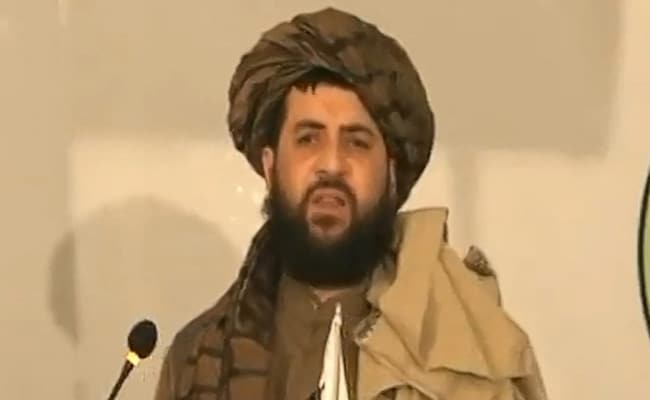
Yaqoob
8am: After the Taliban fighters entered the cities and the group seized control of the country, the Afghan citizen’s situation changed in many ways. It means the life of many citizens has changed against their desire. Hats and longi (turban), which had lost its value during the past two decades, have become the best-selling goods in the market once again since there is a bad economic situation. It means citizens have to buy it. Click here to read more (external link).
Prosecutors launch probe over death of 5 Afghans in Turkiye’s capital
 Daily Sabah: An investigation was launched after Turkish police found the bodies of five Afghan nationals with stab wounds in a house in the capital Ankara on Thursday. The five bodies were found after family members contacted police and reported the five to be missing, Anadolu Agency said. Afghans are believed to be the second-largest refugee community after Syrians. Click here to read more (external link).
UN General Assembly Tells Taliban to Reverse Restrictive Policies on Women, Girls
 Margaret Besheer
VOA News
November 10, 2022
The United Nations General Assembly called on Afghanistan’s Taliban authorities Thursday to reverse their policies and practices restricting the human rights and fundamental freedoms of Afghan women and girls.
“Afghanistan is now the only state in the world that would deny girls their full right to education,” General Assembly President Csaba Korosi told a meeting of the assembly on the situation in the country where the Taliban has been in power for 15 months. “The prospect of girls’ education has been left to uncertainty amid seemingly random edicts from the Taliban.”
His comments come amid new reports from the country that the Taliban are expanding their restrictions on women’s daily lives by forbidding women from going to public parks and gyms. The militant Islamist group already forbids women from seeking a secondary school education.
“To say to a 12-year-old girl, ‘Your brother can go to school. You can’t go to school.’ How can we accept that?” Canadian envoy Bob Rae asked the assembly.
Call carries moral weight
The General Assembly adopted a wide-ranging resolution in a vote of 116 in favor, no countries against and 10 abstentions (which included Russia, China and Pakistan). While the resolution is not legally binding, it does carry the moral weight of the international community.
“The resolution is a clear call to respect, protect and fulfill human rights, develop inclusive governance and fight terrorism,” Germany’s U.N. Ambassador Antje Leendertse said in introducing the text. “It contains a clear message that there cannot be business as usual and no pathway towards recognition without these steps being made.”
In addition to calling on the Taliban to respect the rights of women, girls and minorities, the resolution expressed “serious concern” about the security situation in the country, where attacks by al-Qaida and ISIS-Khorasan — Islamic State’s Afghan affiliate — have been on the rise. The assembly urged the Taliban “to take concrete steps” against the groups.
Resolution links opium industry to terrorism
The resolution also draws a link between Afghanistan’s thriving opium cultivation and the financing of terrorism. The U.N. Office on Drugs and Crime (UNODC) said last week that this year’s opium crop is the country’s most profitable in years. Cultivation soared by more than 30%, covering some 233,000 hectares.
In April, the Taliban banned the growing of opium poppies and all narcotics, but UNODC said this year’s harvest was mostly exempted from the decree. Countries have urged full implementation of the ban.
The assembly also expressed concern about the country’s economic crisis and called for efforts to restore the banking and financial systems, and to enable access to central bank assets outside the country.
Much of that is held by the United States, which is holding part of it for claims by the families of 9/11 victims. But $3.5 billion has been placed in an Afghan Fund that circumvents the Taliban to provide assistance directly to the people.
“These disbursements are intended to help address the acute effects of Afghanistan’s economic and humanitarian crises by supporting Afghanistan’s macroeconomic and financial stability,” said U.S. delegate Doug Bunch.
The country is experiencing a dire humanitarian crisis. A staggering 24 million people need humanitarian assistance. The U.N. has appealed for $4.4 billion for its response plan, which — with winter looming — is only about half-funded.
Taliban’s Governor for Maidan Wardak Entertains Multiple Marriages
 8am: Local sources from Maidan Wardak province report the third marriage of Mawlawi Hafiz Mohammad Amin Omari, the Taliban’s governor for this province, with a young girl. According to sources, yesterday, November 9,, this wedding ceremony was held in Kabul. According to local sources, this Taliban official married a young girl as his third wife in return for a dowry of one million AFN. So far, numerous reports of multipole marriages of prominent Taliban officials and members have been published after the group seized power. Click here to read more (external link).
Banned From Public Parks And Bathhouses, Afghan Women Say Life Under Taliban Is Like A ‘Prison’
 By RFE/RL’s Radio Azadi
November 10, 2022
First came the curbs on girls’ education and women’s right to work, then the enforcement of strict dress codes.
Now, Afghan women have been barred from entering public bathhouses and parks in Kabul following a decision by the Taliban’s notorious Ministry for the Promotion of Virtue and the Prevention of Vice.
It was unclear how the November 9 decision relates to a previous ruling by the ministry that declared that all open-air public spaces, including public parks, must be segregated by gender and women would only be allowed enter on specific days. It was also not clear if the restrictions extended beyond the Afghan capital.
Local resident Maria Tutakhil expressed shock upon learning of the latest limitations imposed on women.
“If another decree is imposed on women, it will be that women cannot even leave the house,” she told RFE/RL’s Radio Azadi.
“What they said — that women can’t go to recreational places and baths — is ridiculous,” she said. “It means that we women are facing a disaster that will be difficult to overcome. Afghanistan is nothing more than a prison for women.”
Habib Jan Zazi, a director at Kabul’s Habibullah Zazi Park — a modern amusement park that features a Ferris wheel, a swimming pool, and other attractions — said that barring women from entering threatens the future of the complex.
“The [ministry] officials announced that women no longer have a right to enter the park, and with this, we are also suffering a lot,” he said. “We have 200 workers and after our income falls, we will have to close the park.”
The closure of public bathhouses, which are often frequented by residents who lack hot water or bathing facilities at home, will place additional burdens on women who are already subject to sweeping restrictions, including on their appearance, access to work and education, and freedom of movement.
“Most families in this cold weather, they can’t draw a warm bath at home,” said Hamira Farhangyar, the former president of Kabul’s Cheragh Medical University. “Where can a mother and her children take a bath?”
The owner of a public bathhouse in Kabul, who spoke to Radio Azadi on condition of anonymity, said that denying women entry to his facility will hit him hard financially.
“The money I earn from the bathhouse supports my family, and after this I will have no income,” he said.
Akif Mohajer, a spokesman for the Ministry for the Promotion of Virtue and the Prevention of Vice, defended the new restrictions on women in comments to Radio Azadi.
He said that the Taliban government has been working since it seized power in August 2021 to find suitable solutions to accommodate women that are in keeping with the militant group’s belief that women and men need to be segregated in public places.
But he said certain places present problems, and that “for the time being” women will not be allowed in public parks or bathhouses.
Copyright (c) 2022. RFE/RL, Inc. Reprinted with the permission of Radio Free Europe/Radio Liberty, 1201 Connecticut Ave NW, Ste 400, Washington DC 20036.
Related
Tolo News in Dari – November 10, 2022
Taliban Arrest and Torture Several Former Soldiers and Officials in Samangan

8am: According to sources, in recent days, the Taliban have arrested several officials and security personnel of the former government in Samangan. Taliban have not been committed to any promise they have made to the people and international community. The employees, particularly the members of the security forces of the former government have been the primary targets of the Taliban across the country. They have tortured, humiliated, killed and taken away with no clear fate. Click here to read more (external link).