
 ICC: Afghanistan have named uncapped wrist spinner Noor Ahmad in their ODI squad for the three-match series against Sri Lanka later this month. Senior all-rounder Gulbadin Naib also returned to the fold after being an injury replacement in the T20 World Cup squad. Noor Ahmad, 18, is yet to make his ODI debut, but is already popular around the world for his performances in T20 franchise league. Click here to read more (external link).
Pakistan says it won’t recognize Taliban without global consensus
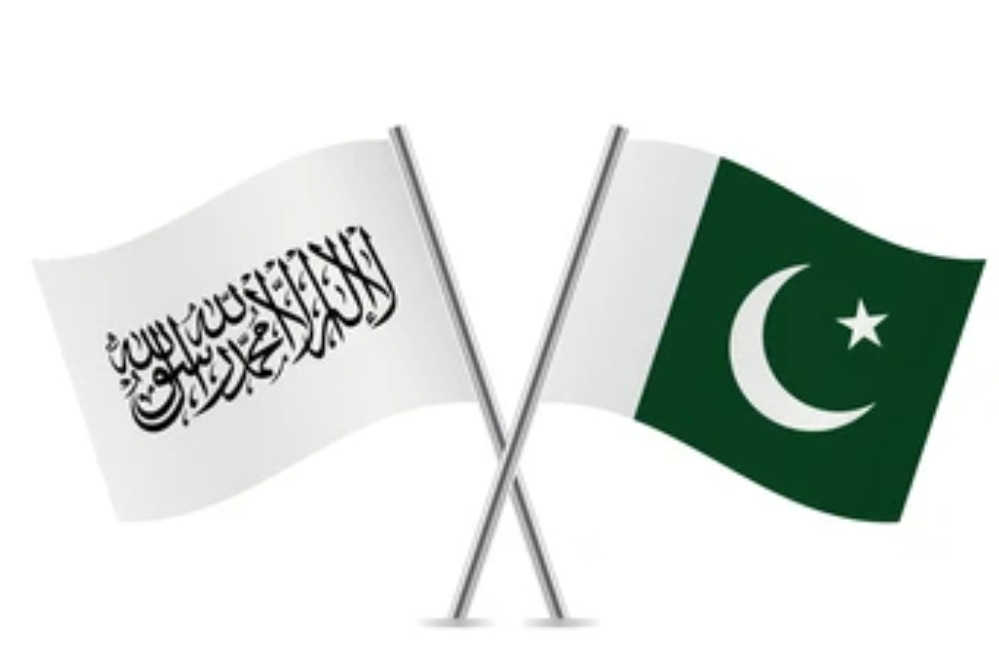 Ariana: Foreign Minister Bilawal Bhutto Zardari told reporters in Islamabad his government continues to advocate sustained international engagement with IEA [Taliban] to help prevent a humanitarian disaster in the war-torn neighboring country. “As far as their official recognition is concerned, Pakistan would not want to take a solo flight and would rather pursue this process with international consensus,” Zardari said. Click here to read more (external link).
Related
Taliban Is a Threat to South Asia: Indian Official

Taliban Militants in Kabul (file photo)
8am: The Indian Union Home Minister Amit Shah said the situation in India’s neighborhood had changed after the Taliban took control of Afghanistan in August last year as the growing influence of Al-Qaida and ISIS was posing a significant challenge to regional security. Click here to read more (external link).
Afghan Who Lost Her Eye In Bombing Wishes Female Students Could Study What They Want
Fatima Amiri lost an eye in a suicide attack on a private college in Kabul on September 30. Just two weeks later, she passed her university entrance exams and plans to study computer science. The Taliban has barred female students from choosing many other university courses, including journalism, economics, engineering, and many social and natural sciences.
Afghanistan to Lose $1 Billion Due to Restrictions on Women’s Work, Says UNDP
 8am: The United Nations Development Program (UNDP) says that restricting women from working costs the Afghan economy $1 billion. The aid group tweeted on Friday (November 18th) that Afghanistan is estimated to lose $1 billion due to restrictions on women’s right to work. Following the Taliban takeover of Afghanistan, women’s freedom to work has been severely restricted, and international organizations report a 32% decrease in women-owned small businesses. Click here to read more (external link).
Related
Turkey pushing tens of thousands of Afghans back at Iran border: HRW
 Ariana: Turkey is routinely pushing tens of thousands of Afghans back at its land border with Iran or deporting them directly to Afghanistan with little or no examination of their claims for international protection, Human Rights Watch said in a report released on Friday. The 73-page report, “‘No One Asked Me Why I Left Afghanistan,’” says that Turkey has stepped up pushbacks and deportations to Afghanistan since August 2021. Human Rights Watch also found that Afghans inside Turkey are being blocked from registering for international protection and that Afghans facing imminent deportation are often given no opportunity to make refugee claims. As of October 20, 2022, the Presidency of Migration Management in Turkey’s Interior Ministry reported 238,448 “irregular migrants whose entrance to our country has been prevented” in 2022, most of them Afghans. Turkey reported deporting 44,768 Afghans by air to Kabul in the first eight months of 2022, a 150 percent increase over the first eight months of 2021. Click here to read more (external link).
Related
1TV Afghanistan Dari News – November 18, 2022
Top TTP Commander Killed in Nangarhar
 8am: The TTP member was found dead on Thursday (November 17th) in a water canal in the Bati Kot district of eastern Afghanistan’s Nangarhar province. The TTP commander has been identified as Saifullah Babuji, a resident of Malakand, Khyber Pakhtunkhwa, Pakistan. Babuji was reportedly a close affiliate of a TTP deputy, Amir Mufti Mazlom. The Taliban has not yet explained how the TTP member was killed. This is the second TTP commander to be killed in the eastern Afghanistan in the past two days. Click here to read more (external link).
Afghans Honor Victims Of Education Center Attack With Books
 By RFE/RL’s Radio Azadi
November 17, 2022
The lives lost when a bomb tore through the Kaaj Higher Education Center in Kabul, killing scores of students and educators, can never be replaced. But the victims’ desire for learning lives on thanks to book drives to establish libraries in their honor.
Fifty-eight people were killed and 126 were injured when the center was targeted by a suicide bomber on September 30 in an area of the Afghan capital predominantly inhabited by members of the Shi’ite Hazara community.
Many of the victims were women and girls who had joined hundreds of other students taking practice university entrance exams. No group claimed responsibility for the attack.
The bombing in the Dasht-e Barchi neighborhood sparked international criticism and large protests against Taliban rule — under which Hazaras have suffered intimidation, discrimination, and violent attacks despite the hard-line Islamist group’s promises to protect ethnic and religious minorities.
But the most lasting efforts to honor the victims may be the establishment of libraries to stand as a permanent reminder of the importance and difficulties of pursuing education in Afghanistan.
Two libraries in Kabul have been filling their shelves with donated books in honor of the victims of the blast.
Anwar Yasa, a professor at the Kaaj Higher Education Center, told RFE/RL’s Radio Azadi that teachers and students have already collected more than 4,000 books to stock a new memorial library at the learning facility.
“The purpose of this library is to keep the memory of the martyrs forever in our hearts so that future generations and other students will not forget that the knowledge we have acquired was not achieved simply; it was achieved through the shedding of students’ blood,” Yasa said. “It can be a message for the next generation that we studied under such conditions yet did not let the flag of science and knowledge fall.”
Yasa still believes that creating a library at the center and promoting the benefits of reading are essential for the advancement of a society, and he is not alone.
Book donations and collection efforts are taking place in provinces across the country, and at least two other libraries have been established in Kabul in honor of the victims of the Kaaj Higher Education Center attack.
One book drive involves an online call for donations and even teams of volunteers going door to door in the western Herat Province, the southwestern Nimruz Province, and the northern Balkh Province.
Khaled Noora, a resident of west Kabul where the deadly bombing took place, has also opened a library there in memory of the victims of the Kaaj Higher Education Center.
A person behind the drive to collect books for that initiative who discussed the effort with Radio Azadi on condition of anonymity out of security concerns said in written comments that the goal is to create a safe reading environment for girls and other young students.
Meanwhile, the families of Marzia and Hajar Mohammadi, two cousins and lifelong best friends who were killed in the September attack, have set up a small library at the site of the girls’ graves where visitors can read the young students’ favorite books.
The bombing has also resulted in hashtags on social media aimed at shedding light on the girls and women who suffer for their pursuit of an education in Afghanistan and on the difficulties Hazaras face under Taliban rule.
Since seizing power in August 2021, the Taliban has banned girls above the sixth grade from attending school. While the militant group has permitted women to attend university, it has imposed gender segregation and a strict dress code at campuses and restricted what women can study.
Hazaras have long been a persecuted minority in Afghanistan. During the Taliban’s first stint in power from 1996-2001, the group terrorized the Hazara community with a campaign of targeted killings.
Since retaking power, the Taliban has tried to assuage Hazaras’ fears of discrimination and persecution. But several thousand Hazaras have been forcibly evicted from their homes and harassment against the minority has been well documented.
Hazaras have been the target of deadly attacks blamed on the Islamic State-Khorasan extremist group, which considers Shi’a apostates who should be killed. The attacks have led to Hazaras demanding that the Taliban protect the community.
Copyright (c) 2022. RFE/RL, Inc. Reprinted with the permission of Radio Free Europe/Radio Liberty, 1201 Connecticut Ave NW, Ste 400, Washington DC 20036.
‘Weapons left by US in Afghanistan being used by militants against Pak security forces’
 The Tribune (India): Weapons and other military equipment left behind by US forces when exiting Afghanistan last year are now being used by militants in attacks against law enforcement and security forces in Pakistan, the media reported. This was claimed by Khyber Pakhtunkhwa (KP) Inspector General of Police Moazzam Jah Ansari while talking to the media on Thursday, Samaa TV reported. Ansari said that after Afghan Taliban took over in Afghanistan on August 15, 2021, many militants in Afghan jails were set free. Click here to read more (external link).