
 BBC News: Afghan media have faced difficulties since the Taliban took power in Kabul on 15 August 2021. Outlets have endured severe restrictions, an economic crisis and waning Western support. There is growing self-censorship and editorial appeasement of the Taliban. Freedom of expression has largely disappeared. Click here to read more (external link).
Tolo News in Dari – January 25, 2023
Ban on NGO Female Employees Will not be Lifted: Taliban Minister
 Khaama: Mullah Mohammad Abbas Akhund, the Acting Minister of Disaster Management of the Islamic Emirate has said the decree banning women employees from working for NGOs will not be lifted, and the international community should respect the Islamic culture of Afghanistan. Click here to read more (external link).
Taliban to Deduct Teachers’ Salaries, Justifying That They Received UNICEF Aid 2 Months Ago

Taliban militants dancing (file photo)
8am: “The Taliban have issued a new order, according to which, the teachers’ two-month salaries will be returned to the [Taliban] government treasury because of UNICEF’s humanitarian aid,” said the teacher. “In this extreme cold, teachers, who desperately need help, are wandering with the question of what to eat and how to pay bills. Is humanitarian aid provided to be taken back from them?” the teacher asked. Recently, an international media outlet reported that the Taliban, since taking over Afghanistan, illegally looted and stored $1 billion of humanitarian aid provided to this country. Click here to read more (external link).
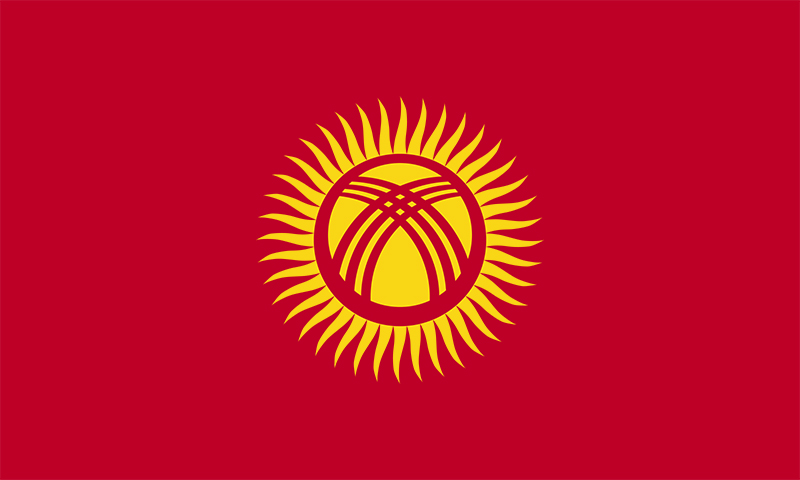
Afghanistan’s Ethnic Kyrgyz Want To Escape The Taliban, But It’s No Easy Task
By Baktygul Chynybaeva
Farangis Najibullah
January 24, 2023
Radio Free Europe/Radio Liberty
Dozens of ethnic Kyrgyz from Afghanistan’s remote Wakhan Corridor are calling on the government in Bishkek to repatriate them to their ancestral homeland so their children can get the education that the Taliban has denied them.
In video statements sent to RFE/RL’s Kyrgyz Service, the families say they are staying in rented homes near the Tajik border in the Ishkashim district of Afghanistan’s northeastern Badakhshan Province as they wait for Bishkek to help them relocate to Kyrgyzstan.
One of the men said they had recently left their homes in Big Pamir and Little Pamir in the Wakhan Corridor — the most remote parts of Badakhshan and home to at least 1,500 ethnic Kyrgyz, also known as the Pamir Kyrgyz.
“We sold all our belongings and livestock and moved here. We can’t return to Pamir anymore,” said Muhammad Abdulzhapar-uulu. “We’re living here with this hope that our fellow Kyrgyz [in Kyrgyzstan] will find us and take us out of here.”
Sitting next to his wife and their three young children, Abdulzhapar-uulu said the couple’s fourth child, a girl, had recently died due to the extreme cold.
Kyrgyz officials say they are aware that nearly 90 ethnic Kyrgyz are waiting for Bishkek to facilitate their repatriation. Bishkek has said it’s committed to repatriate all ethnic Kyrgyz from Afghanistan.
But the Kyrgyz Afghans’ lack of passports and other logistical hurdles were making it difficult for the Kyrgyz government to arrange their return, the officials said.
The Taliban-led government in Afghanistan halted the issuance of passports in October 2022, citing “technical problems” and leaving many desperate Afghan citizens unable to travel abroad.
“There are 88 ethnic Kyrgyz in [the Badakhshan provincial capital of] Faizabad who can’t get passports to come here,” Kyrgyz parliamentary deputy Cholpon Sultanbekova told RFE/RL’s Kyrgyz Service. “As soon as we received appeals from our fellow Kyrgyz, we contacted the relevant Kyrgyz government agencies about it. We also sought financial aid to help the ethnic Kyrgyz there and are waiting for the government’s decision.”.
Kyrgyzstan’s Foreign Ministry hasn’t yet publicly commented on what measures it was planning to help the ethnic Kyrgyz stranded in Ishkashim. The Kyrgyz government relocated 50 Pamir Kyrgyz in 2017 and another 50 in 2019 from Afghanistan for permanent resettlement in Kyrgyzstan.
The returnees have been given homes, access to education and health care, and assistance in finding jobs. As part of a government program for repatriation of ethnic Kyrgyz from abroad, they have also been granted an expedited citizenship procedure.
Those repatriated in 2017 and 2019 have resettled in the eastern Naryn and southern Osh provinces, respectively. Despite the government’s help, however, some of the returnees ended up going back to Afghanistan, saying they found it difficult to adapt to the way of life in Kyrgyzstan.
But that was before the hard-line Taliban came to power in Afghanistan. Now, the Pamir Kyrgyz are pleading with the Kyrgyz government, saying that they fear for the future of their children, especially their education.
The Taliban-led government has banned girls’ education after primary school. And with international aid dwindling since the Taliban takeover, the country is also facing severe economic hardship.
In a video statement, one Pamir Kyrgyz man, Mazhyraiym Abdulzhalil-uulu, said that not only his teenage daughter, but his two sons were left out of school, as the Taliban closed down some of the boys’ schools, too. “I bear responsibility for my children to receive an education. Therefore, I would like to relocate to Kyrgyzstan. I want my daughter to receive an education, so please take us out of here,” he said. “If I die here, my children will be left uneducated.”
Abdulzhalil-uulu said that in Afghanistan he had his own house and relatively comfortable life, but that his family wanted to leave Kyrgyzstan for good to be with their “own people.”
In mid-July 2021, a month before the fall of the Western-backed government in Kabul, 345 Pamir Kyrgyz fled to neighboring Tajikistan as the Taliban advanced toward the north and northeast of Afghanistan.
Kyrgyzstan quickly announced that it was ready to accept the refugees. But Dushanbe sent them back to Afghanistan, saying the Afghan government had guaranteed their safety. The government, however, collapsed the following month.
As the Taliban returned to power, Kyrgyzstan reiterated its commitment to repatriate the ethnic Kyrgyz from Afghanistan.
In September 2021, Kyrgyz President Sadyr Japarov officially launched the construction of a new residential area for the Pamir Kyrgyz in Osh’s Chon-Alai district. The government allocated 30 hectares to build up to 400 residential homes in the area. The project also included various social centers, medical facilities, and a school for 275 children.
Japarov has said he wants to repatriate all ethnic Kyrgyz from Afghanistan to their ancestral home.
In July 2022, the Kyrgyz government said it was setting aside nearly $3 million to return and resettle the Pamir Kyrgyz within the following two years.
Ethnic Kyrgyz have lived in the Wakhan Corridor as far back as the 15th or 16th century, with nomadic Kyrgyz herders using the area to graze their livestock in warmer seasons, according to historians.
Copyright (c) 2022. RFE/RL, Inc. Reprinted with the permission of Radio Free Europe/Radio Liberty, 1201 Connecticut Ave NW, Ste 400, Washington DC 20036.
Cancer Cases on Rise in Afghanistan amid Crumbling Health System
 Khaama: The existing data show that the number of cases in Afghanistan has been increasing compared to last year, officials said. Most of these cases were breast cancer among women. At the same time, men mainly had throat cancer, and the reasons were the use of chemicals, lengthy wars and the use of different weaponry in the country, said Sharafat Zaman, the MoHP spokesperson. Click here to read more (external link).
Other Health News
Tolo News in Dari – January 24, 2023
Uzbekistan to resume electricity exports to Afghanistan
 Ariana: The Ministry of Energy in Uzbekistan said that supplies to Afghanistan were temporarily stopped as a result of fuel shortages and various technical problems, as well as to ensure a stable energy supply to consumers in Uzbekistan. The Ministry said it had warned the energy company Da Afghanistan Breshna Sherkat (DABS) about the situation. Click here to read more (external link).
Related
Ban on University Education Contradicts Islamic Teachings, Says Iranian FM
 8am: Iranian Foreign Minister, Hossein Amir-Abdollahian said that the ban imposed by the Taliban on university education for women contradicts Islamic teachings. The Foreign Affairs Minister of the Islamic Republic of Iran expressed this issue on Tuesday, at the meeting of the Economic Cooperation Organization (ECO) Council of foreign ministers. Click here to read more (external link).
Rashid Khan takes 500 wickets in T20 cricket

Rashid Khan
Ariana: Rashid Khan has completed 500 wickets in T20 cricket – only the second bowler after Dwayne Bravo to reach this landmark. Bravo has taken 614 wickets at an average of 24.13 in 556 matches. Click here to read more (external link).