
 Al Jazeera: Afghanistan’s Taliban authorities have detained an academic who tore up his degrees on live television in protest against a ban on women’s university education in the country, his aide said on Friday. “From today I don’t need these diplomas any more because this country is no place for an education. If my sister and my mother can’t study, then I don’t accept this education,” veteran journalism lecturer Ismail Mashal said in the video that went viral on social media last month. Mashal’s aide Farid Ahmad Fazli told AFP news agency that the academic was “mercilessly beaten” and taken away in a very disrespectful manner by members of “the Islamic Emirate”, the Taliban government. Click here to read more (external link).
Taliban official brags about ordering attacks that killed hundreds of civilians

Taj Mir Jawad
Fox News: Afghanistan’s [Taliban] deputy minister of intelligence bragged on national television about his role in a 2018 suicide bombing in Kabul that killed over 100 people. During an appearance on TOLONews Jan. 28, Taj Mir Jawad [Jawad Sargar] took credit for directing the attack, along with other attacks, including car and suicide bombings. The 2018 attack involved an ambulance full of explosives traveling to an intersection in Kabul, where it detonated and killed over 100 civilians, including women and children. Click here to read more (external link).
Tolo News in Dari – February 3, 2023
UN Says Its Aid Agencies Will Not Quit Afghanistan Despite Taliban Restrictions
 Akmal Dawi
VOA News
February 2, 2023
WASHINGTON — The United Nations says its humanitarians will not leave Afghanistan and will continue delivering lifesaving aid despite Taliban restrictions on Afghan women’s work for nongovernmental organizations.
“The humanitarian community does not go on strike,” Martin Griffiths, a top U.N. official for humanitarian affairs, told representatives of member states on Wednesday.
The announcement comes as some international aid agencies have suspended their operations in Afghanistan to protest a December 24, 2022, order by the de facto Taliban government banning local women from working for NGOs.
The Taliban say the restrictions on women’s work and education are temporary until they figure out how this can be done within religious confines.
The Organization of Islamic Cooperation, an intergovernmental body of 48 majority Muslim countries, and many Muslim scholars have condemned the Taliban’s restrictions on women as inherently against Islamic values.
Griffiths, who traveled to Afghanistan last week urging Taliban officials to reverse the ban, said some immediate exceptions have been offered for women to work in the health and education sectors.
“Where exceptions exist, we will work,” he added. “This year, the U.N. has appealed for $4.6 billion in humanitarian response to the crisis in Afghanistan.
The funding, if provided by donors, will be used to assist 28 million Afghans, 6 million of whom are close to famine, Griffiths said.
Last year, donors met nearly 60% of the $4.4 billion the U.N. requested for the Afghanistan appeal.
Despite the U.N.’s readiness to continue operating in the country, it is unclear how donors will respond to providing funding to a country under a system that women’s rights groups have called gender apartheid.
Donors’ dilemma
The United States, European countries and other donors have refused to recognize the Taliban government. They have imposed sanctions and have warned that there would be costs for the group’s misogynistic policies.
Over the past 18 months, the United States has given about $2 billion in humanitarian assistance to U.N. agencies and other relief organizations to feed and assist millions of Afghans who have been pushed to extreme poverty.
“The Taliban regime’s institutionalized abuse of women raises the important question for policymakers of whether the United States can continue providing aid to Afghanistan without benefiting or propping up the Taliban,” the U.S. Special Inspector General for Afghanistan Reconstruction said in a report on Thursday.
Taliban authorities extract revenue from aid money to Afghanistan in the form of tax, license fees and administrative expenses, SIGAR said.
Germany, another major humanitarian donor to Afghanistan, has voiced concerns about whether aid can be delivered without violating humanitarian principles.
“It is clear to us that if women cannot continue to work and cannot participate in the implementation of humanitarian aid, then very fundamental humanitarian principles are being violated, principles that must be adhered to in the allocation of humanitarian aid,” German Foreign Ministry spokesperson Andrea Sasse told reporters in Berlin on Wednesday.
“The measures by the Taliban violate all of these principles. As the federal government, we are discussing how to respond to this behavior on the part of the Taliban,” Sasse said.
Sweden, which gave roughly $32 million in humanitarian assistance to Afghanistan in 2022, may provide a similar amount this year but a decision will be made in March.
“We still hope that the edict will be rescinded, since it presents a serious obstacle to the delivery of principled humanitarian aid,” Rebecca Hedlund, a spokesperson for Swedish representation at the U.N., told VOA.
The State Department did not respond to written questions about whether Washington is considering reducing or ending humanitarian aid to a Taliban-controlled Afghanistan.
Condemning the Taliban’s ban on women, the United States this week announced additional visa restrictions on unnamed Taliban officials and members of their families.
“We continue to coordinate closely with allies and partners around the world on an approach that makes clear to the Taliban that their actions will carry significant costs and close the path to improved relations with the international community,” Secretary of State Antony Blinken said in a statement on Wednesday.
Activists have questioned the effectiveness of U.S. visa restrictions on Taliban leaders, saying most Taliban officials are already under a U.N. travel ban.
Ashraf Ghani Received $110 M From Qatar Not to Resist Taliban
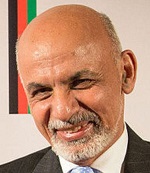
Ashraf Ghani
Khaama: Italian TG1 News Network has revealed an investigative report showing that Qatar had paid Ashraf Ghani more than $110 million to avoid resisting the Taliban fighters. This network has published the document of receipt of this money by Ajmal Ahmadi, the special representative of Ashraf Ghani and the former head of the Central Bank of Afghanistan, from the representative of Qatar. According to Mr. Rossi, the Afghan security forces were commanded from Kabul not to resist and retreat, instead. Prior to this, other reports existed that certain high-ranking security officials across the country claimed that they were dictated by Kabul not to fight. Click here to read more (external link).
Related
A race against destruction: In search of Afghanistan’s lost civilizations
 El Pais: With the return of the Taliban regime to power – following the chaotic American withdrawal in the summer of 2021 – many archaeologists fear a return to the days of the Taliban’s iconoclastic fury. The Taliban are also known to use the lucrative antiquities trade to finance their crimes. Click here to read more (external link).
Tolo News in Dari – February 2, 2023
Afghan Woman Topping the List for Nobel Peace Prize 2023

Mahbouba Seraj
Khaama: On February 1, 2023, the Oslo Peace Research Institute announced that Mahbouba Seraj, an Afghan women’s rights advocate, has been shortlisted as a candidate for the 2023 Nobel Peace Prize. Henrik Urdal, the director of the Peace Research Institute Oslo (PRIO), said yesterday that people who work to defend women’s and human rights are at the top of this year’s Nobel Peace Prize list. Click here to read more (external link).
US Imposes New Visa Restrictions on Certain Taliban Elements

Blinken
8am: US imposes new visa restrictions on some Taliban members who are believed to be involved in repressing the rights of women and girls in Afghanistan. The restrictions come more than a month after the Taliban announced bans on women attending universities and working with non-governmental organizations, CNN reported. US Secretary of State, Antony Blinken, announced on Wednesday the United States is imposing new visa restrictions on certain current and former Taliban members, non-state security group members and others who are believed to be involved in repressing the rights of women and girls in Afghanistan. Click here to read more (external link).
Related
Taliban Tell Pakistan Not to Blame Afghanistan for Mosque Bombing

Muttaqi
Ayaz Gul
VOA News
February 1, 2023
Afghanistan’s Taliban rulers Wednesday rejected allegations their territory was used in this week’s mosque bombing in Pakistan, urging the neighboring country to thoroughly investigate such terror acts before blaming others.
Taliban Foreign Minister Amir Khan Muttaqi told a gathering in the capital, Kabul, that Pakistani officials should find a solution to their security challenges locally and desist from “sowing the seeds of enmity” between the two Muslim countries.
No group has claimed responsibility for Monday’s bombing of a crowded mosque in the highly guarded provincial police headquarters in the Pakistani city of Peshawar. The ensuing blast killed more than 100 people, mostly police personnel, injured many more and demolished the upper story of the building.
Pakistani authorities were quick to blame the outlawed Pakistani Taliban, also called Tehrik-i-Taliban Pakistan (TTP), for what they said was a suicide bomb attack and suggested the violence emanated from Afghanistan.
“We advise them to conduct a thorough investigation into the Peshawar bombing,” Muttaqi said Wednesday. “Our region is used to wars and bomb blasts. But we have not seen in the past 20 years a lone suicide bomber blowing up roofs of mosques and killing hundreds of people.”
Muttaqi echoed suspicions and questions being raised by critics in Pakistan in the wake of the large scale destruction caused by the blast.
The TTP, designated a global terrorist group by the United States, has long been conducting deadly terrorist attacks in Pakistan and its leadership allegedly directs the violence from Afghan sanctuaries. But the Pakistani Taliban has formally denied involvement in the Peshawar mosque bombing.
Moazzam Jah Ansari, the provincial police chief, told reporters Tuesday that a suicide bomber had entered the mosque as a guest, using up to 12 kilograms of explosive material earlier brought to the site in bits and pieces.
Investigators said Wednesday they had arrested several suspects in connection with the deadly bombing. Provincial police officials said they had recovered the remains of the attacker but shared no other details. They did not rule out the possibility that the bomber had internal assistance evading security checks.
Pakistan’s military was frequently accused of sheltering Afghan Taliban leaders and fighters while they were waging insurgent attacks, including suicide bombings, against U.S.-led international forces in Afghanistan for almost two decades.
The Taliban regained control of Afghanistan in August 2021 as the U.S. and allied nations withdrew troops from the country.
Since then, Islamabad has deepened economic and trade cooperation with the cash-strapped Islamist Taliban leadership in Kabul to help it deal with financial troubles stemming from sanctions and international isolation of the Afghan banking sector.
However, a spate of recent terrorist attacks in Pakistan, mostly claimed by the TTP, has strained relations between the two countries.
Islamabad and the global community at large have not yet recognized the Taliban as legitimate rulers, mainly over human rights issues and their restrictions on women’s access to public life and education.
U.S. officials are also skeptical of the Taliban’s pledges against terrorism and continue to press them to prevent the use of Afghan soil for cross-border attacks. Taliban authorities reject the skepticism and so did Muttaqi while responding to the Pakistani allegations Wednesday.
“Don’t point fingers at Afghanistan. If Afghanistan were a center of terrorism then it would also have hit China, Tajikistan, Uzbekistan, Turkmenistan and Iran. Today, all these countries are safe and so is Afghanistan,” asserted the Taliban foreign minister.
Related