
 Khaama: Khalid Zadran [Taliban] Spokesperson of Kabul Police Command has confirmed the incident to Khaama Press that an explosion took place on Saturday evening in Pashtunistan Square. Mr. Zadran said the explosion was caused by a magnetic mine placed in a Toyota ‘Hilux’ vehicle, which injured two civilians. Kabul police spokesperson did not provide any further details about the terror incident, but security personnel has reached the area and investigations are underway. No one or group has claimed the responsibility for the attack so far. Click here to read more (external link).
Deadly Bomb Targets Pakistan Military Convoy
 Ayaz Gul
VOA News
February 5, 2023
ISLAMABAD — A bomb blast in southwestern Pakistan Sunday reportedly killed at least one soldier and injured 12 people, including civilians.
The attack targeted a military vehicle at the entrance to a security checkpoint in a highly guarded central part of Quetta, the capital of Baluchistan province, residents and officials said.
Neither provincial police nor the military’s media wing shared any details about the casualties or the nature of the Quetta blast.
The Pakistani Taliban insurgent group, also called Tehrik-i-Taliban Pakistan or TTP, claimed responsibility, saying one of its suicide bombers carried out the attack on a military convoy. The insurgents gave a much higher casualty toll in the ensuing blast, but they often release inflated details about such attacks.
Rescue workers confirmed at least five passersby were injured in the attack and transported to a nearby civilian hospital.
The attack comes days after a massive bomb explosion ripped through a packed mosque in Peshawar, the capital of northwestern Khyber Pakhtunkhwa province, killing nearly 100 worshipers and injuring more than 150 others.
The Peshawar bombing killed and injured mostly members of the province police. Pakistani authorities said a suicide bomber disguised as a police officer had blown himself up inside the mosque, housed in the provincial police headquarters.
No group has claimed responsibility for the Peshawar carnage. Officials blamed TTP but the insurgents denied involvement.
Pervez Musharraf, Former Pakistan President, Dies at 79

Musharraf
Sarah Zaman
VOA News
February 5, 2023
Former Pakistan President Pervez Musharraf has died. He was 79.
He was suffering from amyloidosis, a rare disease in which an abnormal protein builds up in organs, causing them to malfunction.
Musharraf came to power in a bloodless coup on Oct. 12, 1999, deposing democratically elected Prime Minister Nawaz Sharif.
Promising to soon restore democracy, Musharraf went on to rule for almost nine years, holding the offices of president and chief of army staff simultaneously for most of that time.
Just months before the coup, while under Musharraf’s command, Pakistani troops had entered the Kargil sector of Indian-administered Kashmir. The action brought the nuclear-armed neighbors face to face on a battlefield located 5,000 meters above sea level. The roughly three-month-long Kargil War ended after Pakistan withdrew its troops under U.S. pressure and returned territory it had taken from India. India put the official death toll of the war at 527, while estimates of losses on the Pakistani side vary from a few hundred to a few thousand.
This soured relations between the military and Prime Minister Sharif, who in October 1999 hastily tried to replace Musharraf. However, the army refused to accept the new chain of command, took over the capital Islamabad, arrested Sharif and disbanded parliament, all within a matter of hours.
Pakistan’s fourth military dictator, Musharraf initially enjoyed popularity as he promised to crack down on corruption and increase accountability. His support grew as Pakistan’s economy flourished on the back of foreign assistance that the country received for supporting the U.S.-led coalition in Afghanistan.
Musharraf’s vision of “enlightened moderation” – promoting a moderate rather than fundamentalist interpretation of Islam — was welcomed by many in Pakistan who were worried by events in Afghanistan — the rise of the Taliban, al-Qaida’s presence and the U.S. war on terror.
His era saw the Pakistani media landscape change as the government licensed dozens of private media houses to run news and entertainment channels in a market that until then had been largely occupied by the state broadcaster, Pakistan Television Corporation (PTV).
However, as his rule dragged on, major political parties remained suppressed, thousands of political opponents were arrested, and the freedom of the media and judiciary was curbed. Musharraf eventually suspended the constitution in 2007 – an act for which he was tried for treason in 2013 and given capital punishment in absentia six years later. The punishment was struck down in 2020.
While still holding the office of the Chief of Army Staff, Musharraf ruled Pakistan as the Chief Executive from 1999-2001. His military-run government’s decision to support the U.S. in the Afghan war grew increasingly unpopular as Pakistan suffered a rise in militancy and terrorism from local groups that supported the Afghan Taliban.
Speaking to VOA years later, in 2010, Musharraf defended his decision, saying Pakistan would have suffered if it had not joined the U.S. lead coalition in Afghanistan.
“And this decision was in Pakistan’s interest, let me tell you. We did not do this for America. Does Pakistan need Taliban and Talibanization? Ask Pakistanis and I think everyone will say no. That’s why we had no need to support the Taliban and fight against the coalition in favor of the Taliban,” he said.
Washington and Kabul, however, often accused Pakistan of providing sanctuaries and support to the Afghan Taliban, a charge Pakistan officially denied.
In 2002 Musharraf held a referendum that solidified his position as the most powerful man in the country for the next five years. Voters were asked to say ‘yes’ to keeping him in the president and army chief’s roles until 2007, if they wanted Pakistan to stay on the path of economic reform and prosperity. Results of the referendum, disputed by political parties and civil society, showed 97% supported Musharraf.
But by 2007 Musharraf faced a plethora of problems.
His attempt to depose the Chief Justice of Pakistan Iftikhar Muhammad Chaudhry for alleged corruption led to a nationwide protest movement of lawyers that soon gained support from major political parties.
As political turmoil rose, Musharraf agreed to step down as army chief, but not before suspending the constitution and imposing a state of emergency in November 2007, citing “a threat to Pakistan’s sovereignty.” All political activity was banned, media were gagged, and senior members of the judiciary were detained.
By now, two of Pakistan’s most popular political leaders, Nawaz Sharif and Benazir Bhutto, who had spent most of Musharraf’s era in exile, were allowed to return under a controversial amnesty deal that ended corruption cases against them.
Bhutto’s assassination on Dec. 27, 2007, after a political rally in Rawalpindi, added to Musharraf’s woes. He was later accused of not giving the former prime minister adequate security, leading to her death. Musharraf denied the charges.
After his short-lived emergency, Pakistan held parliamentary elections in February 2008, which Bhutto’s party won. Facing impeachment, Musharraf resigned as president on Aug 18, 2008, and left Pakistan the next year.
His political ambitions, however, did not end. While shuttling between Dubai, the U.S. and U.K., he launched the All Pakistan Muslim League party and returned in 2013 to run in elections. Tepid public support and the Election Commission’s decision to disqualify him due to his past actions pushed him out of the field.
That same year a court ordered the former president and army chief’s arrest for detaining judges in 2007. However, the military stood by him, preventing him from going to jail.
After Musharraf’s archrival, three-time prime minister Nawaz Sharif, won the 2013 elections, the government started proceedings against Musharaff on charges of high treason for suspending the constitution almost six years ago.
In 2019, a special court convicted Musharraf and handed him the death penalty. The decision calling for him to be hanged in public was met with anger by the powerful military and opposed by many others in Pakistan for its harsh language.
Next year, the Lahore High Court threw out the treason case and the death penalty against Musharraf. But hounded by legal troubles, he had already left Pakistan for Dubai in 2016 on medical grounds.
Musharraf survived at least four assassination attempts from militants, three during his rule.
He is survived by a wife, son and daughter.
Pakistan to Play Three T20Is Against Afghanistan in UAE in March
 Khaama: On Sunday, Pakistan’s Chairman Cricket Board, Najam Sethi, informed in a tweet that Pakistan and Afghanistan would play three T20 games against each other by the end of March. He said that the T20I series would compensate for what Afghanistan lost when Cricket Australia pulled out of the ODI series set to take place in UAE. As he wrote on his Twitter, “Pleased to announce PCB will play 3xT20s against Afghanistan in Sharjah end March to compensate Afghanistan following Australia’s pullout from bi lateral series against it.” Click here to read more (external link).
Pakistan to appeal to Taliban leader over Peshawar mosque bombing
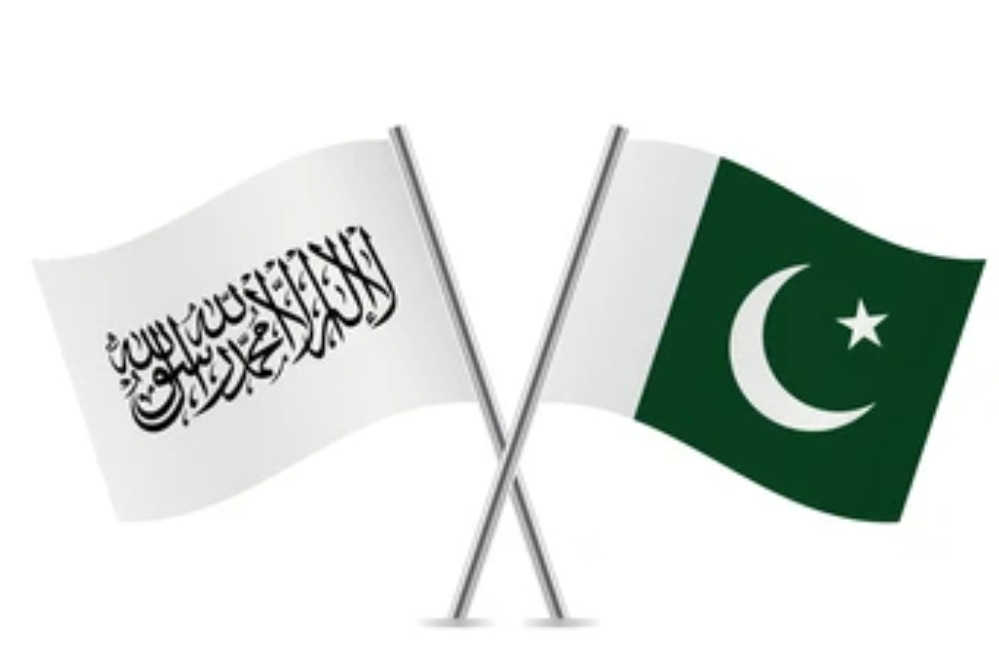 Ariana: Islamabad will ask the supreme leader of the Islamic Emirate of Afghanistan (IEA)[Taliban] to rein in militants in Pakistan after a suicide bombing killed scores of police in a mosque, AFP reported on Saturday. Detectives have blamed an affiliate of the Tehrik-e Taliban Pakistan (TTP) for Monday’s blast in Peshawar which killed more than 100 people inside a fortified police headquarters. Click here to read more (external link).
Tolo News in Dari – February 4, 2023
SIGAR: US Aid May ‘Confer Legitimacy’ Onto Taliban

Tolo News: The Special Inspector General for Afghanistan Reconstruction (SIGAR) said in its newly released report said that the “Taliban” derives revenue from this aid in the form of “licenses,” “taxes,” and “administrative fees” imposed on NGOs and their employees as a condition for operating in Afghanistan. Click here to read more (external link).
Women, Children Among 7 Members of a Family Killed by Gunmen in Balkh
 8am: The victims included four children, two women and one man, according to the Taliban-appointed spokesman of Balkh police. No information was immediately available on the reason and motives for this mass shooting. Since the Taliban’s rise to power in Afghanistan, mass murders, revenge killings and criminal offenses in Afghanistan have increased unprecedentedly. Click here to read more (external link).
Netherlands to compensate relatives of victims of Afghanistan airstrike
 Ariana: The Dutch government announced Friday it will not appeal a court order to pay compensation to relatives of civilians who were killed in an airstrike in Afghanistan. The District Court of The Hague found in November that the late-night attack violated international humanitarian law. The court sided with four survivors of the attack who sued the Dutch state for compensation. Click here to read more (external link).
Taliban Ban Shia-Sunni Marriages in Badakhshan’s Nusay District
 8am: In the announcement issued by the Taliban-appointed district governor in Nusay district of Badakhshan province, it is stated: “Regarding religious and ideological considerations, all ethnic groups in the territory of this district are instructed that from now on, no one from Sunni followers will be allowed to give a daughter to a Shia follower, nor a Shia Muslim can give a daughter to a Sunni Muslim. Some citizens see this decision as discrimination and as fueling intolerance and prejudice among religious groups. Click here to read more (external link).