
 8am: Sources informed Hasht-e Subh on Friday that Abdul Mujib was taken into custody in Kabul city five days ago by the Taliban intelligence on allegations of abusing official powers, financial and administrative corruption, and immorality crimes. Contradictory reports suggest that Abdul Mujib may have been apprehended for colluding with ISKP, with explosives allegedly discovered in his possession at the time of his arrest. Click here to read more (external link).
Ban on Women’s Work Causes ‘Food and Medicine’ Shortage in Afghanistan: Blinken

Blinken
Khaama: US Secretary of State Antony Blinken once again condemned the Taliban’s ban on female employees’ work, adding that gender-based restrictions will lead to a shortage of food, medicine, and other life-saving supplies, affecting vulnerable people including women and girls. The Secretary of State in a recorded speech sent to the United Nations Human Rights Council, described the ban on the education of female students in secondary schools and universities, as part of a repressive policy towards Afghan women and girls. Click here to read more (external link).
Related
Iran Is New Center of Al-Qaeda, Says Khalilzad

Khalilzad
Khaama: The former US special representative for the reconciliation in Afghanistan, Zalmay Khalilzad, said that Iran “would be the centre of Al-Qaeda,” impacting Iran’s ties with the rest of the world. In an interview with Tolonews, Khalilzad said Iran would serve as the group’s centre more than anywhere else. “Once Afghanistan was a centre for Al-Qaeda, but Al-Qaeda has changed, and its small groups have become a network in various world areas. However, if any centre exists, it should be Iran,” he said. Click here to read more (external link).
Tolo News in Dari – March 2, 2023
Taliban Announce Reopening of Universities, but Only for Male Students
 Akmal Dawi
VOA News
March 1 , 2023
WASHINGTON — De facto Taliban authorities have announced the reopening of state-run universities in the Afghan capital, Kabul, and several other cities, but say only male students will be allowed to attend.
“According to a decision by the Supreme Council for Higher Education,” reads a short statement from the Taliban’s Ministry of Higher Education, “studies of the male students at governmental higher education institutions in the colder provinces will officially start from [March 6] of the current year.”
Schools and universities go on annual winter break in about 24 of Afghanistan’s 34 provinces.
The Islamist government banned higher education for female students last year, saying women had not appropriately observed gender-based religious restrictions under the prior government, which was backed by the United States.
Since seizing power in August 2021, the Taliban have also shut down secondary schools for female students, saying the ban is temporary.
“Taliban are running out of time to make a decision on reopening girls’ secondary, high school and universities,” said Orzala Nemat, an Afghan activist and researcher at the School of Oriental and African Studies at the University of London. “This is the demand of the general public, community elders, religious scholars and even some of their own members feel embarrassed to support this un-Islamic and unjustified act.”
Afghanistan is the only country where women and girls are officially barred from education and work, according to human rights groups.
The gender-based discriminatory policy has been maintained even while it costs hundreds of millions of dollars for Afghanistan’s beleaguered economy, the United Nations has reported.
Possible internal divisions
Facing domestic and global condemnation, some Taliban officials have reportedly shown disapproval of the government’s misogynistic policies.
“The Taliban leader, Hibatullah Akhundzada, appears to insist upon these measures out of personal conviction and to assert his authority over the movement and the country,” the International Crisis Group said in a report last month.
Not seen in public, Akhundzada is nevertheless revered as a god among the Taliban. He has no term limit and has unchecked powers over everything within the Taliban government.
“The Taliban are in an internal power struggle,” said Pashtana Durrani, director of Learn Afghanistan, a nongovernment organization supporting education for girls and women.
“Right now, the Taliban are in a stalemate where they can’t remove or impeach the amir, and the amir is a man who thinks women in schools and universities are haram,” Durrani told VOA, using the Islamic term for forbidden.
For Farahnaz Forotan, a prominent female journalist who fled Afghanistan after the Taliban captured Kabul, the denial of education for girls and women is a sadistic power play by the Taliban leader with catastrophic consequences for millions of Afghans.
“How can a poor country compensate for two years of no education for girls? The losses are catastrophic and irreparable,” said Forotan, who spoke to VOA from her home in the U.S. state of Maryland.
Cracking down on internal dissent, the Taliban have defied international calls, including from renowned Islamic institutions, to lift the bans on women’s work and education, saying the world should not interfere in Afghanistan’s internal affairs.
“It’s an Islamic obligation and in the national interest of Afghanistan to have its women as educated as its men,” said the University of London’s Nemat. “A well-educated new generation of women and men will eventually … dismantle the vicious cycle of colonialism in the country where our political leaders become a pawn in the hands of the superpowers of their time.”
Women’s Sports Going Downhill In Afghanistan As Taliban Denies The Right To Ski
 By Mansoor Khosrow
Radio Free Europe/Radio Liberty
March 1, 2023
The majestic mountains in the central province of Bamiyan are known as Afghanistan’s skiing capital. But due to a new Taliban ban, women are no longer welcome on the slopes.
Hundreds of amateur and professional skiers took to the mountains to hone their skills far from the violence that gripped large swathes of the country over the past two decades.
For girls and women, especially, the sport provided a high-altitude refuge that gave them an opportunity to enjoy an activity taken as a given throughout the world.
“I felt happy and free,” said 16-year-old Elina Hussaini of her experiences racing down the slopes of Koh-e Baba, a local Bamiyan skiing hub, with her father.
But like most sporting activities, skiing is now just a memory for the ninth-grader and other Afghan girls and women following a recent Taliban decision to ban them from the slopes.
Afghanistan’s second winter since the hard-line extremist group seized power has proven to be particularly harsh for skiers like Hussaini, as the Taliban has continued to reintroduce many of the draconian limits on women’s rights and activities that it infamously imposed during its first stint in power from 1996 to 2001.
As the Taliban has slowly but surely rebuilt its Islamic emirate, it has banned teenage girls and women from education and work, and restricted women’s mobility and how they can appear in public.
The ban on skiing is just the latest among the sports activities denied to girls and women.
“We are now just restricted to our homes,” Hussaini told RFE/RL’s Radio Azadi.
To fill her newfound and unwelcomed free time after she was barred from attending school and taking part in sports, Hussaini is learning embroidery from her mother to fill her hours stuck at home.
Farahnaz Mohammadi, a 10th-grader who once dreamed of becoming a professional skier, echoes the feeling expressed by Hussaini and an estimated 50 fellow female skiers in the Bamiyan region. “It is very boring and excruciating,” Mohammadi told Radio Azadi. “The Taliban has deprived us of education and leisure.”
In Bamiyan, Taliban officials confirmed the ban on girls and women skiing. “Women athletes are here, but they are not allowed to practice skiing in the mountains,” said Ziauddin Begzad, the provincial head of the General Directorate of Physical Education and Sports.
The Taliban issued a blanket ban on women’s sports within weeks of seizing power in Kabul in August 2021, forcing many professional and amateur women athletes to continue their training in secret or to flee Afghanistan altogether.
Outside the country, some have found opportunities to continue their training abroad.
Afghanistan’s women’s soccer team disintegrated when its members fled to Australia after the Taliban returned to power. But the country’s exiled soccer federation secured world soccer body FIFA’s support in restoring its right to represent Afghanistan on the playing field, and this week the federation announced it would soon hold a training camp for the women’s national team.
The Taliban’s ban on women’s sports has reached well beyond the arena and even into the most routine activities. In November, for example, the Taliban banned women from using public gyms and encouraged those who wanted to exercise to do so at home.
The following month the International Olympic Committee warned that it could quit working with Afghanistan unless the Taliban gave “safe and inclusive access” to women athletes and also allowed women to take part in sports administration.
Written by Abubakar Siddique based on reporting by Mansoor Khosrow of RFE/RL’s Radio Azadi
Copyright (c) 2023. RFE/RL, Inc. Reprinted with the permission of Radio Free Europe/Radio Liberty, 1201 Connecticut Ave NW, Ste 400, Washington DC 20036.
700,000 Jobs Lost Since Late Regime Change in Afghanistan: UN Envoy
 Khaama: Ramiz Alakbarov, the Deputy Special Representative of UNAMA on Tuesday in a press conference said that Afghanistan’s gross income has declined by 35 percent, and nearly 700,000 people have lost their jobs over the past 18 months. Mr. Alakbarov added that 65 percent of the people need humanitarian aid, and millions are on the verge of catastrophic starvation in Afghanistan. Click here to read more (external link).
Third Anniversary of Doha Agreement
 Tolo News: Three years ago today, on Hoot 10 (Solar calendar), the United States of America and the Islamic Emirate signed the Doha Agreement. This agreement was signed in Doha, the capital of Qatar, after 18 months of talks between Zalmay Khalilzad, a former US special envoy for the reconciliation of Afghanistan, and Mullah Abdul Ghani Baradar, the former deputy of the Islamic Emirate’s political office. The agreement, which now Kabul and Washington accuse each other of violating, was signed three years ago on February 29, 2020, during the presidency of Donald Trump, the former US president, in Qatar. Click here to read more (external link).
Related
Tolo News in Dari – March 1, 2023
What were Pakistani Security Officials Doing in Afghanistan?
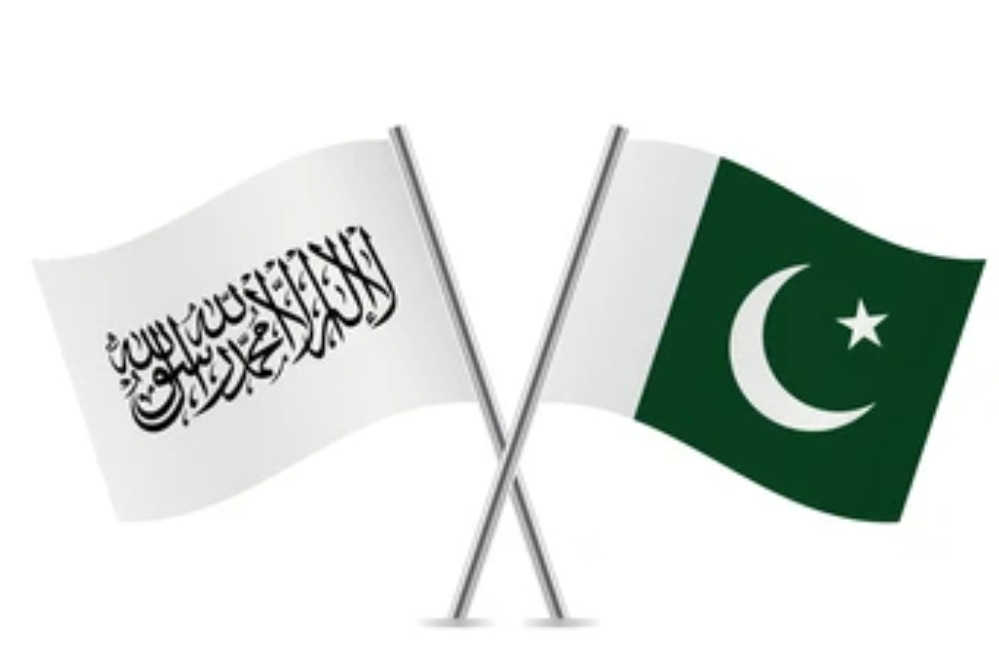 8am: Now that Pakistan‘s support of the Taliban has caused the collapse of the Afghan Government, Islamabad is in violation of international laws as a lobbyist and supporter of this group. However, the Taliban have likely provided Islamabad‘s enemies with a safe haven. Despite this, many politicians in Pakistan and Afghanistan still believe that the activation of the Tehreek–e Taliban Pakistan (TTP) and the border tensions between the military forces of this country and the Taliban are merely media and propaganda games. Click here to read more (external link).