By RFE/RL’s Radio Azadi
August 10, 2023
The UN World Food Program (WFP) has warned that without urgent funding, it will be forced to cut food aid to millions of Afghans grappling with hunger and food insecurity.
The warning comes as aid groups scramble to attract international attention to diminishing funding to assistance operations in one of the world’s worst humanitarian crises.
Aid groups estimate that some 30 million Afghans are in need of assistance amid an economic collapse in the aftermath of the Taliban’s return to power in August 2021.
Also frequently plagued by natural disasters, Afghanistan is one of the world’s most vulnerable countries to climate change.
“We need some $110 million immediately to store food for the winter for nearly 3 million people in the remote corners of Afghanistan,” Wahidullah Amani, a spokesman for the WFP in Afghanistan, told RFE/RL’s Radio Azadi on August 9.
“If we don’t get this funding in time, we will be forced to reduce the quantity of [food] aid in the coming weeks,” he added.
Amani said that the WFP needs $1 billion in the next six months to provide food aid to impoverished and vulnerable Afghans during the winter, which sets in the mountainous country with the first snowfalls in November.
WFP estimates that more than 15 million Afghans out of a total estimated population of 40 million need food aid. Out of these, nearly 3 million are on the brink of starvation.
WFP’s warning comes after concerns were also expressed by the International Rescue Committee (IRC), a U.S. nongovernmental organization with large humanitarian operations in Afghanistan. The IRC and other aid groups are worried about the diminishing funding for humanitarian operations in Afghanistan.
The IRC warned that nearly 30 million Afghans “remain in dire need of assistance” as funding shortfalls jeopardize the humanitarian response in the Muslim country.
It said that only 23 percent of this year’s $4.6 billion proposed humanitarian funding had been covered. In comparison, 40 percent of the previous plan was funded by the same time last year.
Afghanistan, one of the most aid-dependent countries in the world, lost development and financial assistance from Western donors after the Taliban returned to power in the wake of the final withdrawal of U.S. and NATO forces at the end of August 2021.
The fledgling Afghan economy rapidly collapsed, which prompted previously self-sufficient Afghans to rely on humanitarian aid.
The Taliban’s unrecognized government was slapped with sanctions and faced international isolation because of its extensive human rights abuses.
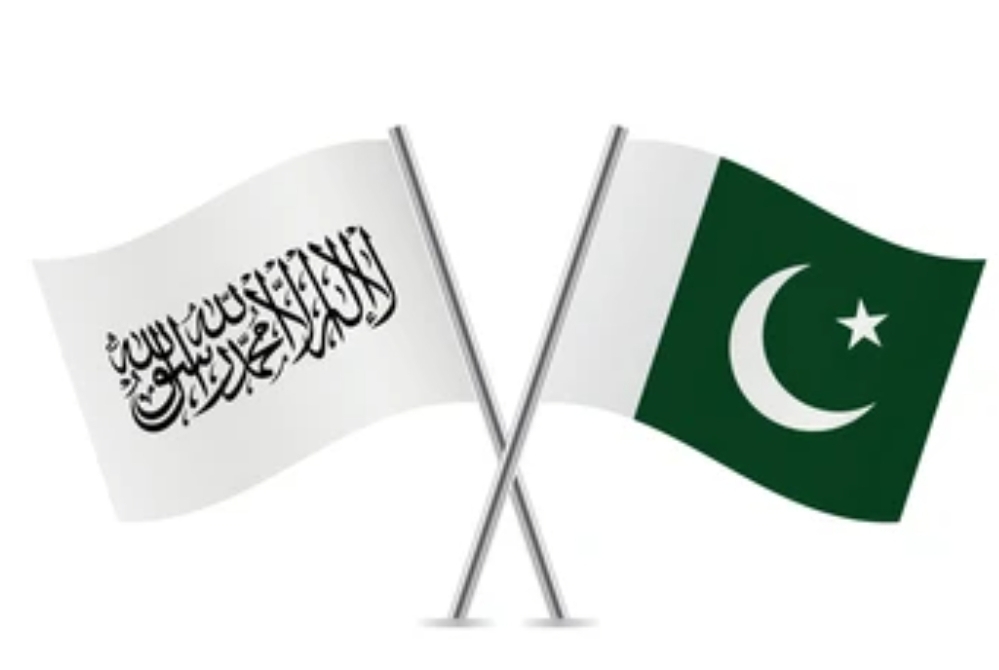 Ariana: Pakistan’s Foreign Minister says that the return of the Islamic Emirate of Afghanistan (IEA) [Taliban] has emboldened the banned Tehreek-e-Taliban Pakistan (TTP), which has been implicated in numerous attacks in the neighboring country in the past year. Responding to the increase in terror attacks in Pakistan, Zardari said that it was clear that the return of the IEA had emboldened the TTP. “If Afghan Taliban (IEA) blame Pakistan, that would first hurt its own people and then Pakistan,” he said.
 Khaama: The Pakistan Cricket Board (PCB) has officially revealed the roster for the forthcoming series against Afghanistan and the Asia Cup. As stated in an announcement on Wednesday, the country’s men’s national team has been finalized. Head of the national men’s selection committee, Inzamam-ul-Haq, unveiled the 18-player lineup for the One-Day International series against Afghanistan, set to take place in Sri Lanka from August 22 to August 26, 2023.
 Ariana: Officials of Afghanistan’s central bank said Wednesday the afghani (AFN) has in the past year strengthened by 4.4 percent against the US dollar. This comes after the afghani dropped by 10.4% in the previous year.

 8am: Despite Iran’s initial optimism about the resurgence of the Taliban group, it has become evident in the past two years that the relationship between Iran and the Taliban is not without challenges. Iran’s lenient policy towards the Taliban regime has not resulted in favorable outcomes for Iran. Since the Taliban took control of Afghanistan, there have been multiple clashes between this group and Iranian border guards. Currently, tensions and disputes persist between both sides. Despite diplomatic efforts to resolve these challenges, no significant progress has been made thus far. The main points of disagreement between the Taliban and Iran revolve around the division of water rights in the Helmand River, the issue of migrants, border conflicts, and disputes, as well as the matter of terrorism and radicalism. These differences have deep historical roots and have long been a source of tension between the two countries. However, they have intensified under the Taliban regime. This article solely focuses on the issue of water tension between Iran and the Taliban.