
 Khaama: The Embassy of Afghanistan in Italy said in a statement that the identity of 32 Afghans had been confirmed as the victims of the Italian shipwreck. According to the press released by the Embassy, out of 180 people on board, 67 bodies have been found so far. The boat carrying migrants from Afghanistan, Iran, and Pakistan collided with rocks during rough sea weather. Click here to read more (external link).
A group of Islamic State killed in Afghanistan’s Herat Province

Khaama: Abdullah Insaf, the spokesman of the Security Chief in Herat province, said to Khaama Press on Saturday that the security forces of the Islamic Emirate attacked an ISIS hideout in the 13th district of the province at around 10:00 last night. He said that during the special operation, six members of the group had been killed, including one woman. Click here to read more (external link).
Tolo News in Dari – March 4, 2023
Taliban Coerce Villagers in Samangan to Hand Over 70 Firearms

8am: According to a trustworthy source who requested anonymity, the Taliban launched an assault on Kota village approximately three days ago with the assistance of their local infiltrators. They have given the residents of this village, including previous soldiers and local leaders, a week to hand over 70 firearms to the Taliban. Click here to read more (external link).
The Sweet Sting Of Success: Afghanistan’s Fledgling Beekeeping Industry Stuck With Glut Of Honey
 March 04, 2023
By RFE/RL’s Radio Azadi
Beekeeping became much more than a hobby when the industry was reborn in Afghanistan over the past two decades. For many Afghan farmers, honey became their lifeblood.
But with the decline of the Afghan economy, the sweet commodity has become a luxury item as cash-strapped customers focus their spending on basic food staples and other necessities. And with the Afghan product competing on the shelves with cheaper imports, beekeepers have been left with a glut of honey they cannot sell.
Ghancha Gul was one of the beneficiaries of the industry’s revival, which aside from providing an additional option for farmers also offered a viable entrepreneurial career for many women.
Known as the “mother of bees,” Gul has plied her trade as the owner of a beekeeping farm in the western province of Herat for 13 years, often dressing in men’s clothing to avoid discrimination as she traveled by motorcycle to deliver honey to local markets.
Business was good for years, she told RFE/RL’s Radio Azadi last month. But that was before the Taliban seized power in 2021, which triggered a devastating economic crisis that led to soaring inflation and mass unemployment and took a toll on household incomes and their purchasing preferences.
Farmers have also been hit hard by drought and floods, while the sharp rise in prices for food, fuel, and fertilizer have greatly increased their operating costs.
“I used to sell between 30 and 40 kilos of honey each month, but now I sell between 10 and 15 kilos,” Gul said. These days, she explained, “instead of buying honey, people buy rice and oil.”
Sting Of Success
International efforts were made over the past two decades to boost the industry as an alternative to opium-poppy cultivation.
The province became one of the centers of the fledgling honey-production industry, boasting about 800 beekeeping farms that employed around 3,000 people, about 10 percent of them women. Beekeeping enterprises have also been prominent in eastern Nangarhar Province and the southern provinces of Helmand and Kandahar.
Seen as an effective way to alleviate poverty in rural areas while also protecting biodiversity and supporting food security, the UN’s Food and Agriculture Organization has continued to boost the industry with training programs and the provision of startup kits, including tens of thousands of honeybees, hive boxes, and beekeeping suits, to get new farmers on their way.
The Taliban government, which has dealt with a free-falling economy and a raft of environmental disasters that have hit the agricultural sector, has also supported beekeeping.
Last year, the Taliban authorities announced the expansion of the industry with more than 400 new beekeeping farms in Helmand as well as the establishment of a berry forest in Nangarhar to sustain the local honeybee population.
The efforts to build the industry had opened export markets to countries like Kuwait, the United Arab Emirates, and India, as well as neighboring Iran and Pakistan. But while honey production showed resilience to the droughts that have ravaged Afghanistan’s agriculture sector in recent years, the export market has largely dried up, leaving beekeepers to compete with cheaper imports from Pakistan and Iran as they try to sell their product to Afghans.
In Helmand alone, honey production rose “significantly” last year following a drought-hit season that saw nearly 40 tons of honey produced in the province in 2021, according to the region’s deputy director of agriculture, Mawlawi Zainullah Zahid.
In Herat, officials suggested that production this year could nearly double to 150 tons, even as many beekeepers and honey processors reduce production as supply swells.
Other provinces have reported similar increases in production in recent years, greatly adding to the reported output of 2,150 tons produced nationwide in 2019.
Glut Of Honey
Khalil Ahmadi Bahmanesh, a beekeeper in Herat, said that half of his yield from last season has gone unsold, and that he cannot compete with imports from Iran.
“While we produce good honey, poor quality Iranian honey saturates the Herat market,” Bahmanesh said. “Iranian honey is sold at a cheap price and leads people to question purchases of our honey.”
Mohammad Aref, who started his beekeeping farm in Helmand’s Karukh district more than a decade ago with just two hives, now has more than 400.
He told Radio Azadi last year that his yields had risen more than 40 percent over the previous season but that he was unable to sell his product in the face of Iranian competition.
“When there are no patrons or customers, we are forced to avoid investing in the next season, to transfer our capital to another sector, or stop altogether,” Aref said.
Shir Agha, who manages 160 hives in Helmand, says he has more than 3,000 kilograms of honey that he cannot sell.
“There are no sales. Honey is still left over from last year. There is no market,” Agha said. “At the same time, we are punished by the honey from Iran and Pakistan.”
Whereas a kilogram of Afghan honey used to sell for about 1,000 afghanis ($11), producers say, the same amount of Iranian honey costs only 150 to 400 afghanis ($1.70 to $4.50).
Aziz Naseri, who runs a honey shop in Lashkargah, the provincial capital of Helmand, says he has been forced to lower his prices for Afghan honey by half.
“People’s economic situation is bad,” he said. “When we look at them, we sell our honey for 700 afghanis ($7.85).”
While Seyyed Masoom Sadat, the head of Herat’s Agriculture Department, says that the province is more than self-sufficient and there is no need to import honey, the rules of international commerce prevent the elimination of competition.
“We cannot ban the import of Iranian honey because of [Afghanistan’s] membership in the World Trade Organization,” he said.
Agriculture officials in the province have said they are working to find suitable markets to boost honey sales.
Based on reporting by Radio Azadi correspondents in the region whose names are being withheld for security reasons.
Copyright (c) 2023. RFE/RL, Inc. Reprinted with the permission of Radio Free Europe/Radio Liberty, 1201 Connecticut Ave NW, Ste 400, Washington DC 20036.
Afghan Women Following Taliban’s Rules Still Banned from NGO Work
 VOA News
March 3, 2023
Roshan Noorzai, Fawzia Ahsan, Sahar Azimi, and Waheed Faizi
WASHINGTON — Every morning since 2021, 26-year-old Sabira Saidi would wear her black hijab and face mask and go to work accompanied by her father or brother.
Saidi, who worked as a case worker for London-based Children in Crisis in Kabul and Maidan Wardak provinces, put up with all the restrictions imposed on women after the fall of Kabul into the hands of the Taliban to keep her job and support her family of 10.
But things changed for Saidi and thousands of women working with nongovernment organizations after the Taliban barred women from working with national and international NGOs on December 24 of last year.
The Taliban’s Ministry of Economy sent a letter to NGOs ordering them to suspend Afghan female employees “until further notice.”
In the letter, the Taliban said that the ban was imposed because female employees of NGOs were not wearing the hijab properly.
Saidi and other women working with NGOs, who spoke to VOA Afghanistan, say they abided by the Taliban’s dress codes.
They say the Taliban’s ban on women working in NGOs was part of the Taliban’s strategy to erase women from public space.
A few days before the NGO ban, the Taliban ordered universities to suspend female students’ access to the universities. The group had already banned girls’ secondary education.
After returning to power in August 2021, the Taliban steadily imposed some repressive measures against women, including banning them from secondary education, working in the government, traveling long distance without a close male relative and going to parks and gyms.
The U.N. special rapporteur on the situation of human rights in Afghanistan, Richard Bennett, in a report released February 9, considered these measures as an attempt to “erase women from all public spaces.”
The report added that “the cumulative effect of the Taliban’s systematic discrimination against women raises concerns about the commission of international crimes.”
Lost hope
Saidi said that now she spends all day at home, which has taken its toll on her.
“We suffer psychologically and financially,” she said.
Saidi said for now her organization pays her, but she is “not sure for how long it will continue.”
“My work as a case worker was to visit them [children] to see their lives from near and assess their living conditions. And then to see how we could provide them services,” said Saidi. “How can I do my job from home?”
She talks to her colleagues “daily to see if there is a change in the Taliban’s policies,” but “no one knows how long we will have to stay at home.”
“I lost my hopes,” said Saidi, adding that, “If I had my passport, I would not stay for a day in Afghanistan.”
Humanitarian crisis
Last month, the U.N. deputy special representative and humanitarian coordinator for Afghanistan, Ramiz Alakbarov, told journalists that 28 million people in the country depend on humanitarian aid for survival.
Since the Taliban’s return to power, “the gross domestic product [GDP] declined by up to 35 percent, the cost of a basic food basket rose by 30 percent and unemployment by 40 percent,” according to Alakbarov.
The Taliban’s restrictions have made it difficult for aid organization to work in Afghanistan, said Janti Soeripto, president and CEO of Save the Children, U.S. adding that the country is facing a humanitarian crisis.
“Operationally, it’s really impossible to do our work well and effectively without women. Women help us reach women and children in particular,” said Soeripto.
She said Save the Children has “made it clear” to the Taliban that “we will not work without our female colleagues,” adding the organization abided by the Taliban’s dress codes and female employees were accompanied by a “mahram,” a close male relative.
Save the Children has been in Afghanistan since 1976, working in 17 out of 34 provinces, with 5,000 employees in the country and half of them are women, according to Soeripto.
She added that among the 55,000 people working with NGOs in Afghanistan, one-third of them were women.
Soeripto told VOA that though her organization was able to start back its activities in the health and in the education sectors, they must get authorization not only at national but provincial level as well.
She said the Taliban gave them more assurances, but “we want to see actions not just the words.”
International pressure
Shinkai Karokhail, a former member of the Wolesi Jirga, the lower house of Afghanistan’s parliament, told VOA that the international community should increase pressure on the Taliban’s leaders.
“It should not be something that the people of Afghan pay the cost. … It should be sanctions on those Taliban who are making decisions,” said Karokhail.
“But the world should not remain silent,” said a 27-year-old woman, who asked VOA to use the pseudonym “Arizo” for security reasons.
Arizo was the only breadwinner of her family and lost her job with an international NGO after the Taliban’s ban on women working with NGOs.
“The world should not recognize the Taliban as they have imposed restrictions on women and violated human rights,” she told VOA.
Arizo, Saidi and thousands of other women working with NGOs, now staying home after the Taliban ban, are worried about what the future holds for them.
Under the Taliban, “I see a bleak future for me and my family,” said Arizo.
This story originated in VOA’s Afghan service.
Related
Local museum inaugurated in Afghanistan’s Ghor province
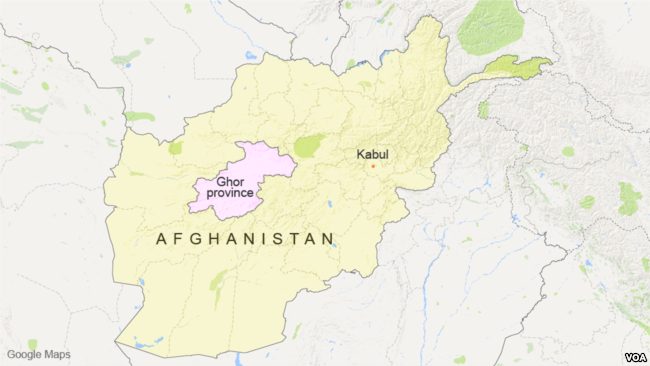
Ariana: The directorate of information and culture in Ghor says it has inaugurated a local museum in the province and showcased almost 170 artifacts at this new museum in Firozkoh city, the capital of the province. According to the directorate, most of these artifacts are related to the period of Ghaznavid and the sultans of the Ghurid Empire. “We opened the Museum of Ghor province to preserve and care for the antiquities. In this museum, we have 169 pieces of ancient artifacts related to the period of Ghaznavid and the sultans of the Ghurid Empire,” said Nizamuddin Nizami, the director of the Ghor Museum. Click here to read more (external link).
Tolo News in Dari – March 3, 2023
Taliban-Appointed Agriculture Head in Panjshir Arrested on Corruption Charges
 8am: Sources informed Hasht-e Subh on Friday that Abdul Mujib was taken into custody in Kabul city five days ago by the Taliban intelligence on allegations of abusing official powers, financial and administrative corruption, and immorality crimes. Contradictory reports suggest that Abdul Mujib may have been apprehended for colluding with ISKP, with explosives allegedly discovered in his possession at the time of his arrest. Click here to read more (external link).
Ban on Women’s Work Causes ‘Food and Medicine’ Shortage in Afghanistan: Blinken

Blinken
Khaama: US Secretary of State Antony Blinken once again condemned the Taliban’s ban on female employees’ work, adding that gender-based restrictions will lead to a shortage of food, medicine, and other life-saving supplies, affecting vulnerable people including women and girls. The Secretary of State in a recorded speech sent to the United Nations Human Rights Council, described the ban on the education of female students in secondary schools and universities, as part of a repressive policy towards Afghan women and girls. Click here to read more (external link).
Related