
 Ariana: Doctors from a cancer treatment facility in Herat province say they have seen a 30% increase in the number of patients seeking treatment for cancer in the western region of Afghanistan. They said in the past 12 months, 4,000 people with cancer sought help – of which 50% were women. Click here to read more (external link).
Taliban Chief Says ‘Reforms’ End Afghan Poppy Cultivation

Mullah Hibatullah Akhundzada
Ayaz Gul
VOA News
June 25, 2023
ISLAMABAD — The supreme leader of Afghanistan’s Taliban declared Sunday that their campaign against illicit drug production in the country had eradicated the cultivation of opium poppies, which are used to make morphine or heroin.
Hibatullah Akhundzada’s declaration follows recent media reports and satellite images backed by the United Nations and the United States, concluding that annual poppy cultivation has “significantly” decreased in the world’s biggest opium producer.
The reduction is credited to a decree issued by the reclusive Taliban chief in April 2022, which strictly prohibited the cultivation, production, usage, transportation, trade, export, and import of all illicit drugs in Afghanistan. The ban allowed anti-narcotics Taliban units to eradicate poppy farming across the impoverished war-ravaged country, which accounted for 85% of global opium production until last year, according to United Nations estimates.
“As a result of continued efforts of the Islamic Emirate, the cultivation of poppy has been eradicated in the country,” the Taliban chief said in his statement in connection with the annual Islamic Eid al-Adha festival later this week. He used the official name of the Taliban government.
“Farmers are looking for alternatives as legal cultivation continues to grow. Many citizens, especially the [Afghan] youth, are now saved from being exposed to harm,” Akhundzada stated.
Last week, the head of the U.N. Assistance Mission in Afghanistan told a U.N. Security Council meeting that there was “growing evidence” the Taliban’s opium poppy ban had been “effectively enforced,” decreasing the cultivation “significantly” in many parts of the country.
“At the same time, the opium economy has helped sustain parts of the rural economy in Afghanistan. Donors should consider allocating funding to alternative livelihood programs that address the specific needs of farmers affected by the ban,” Roza Otunbayeva told Wednesday’s meeting in New York.
Thomas West, the U.S. special representative for Afghanistan, in a June 7 tweet, also hailed the reduction in poppy cultivation.
“Reports that the Taliban have implemented policies to significantly decrease opium poppy production this year are credible and important. Every country in the region and beyond has a shared interest in an Afghanistan free of drugs,” West wrote.
The international recognition of counter-drug efforts by the Taliban stemmed from new research and analysis published earlier this month by a geospatial analytics firm Alcis.
The studies noted that recent satellite images show an “unprecedented” decrease in the cultivation of opium poppy in the country, with cultivation in the largest-producing southern provinces down by at least 80% compared with last year.
“The Taliban have successfully reduced poppy cultivation by more than 99% in Helmand province, which previously produced more than 50% of the country’s opium,” the report said.
Women’s rights
Otunbayeva, briefing the U.N. Security Council members on Wednesday, said, however, that the Taliban’s sweeping restrictions on women’s access to work, education, and public life at large “obscure” their “positive achievements” such as countering narcotics and “the welcome reduction of high-level corruption” in Afghanistan.
She renewed the U.N. call for the fundamentalist authorities to rescind the curbs immediately.
Akhundzada has rejected calls for removing restrictions on women as interference in internal Afghan matters, saying their policies are aligned with local culture and Islamic law, or Sharia.
The Taliban chief reiterated his defiance in Sunday’s Eid message, asserting that his decrees have restored “the status of women as free and dignified human beings.” Akhundzada added that he had instructed all government institutions to help women secure marriage, inheritance, and other rights.
“Under the rule of the Islamic Emirate, concrete measures have been taken to save women from many traditional oppressions, including forced marriages and their Sharia rights have been protected. … The negative aspects of the past 20-year occupation related to women’s Hijab and misguidance will end soon,” Akhundzada said without elaborating.
The Taliban regained power in August 2021 after waging a deadly insurgency for almost 20 years against the U.S.-led NATO troops protecting the internationally backed former Afghan government in Kabul.
No foreign government or global organization has recognized the Taliban as a legitimate government over restrictions on women and girls, among other human rights concerns.
“I am blunt about the obstacles they have created for themselves by the decrees and restrictions they have enacted, in particular against women and girls,” said Otunbayeva on Wednesday. “We have conveyed to them that as long as these decrees are in place, it is nearly impossible that their government will be recognized by members of the international community,” she added.
Related
Tolo News in Dari – June 25, 2023
Widespread fire rages through Nuristan and Kunar forests
 Ariana: More than 180 hectares of forest in Afghanistan’s eastern Kunar and Nuristan provinces is on fire, officials said on Sunday. The fires come as Afghanistan is experiencing rising temperatures. Currently temperatures in many parts of the country are in the high 30s and are expected to move into the 40s in the next few days. Click here to read more (external link).
Private Companies Start Extracting Marble Mine in Afghanistan’s Baghlan
 Khaama: The [Taliban] Ministry of Mines and Petroleum has signed a five-year contract to extract marble from a mine in the Khwaja Zaid Valley of the Doshi district of Baghlan province with two companies. According to company representatives, the marble the two companies export will be marketed locally and internationally. Click here to read more (external link).
Tolo News in Dari – June 24, 2023
Plight of Afghan Refugees in Pakistan Filled With ‘Continuous Suffering’

Khaama: Following the return of the Taliban to power in 2021, new waves of Afghan refugees moved to Iran and Pakistan due to several reasons including fearing ng death threats and persecution by Afghanistan’s de facto regime. While in Pakistan, these migrants are faced with numerous challenges including arbitrary detentions, harassment, and imprisonment by Pakistani police due to failing to provide valid residential permits and visas. Click here to read more (external link).
Other Refugee News / Reports
Moscow Accuses US, UK of Exploiting Afghan Situation to Destabilize C. Asia

Nikolai Patrushev
Michael Hughes: Russian Security Council Secretary Nikolai Patrushev during remarks at a gathering of peers in Kazakhstan said the United States and Britain have tried to take advantage of the chaos in Afghanistan as part of a broader strategy to wreak havoc across Central Asia.
“The Americans and the British are trying to manipulate the terrorist insurgency in Afghanistan to their advantage by provoking tensions on the borders with Central Asian countries,” Patrushev said on Friday at the Russia-Central Asia meeting of security council chiefs. “Given the interest of Afghanistan’s neighbors in strengthening their borders and improving the training and equipping their security forces, the United States and its NATO allies are seeking to expand their presence in Central Asia and create more opportunities to influence them.”
Charities say Taliban intimidation diverts aid to Taliban members and causes

Taliban militant (file photo)
NPR: NPR interviewed six Afghan aid workers from five Afghan provinces. They shared experiences of the Taliban attempting to divert foreign aid to their members through bullying, threats of legal action and even violence. The interviewees, who requested their locations be kept discreet, span four provinces in both the north and the south. Click here to read more (external link).
After Taliban bans opium, a guilt-racked commander winks at harvest
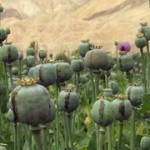 WP: One year on, it’s not clear whether the Taliban will soon make a significant dent on a crop that the United Nations estimated accounts for one-tenth of the entire Afghan economy. The country’s poppy farmers supply the raw ingredients that, after being boiled into bricks, refined and exported to Europe via Iran and Pakistan, make up 80 percent of the world’s opium and heroin supply. If the Taliban falls short, international analysts say, it’ll be because of weak enforcement, corruption, the fact that no economic alternatives exist for farmers. Click here to read more (external link).