
 Tolo News: The WHO in a recent report said that Acute Watery Diarrhea and Crimean–Congo Hemorrhagic Fever (CCHF) cases increased in June. “The CCHF-associated deaths were reported from 12 provinces (13 from Kabul, 6 from Balkh, 3 from Parwan, 3 from Takhar, 2 from Jawzjan, 2 from Kandahar, and 1 each from Baghlan, Faryab, Ghazni, Kapisa, Paktya, and Sar-i-Pul).” According to the report, just in June in various sections, 1.4 million people were reached with humanitarian health services. Click here to read more (external link).
Afghanistan ranks lowest in Henley Passport Index 2023
 Ariana: Afghanistan ranked the weakest in the Henley Passport Index 2023 which includes 199 passports worldwide. Japan, which was sitting in the No.1 position in the index for five years, has fallen to third place. The No.1 position is now held by Singapore. Citizens of Afghanistan are only able to visit 27 destinations without a visa. Click here to read more (external link).
Pakistani Taliban Release New Magazine Geared Toward Women

TTP chief Noor Wali Mehsud
Sarah Zaman
VOA News
July 19, 2023
ISLAMABAD, PAKISTAN — The Pakistani Taliban released an online magazine geared toward women this week. The third of its kind in six years, the magazine comes at a time when the militant group formally known as Tehreek-e-Taliban Pakistan, or TTP, is staging a resurgence with near-daily deadly attacks on Pakistani security forces.
Titled Banat-E-Khadeejatul Kubra, which means Daughters of Khadeejatul Kubra, the 36-page Urdu-language magazine released July 16 is named after Khadeeja, the first wife of Muhammad, the prophet of Islam.
The look
The red and white cover features a photo of a warrior woman dressed in black from head to toe with only her eyes showing, sitting on a white horse, ready to shoot an arrow. For titles, the magazine uses red and pink colors, and many floral motifs; however, all illustrations show women in long, loose gowns and face coverings. None of the drawings depicts any facial features.
The message
TTP, an ideological offshoot of the Afghan Taliban, released its first official magazine for women in mid-2017. Titled Sunnat-e-Khaula, meaning The Way of Khaula, the magazine was named after a female warrior from Prophet Muhammad’s time and encouraged women to prepare to fight.
A second magazine, Khawateen Ka Jihad , or Women’s Holy War, came out in March after a gap of six years. Observers say that was almost a trial run for the latest release.
The latest issue named after Prophet Muhammad’s wife focuses on women’s domestic responsibilities with an emphasis on serving and supporting men.
Feminist scholar and author Afiya S. Zia told VOA the agenda of this magazine is not to spread extremism but maintain a patriarchal status quo.
“It’s to stabilize and support the extremist agenda like the ‘B’ team,” she said in written comments. “It gives women only a supportive role – not suicide bombers or jihadists but daughters and wives who sacrifice their men for the cause and testify to their martyrdom.”
Ihsanullah Tipu Mehsud, a journalist and founder of The Khorasan Diary, an online news platform that focuses on militant activity in Pakistan and Afghanistan, told VOA TTP sees women as an asset in promoting its extremist ideology.
Since the majority of Taliban and their families are Pashtun, Mehsud said releasing a magazine in Urdu shows TTP is trying to reach a wider audience.
“The fact that this magazine has come in Urdu (Pakistan’s national language) and not just Pashto, shows that it’s not just Pashtun women but other too whom they [TTP] are creating content for,” he said.
Unlike the Afghan Taliban who have put a ban on women’s education, the Pakistani Taliban support women’s right to education in this magazine. The writings, however, strongly criticize co-education with sweeping generalizations and declare certain subjects like engineering “unnecessary” for women.
Zia said the TTP takes a pro-education stance because “there is no appetite for Afghan Taliban agenda in Pakistan – it has to be a softer version.”
The timing
Although Pakistani military operations dealt a massive blow to the militant group, driving its leadership and many fighters into Afghanistan in the 2010s, TTP has staged a comeback since the Afghan Taliban regained power in Kabul in August 2021.
Under the leadership of Noor Wali Mehsud, allegedly present in Afghanistan, TTP has regrouped, reorganized, and expanded by taking more than 30 other militant outfits into its fold.
The group has claimed responsibility for more than 300 attacks this year, in which more than 800 people, mostly security personnel, were killed or injured.
The Pakistani Taliban’s official media outlet, Umar Media, named after Afghan Taliban’s founder Mullah Umar, has been ramping up production of slick video and text content.
While Pakistan has repeatedly targeted TTP’s operational capacity, journalist Mehsud said the state has not focused sufficiently on countering its extremist ideology.
“[This] is why the TTP manages to stage a resurgence again and again. For any militant group, their center of gravity is their ideology. We have seen that groups weaken operationally but their ideology remains intact because of which they bounce back again.”
The magazine, like other extremist content, is accessible through various social media accounts that manage to dodge scrutiny with clever use of key words and hashtags.
Afghanistan, Pakistan to Hold Key Talks as Cross-Border Terrorism Strains Ties
 Ayaz Gul
VOA News
July 18, 2023
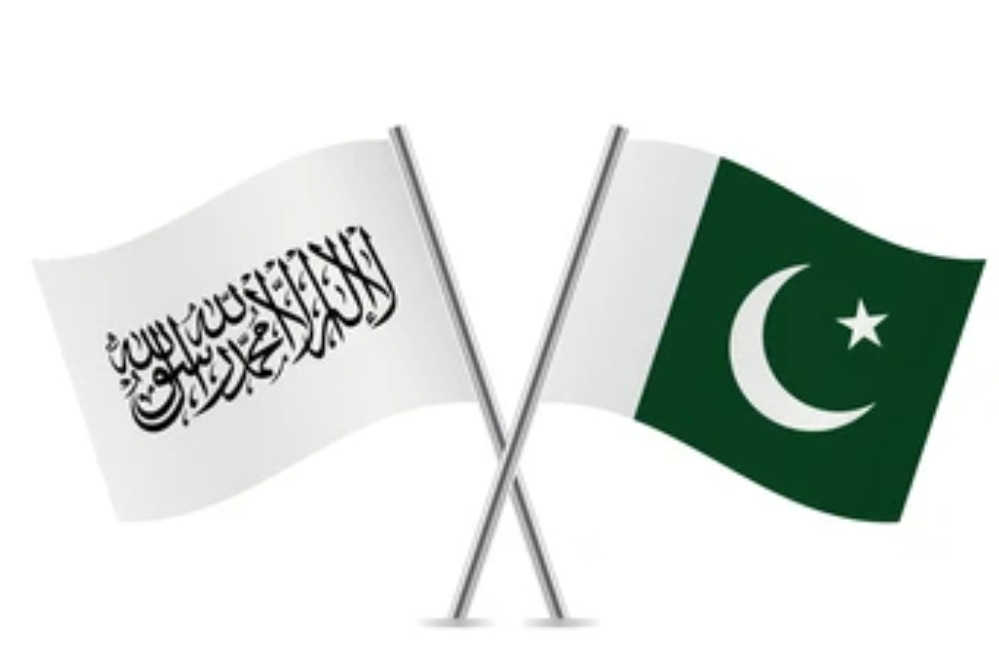
ISLAMABAD — A senior Pakistani envoy will travel to Afghanistan on Wednesday for bilateral talks with Taliban leaders amid growing allegations Afghan-based fugitive militants have stepped up cross-border terrorist attacks in Pakistan.
Asif Durrani, Islamabad’s newly appointed special representative on Afghanistan, will hold meetings in Kabul, focusing on mutual trade and economic and security cooperation, said a Pakistani official Tuesday. He spoke to VOA on condition of anonymity because he was not authorized to interact publicly with the media.
Durrani told VOA in the run-up to his Kabul visit that Pakistan’s trade with and through landlocked Afghanistan had increased since the Taliban reclaimed control of the country two years ago. Bilateral trade currently stands at more than $2 billion, according to official data.
The Pakistani envoy also hailed the growth of Afghanistan’s trade with other neighbors, including China and Iran. Durrani said that “the relative Afghan peace” has enabled Pakistan to increase its trade with landlocked Central Asian countries through Afghan transit routes to nearly $200 million from $55 million two years ago.
“It is good for Afghanistan and will help address many issues; especially it will reduce the poverty rate, which is close to 95% per the U.N. estimates. It is a promising process, but it will take a while,” Durrani said.
“An increase in economic activity will also help deal with the humanitarian crisis amid reports that international donors may reduce their aid contribution for Afghanistan. So, the coming winters are likely to be much harsher for Afghans,” the Pakistani envoy said.
Durrani’s visit coincides with a surge in militant attacks in Pakistan, particularly in districts adjacent to the country’s nearly 2,600-kilometer Afghan border. The violence has killed more than 400 people this year, mostly security forces, with the Pakistani military losing 12 soldiers in a single day on July 12.
The violence is mainly claimed by or blamed on an alliance of outlawed groups, known as the Tehrik-i-Taliban Pakistan or TTP, conducting attacks against the Pakistani state from sanctuaries in Afghanistan, according to officials in Islamabad.
Pakistan has urged the Taliban to adhere to their February 2020 agreement with the United States and prevent terrorists from using Afghan soil to threaten other countries.
On Monday, Washington joined Islamabad in calling on the Taliban to meet their counterterrorism commitments.
We have made very clear that we believe the Taliban has the responsibility to prevent Afghanistan from being used as a safe haven for launching terrorist attacks,” U.S. State Department spokesman Matthew Miller told reporters.
Last week, the Pakistani military sternly warned the Taliban against allowing the TTP and other terrorist groups on their soil to threaten the country.
“The armed forces of Pakistan have serious concerns on the safe havens and liberty of action available to TTP in Afghanistan,” a military statement said on Friday. “Such attacks are intolerable and would elicit an effective response from the security forces of Pakistan.”
Pakistani security officials have also confirmed seizing U.S. military weapons from militants killed in recent counterterrorism operations, saying members of the Afghan Taliban also took part in last week’s terrorist attacks in southwestern Baluchistan province.
The Geneva-based independent Small Arms Survey published a report earlier this month warning that the TTP and other militants continue to have access to weapons of now defunct Afghan security forces that were trained and equipped by the U.S. military.
Taliban authorities rejected Pakistani allegations that the TTP or other groups were using Afghan soil for cross-border terrorism. Chief Taliban spokesman Zabihullah Mujahid urged Islamabad on Saturday to share the evidence with Kabul so they could investigate the claims.
On Monday, the White House National Security Council coordinator for strategic communications, John Kirby, ruled out the possibility of Afghan refugees participating in terrorist attacks in Pakistan.
“We’ve seen no indication that Afghan refugees in Pakistan or along that border are guilty of acts of terrorism…And we’ll continue to work with Pakistan, as we have on their legitimate terrorism threats and their challenges in counterterrorism,” Kirby told reporters in Washington.
Pakistan hosts more than three million Afghan refugees and economic migrants fleeing decades of conflicts and poverty in their country.
Related
Afghan Refugee Finds New Career In California Playing A Film Character A Lot Like Herself
An Afghan refugee seeking asylum in the United States is now captivating audiences onscreen, portraying a character she has a lot in common with. In her first-ever acting role, Anaita Wali Zada plays a haunted young immigrant named Donya who finds herself beached in the northern California city of Fremont. Her new life: working in a factory, writing fortunes for Chinese cookies.
Tolo News in Dari – July 18, 2023
Afghanistan’s Central Bank To Auction $14 Million Tomorrow
 Khaama: Afghanistan’s Central Bank said on Tuesday that it will auction 14 Million US Dollars by Wednesday. The Bank said in a statement on Tuesday that Afghanistan’s Central Bank, Da Afghanistan Bank (DAB), will sell $14 million by Wednesday to stabilize the national currency Afghani exchange rate. Over the past 20 months, Afghanistan has received more than 2 billion dollars in cash as part of the humanitarian assistance provided by the international community to save the country’s economy from collapsing. Click here to read more (external link).
Religious School Boom in Paktika Province: Modern School Students Complain of Teacher and Building Shortages
 8am: Several students in Paktika province complain about the shortage of teachers in local schools, emphasizing that most textbooks remain untaught due to the lack of available teachers. Additionally, other students and residents in the province expressed their concerns about inadequate school facilities. They describe a situation where multiple classes are taught in shared spaces or even open areas due to the absence of dedicated school buildings. These students voice grievances about the scarcity of teachers and the absence of proper school infrastructure. In contrast, the Taliban-controlled Ministry of Education recently decided to close all teacher training institutions in the province and surrounding areas. However, the Taliban have prioritized the construction of religious schools, with nearly 800 such schools currently active in Paktika province alone. Click here to read more (external link).
Taliban Abolishes Attorney General’s Office

Zabihullah Mujahid
Tolo News: The purpose of abolishing the AGO, according to Zabihullah Mujahid, Islamic Emirate’s spokesperson, is to prevent the congestion of departments. Mujahid said that the “Directorate of Supervision and Prosecution of Decrees and Orders” will monitor the implementation of the orders of the Islamic Emirate’s leader in both public and private institutions. Some legal experts believe that by restricting the Attorney General’s Office’s (AGO) authority, justice will not be properly implemented in the nation. “The supervision of discovery and investigation has been removed, the litigation has been removed; therefore, the Attorney General’s Office as a department for monitoring and prosecuting the orders and directions of the Islamic Emirate of Afghanistan, has limited authority,” said Abdul Shukor Dadras, a legal expert. Click here to read more (external link).
Afghanistan’s Shi’ite Minority Suffers ‘Systematic Discrimination’ Under Taliban Rule
 Abubakar Siddique
Mansoor Khosrow
Radio Free Europe/Radio Liberty
July 17, 2023
When the Taliban seized power in 2021, Afghanistan’s Shi’ite Hazara minority feared that the historically persecuted community would once again become the main target of Taliban atrocities.
During its first stint in power from 1996 to 2001, the Taliban terrorized the group, wresting control of Hazara regions in Afghanistan through a campaign of targeted killings.
After regaining power, the Sunni militant group tried to assuage Hazaras’ fears of discrimination and persecution. The Taliban visited Shi’a mosques in the Afghan capital and deployed its fighters to protect ceremonies marking the Shi’ite month of Muharram.
But members of the community have accused the Taliban of since backtracking on its promises to protect Shi’a and grant them the right to freely observe their faith.
Last week, the Taliban prevented Shi’a from celebrating an important religious festival. The militants have also restricted the teaching of Shi’a jurisprudence in universities in Afghanistan. In February, the Taliban reportedly banned marriages between Shi’a and Sunnis in northeastern Badakhshan Province.
The Shi’ite community has accused the Taliban of failing to prevent deadly attacks on Hazaras by the rival Islamic State-Khorasan (IS-K) extremist group. Meanwhile, rights groups have documented the forced evictions of Hazaras by the Taliban, a predominately Pashtun group, in several provinces.
“The Taliban are becoming increasingly intolerant of public expressions and displays of the Shi’ite religious faith,” said Niamatullah Ibrahimi, senior lecturer at Australia’s La Trobe University. “If it becomes a pattern, it will clearly limit the religious freedom of Shi’a, especially ceremonies that are often public in nature.”
Taliban fighters prevented Shi’ite residents in Kabul from publicly celebrating Eid al-Ghadir on July 7. The festival celebrates what Shi’a believe is the day that Prophet Muhammad declared Ali, a cousin and son-in-law, his successor.
But the festival clashes with the Sunni belief that Abu Bakr, the first Muslim caliph, was the rightful successor to Prophet Muhammad. These conflicting beliefs are among the most important differences between the two main Muslim sects.
‘They Want To Eliminate Minorities’
In May, the Taliban banned the teaching of the Shi’a Jafari school of jurisprudence at Bamiyan University. It is not clear if the ban has been extended to all universities in Afghanistan. Most residents in the province of Bamiyan, in central Afghanistan, are Shi’a.
Nematullah, an Islamic studies student at Bamiyan University, said they have been forced to study the Sunni Hanafi school of jurisprudence that is followed by the Taliban.
“We were told that if we raise our voice, we will be taken away and tortured,” the 20-year-old told RFE/RL’s Radio Azadi, adding that the Taliban ban was forcing Shi’a to give up their education or leave their homeland.
Mohammad Hassani, another student at the university, accused the Taliban of trying to “eliminate minorities and their religions by force.”
Seyyed Mohammad Hossein Rizwani, a prominent scholar at the Shi’a Ulema Council of Afghanistan, told Radio Azadi that the Taliban’s ban on teaching Jafari jurisprudence contradicts “the spirit of Islamic brotherhood and national unity.”
Although a census has never been conducted, Shi’a are believed to make up around 15 percent of Afghanistan’s 40 million people, which is largely Sunni. Hazaras account for the overwhelming majority of Shi’a in the country.
During the 19th century, Afghan monarchs attempted to forcibly convert the Hazara, seize their lands, and bring Hazara regions in the country’s central highlands under the control of the central government, campaigns that killed thousands and forced even more to flee their homes, including many to British India. Hazaras who resettled in Kabul and other cities suffered discrimination and were often employed only in low-paying jobs.
In a significant step to address the historical grievances of the Hazaras, Afghanistan’s 2004 constitution permitted Shi’a to use Jafari jurisprudence in court cases involving personal matters. The community also gained an unprecedented share in power during the Western-backed political order that emerged after the U.S.-led invasion in 2001.
Only The Beginning?
Since regaining power in August 2021, the Taliban has mostly maintained the state’s administrative structure. But it has scrapped the 2004 constitution and laws that guaranteed freedoms and rights to Afghans, particularly to religious minorities and women.
The Taliban’s theocratic government is made up almost entirely of senior Taliban members, with no women and just a few non-Pashtuns.
“There are deep fears within the community that this could be only the beginning of systematic discrimination against the Shi’a and the representation of their understanding of Islam in the country’s laws, society, and politics,” said Ibrahimi of La Trobe University.
Niala Mohammad, the director of policy and strategy at the nonprofit Muslim Public Affairs Council in Washington, said the Taliban has failed to protect Afghanistan’s Shi’ite minority from the IS-K, which has killed scores of Hazaras in attacks on schools and mosques since the Taliban takeover.
“[The Taliban] continue to harass and target those that do not adhere to their distorted view of Islam,” said Mohammad, who was previously the South Asia analyst for the U.S. Commission on International Religious Freedom. “Particularly Shi’a Hazaras, whom they view as heretics.”
She said the Taliban’s mounting restrictions on the Shi’ite minority “emboldens Shi’a persecution by other religious extremists across the region and deepens the sectarian divide.”
Copyright (c) 2023. RFE/RL, Inc. Reprinted with the permission of Radio Free Europe/Radio Liberty, 1201 Connecticut Ave NW, Ste 400, Washington DC 20036.
Related