
Behind Closed Doors: Shocking Claims of Taliban’s Secret Prisons and Unlawful Detentions Emerge in Kandahar
 8am: Residents of Kandahar Province have raised allegations claiming that certain local Taliban leaders are operating private prisons, where they reportedly detain former officials and military personnel. In conversation with Hasht-e Subh on Wednesday, August 23rd, Kandahar Province residents asserted that Taliban members have incarcerated local employees and former government military members within their own makeshift detention facilities. These actions by the Taliban are believed to be driven by personal animosities, land disputes, and other undisclosed motivations, as stated by Kandahar Province residents. Click here to read more (external link).
Related
Taliban Says Two Arrested In Killing Of Female Afghan YouTube Star

Hora Sadat
By RFE/RL’s Radio Azadi
August 24, 2023
Afghanistan’s Taliban rulers on August 24 said they have arrested two people suspected in the killing of female YouTuber Hora Sadat in the capital, Kabul, three days ago. Police officials said a woman and a man were being held on murder charges and that the investigation was continuing. Sadat had a YouTube channel with more than 300,000 subscribers and shared video clips on various social issues. After the Taliban takeover of Afghanistan in August 2021, violence against women has increased nationwide, and arrests and murders of journalists have increased.
Copyright (c) 2023. RFE/RL, Inc. Reprinted with the permission of Radio Free Europe/Radio Liberty, 1201 Connecticut Ave NW, Ste 400, Washington DC 20036.
2 years of education denied: Afghanistan girls forced into seminaries and marriages
 Khaama: It has been two years since the de facto administration took control of Afghanistan, and various segments of society continue grappling with this political shift’s impact. However, what the young female students endure goes beyond mere deprivation – it is a profound and unjust cruelty. Following the transition from the republican system to the establishment of the Taliban regime on August 15, 2021, schools ceased admitting girls beyond the sixth grade, and their expected reopening within these two years remains indefinitely deferred. The Taliban’s rule in Afghanistan led to the closure of schools and universities. Also, it resulted in the displacement of numerous women from government and non-government positions, causing them to lose their jobs. Click here to read more (external link).
Afghan Media Watchdog Calls For The Release Of Detained Iranian Photojournalist
 By RFE/RL’s Radio Azadi
August 23, 2023
An Afghan press freedom organization has called for the release of an Iranian photojournalist detained by the Taliban, which has arrested around a dozen reporters over the past two weeks.
The semioffical Tasnim news agency in Iran reported on August 22 that Taliban security agents had apprehended its photojournalist, Mohammad Hossein Velayati, in Kabul three days earlier.
Velayati was reportedly detained at Kabul airport while trying to fly home after a 10-day reporting trip to the Afghan capital.
“We call for his immediate and unconditional release,” the Afghanistan Journalists Center (AFJC) said on August 22.
“[We want] an end to the harassment and targeting of journalists in Afghanistan,” it added.
Valayati’s arrest follows a recent deterioration in relations between Tehran’s clerical regime and the Taliban militants who have ruled Afghanistan since seizing power in August 2021.
Forces from the two sides clashed along their 900-kilometer-long shared border in May after Iranian President Ebrahim Raisi warned the Taliban against depriving his country of its share of water from the Helmand River.
In an interview on August 22, Hassan Kazemi Qomi, the Iranian president’s special envoy for Afghanistan, said his country’s diplomats in Kabul were talking to the Taliban about Velayati’s release.
The Taliban has not commented on the arrest.
Tasnim reported that Velayati went to Afghanistan legally and criticized the arrest of its staff member without explanation.
“Given the negative perceptions that Iranians have of the Taliban’s treatment of Iranian journalists, it is expected that the group will act quickly to secure the release of the Iranian photojournalist,” Tasnim said in a report.
The AFJC, however, said Velayati’s whereabouts are still unknown, days after his arrest.
“This lack of information constitutes a violation of his visitation rights,” the statement said. “We urge the Taliban authorities to provide an immediate update to his family and colleagues and ensure the well-being of Velayati.”
The arrest follows the detention of 11 Afghan journalists in seven Afghan provinces by the Taliban’s General Directorate of Intelligence (GDI) this month. Global and Afghan media watchdogs have condemned the detentions and have called for their swift release.
“It is essential that [the Taliban] put an end to these arbitrary arrests and uphold the principles of press freedom and freedom of expression,” the AFJC said.
Since returning to power two years ago, the Taliban has shut down independent radio stations, television studios, and newspapers.
International media and journalists, too, face severe restrictions and bans. The Taliban has banned international broadcasters and has expelled or banned several foreign correspondents from entering the country.
The ultraconservative Islamist group has also driven hundreds of Afghan journalists into exile.
Copyright (c) 2023. RFE/RL, Inc. Reprinted with the permission of Radio Free Europe/Radio Liberty, 1201 Connecticut Ave NW, Ste 400, Washington DC 20036.
Tolo News in Dari – August 23, 2023
Mujeeb Ur Rahman climbs to 3rd spot in ICC’s ODI bowling rankings

Mujeeb Rahman Zadran
Ariana: Afghanistan spinner Mujeeb Ur Rahman, who has enjoyed a career-best ranking of second in the past, has advanced three places to third position in the ICC Men’s ODI Bowling Rankings after returning figures of three for 33 in Tuesday’s opening fixture of a three-match series against Pakistan. Click here to read more (external link).
Tragic Demise of Panjshir Resident: Tortured to Death by the Taliban in Herat
 8am: Distressing news has emerged from local sources in Panjshir, reporting the tragic death of a resident from this province who fell victim to brutal torture at the hands of the Taliban in Herat. The individual, originally planning to travel to Iran, was apprehended by the Taliban at the Islam Qala border crossing. Subsequently, he underwent severe torture during his 22-day captivity in Herat, which ultimately led to his untimely demise. According to accounts provided by Hasht-e Subh, the victim has been identified as Fayazul-Haq. On Tuesday, August 22, reports indicate that he was “strangled” within the confines of the Herat prison by Taliban operatives. Further information reveals that the Taliban has yet to release the remains of the deceased to his grieving family, adding to their distress. Click here to read more (external link).
‘Forced To Dress Like a Muslim’: Taliban Imposes Restrictions On Afghanistan’s Sikh, Hindu Minorities
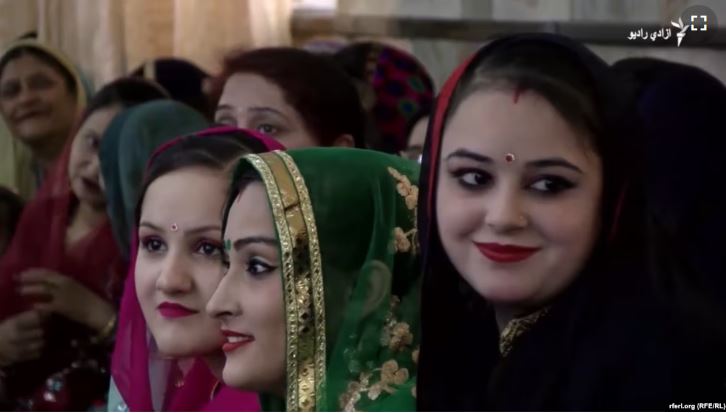
Afghan Hindu and Sikh citizens celebrate their new year ceremony in Kabul in 2018.
Freshta Negah
Abubakar Siddique
Radio Free Europe/Radio Liberty
August 22, 2023
When the Taliban seized power in 2021, there were concerns that some of Afghanistan’s tiny non-Muslim minorities could vanish.
Two years on, those fears are becoming realized. Afghanistan’s last-known Jew fled the country shortly after the Taliban takeover. Meanwhile, the Sikh and Hindu communities are believed to have shrunk to just a handful of families.
Under the Taliban, Sikhs and Hindus have faced severe restrictions, including on their appearances, and have been banned from marking their religious holidays in public, leaving many with no choice but to escape their homeland.
“I cannot go anywhere freely,” Fari Kaur, one of the last remaining Sikhs in the capital, Kabul, told RFE/RL’s Radio Azadi.
“When I go out, I’m forced to dress like a Muslim so that I can’t be identified as a Sikh,” she said, in reference to the Taliban’s order that all women must wear the all-encompassing burqa or niqab.
Kaur’s father was killed in a suicide attack targeting Sikhs and Hindus in the eastern city of Jalalabad in 2018. The attack reportedly led as many as 1,500 Sikhs to leave the country, including Kaur’s mother and sisters.
But Kaur refused to leave and stayed in Kabul to fulfil her father’s dream that she finish school.
In March 2020, 25 worshipers were killed when Islamic State-Khorasan (IS-K) militants stormed a Sikh temple in Kabul. Following the attack, most of the remaining members of the minority left Afghanistan.
Again, Kaur refused to leave. But now, more than two years after the Taliban seized power, she said the lack of religious freedom under the militants has left her no choice but to seek refuge abroad.
“We have not celebrated our key festivals since the Taliban returned to power,” she said. “We have very few community members left behind in Afghanistan. We cannot even look after our temples.”
History Of Persecution
There were up to 100,000 Hindus and Sikhs in Afghanistan in the 1980s. But the war that broke out in 1979 and the onset of growing persecution pushed many out.
During the civil war of the 1990s, the Taliban and rival Islamist groups pledged to protect minorities. But many Sikhs and Hindus lost their homes and businesses and fled to India.
During its first stint in power from 1996-2001, the Taliban caused an international uproar after the militants announced that all Sikhs and Hindus in the country would be required to wear yellow badges.
The Taliban prohibited Sikhs and Hindus from building new temples. They were also forced to pay a special tax called jizya, which was historically imposed by Muslim rulers on their non-Muslim subjects.
Following the U.S.-led invasion in 2001, Sikhs and Hindus were granted the same rights as other Afghans and also received seats in the parliament.
When the Taliban regained power in August 2021, it attempted to assuage the fears of non-Muslim Afghans. The militants visited Sikh and Hindu temples to try and assure the remaining members of the communities of their commitment to their safety and well-being.
But the Taliban’s draconian restrictions on Sikhs and Hindus have forced many to seek a way out of their homeland.
‘Extreme Desperation’
Many of the Afghan Sikhs and Hindus who have left the country have moved to India, where most face a life of poverty.
“We abandoned our country out of extreme desperation,” said Chabul Singh, a 57-year-old Sikh man who left Afghanistan with his wife and two sons several years ago.
The family now lives outside the Indian capital, New Delhi, where Singh and his young sons eke out a living by doing menial jobs.
“In Afghanistan, our distinctive turbans gave us away, and we were killed both by the Taliban and Daesh,” he told Radio Azadi, referring to IS-K by its Arabic acronym. Sikhs often wrap their hair, which they are not supposed to cut, in a turban.
Despite his family’s struggles in India, Singh said returning to Afghanistan is not an option.
“In Afghanistan, our Muslim brothers often asked us, ‘Why have you come from India?'” he said. “But here in India, they ask us, ‘Why don’t you go back to Afghanistan?'”
Niala Mohammad, the director of policy and strategy at the nonprofit Muslim Public Affairs Council in Washington, said the situation for religious minorities in Afghanistan — including Hindus, Sikhs, Bahai’s, Christians, Ahmadis, and Shi’ite Muslims — has deteriorated sharply under Taliban rule.
“The situation continues to deteriorate as political extremist factions that claim to represent Islam, such as the Taliban, ascend to power in the region,” said Mohammad, who was previously the South Asia analyst for the U.S. Commission on International Religious Freedom. “This exodus of diverse religious groups has left a void in the country’s social fabric.”
Copyright (c) 2023. RFE/RL, Inc. Reprinted with the permission of Radio Free Europe/Radio Liberty, 1201 Connecticut Ave NW, Ste 400, Washington DC 20036.
Former Afghan Leaders Powerless Inside, Outside Their Homeland
 Akmal Dawi
VOA News
August 22, 2023
When the Taliban entered Kabul in August 2021, nearly the entire leadership of the Afghan government fled the country fearing for their lives.
President Ashraf Ghani, accompanied by his wife and closest aides, sought asylum in the United Arab Emirates, while the rest of his Cabinet, including his two vice presidents, scattered to different parts of the world.
In a video statement three days later, Ghani said his departure might have been the only way to escape the fate of his predecessor, former President Mohammad Najibullah, who was tortured and killed by the Taliban in 1996.
“If I had stayed, the president of Afghanistan would have been executed in front of the eyes of Afghans once again,” Ghani said.
What the Taliban would have done to Ghani is open to speculation, but Zabihullah Mujahid, the Taliban’s chief spokesman, told VOA that the group had no intention of harming anyone, including Ghani.
That is not entirely true. The United Nations reported Tuesday that since seizing power, the Taliban have killed, tortured, jailed and mistreated hundreds of former Afghan military personnel — a charge the Taliban deny.
But some former leaders did choose to stay in Afghanistan and have been able to remain politically active, if only in a restrained way, thanks to a surprising amnesty announced by the Taliban for its former enemies.
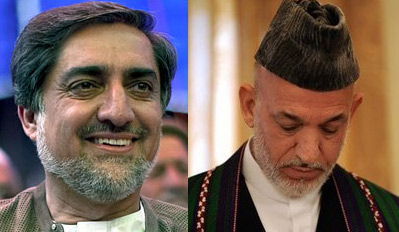
Hamid Karzai, the nation’s first democratically elected president who signed the U.S.-Afghanistan Strategic Partnership Agreement in 2012, declared his commitment to the country in a video posted on Facebook within days of the Taliban takeover in August 2021.
“To the esteemed residents of Kabul, I say that my family, my daughters and I are here with you,” Karzai said in the Dari language as his three small daughters huddled with him.
Similarly, Abdullah Abdullah, a former chief executive and foreign minister of Afghanistan, chose to remain in Kabul despite his history of opposition to the Taliban.
“I personally had a conversation with former President Karzai 10 days prior to the collapse of the government and asked him specifically what his plans were if some morning he woke up to the scenario of Kabul overrun by the Taliban,” Omar Zakhilwal, a former Afghan minister, told VOA.
“He responded that he’d thought about it, realized the possibilities of very high risks to him and his family, particularly in the initial moments of the overrun, but under no circumstances would either he or his family leave Kabul.”
‘No influence or freedom’
Inside Afghanistan, former leaders like Karzai and Abdullah appear active, meeting with locals, diplomats and aid workers. On their verified social media accounts, they issue carefully crafted statements calling on de facto authorities to reopen secondary schools for girls and allow women to work, while avoiding direct criticism of the Taliban’s globally condemned misogynistic policies.
What has become evident in the two years since the fall of Kabul, however, is that regardless of whether they chose to flee or remain, none of the former leaders has had any significant influence over Taliban policies.
“Those who stayed in Afghanistan under the Taliban have no influence or freedom to stand against the Taliban,” Sediq Seddiqi, a former spokesperson to Ghani, told VOA.
Outside of Afghanistan, Ghani and other former Afghan officials are more critical of the Taliban on social media platforms.
“If the Afghan politicians in exile can bring about an enduring political settlement and work together for a better Afghanistan, it is justified,” Seddiqi said.
It remains uncertain what kind of a political settlement the exiled Afghan leaders could reach with the Taliban, particularly now that they have little, if any, leverage.
“History will judge harshly of those who left,” Nader Nadery, a former Afghan official and a member of the former government’s negotiating team with the Taliban, told VOA.
Now a research fellow at the Wilson Center in the United States, Nadery said many Afghans appreciate Karzai, Abdullah and those former leaders who have remained in Afghanistan.
“When the time is hard, leaders stay with their people,” he said.
Exodus of skilled Afghans hurts country
Concerned that the Taliban would target Afghans who worked for the U.S. and the Afghan governments, the United States airlifted more than 120,000 individuals from Kabul in August 2021.
Among them were Afghan lawmakers, ministers, journalists and human rights activists.
Over the past two years, the United States, Canada and some European countries have continued evacuating tens of thousands of at-risk Afghans.
Prevalent poverty and Taliban repressions have also forced many Afghans to migrate to Turkey, Iran, Pakistan and elsewhere.
The exodus of mostly educated and skilled Afghans continues to hurt Afghanistan, Zakhilwal said.
“Afghanistan would have been better off if not only the political leaders but also the tens of thousands of other [mostly educated] Afghans who were evacuated by the West had remained in Afghanistan,” the former official said.
For others, however, life under the Taliban is unbearable.
“Afghanistan now has become the most oppressive country for women,” Pashtana Dorani, an Afghan women’s rights activist, wrote last week on X, formerly known as Twitter.
As the Taliban consolidate their grip on power, rejecting domestic and international calls to respect women’s rights and forming an inclusive government, former leaders — inside the country and in exile — appear to have little sway on how the Taliban govern Afghanistan.
Last week, the Taliban’s Justice Ministry announced that political parties were outlawed, effectively forcing their opponents to either leave the country or submit to non-democratic rule.