
The conflict between the Army and the Religious Schools in Pakistan
 8am: In the past two decades, religious schools in Pakistan have drawn Afghanistan into a deadlock. These schools and their students, through the fatwas they issued and the clerics they nurtured, embarked on a war against the aspirations of the Afghan people and their efforts to build a democratic, humane, and prosperous society. Despite receiving financial, advisory, and arms support from the global community, particularly the United States and its NATO allies, the people of Afghanistan succumbed to what the extremists in Afghanistan received from Pakistani schools and ultimately the generals of that country. This defeat was profoundly humiliating and distressing. Representatives of extremism and backwardness prevailed over representatives of tolerance and development, demeaning them. However, this situation did not remain confined to Afghanistan. Pakistan, which served as a breeding ground for terrorists exporting to Afghanistan, with its schools acting as factories producing terrorists and fundamentalists, is now entangled in similar trouble. This trouble has posed a serious threat to the mighty Pakistani army. Click here to read more (external link).
China Seeks Access to Untapped Rare Metals and Minerals in Afghanistan

Lithium
Khaama: China has shown increasing interest in accessing the abundant oil, gas, and mineral resources in Afghanistan. The pursuit of dominating the supply chain, particularly in light of advancements in high-tech chips and large-capacity batteries, appears to be a significant driver for Beijing’s engagement with Afghanistan’s rich resources. Jalal Bazwan, a political science professor at Kabul-based Kardan University, highlighted the significant economic potential for China in Afghanistan’s vast natural resources, including copper, lithium, and rare earths. The decreased involvement of Western nations has provided an opportunity for China to explore and exploit these resources. Click here to read more (external link).
Polio Inoculation Campaign Kicks Off In 21 Afghan Provinces

Child getting polio drops (file photo)
By RFE/RL’s Radio Azadi
February 26, 2024
An extensive polio vaccination campaign started on February 26 in 21 of Afghanistan’s 34 provinces, the country’s Health Ministry said. The Taliban-controlled ministry’s spokesman, Sharaf Zaman, said the four-day-long campaign aims to inoculate 7.6 million children under the age of five. Zaman asked local religious leaders to cooperate with the inoculation teams. Some parents in the northwest refuse to allow their children to be vaccinated against polio, an infectious disease that can cause paralysis and lead to death. Pakistan and Afghanistan are the only countries in the world where polio has not been completely eradicated.
Copyright (c) 2024. RFE/RL, Inc. Reprinted with the permission of Radio Free Europe/Radio Liberty, 1201 Connecticut Ave NW, Ste 400, Washington DC 20036.
Tolo News in Dari – February 26, 2024
Woman imprisoned by brother for 25 years dies just five months after rescue
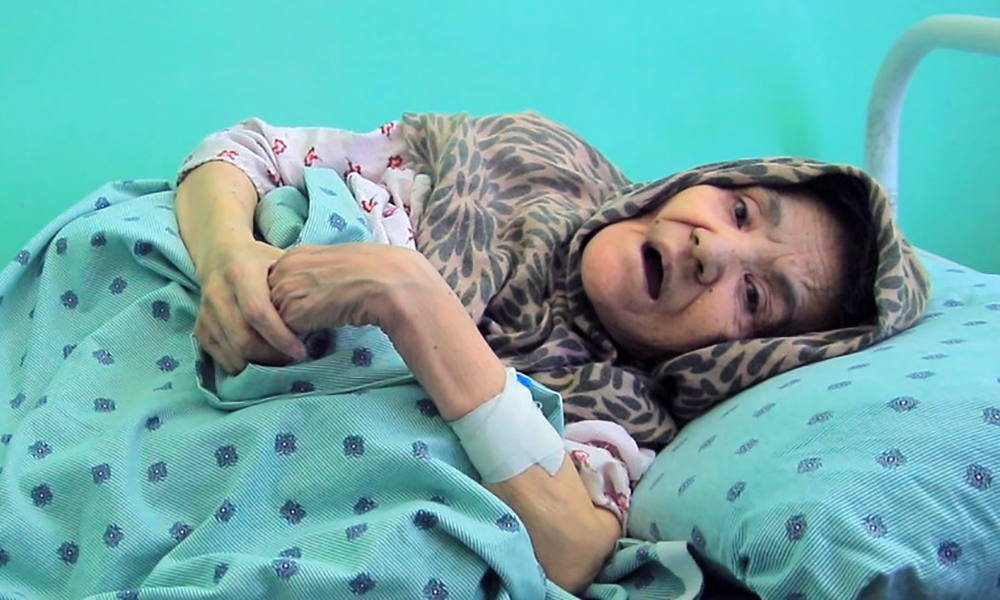
Ariana: A woman who was imprisoned in a dark room for 25 years in Kabul died on Monday, just five months after being rescued by police. The woman, Nikbakht, had been held by her brother in appalling conditions but was rescued after neighbors in district 10 tipped off the authorities about her plight in September last year. After being rescued, she was hospitalized and treated for malnutrition and anemia. Click here to read more (external link).
Gurbaz included in Afghanistan’s squad for one-off test against Ireland
 Ariana: Afghanistan Cricket Board (ACB) on Monday announced the nation’s squad for the one-off test match against Ireland that is scheduled to be played from February 28 to March 3 at the Tolerance Oval in Abu Dhabi. Rahmanullah Gurbaz has been added to the test squad and is expected to be a potential debutant for Afghanistan against Ireland. In addition, a right-arm leg-spinner, Khalil Gurbaz, is expected to provide his leg-break bowling services. Click here to read more (external link).
Taliban Execute Convicted Killer in Afghan Sports Stadium
 Ayaz Gul
VOA News
February 26, 2024
ISLAMABAD — Afghanistan’s Taliban Monday carried out another public execution of a man charged with murder, defying international calls to stop the “inhuman” punishments. It was the third public execution within a week.
The Taliban Supreme Court said in an announcement that the execution had taken place in a sports stadium in Sheberghan, the capital of the northern Afghan province of Jowzjan. It said that government and judicial officials, as well as residents, were among the spectators.
The executed person was found guilty of stabbing to death a young man in 2022. The statement said he was tried in three Islamic courts and subsequent appellate tribunals before the judicial “order of retaliation was issued and approved” in line with Islamic law of Sharia.
The punishment was enforced after the Taliban supreme leader, Hibatullah Akhundzada, examined the ruling and endorsed it, the court said.
Last Thursday, the fundamentalist authorities carried out a double public execution at a football stadium in the southeast city of Ghazni, saying both men had been convicted of murder in separate cases.
That announcement outraged the United Nations and global human rights groups. They denounced the executions as against international law and called for ending them immediately,
“We oppose all executions as a violation of the right to life,” Amnesty International said in a statement in response to the double execution. It added that the protection of the right to a fair trial “remains seriously concerning” under the Taliban rule.
“It’s high time that the international community and the U.N. up the pressure on the blatant human rights violations by the Taliban and help ensure that international safeguards are respected in Afghanistan,” said Livia Saccardi, Amnesty International’s interim deputy regional director for South Asia.
The Taliban have executed five convicted murderers and flogged several hundred others, including women, in sports stadiums since regaining power in August 2021 and imposing their harsh interpretation of Islamic law on Afghanistan.
The de facto Afghan rulers have rejected criticism of their policies, saying the criminal justice system and governance at large are based on Islamic rules and guidelines.
The Taliban have imposed sweeping restrictions on women’s rights to education and public life, barring female visitors from parks and gyms and forbidding girls from attending schools beyond the sixth grade.
The international community has rejected the Taliban’s calls for granting their administration formal recognition, citing their treatment of Afghan women and other human rights concerns.
Sexual Slavery by the Taliban: What Lies Beneath the Skin of the City?

Taliban militants (file photo)
8am: On the first day, Faizullah sexually assaulted me. On that same day, several other Taliban militants came and assaulted too. I’ve been here for more than two months now. So far, over a hundred Taliban militants have sexually assaulted me and other women and girls. Most of them are Arabs, Pakistanis, and Chechens. There was a time when they talked about Afghan honor, dignity, and modesty, but today they disgrace their honor and dignity in front of foreigners and trample them underfoot. Click here to read more (external link).