

Ayaz Gul
VOA News
October 8, 2023
ISLAMABAD — Officials in Afghanistan say the death toll from a powerful earthquake that shook western parts of the country on Saturday has risen to more than 2,000.
The Taliban-led Ministry of Natural Disasters confirmed the death toll in a statement Sunday, saying more than 1,300 houses were completely destroyed in the quake.
Naeemul Haq, the head of the Taliban-led information and media center in Herat province, said in a statement that more than 2,000 people were injured in the magnitude 6.3 quake. He added that rescue operations continued and said the number of victims is expected to increase further.
The earthquake struck Herat, a western province bordering Iran, at about 11 a.m. Saturday morning. Its epicenter was located near Zinda Jan, a district in central Herat.
At least eight powerful aftershocks rattled the province within five hours and affected villages across three districts, the U.N. Office for the Coordination of Humanitarian Affairs said. It described as serious the condition of many of those injured.
Taliban officials told a meeting of humanitarian organization representatives Sunday that the calamity had flattened more than a dozen villages housing around 3,000 families.
The United Nations in an initial overnight assessment reported that more than 600 houses “were partially or fully damaged” in the disaster zone.
“At least 4,200 people [600 families] have been affected. Additionally, an estimated 300 families, or 2,100 people, are reported to have been displaced,” the U.N. Office for the Coordination of Humanitarian Affairs said.
“In coordination with the health authorities, the World Health Organization Country Office in Kabul and the WHO Field Office in Herat rapidly mobilized resources and extended immediate life-saving support for the affected population,” the statement said.
U.N. Secretary-General Antonio Guterres expressed sadness at the loss of life in the earthquake, asserted his solidarity with the Afghanistan people, and extended “his sincere condolences to the families of the victims and wishes a swift recovery to those injured.”
The rest of statement released by Stephane Dujarric, secretary-general spokesman, read, “The United Nations and our partners in Afghanistan are coordinating with the de facto authorities to swiftly assess needs and provide emergency assistance.
“As winter approaches, the Secretary-General calls on the international community to come together and support people impacted by the earthquake, many of whom were already in need before this crisis.”
In June 2022, a powerful earthquake in the eastern parts of the impoverished South Asian nation killed more than 1,000 people.
Afghanistan has faced prolonged conflict and natural disasters, including flooding, drought and earthquakes, leading to one of the world’s largest humanitarian crises. The U.N. estimates that two-thirds of the country’s population is in need of aid.
The hardline Taliban seized control of the country two years ago. They imposed sweeping restrictions on women’s access to education and work per their strict interpretation of Islamic law. The de facto rulers have also barred women from working for aid groups, hampering humanitarian activities in Afghanistan.
No country has recognized the Taliban government, citing human rights concerns and their treatment of women.
Related

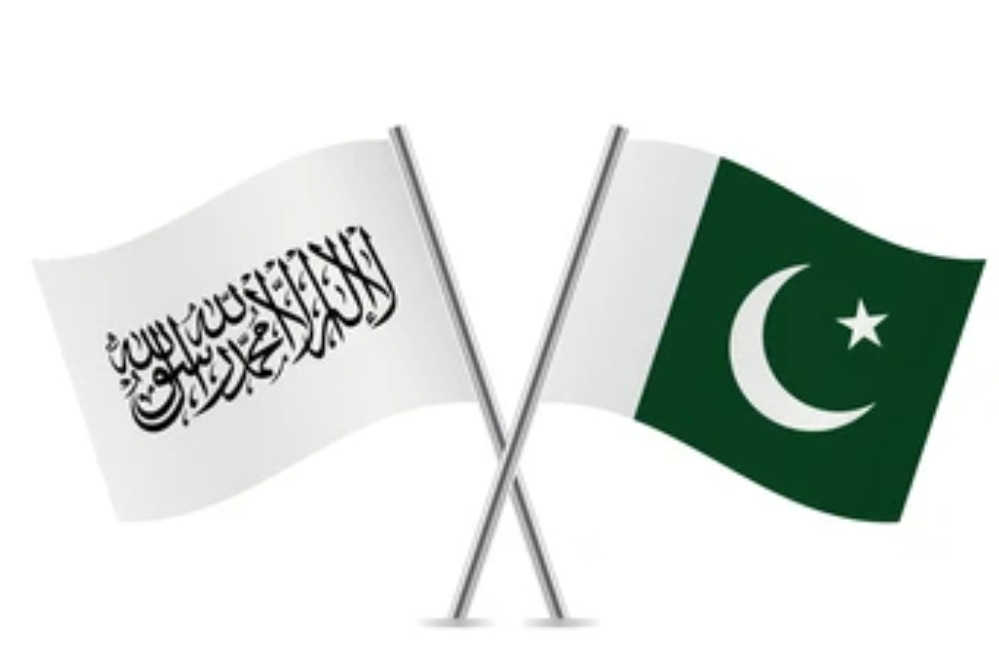 Michael Hughes: Islamabad introduced trade restrictions targeting a frail Afghan economy because – apparently – threatening to send 1.7 refugees to Afghanistan wasn’t enough of a message to send the Taliban in one week. On the surface they appear more disruptive than anything, but the measures could be the opening salvo of a one-sided trade war if the Taliban refuse to curb support for the militant extremists that are wreaking havoc in Pakistan.
  Hujjatullah Zia via Al Jazeera: Climate change is bringing about more devastation, forcing more Afghans to flee. Deportations from neighbouring countries will not stop them.
  Ariana: India were crowned Asian Games men’s cricket champions on their first attempt and without needing to bat Saturday in an anti-climatic finish, consigning Afghanistan to a third consecutive silver.
  Khaama: In Qazvin Province, hundreds of Iranian citizens passionately demonstrated, expressing their concerns about Afghan migrant presence in the country. Some protesters resorted to violence, attacking the homes of Afghan migrants with rocks and wooden objects, highlighting the complex challenges surrounding immigration and the pressing need for dialogue and understanding in addressing these issues. Videos on social media showed the presence of riot police trying to prevent further violence. The protesters gathered before Aghabaliyeh City Council and shouted slogans against Afghan migrants like “Afghans must disappear.” A troubling video from Aghabaliyeh depicts local youths attacking the homes of Afghan migrants with rocks and wooden objects, causing a child to cry out in fear. In response, Afghan migrants in the city advise one another through Telegram and WhatsApp groups to remain indoors, ensure a sufficient food supply, and secure their doors and windows, reflecting the fear and uncertainty surrounding their safety.
  Dawn (Pakistan): His remarks come after two more samples tested positive for the poliovirus in the country, just a day after this year’s third case surfaced. According to an official at the polio laboratory of the National Institute of Health (NIH), sewage samples collected from Dera Bugti, in Balochistan, and Peshawar had tested positive for the virus. Both viruses, found in sewage samples, are similar to Afghanistan’s poliovirus. Pakistan and Afghanistan are the only countries where the polio virus remains endemic.