
Bandits Behead 23-Year-Old Youth in Takhar Province
 8am: Local sources in Takhar have reported a horrifying incident in which a 23-year-old young man fell victim to a brutal act by robbers in the province. It is noteworthy that, in recent months, armed robberies in Takhar have seen an unprecedented increase. On June 23 of this year, armed robbers also beheaded a shopkeeper in Takhar. Click here to read more (external link).
Facing An Uncertain Future, Afghan Girls Finishing Sixth Grade Leave School In Tears

Afghan girls (file photo)
By RFE/RL’s Radio Azadi
December 8, 2023
Hundreds of thousands of sixth-grade girls in Afghanistan attended the last day of the school year, many with tears in their eyes as they face an uncertain future because of Taliban policies that forbid them from further schooling and restrict their basic human rights.
“These last few days of our studies are very stressful and difficult,” Kainat, a sixth-grader in Kabul, told RFE/RL’s Radio Azadi on December 8, the last day of the current school year before the winter break. “We all cried because none of us will be able to study further. Our teachers tried to console us by saying that school doors might reopen for us some day.”
But for Kainat and the rest of the war-torn country’s females, that day may not come for some time.
Despite pledges of a less-authoritarian rule than in their previous time in power, Taliban militants have sharply restricted the rights and freedoms of Afghan girls and women since taking over the government as international troops withdrew following two decades of intervention.
The ultra-fundamentalist Islamist Taliban rulers have since banned girls from attending school from grade seven onward. They have severely curtailed their employment prospects, mobility, and any public role in society, defying international pressure, domestic protests, and efforts to persuade the militants from rescinding their brutal policies.
The ban on education was prompted by the religious views of the Taliban Chief Justice Abdul Hakim Haqqani and endorsed by the group’s supreme leader, Mullah Haibatullah Akhundzada.
Fatima Siddiq, a primary school teacher in Kabul, told Radio Azadi that the hopelessness felt by girls as they leave the school is haunting.
“I am also a mother of three daughters who will no longer be able to continue their education,” she said. “How is it possible that the [Taliban] government is unable to fulfill its promise of reopening schools?”
The Taliban’s policies are deeply unpopular among most Afghans. Even though dissent is often met with a harsh response by authorities, some people are still willing to criticize the government because the policies are seen as destructive.
In the Muslim nation of some 40 million people, activists and rights advocates accuse the Taliban of implementing “gender apartheid” by denying women education, work, freedom of movement, and deciding how they can appear in public.
But it’s not only females who are bearing the brunt of the government’s policies.
In a new report released on December 6, the global rights watchdog Human Rights Watch (HRW) said that education for boys in Afghanistan under the Taliban rule is at risk, too.
The report, titled Schools Are Failing Boys Too, says curriculum changes, the firing of female teachers, corporal punishment, and other practices risk their education over the longer term as well.
Sahar Fetrat, a women’s rights researcher at HRW and the author of the report, says the Taliban has caused “irreversible damage” to the education of both Afghan boys and girls.
“By harming the whole school system in the country, they risk creating a lost generation deprived of a quality education,” she said.
Copyright (c) 2023. RFE/RL, Inc. Reprinted with the permission of Radio Free Europe/Radio Liberty, 1201 Connecticut Ave NW, Ste 400, Washington DC 20036.
Other Education News
The Recent Movements of the Opposition Fronts of the Taliban and the Imperative to Ponder Four Points

NRF Fighters (file photo)
8am: Several movements opposing the Taliban have recently accelerated their activities, as evidenced by the convention of many international meetings. Moscow, which was not expected to embrace these trends immediately, hosted them on two occasions, ultimately resulting in a harsh reaction from the Taliban spokesperson: “Some countries want to revive the burnt beads.” At the same time, a picture of the meeting between Taliban Foreign Minister Amir Khan Muttaqi and Russia’s Ambassador to Afghanistan, Dmitri Zhirnov, spread out in the media, which was likely aimed at conveying concern to Moscow. Click here to read more (external link).
Related
Tolo News in Dari – December 8, 2023
Ex-PM Imran Khan: 1.5 million Afghan refugees not a burden for Pakistan

Imran Khan
Khaama: Former Prime Minister Imran Khan, currently in jail, criticized the deportation of Afghan refugees from Pakistan on Thursday. “1.5 million refugees are not much of a burden for a nation of 250 million people. There is a fear of a permanent rift in the long-standing relationship between the two countries, considering the way Afghan refugees are being expelled,” Imran Khan wrote on his social media X. “Pakistan has hosted Afghan refugees for 40 years but the fruits of this years-long hospitality are being wasted just because of a poor strategy, “Khan said. Imran Khan cautioned that the forced expulsion of refugees could lead to a lasting rift in the relationship between Pakistan and Afghanistan, emphasizing the need for a more considerate approach. Click here to read more (external link).
Taliban Reportedly Dismantled Islamic State Bases in Western Afghanistan
 Ayaz Gul
VOA News
December 8, 2023
ISLAMABAD — Taliban security forces in Afghanistan have reportedly killed an Islamic State operative and captured several others during overnight raids on the militant group’s bases near the border with Iran.
“important network” of the regional branch of Islamic State known as Islamic State-Khorasan, or IS-K, said a Taliban-affiliated media outlet Friday.
The network was involved in some of the recent attacks on the Shi’ite Muslim community in Afghanistan, according to Al-Mersaad, which is tasked to counter IS-K propaganda in the country and report on Taliban counterterrorism operations against the group.
Using a local acronym for the group, Al-Mersaad noted that “some of the arrested ISKP members are highly important.”
It was not possible to verify the claims from independent sources and Taliban government officials rarely comment on reports published by the state media outlet.
US Concerns
The United States, in recent statements, has described IS-K as a significant threat to regional security, warning the group could soon launch an international attack from Afghan bases.
On Thursday, U.S. President Joe Biden attempted to address those concerns in a letter he wrote to Congress.
“United States military personnel remain postured outside Afghanistan to address threats to the United States homeland and United States interests that may arise from inside Afghanistan,” Biden said without elaborating.
Taliban authorities reject U.S. concerns, claiming their security forces have significantly degraded IS-K’s abilities to prevent it from posing a threat to Afghanistan or beyond.
Al-Mersaad recently published details and pictures of what it said were the “top 12 leaders/officials” of IS-K who were killed by Taliban special forces this year.
Last week, the U.S. State Department said in its annual report that IS-K continued to conduct terrorist attacks against Afghan civilians, particularly members of the Shi’ite community and the Taliban.
“In 2022, ISIS-K conducted cross-border attacks in Pakistan, Tajikistan, and Uzbekistan and maintained ambitions to attack the West,” the report noted, using an acronym for the regional Islamic State affiliate.
“While the Taliban committed to preventing terrorist groups from using Afghanistan to conduct attacks against the United States and its allies, its ability to prevent al-Qa’ida elements, Tehrik-e-Taliban Pakistan, and ISIS-K from mounting external operations remained unclear,” the report said.
It added that the Taliban had hosted and sheltered al-Qaida leader Ayman al-Zawahiri in Kabul, the Afghan capital, before he died in a U.S. airstrike on July 30, 2022. The Taliban have refused to comment on the allegations to date, saying the matter remains under investigation.
The Islamist Taliban seized power from an American-backed government in August 2021, when all U.S. and NATO troops withdrew from Afghanistan after two decades of war with the then-insurgent Taliban.
Red Cross warns of rising poverty and unemployment in Afghanistan
 Khaama: The International Red Cross Committee states that the spread of poverty and unemployment in Afghanistan has greatly affected the lives of many people. This committee stated this issue in its recent report, updated on Thursday. Natural incidents such as droughts, floods, and earthquakes, along with the suspension of international aid and sanctions on Afghanistan’s banking system, have been cited as reasons for the expansion of poverty in the country. Click here to read more (external link).
Tolo News in Dari – December 7, 2023
Pakistan Army Chief backs expulsion of ‘illegal’ migrants
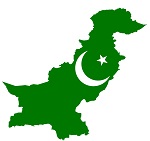 Khaama: General Asim Munir, the Chief of the Pakistan Army Staff, has emphasized his support for Pakistan’s decision to expel illegal migrants, stating that this action is in the best “interest” of Pakistan. Aasim Munir stated, “Illegal migrants are being repatriated to their country in a humane and dignified manner, following established norms.” On the other hand, experts from the United Nations, including Richard Bennett, the UN Special Rapporteur on Human Rights, have expressed concerns about the expulsion of Afghan migrants from Pakistan, emphasizing that they are at risk of human rights violations. Earlier, several UN agencies and human rights organizations had also expressed concerns about the situation of migrants expelled from Pakistan. Click here to read more (external link).
Related