
Political Instability Hinders Pakistan Response to DI Khan Attack
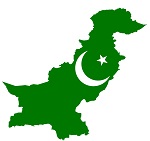 Michael Hughes: The rulers in Kabul from an “official” perspective have a level of plausible deniability with respect to the recent attack on a military barracks in northwest Pakistan. That is, as of now, there is no direct evidence the current de facto Afghan government was involved in the attack’s planning, resourcing, and/or execution. The fingerprints are not clear. Sort of reminds one of terror attacks inside Afghanistan that everyone and their cousin knew would not be possible without support from Rawalpindi. Click here to read more.
Afghan Refugees in Turkey Hope for Relocation, Fear Deportation
 Farkhunda Paimani
Roshan Noorzai
VOA News
December 15, 2023
WASHINGTON — Edris Niazi had “a normal life,” back in Kabul, working as a government employee, but his life “turned upside down” after the Taliban seized power in 2021.
Niazi, 32, is now working as a welder in Turkey’s Kayseri province with “no future,” as he fears being deported to Afghanistan.
“There is no way that I return to Afghanistan,” Niazi said. “My life is in danger, and I would try whatever it takes to go to a third country, either through legal or illegal routes.”
Many urban, educated Afghans like Niazi escaped after Kabul fell into the hands of the Taliban.
According to the U.N., more than 1.6 million Afghans have fled since August 2021, bringing the total number of Afghan refugees in the neighboring countries to 8.2 million.
More than 300,000 Afghan refugees live in Turkey. Many of them, like Niazi, are hoping to be relocated to a third country.
“Turkey is not the place that one would like to stay in it permanently,” Niazi said. “Turkey serves as a bridge” for refugees hoping to go to Europe.
Waiting for relocation
Many Afghan families in Turkey have been waiting for resettlement in third countries for years.
Munir Mansoori, who fled with his family to Turkey in 2016, is still waiting to be relocated to a third country.
“We have tried all the venues [for relocation] but our efforts have yet to yield results,” said Mansoori, who worked as a journalist with Ariana TV back in Afghanistan.
“Here in Turkey, we can’t work in our profession. We can’t work here. It is a different country with a different culture and language,” he said.
He said that he is afraid of deportation as his life would be in danger in Afghanistan.
“I am afraid of being deported. I received threats because I was hosting a music show in Afghanistan before coming to Turkey,” he added.
Ali Hikmat, the co-founder of the Afghan Refugee Solidarity Association, told VOA that in just one week in November, “Turkey arrested 820 Afghans in the eastern part of Turkey and deported them by air to Kabul.”
Hikmat added that Afghans are also pushed back to Iran via the land border.
Last year, Human Rights Watch reported that Turkey was “routinely” pushing back tens of thousands of Afghan refugees to Iran or sending them back to Afghanistan, “with little or no examination of their claims for international protection.”
Based on the information provided by the Turkish authorities, HRW reported that Turkey deported 44,768 Afghans by air to Kabul in the first eight months of 2022.
Worries about education
Shabnam Mohammadi was in high school in Afghanistan’s western province of Herat when the Taliban seized power in 2021.
She, together with her parents and three brothers, left Afghanistan two months after the takeover and crossed the border to Iran and then to Turkey.
Mohammadi told VOA that as soon as the family reached Turkey, they “applied for relocation [to a third country] but heard nothing.”
“It is difficult here. We left everything behind and had to start from the beginning,” she said, “We can’t go to school. We don’t have a future here and can’t go to Afghanistan.”
Mohammadi added that the family still hopes to be resettled in a third country where she and her brothers can attend school.
“But now that we are in Turkey, it is not clear what is going to happen to us,” she said.
Mohammadi said that she would not be able to go to school or work if she returned to Afghanistan.
After seizing power in 2021, the Taliban banned girls’ secondary and university education. Women are also barred from working with NGOs, going to parks and gyms and long-distance traveling without a male chaperone.
“Like everyone else,” Niazi said, “I would like to go to a place where my daughter can get an education. I want her to have a better future.”
This story originated in VOA’s Afghan Service.
Major Rally Held in Kabul in Support for Palestine
 Tolo News: A major gathering was held in capital Kabul on Friday in support of the people of Palestine and to condemn the Israeli attack on Gaza. The participants of the rally called for an “immediate” halt to Israel’s attack on Gaza and criticized the “silence of the Islamic countries” regarding the issue of Palestine. “The cruelty which is going on in [Palestine] on the defenseless people is unacceptable and we condemn this action in the strongest terms,” said Mohammad Mohsin, a participant. Click here to read more (external link).
Islamabad and Kabul should negotiate to prevent direct conflict: Khalilzad

Khalilzad
Ariana: There is a crisis in relations between Afghanistan and Pakistan, and to preclude further escalation including a direct conflict, Islamabad and Kabul should consider negotiating an agreement, Zalmay Khalilzad, former US special envoy for Afghanistan reconciliation, said on Friday. He added that the Doha agreement did not deal directly with the challenge of terror threats to each country from the territory of the other. “It was understood that the two countries would negotiate on this critical issue bilaterally. It is time to start the process.” Click here to read more (external link).
Related
Tolo News in Dari – December 15, 2023
UN Mission Says Taliban Putting Afghan Women In Prison For Protection From Violence
 Radio Free Europe/Radio Liberty
December 14, 2023
The United Nations Assistance Mission in Afghanistan (UNAMA) says de facto Taliban governing officials have admitted to sending women to prison as a means of protecting them from gender-based violence.
In a report published on December 14, the UN mission said the Taliban has eliminated the country’s 23 state protection centers for women because, as some officials said, “women’s shelters are a Western concept.”
“Some de facto officials stated that in instances where they had safety concerns for a survivor, she would be sent to the women’s prison, for her protection, akin to how prisons have been used to accommodate drug addicts and homeless people in Kabul,” the report said, noting that women sent to prison as a means of sheltering them have no male relatives to stay with or they would not be safe with males from their families.
Since the Taliban seized power in August 2021 as international troops withdrew from the country, Western officials and activists, along with some inside Afghanistan, have expressed concerns about women’s rights under the extreme conservative rule of the Islamist Taliban leadership, which has banned women and teenage girls from education in Afghanistan.
It has also banned them from employment in most sectors and discouraged them from leaving their homes.
The de facto rulers have put down, often violently, protests by Afghan women over their lack of rights. Hundreds of women have been imprisoned after their protests were declared illegal.
The UNAMA report said that with regard to gender-based-violence complaints, there was a “lack of clear delineation of responsibilities” among the various de facto institutions on handling cases of women and girls and that “referrals between entities creates a gap in accountability for justice actors and makes it difficult for women and girls to know which entity to approach when they have a gender-based violence complaint.”
“The situation is compounded by the handling of gender-based-violence complaints predominantly by male personnel of the de facto law enforcement and justice institutions. Many survivors reportedly prefer seeking redress through traditional dispute-resolution mechanisms because of fear of the de facto authorities,” it added.
Women’s rights were severely restricted during the Taliban’s first stint in power until they were driven from government by a U.S.-led invasion in 2001.
Despite pledges of a less authoritarian rule than in their previous time in power, the ultra-fundamentalist Taliban de facto rulers, who have not been officially recognized as the country’s government by the international community, have gone further in some of their restrictions on women, leading to accusations from rights groups and many governments that “gender apartheid” has been installed in the country.
“The confinement of women in prison facilities, outside the enforcement of criminal law, and for the purpose of ensuring their protection from gender-based-violence, would amount to an arbitrary deprivation of liberty,” UNAMA said.
“Confining women who are already in a situation of vulnerability in a punitive environment would also likely have a negative impact on their mental and physical health, revictimization and put them at risk of discrimination and stigmatization upon release,” it said, adding that the authorities “have an obligation” to protect women and girls from gender-based violence.
Copyright (c) 2023. RFE/RL, Inc. Reprinted with the permission of Radio Free Europe/Radio Liberty, 1201 Connecticut Ave NW, Ste 400, Washington DC 20036.
Pakistan extends deadline for Afghans awaiting third-country resettlement
Al Jazeera: The Pakistani government has announced that undocumented Afghans awaiting paperwork to resettle to a third country will be allowed to stay in Pakistan for two more months. The extension of the deadline on Wednesday from the end of this year to February 29 comes amid Pakistan’s drive to expel more than one million foreigners living in the country without paperwork. Click here to read more (external link).
Ghazni in the Dark: Residents Endure Four Days Without Electricity, Blame Taliban Negligence
 8am: Residents in Ghazni report that for the past four days, the entire province has been without electricity due to an unknown disruption in the power supply. According to them, the closure of some shops and production companies has also occurred due to the lack of electricity in the province. The residents of Ghazni accuse the Taliban of negligence in this matter, stating that the group has not provided any explanation for the power outage in the province over the past four days. Click here to read more (external link).
Tolo News in Dari – December 14, 2023