
 8am: Several residents of Rawza village, located near the historic Rawza of Sultan Mahmud of Ghazni, say the Taliban seized land in the same area without following legal steps or acknowledging ownership documents. They describe the area as one of the most densely populated residential zones of Ghazni city, home to more than 5,000 people whose lives are closely tied to this land. According to residents, these lands have supported local families for generations, serving as the backbone of farming, income, and survival. They say the Taliban took the land by force, ignoring deeds and evidence that clearly establish private ownership. Click here to read more (external link).
Corruption Under Sharia: Inside the Taliban’s Virtue and Vice Directorate in Balkh Province
 8am: When commanders and fighters from within the group face accusations of sexual relations outside marriage, the Taliban often protect their own. Instead of enforcing the Sharia punishments they claim to uphold, they conceal these acts by imposing forced marriages. These accounts follow earlier findings by the Hasht-e Subh Daily, which documented in multiple reports that the Taliban have forced girls into marriage across several provinces using violence and money. Click here to read more (external link).
Unpaid salaries deepen hardship for Afghanistan’s public employees amid winter
 Amu: Public employees in Afghanistan say unpaid salaries are pushing many into severe financial difficulty as winter temperatures drop and the cost of food and healthcare rises. Employees said wages for the months of Qaws and Jadi (November and December) remain unpaid, despite payroll documents and financial reports having been submitted to the finance ministry by public institutions. Click here to read more (external link).
More Economic News
Tolo News in Dari – January 4, 2026
Drones & Khalilzad Are Monitoring Taliban Leader, Says Afghan Envoy In Geneva

Mullah Hibatullah Akhundzada
Afghanistan International: Afghanistan’s ambassador and permanent representative to the United Nations in Geneva said Taliban leader Hibatullah Akhundzada has become increasingly isolated and is under constant scrutiny from foreign surveillance and political pressure. Nasir Ahmad Andisha said Akhundzada disapproves of the repeated visits to Kabul by Zalmay Khalilzad, the former US special envoy for Afghanistan, but is effectively unable to prevent them. “Drones in the sky and Khalilzad on the ground are keeping Hibatullah Akhundzada under watch,” Andisha told Afghanistan International. He added that the Taliban leader has become “like a ghost” in Kandahar and no longer trusts those around him. Click here to read more (external link).
Pickpocketing in Kabul: Hidden Insecurity Beneath Taliban Claims of Safety

8am: Residents of Kabul are increasingly alarmed by a surge in thefts, especially pickpocketing, across the city. They say that despite repeated Taliban promises to guarantee public safety, the group has failed to curb these crimes. According to many residents, pickpockets operate most often in crowded areas, public buses, and narrow alleyways, where people are least able to protect themselves. Click here to read more (external link).
Who Killed The Chinese Workers? Questions Persist Weeks After Afghan-Tajik Border Attacks
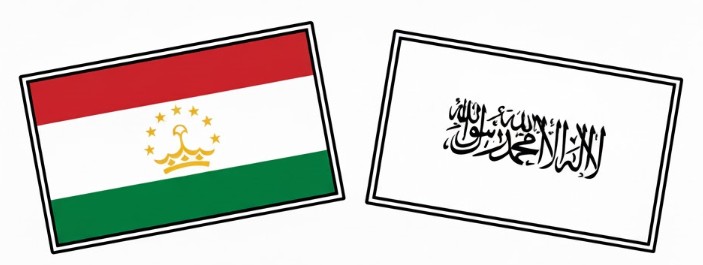
RFE/RL: More than a month after a pair of attacks killed five Chinese nationals working at a gold mine near Tajikistan’s remote border with Afghanistan, questions remain over what led to the high-profile incidents that could reshape both countries’ relations with China. Click here to read more (external link).
Afghanistan Freedom Front Claims Killing of Two Taliban Fighters in Kunduz
 8am: The Afghanistan Freedom Front has claimed that two Taliban fighters were killed and two others wounded in an attack in Kunduz province. According to the Afghanistan Freedom Front, the vehicle carrying Taliban fighters was also set on fire in the attack. Click here to read more (external link).
More AFF News
Linguistic Purge from Streets to Universities: How the Taliban Are Translating Proper Names
 8am: For more than four years, the Taliban have systematically erased Persian words and expressions from schools, universities, and even city streets. In recent days, images shared on social media have revealed a new phase of this effort. Taliban authorities have removed urban signboards in Kabul, rearranged text, replaced Persian with Pashto, and gone so far as to translate proper names. In one striking example, “Shahr-e Naw Kabul” appears as “Nawi Shar,” while “Bagh-e Daoud” has been changed to “Daoud Ban.” These changes have triggered strong reactions from many citizens. Around the same time, the group removed Persian and Uzbek signboards from Samangan University. Click here to read more (external link).