
Ashraf Ghani: Politician or Teacher?
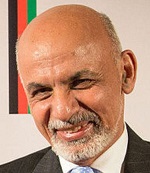
Ashraf Ghani
8am: Ashraf Ghani destroyed the institutions, which ultimately at the end of his rule, most of the ministries and directorates had been stripped of their authority, with the competing parallel departments neutralizing each other’s influence. During Ashraf Ghani’s era, the army experienced extreme management instability and most generals and military officials did not feel job security. Ashraf Ghani’s relationship with external sources of power, such as neighbors and Westerners was turbulent and unstable. He failed to understand the significance of American cooperation for the survival of his power.
Ashraf Ghani had tried to introduce himself as a nationalist who wanted progress and was inclined to stabilize the rule of Pashtun elites. There was no stability in this work either. His stance towards former Afghan Kings Ahmad Shah Abdali and Amanullah Khan during his rule had offended a group of Pashtun nationalists. He once stated that since the era of Ahmad Shah Abdali, the rulers of Afghanistan have been engaged in fratricide and civil war. Once again, in the last days of his rule, he had called Amanullah Khan a deserter, asserting that he would not repeat his mistake.
UNAMA survey reveals only 4% of women support recognition of Taliban Govt in Afghanistan
 Khaama: The report indicates that 45% of women have requested increased international aid to improve their situation. Another 39% of women have stated that direct dialogue opportunities with the Taliban are necessary to improve their human condition. Meanwhile, 4% of women have emphasized the recognition of the Taliban. A Gallup survey in 2023 shows that only 11% of women in Afghanistan are satisfied with their life situation. Click here to read more (external link).
Rahmani Denies US Treasury Accusations of Corruption

Mir Rahman Rahmani
Tolo News: The press release of Rahmani said: “On 12/12/2023, the Treasury Department of the United States of America published a report containing false information regarding U.S. contracts in Afghanistan and accusations of our administrative corruption. We categorically deny these corruption allegations. However, out of respect for our people, it is necessary to inform the people of Afghanistan and the world that such baseless accusations are contrary to international standards and United Nations conventions.” Click here to read more (external link).
Related
Donors Pay Afghan Health Workers While Number of Female Doctors Shrinks
 Akmal Dawi
VOA News
December 12, 2023
Since the Taliban’s seizure of power in Afghanistan in 2021, the nation’s public health sector has been on life support, with foreign aid agencies stepping in to pay health workers and sustain hospitals and local health centers.
The country’s donor-dependent economy has teetered on the brink of collapse as foreign donors cut off development assistance and imposed sanctions on governing Taliban entities.
The International Committee of the Red Cross, or ICRC, paid supplemental salaries for more than 10,000 doctors, nurses and staff at 33 hospitals serving 26 million people across Afghanistan.
It also “paid for drugs and other medical supplies, as well as running costs of the hospitals, like electricity, ambulance services, lab tests and food for patients,” Diogo Alcantara, an ICRC spokesperson, told VOA.
The ICRC program ended in August, but the donor-funded payments have continued.
Now, the United Nations children’s agency, UNICEF, has picked up the tab, paying the salaries of more than 27,000 Afghan health workers, including 10,000 women.
The salary payment program serves as a “lifeline in retaining the health workforce and preventing further brain drain” in Afghanistan, according to Kate Pond, a UNICEF spokesperson.
“Lack of access to health care services is of great concern to UNICEF, which is why we have taken concrete steps to keep the health system afloat, ensuring primary and secondary health services are available for women, children and families across Afghanistan,” Pond told VOA in written comments.
Taliban health ministry officials refused to comment to VOA regarding the allocation of limited domestic resources for the health sector. The Islamist regime does not publicly disclose its budget and national spending.
Despite funding from UNICEF, a pressing need for immediate donor assistance has been reported for at least 36 hospitals previously financed by the ICRC to sustain critical services.
While donors have responded to the U.N.’s calls for humanitarian assistance for Afghanistan, only 40% of the required $412 million for critical health services in 2023 has been committed.
Dwindling number of female health workers
For decades, Afghanistan has grappled with a significant shortage of female health professionals, resulting in some of the worst women’s health indicators in the world.
The nation’s maternal mortality rate stood at more than 1,600 per 100,000 live births until 2002 but decreased to 620 in 2020, largely due to sustained international technical and financial assistance.
Aid workers say the Taliban’s restrictions on women’s education and work are reversing the progress achieved in Afghanistan’s health sector, especially for women.
“Afghanistan has not produced a single female doctor for more than a year, and this is the worst thing that could happen to our health sector,” said a Kabul Medical University lecturer who did not want to be named in this article.
The Taliban have prohibited secondary and higher education, including medical studies, for girls, giving no indication as to when the gender-based restrictions might be lifted.
“There is a shortage of qualified health workers in Afghanistan in general, and women especially,” said UNICEF’s Pond, adding that some Afghans travel long distances for health care services.
“As a result, more than one-third of the population lack access to health facilities,” she said.
Even before the Taliban’s return to power in 2021, there was no female doctor in some rural districts of Afghanistan.
“If the ban on women’s education and work is not lifted, there will be no female doctor left in Afghanistan in the near future,” said the lecturer.
Other Health News
Pakistan: Militant Attack Kills 23 Troops
 Sarah Zaman
VOA News
December 12, 2023
ISLAMABAD — An early morning militant attack in Pakistan’s northwest Khyber Pakhtunkhwa province killed 23 troops Tuesday.
The attack occurred in Daraban, a remote area in the militancy-hit district of Dera Ismail Khan near Pakistan’s tribal districts bordering Afghanistan.
Inter Services Public Relations or ISPR, the Pakistani military’s media wing, confirmed the death toll. It also said the military killed 27 terrorists in multiple operations.
The military’s statement sent to the media several hours after the Daraban incident said six terrorists attacked a security forces’ post in the early hours of the morning.
“The attempt to enter the post was effectively thwarted which forced the terrorists to ram an explosive-laden vehicle into the post, followed by a suicide bombing attack.”
According to the military’s statement, the building of the military camp collapsed because of the ensuing blast, causing multiple casualties.
The statement said all six terrorists were “effectively engaged and sent to hell,” implying the attackers were killed in military action.
The overnight militant attack came after operations targeted terrorists in the larger Dera Ismail Khan area between Dec. 11 and 12. The ISPR said 21 terrorists were killed in those intelligence-based operations in which two soldiers also died.
Tehreek-e-Jihad Pakistan, a relatively new and less-known militant group claimed responsibility for the attack in Daraban.
The group has carried out several high-profile raids against security forces in recent months including an attack on an air force base in early November that damaged three aircraft.
In July, the group claimed responsibility for attacking a military base in southwestern Baluchistan province and killing 12 Pakistani soldiers.
Condemning the attack in a message on X, formerly Twitter, Pakistan’s caretaker Prime Minister Anwaar-ul-Haq Kakar expressed the country’s resolve to continue fighting terrorism.
Pakistani military and police are coming under frequent deadly attacks, primarily in Khyber Pakhtunkhwa and Balochistan provinces.
Pakistan alleges terrorists present on Afghan soil are responsible for the surge and accuses Afghan Taliban of providing them a haven. The de facto rulers in Kabul deny the charge.
Related
Ethnic Tensions Escalate in Paktia: 13 Injured Following Taliban’s Directive to Open Fire
 8am: Local sources have reported an escalation of ethnic tensions in Paktia province, with Mullah Azizullah, the Taliban governor of Samkanai district, allegedly issuing orders for individuals under his command to open fire on non-combatants during mediation efforts between the “Samkanai and Moqbil” ethnic groups. According to the sources, at least 13 individuals from the “Moqbil” community sustained injuries in the aftermath of a confrontation that occurred on Monday, December 11. The condition of five of the injured is reported to be critical. Click here to read more (external link).
Tolo News in Dari – December 12, 2023
Taliban Purge in Ghazni Province: Former Government Employees Face Insults, Dismissals, and Detentions
 8am: Some employees of the former government offices, who continued their Work under the Taliban Rule after the fall of the previous government, report experiencing arbitrary treatment, insults, humiliation, and pretextual dismissals. Local Taliban officials in Ghazni province have reportedly replaced a group of government office employees with their fighters. This comes as, despite declaring a general amnesty for employees of the civilian and military sectors of the previous government, the Taliban have been accused numerous times of murder, detention, torture, humiliation, and harassment of employees of the civilian and military sectors of the previous government. Click here to read more (external link).
Myanmar Overtakes Afghanistan as World’s Top Opium Producer
 VOA News
Zsombor Peter
December 12, 2023
BANGKOK — Myanmar has overtaken Afghanistan as the world’s top opium producer in 2023 after a third consecutive year of expanding cultivation fueled by the country’s civil war, the United Nations says in a new report.
After more than two decades as the world’s leading supplier of opium, Afghanistan saw its cultivated area plummet from 233,000 hectares in 2022 to under 11,000 this year, owing to the ruling Taliban’s strict enforcement of a ban on poppy farming.
At the same time, more and more farmers in Myanmar have been turning to opium since the economy’s nosedive following a military coup in 2021 that has plunged the country into a nationwide civil war.
After surging 33% last year, the area under opium poppy cultivation in Myanmar jumped another 18% in 2023 to 47,000 hectares, according to the U.N. report, Southeast Asia Opium Survey 2023, released Tuesday.
That makes for the most land Myanmar has had growing opium since 2013, and the first time it has led Afghanistan since 2002.
“The instability and lack of security in Myanmar have caused really significant economic turmoil the past couple of years, resulting in people turning to other ways to make money. So, essentially people that had options before, when the economy was doing comparatively well, are going back to opium production. It’s basically an income earner for them when they have few or no other options,” Jeremy Douglas, the regional representative of the U.N. Office of Drugs and Crime, told VOA.
More and more people are finding it hard to eat well, or simply to eat enough. In a country where most families make their living off the land, nearly half of farming families say they worry about having enough food, according to a survey by the World Bank in May, up from 26% a year earlier.
Making opium all the more attractive, the drug traffickers and middlemen buying up crops paid more per kilo this year than last and continued investing in farmers’ fertilizer and irrigation systems, which boosted yields, making each hectare more productive.
“You put it all together, and of course you’re going to see an increase,” Douglas said.
The UNODC estimates that Myanmar’s farmers grew enough poppy this year to produce up to 1,080 metric tons of dry opium, earning up to $2.5 billion for all involved, most of it going to the traffickers shipping the product across Asia and as far as Australia, often as heroin.
Most of that heroin flows through neighboring Thailand on its way further afield. In September, Thai police seized over 440 bars of heroin along with some 15 million methamphetamine tablets after a two-year investigation of a major trafficking ring.
Prin Mekanandha, director of law enforcement for Thailand’s Office of the Narcotics Control Board, told VOA that the $8.2 million drug bust was the largest in the country’s history.
The UNODC report adds that the global opium and heroin shortage expected to follow Afghanistan’s poppy crash is likely to drive prices higher still, which should give farmers in Myanmar an even greater incentive to start growing poppy or expand the poppy farms they already have in the season to come.
Douglas said the same shortage is also likely to see heroin from the infamous Golden Triangle region — where the crime-riddled borderlands of Myanmar, Laos and Thailand converge — making its way beyond the Asia-Pacific to Europe and North America once more.
Afghan heroin started taking over the European and North American markets from the Golden Triangle more than a decade ago as the drug gangs in Southeast Asia mostly switched their focus from opium to methamphetamine.
Now, as Afghan supplies start drying up, Douglas said, “there’s still significant demand out there, and it’s highly likely that we’re going to start seeing Golden Triangle heroin returning to markets that it hasn’t been in for quite some years.”
He said that will be a boon as well for many of the armed groups in Myanmar’s civil war, both those fighting with and against the junta. While most of the groups involved in Myanmar’s drug trade traffic mainly in methamphetamines these days, opium and heroin are still steady earners.
“If the global heroin supply continues to dry up due to the situation in Afghanistan, it’s going to be an incentive to back more cultivation and start trafficking a lot of heroin. There’s going to be increasing supply in the country and it’s going to go somewhere,” said Douglas. “So, they’re going to benefit from this for sure.
The surge in opium farming inflicts costs on Myanmar as well.
The UNODC’s research finds that those who grow opium are more likely to use it themselves than those who don’t, so more cultivation is likely to mean more addicts, and a growing need for programs to treat them.
Rising opium prices will also make it harder to expand a program the U.N. has been running in Shan state, the epicenter of the country’s opium industry, to convince farmers to switch to growing coffee and to stick with it.
The UNODC sees little chance of reversing the current trends while intense fighting in Myanmar continues and puts off any hope of a significant economic rebound. It is expecting to see even more areas put under opium poppy cultivation in 2024.
“Farming communities are caught between insecurity and economic hardships,” said Benedikt Hofmann, the UNODC’s deputy regional representative.
So long as those conditions last, he added, “even more people will look at opium as a viable crop if there are no alternatives, especially in the absence of the rule of law.”