 By Michael Scollon
Radio Free Europe/Radio Liberty
January 28, 2024
Afghan men have limited options when visiting the barbershop if they do not want to be accused of walking away looking like a trendy Westerner or a North Korean dictator.
No haircuts that make them look like an “infidel.” No trimmed eyebrows. And no shaved faces or beards shorter than the optimal length.
Any of those styles are considered a fashion sin, according to a new six-point list of rules for barbers issued by the Taliban’s Ministry for the Promotion of Virtue and the Prevention of Vice.
The issuance of the directives, initially denied by the ministry, were confirmed by a regional ministry official in the western province of Herat this week.
Azizul Rahman Mohajer said on January 23 that certain haircuts were too similar to what the “infidels in the West or North Korea” have.
Some among the younger generation in Afghanistan try to follow these styles, Mohajer said, prompting the delivery of the new rules for barbers to follow.
“If the style is according to our principles there is no problem,” he said, stressing that if customers ask for trendy hairstyles or to have their beards cut, barbers should refuse them.
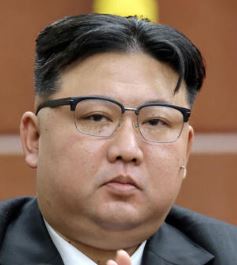
The directives appeared to single out hairstyles that might resemble that of North Korean dictator Kim Jong Un — whose head is shaved on the sides and back, and topped with longer hair in a nod to the cut donned by his grandfather, Kim Il Sung, the founder of communist North Korea.
They were also reminiscent of orders issued under the previous Taliban government in power from 1996 to 2001, including “foreign haircuts” styled after the side-shaved, long-on-top hairdo popularized by American actor Leonardo DiCaprio in the film Titanic. Anything resembling the “Beatles cut,” the iconic mop top worn by John, Paul, George, and Ringo during the British band’s 1960s Beatlemania era, was also banned.
The latest rules say that beards should be no shorter than “one strand” and that men’s eyebrows should not be trimmed. Barbers were also told not to have music playing in their shops, or to have any images that might advertise undesirable styles on display.
It was not clear if the new rules applied only in Herat or across the country.
Since seizing power in 2021, the Taliban has outlawed music and made clear that it considers the shaving or cutting of beards to be a violation of its strict interpretation of Islamic law and values.
Afghan barbers who spoke to RFE/RL’s Radio Azadi expressed incredulity at the latest rules, with some questioning how the styles coming under scrutiny could be in violation of Islamic law and saying the order would harm their business.
“If you trim your beard…or wear Western-style clothes, how does that make you a nonbeliever?” asked one barber who spoke on condition of anonymity out of fear of retribution. “It doesn’t make any difference.”
“The Koran says that cleanliness is part of the faith, but that is not the case here,” a youth from Herat Province who also spoke on condition of anonymity told Radio Azadi. “We understand that wearing a [long] beard is preferred, but it is not a sin [not to have one].”
Policing Appearances
The new rules for barbers are the latest attempt by the Taliban to police the appearances of Afghan men and women.
Since regaining power, the Taliban has ordered male government employees to grow beards and wear traditional attire or risk being fired. In some areas, men have been forced to attend prayers.
In some parts of Afghanistan, the Taliban has banned Western-style clothing, including jeans and suits.
The extremist group has also ordered male teachers and high-school students in some provinces to grow a beard, wear a turban or Islamic cap, and don the “pirhan tumban,” the traditional baggy shirt and pants that is common in rural Afghanistan.
The militants have also imposed strict gender segregation in schools, universities, hospitals, government offices, and public transport.
Women have borne the brunt of the Taliban’s attempts to police Afghans’ appearances. The hard-line Islamist group has enforced strict dress and behavioral codes that require women to cover from head to toe and severely restricts their rights to move freely, work, or receive an education.
The Ministry for the Promotion of Virtue and the Prevention of Vice has frequently issued orders it has said are intended to help Afghans stay in compliance with what the Taliban considers Islamic law.
Written by Michael Scollon based on reporting by RFE/RL’s Radio Azadi
 Khaama: A British newspaper, known as “The Sunday Guardian,” has reported, citing informed sources, that the Pakistani army is allegedly facilitating the movement of ISIS-Khorasan branch militants into Afghanistan. According to the report published on Sunday, it is claimed that the Pakistani military is assisting members of the ISIS-Khorasan branch in crossing the border and entering Afghanistan. Last week, when the Pakistani army attempted to help ISIS members cross the border, they clashed with Afghan Taliban border guards, leading the ISIS fighters to retreat towards the Pakistani side.
  By
By 
 Ariana: Kabul police spokesman Khalid Zadran said Sunday in a post on X that 17 people had died and 10 others were injured in 10 separate traffic accidents on the Kabul-Jalalabad highway in a single day. Zadran said the accidents happened in various areas in the Sorubi district in Kabul province.
  8am: Credible sources within aid organizations working closely with residents of Jawzjan, Faryab, and Samangan provinces report that during this period, 68 infants and children under the age of five, approximately 70% of whom are girls, have been sold by families due to poverty, unemployment, and domestic violence, each fetching between 50,000 to 70,000 Afghanis. Sources add that the lack of oversight, limited access by human rights organizations, and restrictions imposed by the Taliban have prevented accurate reporting of child sales by the media and child advocacy organizations.
  8am: Over the last decade, Tajikistan’s foreign terrorist fighters (FTFs) have brought their homeland under negative limelight on numerous occasions. The most notorious of them all is Gulmurod Khalimov, who became the IS Minister of War after joining the group in 2015. Before becoming a high-ranking terrorist, he served as the head of the special forces unit under Tajikistan’s Interior Ministry in the rank of colonel. After defecting to Syria, Khalimov recorded a video message in which he criticized the Tajik authorities for their ‘anti-Islamic’ religious policy and poor economy that pushed his compatriots out of the country in search of jobs. The IS used Khalimov as its poster boy for the recruitment of Tajik nationals and other Central Asians until he died in 2017. Between 1,100 and 1,900 Tajik citizens joined the IS.