
 Ayaz Gul
VOA News
January 10, 2024
ISLAMABAD — A senior representative of Afghanistan’s Taliban government told a Pakistan-hosted international health conference Wednesday that his country had recorded an increase in mosquito-borne malaria and dengue fever cases, but infections caused by highly contagious poliovirus declined significantly.
Only 12 children around the world were paralyzed by wild poliovirus in 2023, all of them in Afghanistan and Pakistan — with six reported in each. The two countries, sharing a nearly 2,600-kilometer border, have not detected a polio infection this year.
“Polio is still a great challenge for both Afghanistan and Pakistan,” Qalandar Ebad, the Taliban health minister, said in his English-language speech at the first global health security summit in Islamabad.
Delegates from 70 countries worldwide, including those from the United States and the United Nations, are attending the summit in the Pakistani capital.
“We are trying our best to eradicate the polio virus from the country and fortunately we have good accomplishments in this area,” Ebad said.
The World Health Organization says the polio vaccination campaign in Afghanistan has improved in quality and outreach since the Taliban regained control of the war-ravaged country in August 2021, leading to the cessation of years of nationwide hostilities.
The Taliban minister noted that there was a “slight increase in HIV/AIDS cases” in the impoverished country, but he did not elaborate.
Ebad blamed climate change for some health emergencies facing his South Asian nation of more than 40 million people. He urged the need to assist Afghanistan and other developing countries in improving their national healthcare systems to enable them to utilize locally available expertise to combat infectious diseases.
“We are witnessing that the funding in Afghanistan is decreasing, but still, in our country, instead of national capacity [building], many international [workers] with higher salaries are recruited, though the national [workers] can perform the same tasks as internationals do,” the Taliban minister asserted.
No foreign country has recognized the Taliban, citing their bans on Afghan women’s access to education and work.
Afghanistan lost billions of dollars in foreign aid after the Taliban takeover as Western countries and international donors suspended their financial support for the country, where the health sector was primarily dependent on the funding.
In his address to Wednesday’s opening session of the summit, Pakistani Prime Minister Anwaar-ul-Haq Kakar urged collective efforts to fight global infectious diseases like COVID-19 and climate change-induced emergencies.
Kakar said that “no state in the world, no matter how powerful it is, can meet such challenges” alone.
While addressing the gathering, Donald Blome, the U.S. ambassador to Pakistan, backed calls for a collaborative international approach to global health security.
“Coordination with partners is the most effective way to address regional and global health threats,” Blome said. He added that halting infectious disease outbreaks at their point of origin is one of the best and most economical ways to save lives. “Health is the cornerstone to the future of any thriving nation, and the United States will be a strong partner to build this future.”
 Khaama: The Afghanistan Cricket Board has announced that tomorrow, the national cricket teams of Afghanistan and India will face each other in their first T20 match. The national cricket teams of Afghanistan and India will hold their inaugural T20 match on Thursday, January 11th at 6:00 PM Afghan time in Malerkotla, Punjab. According to the schedule, Afghanistan and India will play three T20 matches on January 11th, the second game on Sunday, January 14th, and the third match on Wednesday, January 17th.
  Khaama: The Ministry of Transport and Civil Aviation has officially announced that Air Arabia Airlines successfully conducted its inaugural flight to Kabul International Airport on Wednesday. Air Arabia Airlines is scheduled to operate a daily flight connecting Sharjah and Kabul, enhancing connectivity between the two cities.
 Radio Free Europe/Radio Liberty
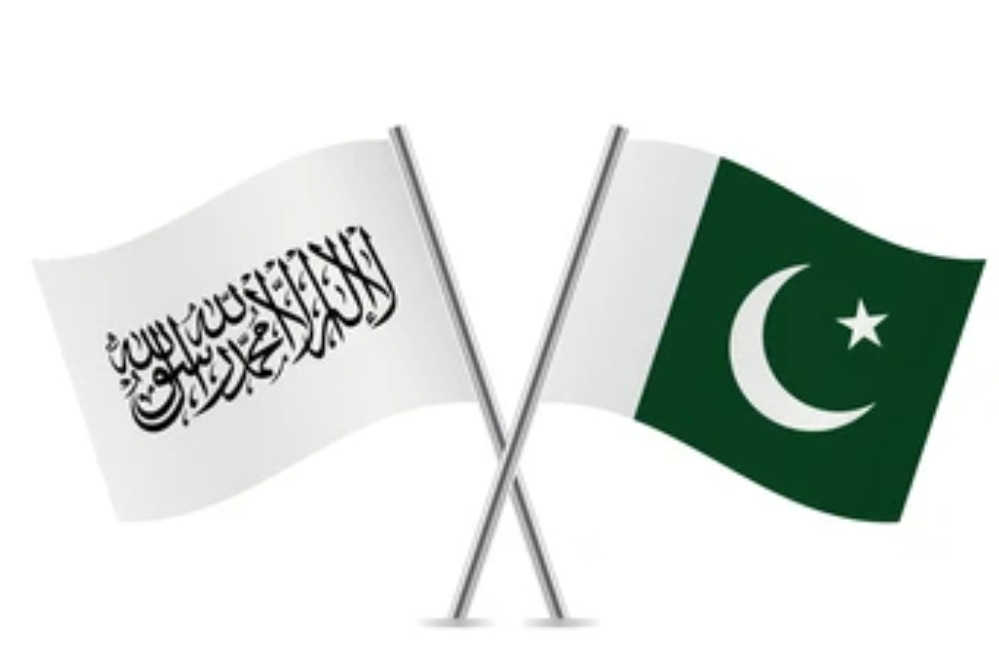 Foreign Affairs: How Islamabad’s Expulsions of Afghans Could Backfire—and Help the Taliban… Although Pakistan has reason to be angry with its Afghan Taliban allies, the country’s terror problem is the direct result of its military’s decision to differentiate between the “good” Afghan Taliban and the “bad” Pakistani Taliban, overlooking their inextricable connections. The policy aimed to secure strategic depth in Pakistan’s western neighbor, but it has demonstrably failed. The TTP ’s access to safe havens in Afghanistan ties the military’s hands, as does Pakistan’s acute economic crisis, the lack of the same public backing that helped legitimize the 2014 offensive against the TTP, and the absence of American political and financial support that Pakistan enjoyed in the years following the U.S. invasion of Afghanistan.
 Khaama: After the detention of several girls by the authorities of the Ministry of Promotion of Virtue and Prevention of Vice on charges of “ban hijab” in the outskirts of Kabul, a recent announcement based on the observance of the hijab guidelines in the eighteenth district of Kabul has been issued. According to the announcement released by the officials of the Ministry of Promotion of Virtue and Prevention of Vice following a meeting with the school principals in the eighteenth district of Kabul, the ministry detains girls who do not consider what is called by the Taliban as an Islamic dress code.