
Afghan Schools Reopen, Girls Banned For 3rd Consecutive Year
 Ayaz Gul
VOA News
March 20, 2024
Schools in Afghanistan reopened Wednesday for the new academic year, but the fundamentalist Taliban government prohibited teenage girls from joining secondary-level classes for a third year in a row.
In a statement marking the new school year, the Taliban Ministry of Education asked teachers and students to follow “Islamic principles in their appearance” and avoid clothing that is against “Islam and Afghan customs.” However, it did not address the closure of secondary schools for girls.
The Taliban have suspended girls’ education beyond the sixth grade and barred many Afghan women from public and private workplaces. Afghan female aid workers have also been prohibited from working for the United Nations and other aid organizations.
The hardline former Afghan insurgents stormed back to power in mid-2021 when U.S.-led foreign forces withdrew from the country after 20 years of involvement in the war with the Taliban.
The Taliban government has since reimposed its strict interpretation of Islamic law to govern the war-torn, impoverished South Asian nation. It has rejected international calls for lifting restrictions on women as interference in internal Afghan affairs.
The de facto Afghan rulers defend the ban, insisting they are working on establishing a female education system that aligns with “Islamic principles” and local culture.
U.N. human rights experts have decried restrictions on Afghan women as “gender apartheid” and called for reversing them immediately.
The United Nations Assistance Mission in Afghanistan, or UNAMA, renewed its call Wednesday for the Taliban to end what it called an “unjustifiable” ban on girls’ education.
“As #Afghanistan’s new school year begins, it is now more than 900 days since girls aged 12+ have been barred from attending school & university,” the mission said on social media platform X. “UNAMA urges the de facto authorities to end this unjustifiable and damaging ban. Education for all is essential for peace & prosperity,” it wrote.
The U.N. has turned down Taliban requests to let them represent Afghanistan at the world body, citing restrictions on women. No foreign country has formally recognized the rulers in Kabul primarily over human rights concerns.
Vedant Patel, the U.S. State Department principal deputy spokesman, reiterated Tuesday that “the so-called Taliban government” should prioritize and address the issue of women’s rights before stating their desire for international recognition.
“The fair treatment of Afghan women and girls continues to be one of our highest priorities when it comes to our engagements on policy as it relates to Afghanistan,” Patel told reporters in Washington.
“The fact that this is another year in which Afghan women and girls don’t have access to these kinds of schools, it’s heartbreaking, and it’s troubling,” he added.
Meanwhile, Taliban authorities say there are no restrictions on girls’ education in their religious schools known as madrasas.
“Principally, there is no difference between a school and a madrasa,” an official at the Taliban Ministry of Education told VOA last week. He asked for anonymity because the Taliban have banned their members from speaking to VOA.
“If the purpose is education, it can be attained as much in madrasas as in schools, so there should be no insistence only on schools,” the official asserted.
However, the U.N. and human rights activists worry that religious seminaries, largely focused on Islamic studies, cannot fully replace traditional schools that deal with diverse subjects.
“I am concerned that the quality of education in these institutions does not adequately prepare girls or boys for higher-level education and professional training to join an effective workforce in the future,” U.N. Secretary-General Antonio Guterres said in a report to the Security Council this month.
The U.N. report documented more than 7,000 registered madrasas in Afghanistan, with nearly 400 designated for girls, where Taliban officials say there are no age restrictions for female students.
“Recruitment of madrasa teachers continued following the promulgation in July 2023 of the Taliban leader’s decree mandating the recruitment of 100,000 new madrasa teachers by the end of 2023,” Guterres said in his report.
Related
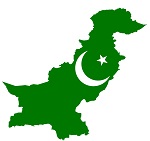
Pakistan’s Campaign To Expel Millions Of Afghan Refugees Enters Second Phase
 By RFE/RL’s Radio Azadi
March 20, 2024
Pakistan is set to force some 850,000 documented Afghan refugees back to their country next month if they don’t leave voluntarily.
According to reports in Pakistani media, the expulsions, the latest in an ongoing campaign of forced deportations, are scheduled to begin on April 15.
The News, an English-language daily, reported that Afghans holding an Afghan Citizen Card (ACC), an ID card issued by the Pakistani government, will be first asked to voluntarily leave the country.
“Later, they will be arrested and deported,” the report said.
Islamabad is calling this the second phase of its move to force more than 3 million documented and undocumented Afghans out of the country. Since October, it has expelled more than 500,000 Afghans who lacked proper documentation to stay in Pakistan.
“This new step will force Afghans to face danger and fear,” lawyer Muniza Kakar told RFE/RL’s Radio Azadi.
Kakar, a lawyer who has voluntarily represented Afghan refugees arrested in the Pakistani city of Karachi, says the campaign aims to expel more than 850,000 ACC-holding Afghans from the South Asian nation.
“When the expulsions begin, they will not discriminate between Afghans holding ACC cards and those holding valid visas,” she said.
Widespread abuses marred Pakistan’s earlier expulsions. Afghans complained of police and other authorities pressuring them for bribes. Many said they were robbed or were expelled despite holding documents that proved that their stay in Pakistan was legal.
“Urgent action is needed to protect the lives and rights of refugees,” Muniza said.
She shared a government document on X, formerly Twitter, that asks the provincial authorities in the southern province of Sindh, where Karachi is the capital, to complete their respective “mapping and repatriation plans” by March 25.
“Unfortunately, the Pakistani government’s campaign against Afghan refugees has upended our lives,” said Suraya Sadat. “When outside, we always fear being arrested.”
Samira Hamidi, a campaigner for global human rights watchdog Amnesty International, questioned why Islamabad is going after Afghan refugees given the situation in Afghanistan.
“Most of these refugees fled Afghanistan fearing persecution of the Taliban,” she wrote on X. “Such mapping and any further decision will expose them to great risk.”
The new plan for exclusions comes after Afghanistan’s Taliban government shelled a Pakistani military installation on March 20. The Taliban said that the attacks were a retaliation for Pakistani air strikes that killed women and children in two southeastern Afghan provinces.
Pakistan said the attacks targeted members of the Tehrik-e Taliban Pakistan, which Islamabad says is sheltering in Afghanistan. Islamabad blames the group for violent attacks on its security forces.
Copyright (c) 2024. RFE/RL, Inc. Reprinted with the permission of Radio Free Europe/Radio Liberty, 1201 Connecticut Ave NW, Ste 400, Washington DC 20036.
We Don’t Want Armed Conflict With Afghanistan, Pakistani Defense Minister Tells VOA

Khawaja Muhammad Asif
By Sarah Zaman
VOA News
March 20, 2024
ISLAMABAD — Pakistan’s Defense Minister Khawaja Asif says his country does not want to engage in an armed conflict with neighbor Afghanistan after Islamabad conducted airstrikes this week on alleged terrorist hideouts across the border.
“Force is the last resort. We do not want to have an armed conflict with Afghanistan,” Asif said, speaking exclusively to VOA.
However, he warned that Islamabad could block the corridor it provides to landlocked Afghanistan for trade with India, saying Pakistan has the right to stop facilitating Kabul if it fails to curb anti-Pakistan terrorists operating on Afghan soil.
“If Afghanistan treats us like an enemy, then why should we give them a trade corridor?” he said.
On Monday, Pakistan confirmed carrying out “intelligence-based anti-terrorist” operations along the border inside Afghanistan targeting banned terrorist outfit Tehrik-e-Taliban and its affiliates.
The strikes came after insurgents killed seven troops, including two officers, in an attack on a regional military base in Pakistan’s border district of North Waziristan on Saturday.
Pakistan alleges that fighters linked to Tehrik-e-Taliban Pakistan, or TTP, and groups supporting it have a haven in Afghanistan.
Intelligence assessments by the United Nations affirm the TTP presence in Afghanistan and say some ruling Afghan Taliban members have joined its ranks.
“A message needed to be sent that this [cross-border terrorism] has grown too much,” Asif told VOA, adding that Pakistan wanted to convey to the de facto rulers in Kabul “that we cannot continue like this.”
Pakistan has experienced a surge in terror attacks since the Taliban returned to power in Afghanistan in August 2021.
The Afghan Taliban initially brokered talks between Pakistan and TTP, but the latter unilaterally ended a cease-fire in November 2022. Since then, Pakistan has seen a dramatic rise in attacks, primarily against military and security personnel in Khyber Pakhtunkhwa and Balochistan provinces bordering Afghanistan.
An estimated 5,000 to 6,000 TTP fighters are present in Afghanistan. They took refuge across the border after Pakistan conducted massive military operations in Khyber Pakhtunkhwa to flush out terrorists almost a decade ago.
The militant group also provided battlefield support to the Afghan Taliban in their 20-year war against a U.S.-backed government in Kabul.
Asif said that in a visit to Kabul in February 2023, he told Taliban ministers not to let the TTP’s past favors tie Kabul’s hands.
“If they [TTP] have done you a favor and you’re grateful to them, then control them. Don’t let them start a war with us while living in your country, and you become their ally,” he said.
The Taliban denies harboring anti-Pakistan terrorists. Reacting strongly to Monday’s strikes, which Kabul alleged killed eight civilians, Taliban spokesperson Zabihullah Mujahid warned of serious consequences.
“Pakistan should not blame Afghanistan for the lack of control, incompetence and problems in its own territory. Such incidents can have very bad consequences, which will be out of Pakistan’s control,” Mujahid said in a statement.
The Taliban Defense Ministry later confirmed that its security forces targeted Pakistani positions with “heavy weapons.”
Since Tuesday, a tense calm has prevailed along the 2,600-kilometer-long border (1,616 miles).
Experts say that while the Taliban do not have the military might to attack Pakistan, the Afghan Taliban could use unconventional means, including actively supporting anti-Pakistan militants, to respond if aggression from Islamabad grows.
“If they can harm us, then we’ll be forced to [retaliate],” Asif said, while expressing hope that Afghanistan would meet the “single demand” of reining in TTP, preventing the need for future military strikes from Pakistan.
The defense minister alleged that Kabul was letting TTP operate against Pakistan in a bid to prevent its members from joining the Islamic State terrorist outfit’s local chapter, known as IS-Khorasan Province. Known commonly as IS-KP, the group is a major internal security threat for Afghanistan.
Reacting to Monday’s strikes, the U.S. State Department urged Pakistan and Afghan Taliban to take steps to address differences.
“We urge the Taliban to ensure that terrorist attacks are not launched from Afghan soil, and we urge Pakistan to exercise restraint and ensure civilians are not harmed in their counterterrorism efforts,” deputy spokesperson Vedant Patel told media during a regular press briefing Monday.
Pakistan’s biggest ally, China, has remained silent on the cross-border fighting. Asif dismissed the lack of public support from Beijing.
“It’s not necessary that the world must applaud us. What is in our interest is enough for us. We are protecting our interest, irrespective of whether someone applauds us or not,” Asif said.
Related
Afghanistan national football team faces India tomorrow
 Khaama: The Afghanistan national football team will face India tomorrow in the second stage of the preliminary round for the 2026 FIFA World Cup and the 2027 AFC Asian Cup. The Afghan Football Federation recently announced that the match is scheduled to take place on Thursday, March 21st, hosted by Saudi Arabia, and the Afghan national football team players will compete against India. It is worth mentioning that this match is supposed to be held in Abha city in Saudi Arabia, hosted by Afghanistan. Click here to read more (external link).
Swedish Aid Group Suspends Afghanistan Operations After Taliban Pulls Licenses
 By RFE/RL’s Radio Azadi
March 19, 2024
The Swedish Committee for Afghanistan (SCA), one of the country’s oldest and largest international aid groups, has suspended activities in Afghanistan after the Taliban revoked its licenses.
“We are extremely saddened by the current situation and the effects our suspension will have on the millions of people who have benefitted from our services over the past four decades,” the organization said in a statement on March 19.
The SCA said the suspension was in response to a decree from the Taliban, which called for the suspension of all of “Sweden’s activities” following the burning of copies of the Koran in Stockholm in June.
“We strongly condemn and distance ourselves from these acts,” the statement said.
“Desecration of the Holy Koran is an insult to all Muslims around the world who hold this sacred text dear to their hearts, and it constitutes a flagrant attack on the Islamic faith.”
Every year, nearly 3 million Afghans residing in 16 provinces benefit from the SCA’s projects in health care, education, and disability and livelihood support.
“We are also gravely concerned about the future of our nearly 7,000 Afghan employees across 16 provinces,” the SCA said.
“Many of them are the sole breadwinners of their families and if they lose their jobs, thousands of families will suffer,” the organization added.
The closure of the SCA has disappointed Afghans across the country because it was seen as a leading example of how best to work with Afghan communities.
“All these activities were effective in healing our nation’s pain,” an Afghan aid worker who requested anonymity told RFE/RL’s Radio Azadi.
“While our people face starvation and don’t have enough food and water, they are closing such humanitarian organizations,” he added.
An SCA employee in the southeastern Ghazni Province told Radio Azadi that the closure of the group’s operations was wreaking havoc on the daily lives of Afghanistan’s most vulnerable.
“Our hospital was helping more than 200 disabled people daily,” he said.
“Now hundreds wait outside the hospital’s gates with no prospects of it reopening soon.”
In the northern Balkh Province, another employee said that closing an education training institute was a further blow to the region.
“Our people are grappling with monumental problems,” he told Radio Azadi. The SCA employees interviewed sought anonymity because they said they were not authorized to speak to the media.
The SCA was founded as a nongovernmental organization in 1980. It first supported millions of Afghan refugees in neighboring Pakistan who had fled the Soviet invasion of Afghanistan.
In the 1990s, it moved into Afghanistan and provided lifesaving health care and education to millions of Afghans. Various Western donors have supported its projects.
Copyright (c) 2024. RFE/RL, Inc. Reprinted with the permission of Radio Free Europe/Radio Liberty, 1201 Connecticut Ave NW, Ste 400, Washington DC 20036.
Surge in Criminal Incidents in Khost Province: Taliban Unable to Ensure Security

8am: Concerns are rising among residents of Khost Province over the increase in targeted killings and criminal incidents in the region. Many accuse the Taliban of incompetence in providing security and emphasize that most of these incidents occur near Taliban checkpoints. According to these residents, the Taliban are incapable of controlling criminal activities and targeted killings. Simultaneously, some sources claim that the Taliban are involved in systematic killings and massacres of former security forces personnel, targeting them under the guise of unidentified armed individuals. Click here to read more (external link).
Afghans Pushed Out, Fenced In By Once-Accommodating Neighbors
 By Michael Scollon
Radio Free Europe/Radio Liberty
March 19, 2024
Afghans are being pushed back, fenced out, and left to fend for themselves in the face of Taliban persecution and widespread hunger.
Hundreds of thousands of undocumented Afghans have been kicked out of neighboring countries and forcibly returned to Afghanistan in recent months. Millions more are slated to join them, complicating the already daunting humanitarian effort to stave off a famine.
Underscoring that Afghans are not welcome, neighboring states are rolling out the barbed wire in an attempt to keep them out.
Returnee Overload
Over the course of a year, a total of 1.5 million Afghans have been forcibly returned to Afghanistan by various countries, the Taliban said earlier this month.
Most, according to migration officials, were sent back by Pakistan, Iran, and Turkey — for decades destinations for Afghan migrant workers as well as refugees looking to escape war and poverty. Others have been sent back from Tajikistan and Uzbekistan.
That number could more than double if Iran and Pakistan fully carry out their goals of deporting all undocumented Afghans, including asylum-seekers who face persecution under the Taliban and some who have not lived in their home country for decades or were born abroad.
Pakistan was initially accommodating to Afghans fleeing Taliban rule, serving as a temporary destination for many as they sought asylum in a third country.
But since October 2023, when Islamabad announced its plans to expel more than 1.7 million “undocumented foreigners,” more than a half million Afghans have been forced to leave Pakistan, Abdulmatallab Haqqani, spokesman for the Taliban’s Refugees and Repatriations Ministry, said this week.
Some of the new arrivals are now trying to resettle in a homeland they have never stepped foot in, and most are being held in temporary tent camps set up along Afghanistan’s eastern border with Pakistan, where aid groups are struggling to provide them with emergency relief.
More than half of Afghanistan’s population of around 40 million faces a food security crisis that is approaching the level of a famine, according to aid and rights groups.
According to the UN’s World Food Program, the situation is contributing to “a humanitarian crisis of incredible proportions” that has “grown even more complex and severe since the Taliban took control” in August 2021. The UN body warns that Afghanistan is on the brink of economic collapse, with the currency struggling and food prices on the rise.
The vast majority of the returnees aim to return to their provinces of origin, according to the International Organization for Migration Afghanistan, but many have no homes or livelihoods to return to.
The new arrivals have been welcomed in Afghanistan, UN Refugee Agency (UNHCR) senior public information officer Caroline Gluck told RFE/RL in written comments, but “there are limited capacities to offer them the support they need.”
“The arrival of around a half million Afghans from Pakistan is putting a huge strain on already limited services — from health to shelter, work opportunities, and schools,” Gluck said.
“Many have arrived, having spent all their life in Pakistan and never having set foot in Afghanistan,” Gluck added, noting that more than 23 million Afghans are in need of humanitarian aid.
Like many returnees, Abdul Basit, a migrant who recently left Pakistan and moved to Afghanistan’s eastern Nangarhar Province, has experienced difficulties settling back in.
Basit told RFE/RL’s Radio Azadi that there is no work and he and other deportees spend much of their time bouncing around from government office to government office.
The situation now promises to get even worse, with a second phase set to begin on April 15 to expel Afghan citizens from Pakistan, meaning more than 1 million Afghans could be potentially deported.
To the west, Iran is also engaged in a concerted effort to push out Afghans.
According to Iranian officials, more than 1 million undocumented Afghans have been deported in the past year. That number, too, could more than double, with Tehran saying it intends to expel half of the 5 million Afghans it estimates live in Iran.
In the meantime, Iran has taken steps to make Afghans’ lives difficult on its territory, with migrants and refugees barred from living in, traveling to, or seeking employment in more than half of Iran’s 31 provinces.
Amid rising resentment against Afghan migrant workers whom some Iranians accuse of stealing their jobs, parliamentary committees and officials have also discussed plans that would introduce strict punishments for renting homes or hiring undocumented foreigners.
Heydayatullah, an Afghan laborer who gave only his first name to Radio Azadi, said he was recently deported from Iran after spending only 20 days in the country.
He said that now that he is back in Afghanistan, he is unemployed and has no way of supporting his family of six.
Nasir Ahmad, a 30-year-old who was deported from Iran and has tried to settle in the northern Afghan city of Mazar-e Sharif, said “there is no work in Afghanistan” and that he had depended on traveling to Iran to support his wife and children. Now, he says, he is ready to work for a pittance if only he could find employment.
Fenced Out
From all sides, Afghanistan’s neighbors are taking steps to prevent Afghans from entering their territory, a situation that has led to tensions and occasional clashes.
The efforts are far-reaching, including Tajikistan calling on fellow members of the Shanghai Cooperation Organization to establish a “security belt” along the Afghan border to combat drug trafficking, and Turkey’s construction of a 170-kilometer wall along its border with Iran that is widely seen as intended to keep Afghan migrants out.
But most of the work is being done along Afghanistan’s borders with Pakistan and Iran.
In April 2023, Pakistan announced it was “98 percent” done installing fencing along its around 2,600-kilometer border with Afghanistan. Ahmed Sharif, the spokesman for the Pakistani military’s media department, said the barrier was intended to prevent “terrorists” from crossing into Pakistani territory.
But the fence also reinforces Islamabad’s anti-migrant position, observers suggest, and has posed difficulties for traders on both sides.
Running along the contentious Durand Line border that the Taliban does not recognize as legitimate, the fence has also left Taliban officials bristling. Having previously boasted about destroying the barbed wire fencing, the Taliban has said it will not allow the fence to be completed.
Tensions along the border have risen considerably in recent days, with Islamabad this week launching retaliatory air strikes on armed groups it says have carried out militant attacks in Pakistan and are hiding out in Afghanistan.
The Taliban, in turn, said its forces had fired at Pakistani positions in retaliation on March 17.
Iran, meanwhile, has launched its own initiative to block the paths of Afghans across its 920-kilometer border with Afghanistan.
Iranian Interior Minister Ahmad Vahidi said in January that the project was a “complete plan” that went beyond the erection of a wall along a porous 74-kilometer stretch of the border, stressing it is a top priority to seal gaps in the border that are being “misused.”
Observers note the initiative comes after Iran accused extremist groups in Afghanistan of attacks on Iranian territory as well as following clashes between Iranian and Taliban border forces that reportedly led the Taliban to reinforce the border.
Aziz Maaraj, a former Afghan diplomat in Iran, told Radio Azadi that “Iran is installing cameras and barbed wire” to prevent smuggling and the entrance of illegal migrants, as well as to protect itself against future clashes and possible militant attacks.
Fereshta Abbasi, a researcher in the Asia division at Human Rights Watch, told RFE/RL that “definitely, Iran and Pakistan are trying to send the message to Afghans that they are not welcome.”
Contributing to the problem is that the international community has been slow in living up to commitments to resettle Afghan asylum seekers and refugees who fled after the Taliban seized power. That has left thousands of Afghans who did find temporary refuge in neighboring countries as they awaited processing at the risk of having to return to the persecution and insecurity they fled.
“Some of these people who are now being forced to leave Pakistan and Iran are the ones whose lives are not safe inside Afghanistan,” Abbasi said.
“The Taliban have arbitrarily detained journalists, human rights activists, former government employees, and former security officers. These people have been tortured. In some cases, they have been forced to disappear and killed,” she added.
Outside countries have also been slow to deliver money, leaving the coffers of the UN’s 2024 humanitarian response plan at just 3 percent of expected levels, coming after the 2023 plan was only funded by half, according to Abbasi.
“These governments are not living up to their commitments,” Abassi said, adding that Afghans who worked with the previous Western-backed government or alongside Western forces are at particular risk. “They need to be reminded of the fact that they are leaving those Afghans behind who have stood by them.”
Copyright (c) 2024. RFE/RL, Inc. Reprinted with the permission of Radio Free Europe/Radio Liberty, 1201 Connecticut Ave NW, Ste 400, Washington DC 20036.
Related
Tolo News in Dari – March 19, 2024
Increase of Child Workers Observed in Kabul During Ramadan

Child Laborers (file photo)
Tolo News: Although child labor in the capital is not new, with the beginning of Ramadan, the number of these children on the roads of Kabul has increased. These children say that they are forced to work hard due to economic challenges. Previously, Save the Children reported that child labor in Afghanistan has increased by 38% compared to last year. Click here to read more (external link).