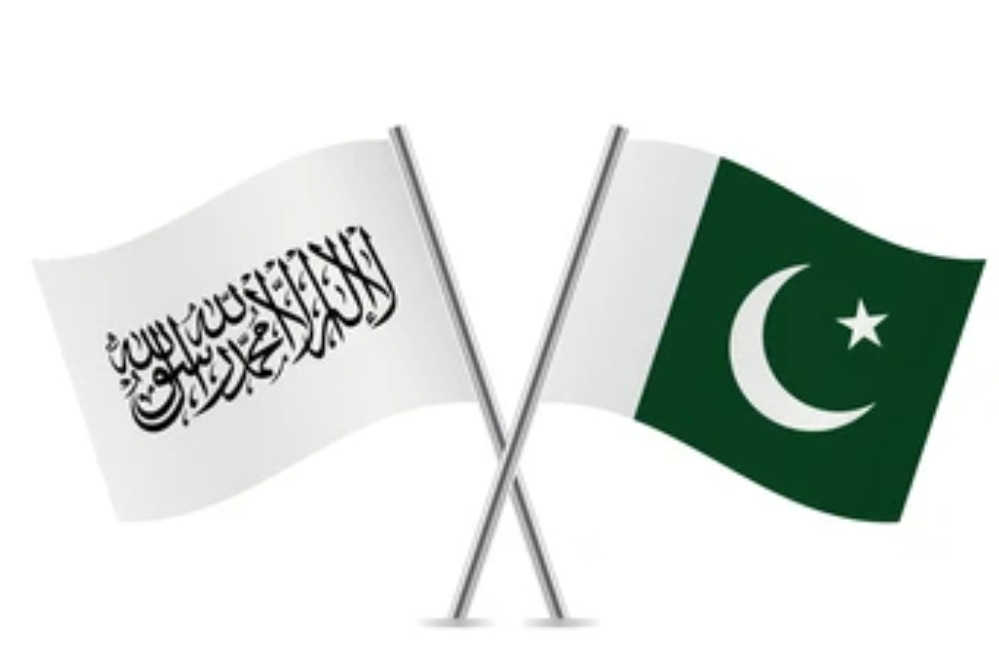
Afghans Face Abuses in Pakistan, US Announces Hotline
Akmal Dawi
VOA News
November 29, 2023
Pakistani police are facing accusations of unlawfully detaining, beating, extorting and sexually harassing Afghan refugees as part of a coercive campaign aimed at compelling them to return to their home country.
“Police and other officials have carried out mass detentions, seized property and livestock, and destroyed identity documents to expel thousands of Afghan refugees and asylum-seekers,” U.S.-based Human Rights Watch said in a statement on Wednesday.
“Afghan women told Human Rights Watch that Pakistani police had sometimes sexually harassed some Afghan women and girls and threatened them with sexual assault.”
Amnesty International has also reported on the trauma experienced by refugee women during police night raids.
“Many women are sleeping fully covered [in veils] because they are afraid of nighttime police raids by male police officers,” the U.K.-based rights organization said, quoting a female human rights lawyer.
Afghans in need of visa extensions in Pakistan are reportedly required to pay fines exceeding $800, while others have reported extortion.
“Afghan traders in Akbari Mandi in Lahore were searched for documentation by individuals in plain clothes claiming to be police officials who confiscated Rs. 500,000 [$1,750] in cash,” Amnesty International said.
United Nations human rights chief Volker Türk has expressed alarm at these reports and urged Islamabad to cease the deportation campaign.
“The local police conducted a night raid on our home,” a refugee told the U.N. human rights body. “They confiscated cash, jewelry, goats, sheep and other items from our home and took them.”
Cause for deportation
In October, Pakistani authorities announced that all foreign nationals in the country without valid visas and permits would be expelled within a short period.
While Pakistani officials cite Afghan nationals’ alleged involvement in crimes and security incidents, experts suggest that Islamabad is leveraging mass deportations to press the Afghan Taliban to meet its security demands.
Islamabad claims Pakistani Taliban insurgents have havens in Afghanistan from where they orchestrate terrorist attacks in Pakistan. The Afghan Taliban deny the charge.
“The mass deportation is primarily driven by considerations — in particular Pakistan’s loss of patience with the Taliban — that have little to do with any purported danger posed by migrants and refugees themselves,” U.S.-based International Crisis Group reported this month.
Aid agencies have warned that a mass deportation, particularly during the cold season, would exacerbate the already dire humanitarian situation in Afghanistan.
Nearly half of the 3 million Afghans living in Pakistan are registered by the United Nations as refugees. The U.N. has reported that more than 370,000 Afghans have repatriated from Pakistan over the past two months.
US hotline
About 25,000 Afghans who worked for U.S. and international programs in Afghanistan prior to the Taliban’s return to power in 2021 are in Pakistan with applications for resettlement in the United States pending.
Afghans seeking U.S. consular services must travel to a third country, primarily Pakistan, because the U.S. Embassy in Kabul remains closed, and Washington has refused to diplomatically recognize the Taliban regime.
This week, the U.S. Department of State announced an emergency hotline for Afghans who are on a pathway to U.S. immigration and resettlement but face deportation or detainment in Pakistan.
The Department of State did not respond to questions about the kind of services the hotline provides, but messages sent via WhatsApp to the hotline returned autoreplies asking for personal identification, date and place of detention for individuals concerned.
“Chats are answered in the order they are received,” a reply from the hotline said.
Human rights groups have called on the U.S. and other Western governments to expedite the resettlement process of Afghans from Pakistan to prevent their possible expulsion to Afghanistan, where they could face persecution.
Other Afghan Refugee News
Taliban Say Afghan Embassy in India Set to Resume Operations Soon
Ayaz Gul
VOA News
November 29, 2023
ISLAMABAD, PAKISTAN — A senior Taliban government official has stated its representatives have taken control of Afghanistan’s diplomatic missions in India, including the embassy in New Delhi.
Shir Mohammad Abbas Stanekzai, the Taliban deputy foreign minister, has told Afghan state-run television that the embassy in the Indian capital would reopen in the next couple of days.
His assertions came after diplomats loyal to the U.S.-backed ousted Afghan government announced last week they were permanently shutting down the embassy over alleged lack of cooperation from the host country, among other issues.
“Our consulates in Mumbai and Hyderabad are functioning and in contact with the Ministry of Foreign Affairs [in Kabul] and delivering routine consular services,” Stanekzai said in his interview the RTA aired on Tuesday.
He added that consuls at both missions moved to New Delhi earlier this week and reopened offices at the Afghan embassy. “God willing, our embassy will resume regular services in two to three days.”
The Islamist Taliban reclaimed power in Afghanistan two years ago, but India and the world at large have not granted them diplomatic legitimacy, mainly over human rights conners and their harsh treatment of Afghan women.
Last Friday, the Afghan embassy posted a statement on X, formerly known as Twitter, saying the mission was shutting down and the keys had been given to the host government. It alleged pressure from both India and the Taliban had forced the decision.
“Unfortunately, despite an eight-week wait, the objectives of visa extension for diplomats and a shift in the Indian government’s conduct were not realized,” the statement quoted the then-Ambassador Farid Mamundzay as saying.
It noted that Afghan diplomats had reached third countries, and none remained in India. They are reportedly seeking asylum in the U.S. and Europe.
“The only individuals present in India are diplomats affiliated with the Taliban, visibly attending their regular online meetings,” the embassy said, without discussing the status of the consulates in Mumbai and Hyderabad.
The Indian foreign ministry so far has not commented on the status of the Afghan diplomatic missions in the country.
India is among the more than a dozen countries that have kept open or returned to reopen their embassies in Afghanistan after the Taliban takeover. They included neighboring Pakistan, China, Iran, and Russia.
These countries also have allowed Taliban diplomats to take charge of Afghan diplomatic missions on their respective soils, saying their engagement is aimed at facilitating humanitarian aid and ensuring the war-torn country does not plunge into chaos again.
The United States and other Western countries relocated their diplomatic missions to Qatar just before the U.S.-led international forces withdrew in August 2021, ending nearly two decades of Western involvement in the war with the then-insurgent Taliban.
Washington remains the largest donor of humanitarian aid to Afghanistan, where millions require assistance.
Tolo News in Dari – November 29, 2023
Resistance and Its Vital Necessity
8am: The Taliban stand as a significant and primary impediment to the human rights of the people of Afghanistan. Therefore, resisting the rigid and harsh ideology of this terrorist group is crucial to achieving fundamental human freedoms. The historical experience with the Taliban has proven their indifference to reformist ideas and recommendations. As various forms of resistance against the Taliban persist in society, these resistances need to continue and intensify. Over the past two decades, this group has become a bloodthirsty terrorist organization, committing various explosive and suicide attacks and causing the deaths of hundreds of thousands of people. They have shown a ruthless willingness to massacre and shed blood in the face of any dissenting thoughts or beliefs. In light of this, the most powerful tool available to the people in Afghanistan, enabling them to progress towards human rights, is the refusal to submit to the Taliban and to resist and fight against this group. Click here to read more (external link).
Afghan Women Activists Seek Taliban ICC Trial Over Rights Abuses
By RFE/RL’s Radio Azadi
November 28, 2023
Afghan women’s rights activists are demanding the International Criminal Court (ICC) prosecute Afghanistan’s Taliban rulers for systemic violations of human rights.
In an open letter sent to the ICC on November 27, they accused the Taliban, who seized power in August 2021 as international troops withdrew from the country, of consistently violating the UN Universal Declaration of Human Rights and the UN Convention on Elimination of All Forms of Discrimination Against Women.
“They must be prosecuted,” said one activist who requested anonymity because of security fears.
“The Taliban has imposed a gender apartheid in Afghanistan by excluding women from the society through employment and education bans while also persecuting rights activists,” she added.
She is one of dozens of signatories to the letter.
The letter argues that the treatment of Afghan women under the Taliban constitutes a gender apartheid because “they are systematically deprived of basic freedoms and human and citizenship rights.”
The letter also highlights the persecution of Afghan women’s rights activists.
Since the Taliban returned to power, the Taliban has put down, often violently, protests by Afghan women over their lack of rights. Hundreds of women have been imprisoned after their protests were declared illegal.
“Such letters can help the international community to fulfill its obligation toward the Afghan women,” Maryam Maarouf Arvin, an Afghan women’s rights activist, told RFE/RL’s Radio Azadi.
Five women’s rights activists — Neda Parwani, Zholya Parsi, Manijeh Sediqi, Bahare Karimi, and Parisa Azadeh — are currently in Taliban custody.
Since returning to power, the hard-line Islamist Taliban has banned women and teenage girls from education in Afghanistan. It has also banned them from employment in most sectors and discouraged them from leaving their homes.
On November 26, global rights watchdog Amnesty International launched an online petition saying the Taliban has started “a new era of human rights abuse and violations” that has put the country “at the brink of irreversible ruin.”
“Not only [have] the Taliban de-facto authorities…broken their promise of protecting Afghan people’s rights, especially women’s rights, they have resumed the cycle of violence and committed a litany of human rights abuses and violations with full impunity,” the petition says.
“Human rights are under attack on all fronts. It must be stopped,” it added.
Copyright (c) 2023. RFE/RL, Inc. Reprinted with the permission of Radio Free Europe/Radio Liberty, 1201 Connecticut Ave NW, Ste 400, Washington DC 20036.
‘Collision Course’: Will The Afghan Taliban Choose Pakistan Or The Pakistani Taliban?
By Abubakar Siddique
Radio Free Europe/Radio Liberty
November 28, 2023
Pakistan has issued an ultimatum to the Afghan Taliban: Expel the Tehrik-e Taliban Pakistan (TTP) extremist group from Afghanistan or face the consequences.
Pakistan’s special representative for Afghanistan, Asif Durrani, repeated the warning on November 11, saying that the Afghan extremist group must “choose Pakistan or the TTP.”
The Afghan Taliban denies sheltering the TTP, with which it has close ideological and organizational ties. The TTP has intensified its deadly insurgency against Pakistan since the Afghan militants seized power in Afghanistan in 2021.
By refusing to rein in the TTP, Pakistan believes the Afghan Taliban has made its choice. Islamabad has sought to strongarm the Afghan militants by expelling hundreds of thousands of Afghan refugees from Pakistan, shutting key border crossings, and temporarily blocking Afghan transit goods in recent months.
Experts said the relationship between Pakistan and the Taliban, which have been close allies for decades, has reached a crisis point. They warn that further escalation could have major security and economic ramifications for both countries.
“Pakistan and the Taliban are on a collision course,” said Asfandyar Mir, a senior analyst at the United States Institute of Peace.
“Pakistan’s pressure campaign has the potential to be very painful for the Taliban and the Taliban’s retaliatory measures, like letting the TTP undertake even more attacks, can impose serious costs on Pakistan as well,” Mir added.
Pressure Tactics
The Afghan Taliban has accused Pakistan of using pressure tactics to make the group bow to Islamabad’s demands.
Last month, Islamabad ordered 1.7 million undocumented Afghan refugees and migrants to leave the South Asian country or face arrest and forced deportation after November 1.
Over 400,000 Afghans have returned to their homeland since then, in a move that has further aggravated the devastating humanitarian crisis in Afghanistan, the world’s largest.
Pakistan said its decision was in direct response to the Taliban’s alleged refusal to expel the TTP, also known as the Pakistani Taliban.
“After noncooperation by the Afghan interim government, Pakistan has decided to take matters into its own hands, and Pakistan’s recent actions are neither unexpected or surprising,” Pakistani caretaker Prime Minister Anwar ul-Haq Kakar said on November 8.
Kakar claimed that terrorist attacks inside his country have increased by around 60 percent since the Taliban regained power in Afghanistan in August 2021. Since then, he said, some 2,300 Pakistanis have been killed in those attacks.
Pakistan also temporarily blocked the transit of thousands of containers filled with imports bound for Afghanistan that were stranded at Pakistan’s port city of Karachi for months.
To open alternative international trade routes for landlocked Afghanistan, the Taliban has sought access to Iran’s strategic Chabahar Port, located in the country’s southeast.
Pakistan has also sporadically closed the border with Afghanistan, stranding thousands of mostly Afghan civilians and halting hundreds of vehicles carrying goods between the two countries.
Pledge Of Allegiance
Some experts said Pakistan’s tactics are unlikely to change the Afghan Taliban’s calculations.
Sami Yousafzai, a veteran Afghan journalist and commentator who tracks the Taliban, said it was unlikely that the Afghan Taliban would expel the TTP.
In 2001, the Taliban refused to hand over the Al-Qaeda leaders that Washington held responsible for the 9/11 terrorist attacks. In response, the United States invaded Afghanistan and ousted the Taliban regime from power.
“Today, the TTP is a much closer ally,” said Yousafzai.
Successive TTP chiefs have sworn allegiance to the Taliban’s spiritual leader. Like the Afghan Taliban, many TTP fighters are from the Pashtun ethnic group. The TTP also hosted and fought alongside the Afghan Taliban during its nearly 19-year insurgency against the Western-backed Afghan government and international troops in Afghanistan.
“The TTP made many sacrifices to enable the Taliban to return to power,” Yousafzai said. “How can the Taliban abandon them now?”
Yousafzai said the Afghan Taliban’s confrontation with Pakistan has also allowed it to shed its image as a Pakistani proxy. Islamabad has been the Afghan Taliban’s key foreign sponsor since the mid-1990s, when the extremist group first emerged.
“The current tensions give the Taliban a golden opportunity to undo those accusations,” he said.
Military Option
Islamabad could resort to military force to compel the Afghan Taliban to change its behavior, according to some experts.
The Afghan Taliban has tried to appease Pakistan. In June, the Afghan Taliban relocated TTP fighters and their families away from the border with Pakistan to other areas of Afghanistan, a move intended to placate Islamabad.
Last year, the Afghan Taliban brokered yearlong peace talks between the TTP and Islamabad that broke down.
Ihsanullah Tipu Mehsud, an Islamabad-based director at Khorasan Diary, a website tracking militant groups in Afghanistan and Pakistan, said that senior Pakistani officials feel they have exhausted all diplomatic and political options.
“Here, the current mindset is that the TTP can only be contained through force,” he said. “One possible option being considered here now is to begin cross-border strikes on suspected TTP bases and hideouts inside Afghanistan.”
In April 2022, Pakistan carried out unprecedented air strikes in eastern Afghanistan, killing dozens of people. Pakistan said it was targeting the TTP. The air strikes provoked harsh exchanges, with the Taliban issuing threats against Islamabad.
There have been reports of other Pakistani cross-border attacks that have targeted the TTP over the past year. Some of those incidents have led to the TTP launching retaliatory attacks against Pakistani forces, Mehsud said.
Pakistani attacks inside Afghanistan have raised fears of a direct conflict between Islamabad and the Afghan Taliban.
But experts said they expect the sides to reach a compromise that would prevent a worst-case scenario.
Mir of the United States Institute of Peace said that the Afghan Taliban is unlikely to rein in the TTP unless Pakistan offers concessions to the Pakistani militants.
During the failed peace negotiations with Pakistan, the TTP demanded that Islamabad withdraw a large portion of the tens of thousands of Pakistani troops stationed in northwestern Pakistan, the extremist group’s former stronghold.
The TTP’s other demands included the implementation of Islamic Shari’a law in parts of Khyber Pakhtunkhwa and the reversal of democratic reforms in the same province.
“Pakistan may settle for less than a Taliban crackdown or expulsion of the TTP,” said Mir. “But, at a bare minimum, it will want an end to the TTP violence.”
Copyright (c) 2023. RFE/RL, Inc. Reprinted with the permission of Radio Free Europe/Radio Liberty, 1201 Connecticut Ave NW, Ste 400, Washington DC 20036.
Iran: Opium Cultivation Triples Afghan Farmers’ Income

8am: Amirabbas Lotfi, the spokesperson for the Iranian Anti-Drug Headquarters, made this announcement on Tuesday, November 28, in response to a recent United Nations report on the reduction of opium cultivation in Afghanistan, according to an ISNA report. Lotfi stated, “The income of Afghan farmers from opium cultivation in the past Gregorian year has suddenly tripled, estimated at over $4 billion. However, part of this threefold increase is attributed to a 32% rise in cultivation and an increase in drug prices last year.” Despite the Taliban leader’s decree banning opium cultivation and production, Lotfi pointed out that drugs are still being cultivated and produced in Afghanistan. He emphasized that opium cultivation in Afghanistan has reached 266,000 hectares. Click here to read more (external link).
Tolo News in Dari – November 28, 2023
The Taliban’s Plan to Rebuild and Legitimize al-Qaeda
Geopolitical Monitor: The current Taliban regime has renewed its symbiotic relationship with the remnants of al-Qaeda. And though their global return may not be imminent, it must be remembered that the terrorist group is laying low by choice. Under this arrangement, al-Qaeda has agreed to stay under the radar, for now, in order to aid the Taliban’s international image of upholding their promise to prevent extremist organizations from using Afghanistan as a safe haven. Yet al-Qaeda views the Taliban-controlled country as precisely that—a base in which they can regrow and expand. Click here to read more (external link).