
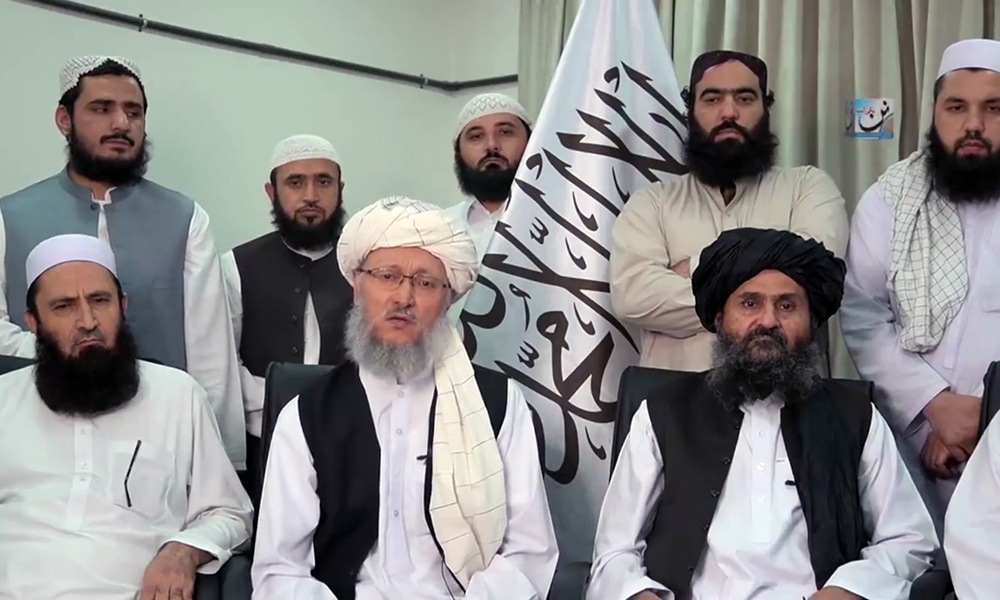
8am: Currently, Qatar is one of the key players in Afghan politics. Qatar’s relationship with the Taliban dates back to the early years of the group’s emergence. However, the opening of the Taliban’s political office in Qatar and this country’s unwavering propaganda support for the Taliban, followed by the signing of the Doha agreement between the United States and the Taliban, have provided Qatar with greater maneuvering opportunities, turning it into a significant player in Afghanistan’s developments. On the other hand, Türkiye, which has close relations with Qatar, has also sought to manage Taliban leaders in a way that does not jeopardize Türkiye’s economic and strategic interests in Afghanistan after the establishment of the Taliban regime. Qatar’s Foreign Minister’s reception of Mullah Abdul Ghani Brother and the delegation of some Afghan diplomatic representatives to Türkiye to this group signify the warm relationship between Türkiye and the Taliban. Türkiye expects the Taliban to give a greater role to the Uzbeks in leading Afghanistan and to allow desired personalities in Ankara to engage in political activities inside Afghanistan, but so far, they have not succeeded in this regard. Despite international pressures, the Taliban have not relinquished power monopolization thus far. Click here to read more (external link).


 orfonline.org: As the Taliban solidifies its footing in Afghanistan, we witness a significant increase in the persecution of minority communities such as the Hazaras – Soon after coming to power, the Taliban blew up the statue of the Hazara leader Abdul Ali Mazari in Bamiyan—a blow to any hope of moderation towards minorities. Reports about forced relocation and the Hazaras’ evictions from their ancestral lands and the land being given to the Taliban’s supporters also cropped up. They were removed from the Daykundi, Uruzgan, Kandahar, Helmand and Balkh provinces on short notice with no recourse to any legal redressal. Nearly 2,800 Hazara residents were evicted from 15 villages in Daykundi and Uruzgan in September 2021. This strategy of forcibly taking the Hazaras’ lands has been historically used to subjugate the group. Under the pretence of reform to build an Islamic system created by and for the Taliban, ethnic Hazaras were also excluded from the government’s bureaucracy and the judiciary. They only received token representation in the political setup, with Mawlawi Mehdi Mujahid being the only Hazara appointed as an intelligence chief of a central province when the group gained power. Mujahid was subsequently killed in August 2022 allegedly for rebelling against the Emirate. The group has also been targeting members of the community they perceive as a threat, with extrajudicial killings reported since they usurped power.
 Tehran Times: Earlier, a technical-economic delegation of the Taliban government arrived in Iran’s Chabahar port to break the ground for the construction operation of some trade and residential projects. The Taliban’s trade ministry had previously revealed the visit of the technical delegation to Iran aimed at boosting the transit cooperation and the development of economic ties. For Afghanistan, Iran’s Chabahar Port can replace ports in Pakistan that are currently used for import and export activities.
 8am: The Hasht-e Subh Daily’s investigation into the situation of female prisoners across five western provinces of Afghanistan reveals alarming conditions. Women detainees face arbitrary arrests on “baseless” charges and endure torture in Taliban-run prisons. Presently, approximately 340 women are incarcerated in these facilities across the five provinces, primarily accused of making phone calls to men. The prisons exhibit inappropriate conditions, poor nutrition, hygiene deficiencies, limited medical care, and instances of misconduct by guards. Female inmates lack professional female supervision, are shackled during medical transfers, and have restricted communication with their families. These challenges underscore the deprivation of necessities within the prison system. The report highlights that all female prisons are overseen by Taliban military commanders, with no female involvement in management. To protect identities, pseudonyms are used in the report due to security concerns.
  Khaama: The organization stated on Sunday, March 4 that children under five years old constitute 80% of the suspected measles cases. According to the World Health Organization’s report, more than seven thousand suspected cases of measles were registered in the country in just the first two months of the current year, with 29 deaths reported. Severe winter colds and inadequate coverage of immunization programs have been cited as factors contributing to the increase in this disease.