
 Ariana: Afghanistan is losing more than $1 billion annually due to the Islamic Emirate of Afghanistan’s (IEA) extreme decrees against women and girls, Rina Amiri, US special envoy for Afghan women, said on Saturday. “The edicts prohibiting Afghan women & girls’ education & employment are hurting all Afghans. To lift Afghanistan out of aid dependency & poverty, these policies must be reversed,” she said in a post on X. Click here to read more (external link).
Muslims Spot Ramadan Crescent Moon in Saudi Arabia
 AP: DUBAI, UNITED ARAB EMIRATES — Officials saw the crescent moon Sunday night in Saudi Arabia, home to the holiest sites in Islam, marking the start of the holy fasting month of Ramadan for many of the world’s 1.8 billion Muslims. The sacred month, which sees those observing abstain from food and water from sunrise to sunset, marks a period of religious reflection, family get-togethers and giving across the Muslim world. Seeing the moon Sunday night means Monday is the first day of the fast. Click here to read more (external link).
The Taliban once smashed TVs. Now it fosters YouTubers to promote its image.
 WP: The Taliban-run government is fostering a thriving community of YouTube influencers and video bloggers in Afghanistan, seeking to shape a positive narrative about the country by rewarding those who have welcome viewpoints with access to stories that can draw millions of views online. Meanwhile, videos that are critical of the Taliban have largely disappeared from platforms such as YouTube over the past two years as a result of Taliban pressure and self-censorship, according to interviews with 10 content creators in Afghanistan and neighboring Pakistan. Click here to read more (external link).
Afghanistan’s singing sisters defying the Taliban from under a burka
 BBC: As the world was watching the Taliban’s return to power in August 2021, two sisters in Kabul were among millions of women in Afghanistan who could directly feel the new regime tightening its grip on them. They decided they couldn’t just stand back and watch women’s freedoms being restricted, and started secretly using the power of their voices to resist. Putting themselves in great danger in a country where musicians can be arrested, they started a singing movement on social media known as the Last Torch. Click here to read more (external link).
Tolo News in Dari – March 9, 2024
Rain washes out 2nd ODI between Afghanistan and Ireland
 Ariana: The second one-day international cricket match between Afghanistan and Ireland was called off on Saturday because of heavy and persistent rain in Sharjah. The third match is at the same ground on Tuesday. Click here to read more (external link).
Other Sports News
Taliban Send Victims of Domestic Violence to Prison
 By Lina Rozbih
VOA News
March 8, 2024
WASHINGTON — For 27-year-old Leeda, “life is like hell” as her husband beats her every day and she “has to tolerate it” because she has “no other option.”
“My body is always bruised, now I am used to it, I have to tolerate it for my children,” Leeda, a mother of three who lives in the western city of Herat, told VOA with tears in her eyes.
But Leeda, who did not want her real name to be revealed for fear of reprisals, said that she has “nowhere to go” as her parents and siblings are not in Afghanistan and there is no organization in Herat she can turn to for help.
“In the past in Herat, women-operated offices used to help women like me, but those offices no longer exist,” Leeda said, adding that “if I go to the Taliban for help, they will imprison me. They listen to men, not women. What will I do with my children if I go to jail?”
A United Nations report released in December said the Taliban are sending to prison women who complain to them about gender-based violence and do not have male relatives to stay with.
“The confinement of women in prison facilities, outside the enforcement of criminal law, and for the purpose of ensuring their protection from gender-based-violence, would amount to an arbitrary deprivation of liberty,” stated the U.N. report.
The report added that the imprisonment of vulnerable women would have “a negative impact on their mental and physical health.”
The report, covering the period from August 2021 to March 2023, said that gender-based violence against women in Afghanistan includes murder, honor killings, sexual assault, injury and disability, and deprivation of women from receiving inheritances.
The Taliban told the U.N. that the handling of the cases of violence against women is “based on Sharia law and there is no injustice committed against women.”
After seizing power in 2021, the Taliban closed all the women’s protection centers in Afghanistan where female survivors of family violence would take refuge.
Even before the Taliban’s takeover, Afghanistan had one of the highest rates of violence against women, with nine in 10 women experiencing some sort of intimate-partner violence in their lifetimes.
Though the support system was not without shortcomings, female survivors of gender-based violence had access to “pro bono legal representation, medical treatment and psychological support,” Amnesty International stated in a 2021 report.
“The system was imperfect, but activists had fought hard for it, and it was gradually improving. One of the first things the Taliban did after seizing power was to destroy this system completely,” said Heather Barr, associate director at Human Rights Watch.
Barr said that the Taliban’s return brought about “the worst women’s rights crisis” in the world.
Under the Taliban, women in Afghanistan are banned from secondary and university education, working with government and nongovernment organizations, and traveling long distances without a male relative. They are also barred from going to gyms and public parks.
Samira Hamidi, a regional campaigner for Amnesty International, told VOA that dismantling the institutions, such as the Ministry of Women’s Affairs and the Afghanistan Independent Human Rights Commission, created “a huge gap” in the ability to monitor the women’s rights situation in Afghanistan, especially that of survivors of domestic violence.
“The Taliban’s measure to accommodate women survivors of domestic violence in prisons instead of safe houses and accommodations is a blatant violation of human rights, especially the right to freedom of movement and life,” said Hamidi.
She added that the Taliban “have no intention to protect women” who face gender-based violence.
With the Taliban’s continued crackdown on women’s rights in Afghanistan, female victims of gender-based violence, like Leeda, live in fear.
“I fear the Taliban,” Leeda said. “If I complain against my husband to anyone, my husband will send the Taliban after me.”
Roshan Noorzai of VOA’s Afghan Service contributed to this report, which originated in VOA’s Afghan Service.
UN Presses Taliban Again to End ‘Heartbreaking’ Curbs on Afghan Women
 By Ayaz Gul
VOA News
March 8, 2024
ISLAMABAD — The United Nations warned Afghanistan’s Taliban authorities Friday that their bans on women’s education and work risk pushing the country further into deeper poverty and international isolation.
The head of the U.N. Assistance Mission in Afghanistan, or UNAMA, called again on the fundamentalist regime to reverse the restrictions as the world marked International Women’s Day to highlight the need to invest in women.
“It is heartbreaking that we are seeing precisely the opposite unfolding in Afghanistan: a catastrophic and deliberate disinvestment that is causing immense harm to women and girls, creating only barriers to sustainable peace and prosperity,” said Roza Otunbayeva.
Since reclaiming power in August 2021, the Taliban have blocked girls from accessing secondary school education and beyond. They have limited women’s freedom of movement outside the home and prohibited most from public and private sector workplaces, including the United Nations and other aid groups.
The U.N. Development Program, or UNDP, reported Thursday that nearly 70% of Afghans do not have enough basic resources, and restrictions on women continue to thwart basic rights and economic progress. It said the Afghan economy had contracted by 27%, and unemployment doubled since the Taliban takoever.
“The biggest challenge is the continued edict that bans girls’ education. Not being able to move forward after the sixth grade is a major stumbling block,” said Kanni Wignaraja, UNDP’s director for Asia and the Pacific, told reporters in New York.
“Last year, no girl graduated the twelfth grade so how are they going to jump from sixth grade to moving into technical colleges or universities need for the medical field?” said Wignaraja, who recently returned from a visit to Afghanistan.
The ban on female aid workers has undermined relief activities in a country where the U.N. estimates more than 12 million women will need humanitarian assistance this year.
In a statement Friday, UNAMA said it “also fears a recent crackdown by the de facto authorities because of alleged non-compliance with the Islamic dress code is pushing women into even greater isolation due to fear of arbitrary arrest.”
The U.N. refers to the Taliban as de facto authorities because no foreign government has formally recognized their government in Kabul.
However, the euphemism has upset human rights groups and many women in Afghanistan, who are vehemently opposed to granting legitimacy to the Taliban government until it lifts all bans on women.
Heather Barr, the associate director at Human Rights Watch, urged diplomats, the UN, and aid workers on Friday to stop referring to the Taliban as the de facto authorities to show solidarity with Afghan women.
“This euphemism kowtows to Taliban demands for normalization,” Barr said on X, formerly known as Twitter. Rights groups oppose any recognition of the Taliban and accuse it of implementing “gender apartheid” policies.
“Every step toward normalizing the Taliban—every time they walk a red carpet, or send a new ambassador, or host a meeting w/smiling foreigners—sends a message to the Taliban that what they’re doing to women & girls is fine and they are free to carry on,” she wrote in a subsequent X post.
The U.N. acknowledged in a quarterly report Wednesday that the Taliban had consolidated political, security, and economic gains since taking power. However, it noted that Afghan de facto authorities “appear to be facing growing internal disagreements over key governance issues, including the enforcement of the drug ban.”
The report did not elaborate further, but Otunbayeva suggested after briefing a U.N. Security Council meeting on Wednesday that curbs on Afghan women were among the issues causing internal Taliban disagreements.
“There is a part of the [Taliban] government who understand that they should overcome [these restrictions]. But someone else … decided that no, women and girls should be behind the scene,” she said, without naming anyone.
Most of the religious edicts or decrees the reclusive Taliban supreme leader, Hibatullah Akhundzada, has issued over the past 2½ years have targeted women directly, banning their rights to education, work, to visit public places, including parks and gyms, as well as preventing them from taking road trips without a male chaperone.
Akhundzada, who directs the government from the southern Afghan city of Kandahar, defends his policies and dismisses international calls to reverse them as interference in Afghanistan’s internal matters.
Related
The Little-Known Story of Afghanistan’s Last Jew
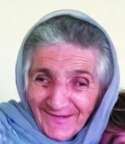 News Line Magazine: Tova Moradi, who was forced to flee Kabul, recalls her religious roots, a girlhood interrupted and the love she still carries – Around sundown on Aug. 31, 2021, a minivan stopped in front of Tova Moradi’s house in Kabul, Afghanistan. She had to get in as quickly and quietly as possible. Any attention could be dangerous. The Taliban had just taken control of Kabul two weeks prior. Their fighters were going door to door, hunting suspected opponents. Despite her frailty, the 83-year-old Moradi was a prized target because she was Jewish and had misled the Taliban during its previous rule in the 1990s by sheltering a rabbi in her house. She needed to escape, and Israelis were helping her flee. Click here to read more (external link).
Tolo News in Dari – March 8, 2024