 Omid Marzban and Michael Scollon
Radio Free Europe/Radio Liberty
April 14, 2024
Facebook users in Afghanistan fear the Taliban’s plans to block or restrict access to the popular social-media platform will deal a death blow to what is left of free speech in the country.
It is unclear what exactly the “finalized” policy announced last week will entail or how it will be implemented and enforced, but Afghans are bracing for the worst-case scenario.
“This is really the last nail in the coffin of freedom of speech,” Fatema, a Facebook user in Afghanistan, told RFE/RL’s Radio Azadi.
“Facebook was the only source where most of the news that is censored in the Afghan domestic media was published without censorship,” she said, providing only her first name due to fear of retribution from the Taliban’s hard-line Islamist government.
In announcing the impending move to counter what it called the distracting influence of social media, the Taliban cited the need for young people to focus on their education.
“Our youth are in a situation where they are academically weak and the majority of them are illiterate, yet they continue to waste their time and spend money on these things to the benefit of the company and the detriment of the nation,” Najibullah Haqqani, the Taliban’s minister of telecommunications and information, said in an interview with the private Tolo News channel on April 6.
Facebook has emerged as a major social-media platform in Afghanistan, with an estimated 4.5 million users in the country of some 40 million people. Many rely on Facebook for unfiltered information and, particularly for women and girls, to continue their pursuit of an education denied to them by the Taliban.
Media watchdogs say that any effort to curtail access to Facebook would have a devastating effect in an already heavily censored media landscape.
“The Taliban’s plan to restrict or block access to Facebook would be a further blow to freedom of information in Afghanistan,” Beh Lih Yi, Asia program coordinator for the Committee to Protect Journalists (CPJ), said in a statement. “Social-media platforms, including Facebook, have helped to fill a void left by the decline of the Afghan media industry since the Taliban’s August 2021 takeover and the ensuing crackdown on press freedom.”
The CPJ statement said that when questioned, Taliban spokesman Zabihullah Mujahid told the U.S.-based media watchdog that “Facebook will not be banned, but restrictions will be imposed on it.”
In any event, the CPJ said, the proposal “highlights the worsening censorship by the Taliban.”
The Taliban’s Telecommunications and Information Technology Ministry did not respond to questions from Radio Azadi asking for specifics about the new policy and when it will come into force.
Since regaining power, the Taliban has reversed the free-media gains that were made after the first Taliban regime was ousted by the U.S.-led invasion in 2001.
Despite its early promises to protect the independent media, the Taliban has waged a violent crackdown on dissent. Television and radio stations have encountered sustained pressure to end entertainment and educational programming that does not fit with the hard-line leadership’s strict interpretation of Islamic law. Female television presenters are required to wear face masks on air and are barred from conducting interviews with male government officials or from participating in press conferences without a male chaperone.
Women and girls have meanwhile seen their access to education severely impeded, again despite the Taliban’s early pledges. Girls are not allowed to attend school past the sixth grade, while women have been banned from going to university.
Female teachers are barred from teaching male students, and encounter difficulties leaving their homes for work at all due to the Taliban’s restrictions on women being in public without a male escort.
With many teachers and journalists fleeing the country due to the obstacles to their work, many Afghans turned to inclusive radio and television programs that provided students a lifeline to continue their studies and for unrestricted media and discussion of social issues. Facebook, by providing access to outside news and educational courses often catered to women and girls, became a crucial tool.
The Taliban has already taken steps to curtail traditional media from continuing with such programming. In February, for example, police in the eastern Khost Province banned girls from contacting local radio and television stations and warned such outlets against taking calls from girls.
The Taliban cited the potential for such outreach to promote “inappropriate behavior” among audiences as justification for the move, which was enforced with warnings of punishment and shutdowns against media that did not comply.
Now the Taliban appears to have focused its attention on Facebook, which hosts a wealth of pages dedicated to women’s rights and education, Afghan news and society, and allows for discourse among users.
Spozhmai Gharani, a Facebook user, said the social-media platform is one of the few ways for Afghan girls to continue their education, and “should not be shut down.”
Homa Rajabi, from Kabul, said that without the ability to share views and collect information on Facebook, life in Afghanistan “will become more limited and narrow.”
Kamal Sadat, who served as a deputy minister of information and culture in the previous, Western-backed government, told Radio Azadi that any restrictions on Facebook would be a “strong blow to freedom of expression.”
The move, he said, would cut the Afghan people off from a crucial and increasingly rare way to “express their voices to the world, Afghan authorities, and international organizations.”
Facebook has blacklisted the Taliban for years, and since the militant group took power in 2021, the platform has reportedly maintained a loose ban on Taliban content. References and posts that promote the Taliban are removed, while official Taliban posts that serve the public good, such as the de facto Health Ministry’s directives related to natural disasters, have been allowed.
Asif Ashna, a frequent critic of the Taliban’s unrecognized government, took to a social-media platform that the Taliban itself relies on heavily to promote itself to air his criticism of the new policy. Ashna suggested that the Taliban may have targeted Facebook in retaliation for restrictions the U.S.-based social-media company has placed on its content.
“Why is this ignorant group hostile to Facebook?” Ashna asked in a post that included a clip of Haqqani’s Tolo News appearance. “The bottom line is that Facebook has blocked thousands of official and pseudonymous accounts related to the Taliban and put this group on its blacklist.”
“Now the Taliban has decided to do the same thing to Facebook,” Ashna wrote. “The rest of the arguments [made by the Taliban for targeting Facebook] are bullshit.”
Whether the Taliban can actually succeed in banning or curtailing Facebook is open to debate.
Experts say that the Taliban does not have the technological infrastructure in place to cut Afghanistan off from the global Internet and force its citizens to use a domestically designed “intranet,” as Iran and China have attempted to do.
“No, never. They cannot do that,” Jamil Nematyar, a cybersecurity expert who worked for the former Afghan government told Radio Azadi in a video interview. “It is not possible for them. The existing infrastructure is not capable of this.”
Instead, Nematyar and other experts say the Taliban must rely on pressuring private companies to enforce any policy decisions or laws that would target Facebook.
The Taliban’s control over the country’s telecommunications infrastructure does give its government leverage in this regard by forcing mobile telecoms operators or Internet service providers (ISPs) to block specific websites, and by filtering the domain name system (DNS) that determines specific Internet protocol (IP) addresses.
“It is common to use the worldwide web to control the flow of information” in Afghanistan, Agha Malok Sahar, founder of Darrak, a GPS tracking and software company that works in Afghanistan, told Radio Azadi.
There is precedent for banning foreign news outlets in the country, including the websites of Radio Azadi, the Afghan service of the congressionally funded RFE/RL. But as CPJ notes, the Facebook pages of Radio Azadi and other foreign news outlets such as Britain’s BBC and Germany’s Deutsche Welle are still accessible to readers inside the country despite being officially banned.
Sahar said that in the event of a complete ban, the Taliban authorities could also go after individuals and media outlets that are active on Facebook by “monitoring their activities, potentially harassing or penalizing them.”
Such an approach, Sahar said, could “involve arrests or other forms of intimidation to discourage the use of Facebook” and be accompanied by Taliban propaganda efforts “to discredit these outlets or individuals.”
But restricting or outright banning Facebook would be a tough task for the Taliban. “This would be a difficult law to actually enforce,” Darren Linvill, co-director of the U.S. Clemson University’s Media Forensics Hub, told RFE/RL in written comments.
“There are a large range of ways individuals have to skirt such restrictions. Any teenager can learn to pretend their computer is somewhere in the EU so that they can get different options out of Netflix,” he said. “China has difficulty enforcing the Great Firewall. I’m sure Afghanistan would face similar problems.”
Elsewhere around the world, people have found a workaround to local restrictions by using virtual private networks (VPNs) that allow users to mask the area or country they are in.
Ultimately, Nematyar said, “people will go to VPNs and it will make more headaches for the nation and the current regime” in Afghanistan.
“Facebook will be working, through VPNs,” Nematyar said, although Afghans’ use of the social-media platform might be closely followed by the Taliban authorities.
Written by Michael Scollon based on reporting by RFE/RL’s Radio Azadi
 Ariana: The ministry added that floods also destroyed dozens of residential houses, damaged hundreds of acres of agricultural land, and killed hundreds of livestock. According to the ministry, Farah, Herat, Zabul and Kandahar are among the provinces that suffered the most damage from the floods.
 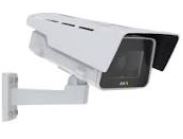 Khaama: Abdul Matin Qaneh, the spokesperson for the Ministry of Interior of the Taliban, stated on Sunday, April 14th, that these cameras have been installed at intersections, crowded areas, and key points. According to Qaneh, efforts are underway to increase the installation of these cameras in the capital and other provinces of the country.
  8am: Reliable local sources informed the Hasht-e Subh Daily that the money changer, identified as Rahimullah Qarluq, resides in the Dashti Qala district of Takhar province. Qarluq, the money changer, has been well-known in the district for nine years. It is reported that the majority of the stolen money belonged to deposits made by customers with this money changer.
  Ariana: Former commander of US Central Command (CENTCOM), has said that with the Taliban gaining power, ISIS Khorasan has found conducive conditions for advancement. According to Business Insider, prior to the Taliban’s takeover of Kabul, ISIS Khorasan’s activities were limited to Afghanistan with minimal penetration beyond its borders.
  Tolo News: The Ministry of Mines and Petroleum (MoMP) said that, they will issue extraction licenses of precious stones in several provinces in the near future. The spokesperson for the ministry told TOLOnews that in the near future, licenses for the extraction of precious stones, including rubies, lapis lazuli, and beryl, will be issued in the provinces of Badakhshan, Panjshir, Kabul, Nuristan, Kunar, and Laghman.