
 Khaama: On Friday, Afghanistan defeated Iraq 5-3, edging closer to qualification for the 2024 FIFA Futsal World Cup. The Afghanistan National Futsal team faced Iraq in the semifinal stage of the FIFA Futsal World Cup qualifiers. Afghanistan will have to play against the winner of the match between Kyrgyzstan and Vietnam to secure a spot in the Futsal World Cup. If Afghanistan wins that match, which will be held on Sunday morning, it will qualify for the Futsal World Cup. Click here to read more (external link).
Remembering the Fall of Afghanistan’s First Republic

Daoud Khan
Tolo News: On Saur 7, 1357 (solar calendar), following a coup by the People’s Democratic Party, the first republic regime in Afghanistan was overthrown. Friday marks the 46th anniversary of the day the People’s Democratic Party assassinated Mohammad Daoud Khan, who had established the country’s first republic, along with 18 members of his family at the presidential palace, effectively toppling the first republic regime in the country. The morning of Saur 7, 1357, began with the alarming sounds of cannons and gunfire. 46 years ago today, tanks and helicopters from the army stormed the presidential palace from both ground and air, marking the first coup against the first republic regime. Click here to read more (external link).
Related
Afghanistan’s problems caused more damage to Pakistan than 3 wars with India: Durrani
 Khaama: Islamabad’s special envoy for Afghanistan Asif Durrani said on Wednesday that Pakistan has suffered more due to Afghanistan’s internal situation than Pakistan has suffered in three wars with India in terms of blood spilt and finances drained. Click here to read more (external link).
Related
Tolo News in Dari – April 25, 2024
Afghan People Facing Severe Repression, Reports Amnesty International
 Afghanistan International: Amnesty International’s recent report has highlighted the dire human rights situation in Afghanistan. The organisation has pointed out severe repression and violations suffered by the Afghan people, with a particular emphasis on violence and discrimination against ethnic groups, notably the Hazaras. Released on Tuesday, April 23, the report also mentioned the Taliban’s policies targeting women and girls, to eradicate their presence from social spheres. The report underscores that Uzbeks, Hazaras, Tajiks, and Turkmen communities are experiencing heightened marginalisation, and often forcibly displaced from their homes and lands. Furthermore, Taliban officials have consistently favoured tribal communities, predominantly Pashtuns, in disputes over land and livestock, particularly in conflicts involving Hazaras. Hazaras have been compelled by the Taliban to compensate tribals for missing livestock dating back to 20 years ago. Additionally, the report documents targeted attacks on Hazara individuals, including the killing of men from this ethnic group in the Uruzgan province. Click here to read more (external link).
Attack Energy and Istiqlal Kabul secure wins in respective ACL matches
 Ariana: Attack Energy FC defeated Sorkh Poshan Khafi 1-0 in the 9th match of Afghanistan Champions League (ACL) in Kabul on Wednesday. Hasib Ahadi scored the only goal and was named man of the match. In the 10th ACL match, played on Wednesday, Istiqlal Kabul FC beat Mawj Sahil FC 2-1. Tomorrow’s matches will see Khadim FC take on Maiwand FC at 1:00 PM, while Jawanan Wahedi FC face Adalat Farah FC at 3:30 PM. Click here to read more (external link).
No longer a US priority, is Afghanistan a Central Asia problem now?
 By Navbahor Imamova
VOA News
April 24, 2024
WASHINGTON — Afghanistan’s Central Asian neighbors are holding out hope that America, based on its pledges at September’s C5+1 summit, will expand its role in this neighborhood. The wish list includes delivering more humanitarian assistance to the Afghan people, facilitating the expansion of trade, and combating the threats of terrorism emanating from Afghanistan.
Officials speaking with VOA suggest that more aid could be channeled into Afghanistan via Uzbekistan. Additionally, Washington could offer more military assistance to Central Asian states and tangibly support their regional connectivity initiatives.
While no country has formally announced diplomatic recognition of the Taliban government, Central Asian nations have been engaging with the Taliban based on mutual interests, such as security, trade, and water sharing. Uzbekistan, which has extensive political and economic ties with Kabul, has been urging the West and the larger international community not to isolate Afghanistan.
Nearly three years since the withdrawal of American forces, U.S. officials insist that they have not abandoned Afghanistan, pointing to ongoing efforts and consultations with Central Asian counterparts. However, they admit Washington’s priorities have shifted to other issues, such as Russia’s war on Ukraine.
“It will take the U.S. a decade or two to recover from the fact that we lost the war,” said David Sedney, a veteran diplomat and former deputy assistant secretary of defense for Afghanistan, Pakistan and Central Asia. “It took us 20 years before we were able to engage in Vietnam in a productive way,” he told VOA.
Scott Worden, who heads the Afghanistan and Central Asia programs at the U.S. Institute of Peace, thinks that Central Asian governments overestimate Washington’s leverage.
“There are a lot of issues in the world that have to be addressed simultaneously,” he noted in an interview with VOA. “They [the U.S.] are balancing the leverage that they have against issues that are manageable and maybe achievable versus ones like women’s rights, which I think the administration cares strongly about.”
“It’s just a really tough situation,” Worden added. “In my view, you should not condition humanitarian assistance. Any economic sanctions wind up hurting the Afghans that we want to support. It’s a difficult balance, and so I don’t think there is any obvious additional tool or leverage that could be deployed that they’re withholding.”
Some Western nations including the United States, however, have filtered humanitarian aid programs through partner organizations that circumvent Taliban officials and deliver aid directly to Afghan civilians.
According to USAID, the U.S. supplied nearly $81 million in Afghan humanitarian aid in fiscal year 2024, and has supplied total funding for Afghanistan of “more than $2 billion since August 2021 … including more than $1.5 billion in [USAID’s Bureau for Humanitarian Assistance] funding and nearly $550 million in [the State Department’s Bureau of Population, Refugees, and Migration] funding.”
“Provided through international partners on the ground,” says USAID, this assistance helps “meet the needs of the most vulnerable through food and cash support, nutrition, health care, protection for women and children, and agricultural inputs to support Afghans in meeting their immediate food needs.”
Like Sedney, Worden suggests being realistic. “There is ample opportunity for the U.S. and other international partners to talk to the Taliban when they want to.”
“This is all part of a very difficult global conversation,” he said.
But for Frederick Starr, chairman of the Central Asia-Caucasus Institute, known for advocating closer ties with the region, Afghanistan is “utterly ignored right now.”
Starr emphasizes that this country is critical for regional integration and stability, two goals the U.S. has long vowed to support.
Sedney observes that “not many people want to talk about Afghanistan,” not just in Washington but in other Western capitals as well.
Speaking last week at the American Foreign Policy Council, these experts stressed that America’s two decades of involvement in Afghanistan left it with an obligation to go beyond the status quo.
Starr approves of the steps Kazakhstan, Turkmenistan and Uzbekistan have taken with Afghanistan, particularly regarding commerce, energy supply and water resources.
Other observers, however, warn about tensions between the Taliban and Tajikistan, which officially supports the National Resistance Front, an armed alliance of anti-Taliban forces that is loyal to the previous regime and carries out guerrilla attacks in Afghanistan. Dushanbe continues to host the previous government’s ambassador.
Worden identifies several key interests and objectives for Washington, most of which align with those of the region. The first and most important objective is counterterrorism, ensuring that Afghan territory is never again used to launch attacks on the U.S. or its allies.
Others include negotiations on American hostages; the evacuation of Afghans that the U.S. promised to help following its withdrawal; women’s rights and other human rights; humanitarian assistance; and economic development.
Perhaps the most abstract interest, according to Worden, “is trying to maintain an international diplomatic consensus on the broad conditions and expectations that we have for the Taliban, which include in the endgame a more inclusive society that is not a threat to itself and for its neighbors as well as these U.S. interests.”
“It’s remarkable that no country in the world has recognized the Taliban,” he said, adding, however, that he sees a divergence between Western-allied emphasis on human rights and women’s rights and the neighboring countries’ economic and security concerns.
In Worden’s view, the U.S. is pursuing a policy of “quiet engagement” on humanitarian assistance and counterterrorism. At the same time, there is a firm position of non-recognition and not wanting to legitimize the Taliban.
“Can this dualism sustain over time?” asked Worden, who also sees a cleavage developing, where countries in the region will over time increase engagement with those in power in Afghanistan to achieve their economic and security interests. “Not that they like the Taliban, but they feel like talking to them is better than not.”
Regardless of who inhabits the White House next January, Worden doubts that U.S. attention toward Afghanistan will increase unless there is an “acute crisis.”
Republicans tend to “prefer coercion to engagement when you’re talking about regimes that we don’t have much in common with,” he said. “So yes, there is the wild card of potentially making a great deal, but I think the odds of support for armed opposition would increase.”
U.S.-based Afghan journalist Samy Mahdi, who runs Amu Television out of Virginia, points out that the Taliban enjoy close relations with America’s adversaries, such as Iran, Russia and China. He argues that U.S. assistance has brought about minimum results, and that the Taliban is as radical and dangerous as it was in the 1990s.
Mahdi recommends a full review of U.S. policy.
“More communication and transparency are needed on Afghanistan,” he said at the American Foreign Policy Council forum. “We don’t hear much from the U.S. administration about Afghanistan.”
Pakistan and Iran see Afghanistan-based terror groups ‘serious threat’ to global security
 Ayaz Gul
VOA News
April 24, 2024
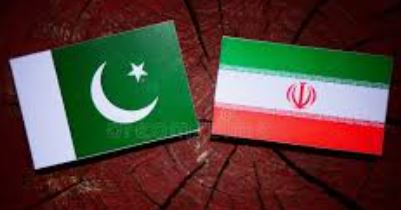
ISLAMABAD — Pakistan and Iran pledged Wednesday they would increase joint efforts against Afghanistan’s terrorism threat and urged Afghanistan’s hardline Taliban government to involve all Afghans in “basic decision-making.”
The two neighboring countries, which share long, porous borders with Afghanistan, made the promise in a joint statement released at the culmination of Iranian President Ebrahim Raisi’s three-day visit to Pakistan.
Both Tehran and Islamabad complain that transnational militant groups have increased cross-border terrorist attacks from Afghan sanctuaries since the Taliban reclaimed power in Kabul in 2021.
“Noting that the existence of terrorist organizations in Afghanistan poses a serious threat to regional and global security, the two sides reaffirmed their willingness to enhance cooperation on counterterrorism and security and to develop a united front against terrorism,” the statement reads.
Islamabad alleges militants tied to the globally designated terrorist outfit Tehrik-i-Taliban Pakistan, or TTP, are being sheltered on Afghan soil and even facilitated by the Taliban administration to conduct deadly cross-border attacks on Pakistani security forces and civilians.
Iranian authorities have blamed an Afghan-based regional Islamic State affiliate known as Islamic State-Khorasan for recent high-profile terrorist attacks inside Iran.
In their joint statement, Pakistan and Iran again emphasized the need for the Taliban to rule their crisis-hit nation through a politically inclusive government.
“While respecting the sovereignty and territorial integrity of Afghanistan, the two sides recognized that increasing participation of all strata of Afghans in basic decision-making will lead to the strengthening of peace and stability in this country,” the joint announcement noted Wednesday.
The Taliban deny allegations they shelter or allow foreign militants to operate and threaten neighboring countries from Afghan soil. The fundamentalist de facto rulers defend their leadership as an inclusive setup, and they reject calls for any reforms in it as interference in the domestic affairs of Afghanistan.
Pak-Iran pipeline
In meetings, Raisi and his delegation held with Pakistani Prime Minister Shehbaz Sharif and other top officials, the two sides agreed to expand bilateral trade and economic ties and boost bilateral trade to $10 billion over the next five years.
The joint statement reiterated the importance of cooperation in the energy sector, including trade in electricity, power transmission lines, and the import of Iranian natural gas through a long-delayed pipeline project linking Pakistan and Iran, without sharing further details.
The United States has repeatedly warned Islamabad against joining the pipeline project with Tehran, citing sweeping sanctions on Iran’s energy sector over its nuclear program.
“We advise anyone considering business deals with Iran to be aware of the potential risk of sanctions,” said Vedant Patel, the U.S. State Department principal deputy spokesperson, on Tuesday. He was asked for comments on the deals Pakistan and Iran signed during Raisi’s trip.
Tehran claims it has completed constructing 1,100 kilometers of the pipeline on its side of the border and is waiting for Islamabad to build its part of the project. Pakistan has not started the work despite repeated public pledges, fearing it would trigger U.S. sanctions for importing Iranian gas.
Iranian officials have repeatedly threatened to sue Islamabad in international arbitration and impose a penalty of around $18 billion for breach of contract.
“Pakistan must take a long-term view of this problem. While ties with the U.S. are important, should Pakistan seek American approval for all key economic and strategic decisions?” asked the prestigious English-language DAWN newspaper in a Wednesday editorial.
“Today, the U.S. does not want the Iran pipeline to proceed. Tomorrow, if ties between Washington and Beijing nosedive, and the U.S. asks Pakistan to reconsider CPEC or our defense cooperation with China, will we comply?” the editorial read.
The newspaper referred to the multi-billion-dollar China-Pakistan Economic Corridor, or CPEC, which has built Pakistani road networks, power plants, and other infrastructure with Chinese investment. The mega project is an extension of Beijing’s global Belt and Road Initiative infrastructure development program.
Middle East crisis
Raisi’s meetings with Pakistani leaders also focused on Iran’s military stand-off with Israel.
Tehran and Islamabad demanded through their Wednesday statement an “immediate and unconditional” cease-fire in Gaza and unimpeded humanitarian access to its besieged residents.
“Both sides expressed their strong and unequivocal condemnation of the ongoing Israeli regime’s aggression and atrocities against the Palestinian people, along with the inhumane blockade of Gaza that has resulted in widespread death and destruction, as well as displacement of millions of Palestinians,” the statement said.
Israel declared war on Gaza-based Hamas after the Iran-backed Palestinian militant group attacked southern Israel on October 7, killing 1,200 people and leading to the capture of about 250 hostages.
Hamas has been designated as a terror organization by the United States.
Inside Gaza, Israel’s counteroffensive has killed nearly 34,000 people, two-thirds of them women and children, Gaza health officials say Israel says the death toll includes thousands of Hamas fighters.
Pakistan does not recognize Israel and has no direct channels of communication with the Jewish state over the issue of Palestinian statehood.
On Wednesday, Pakistan and Iran also condemned Israel’s alleged April 1 attack on the Iranian diplomatic compound in Damascus, calling it an “unacceptable violation of the sovereignty of Syria” and of international laws.
The two countries, in their joint statement, declared the attack as an “irresponsible act of the Israeli regime forces” and blamed it for “a major escalation in an already volatile region.” The suspected Israeli strike killed seven members of Iran’s elite Revolutionary Guards, including two generals.
Tehran responded to the suspected Israeli strike by firing more than 300 drones and missiles directly at Israel more than a week ago, fueling concerns about a wider conflict in the Middle East.
New evidence challenges the Pentagon’s account of a horrific attack as the US withdrew from Afghanistan
 CNN: For two years, the US military has insisted that the loss of life was caused by a single explosion, and that troops who reported coming under fire and returning it were likely confused in the chaotic aftermath, some suffering from the effects of blast concussion. But video captured by a Marine’s GoPro camera that has not been seen publicly in full before shows there was far more gunfire than the Pentagon has ever admitted. A dozen US military personnel, who were on the scene and spoke to CNN anonymously for fear of reprisals, have described the gunfire in detail. One told CNN he heard the first large burst of shooting come from where US Marines were standing, near the blast site. “It wasn’t onesies and twosies,” the Marine said. “It was a mass volume of gunfire.” Click here to read more (external link).
Tolo News in Dari – April 24, 2024