
 Ariana: The Afghanistan Cricket Board (ACB) on Tuesday announced the appointment of Toby Radford as the new batting coach of the national team. Radford replaces Andrew Puttick and is expected to join the squad ahead of Afghanistan’s upcoming three-match T20I series against the West Indies. Alongside Radford’s appointment, the ACB also named Robert Ahmun as the team’s new strength and conditioning trainer. Both Radford and Ahmun have been appointed on one-year contracts and will link up with the squad before Afghanistan’s final T20I series ahead of the ICC T20 World Cup, which will be held in India and Sri Lanka. Click here to read more (external link).
Impunity & Violence: Inside Taliban-Run Assassination Networks
 Afghanistan International: Afghanistan International has obtained a collection of official documents and internal reports from Taliban authorities that reveal the direct involvement of members of the group in extrajudicial killings in several Afghan provinces. The documents show that these killings were not isolated incidents but part of a systematic pattern of violence carried out on the orders of Taliban intelligence and security officials, using state-issued weapons and conducted during official duty. Click here to read more (external link).
Tolo News in Dari – January 12, 2026
Afghanistan U19 beat Australia U19 by six wickets in World Cup warm-up
 Amu: Afghanistan’s Under-19 team continued their preparations for the ICC Men’s Under-19 Cricket World Cup with a six-wicket win over Australia in a warm-up match on Sunday, chasing down a revised target under the Duckworth-Lewis-Stern (DLS) method. The match was Afghanistan’s first warm-up fixture ahead of the Under-19 World Cup, which will be co-hosted by Zimbabwe and Namibia. Afghanistan are scheduled to face Sri Lanka in their second warm-up match before beginning their group-stage campaign later this week. Click here to read more (external link).
More Cricket News
Taliban Gold Rush Turns Deadly, Putting Spotlight On Chinese-Backed Mining
 By RFE/RL’s Radio Azadi
January 11, 2026
A deadly confrontation at a gold mine in northern Afghanistan has cast new light on the Taliban’s push to expand gold extraction, raising questions about the largely unregulated operations and their foreign — mostly Chinese — backing.
The latest incident comes as the Interior Ministry of the Taliban government confirmed on January 7 that ongoing clashes from last week between officials of a contracted gold-mining company and residents of Chah Ab district in Takhar Province have left four people dead and five others wounded.
The dead included three local residents and one company employee, Taliban Interior Ministry spokesman Abdul Matin Qane told reporters following the incident, adding that one company guard and one local resident have been arrested on murder charges and that the firm’s operations have been suspended while investigations are underway.
He neither mentioned the company’s name nor identified the victims, but the attack took place in an area known for its large number of Chinese or joint Afghan-Chinese mining ventures.
Residents say the confrontation started after the company began digging on agricultural and residential land, causing protests that led to violence, highlighting the mounting tensions around Afghanistan’s fast-expanding but murky gold sector under Taliban rule.
Since the Taliban’s return to power in August 2021, the country’s mineral resources, considered to be a pillar of economic recovery, have entered a new phase marked by limited oversight, rising foreign involvement led largely by China, and growing local opposition.
In November 2025, two separate attacks killed five Chinese nationals working at a gold mine near Tajikistan’s remote border with Afghanistan. It remains unclear who was behind the attacks, but reporting by RFE/RL found a history of mounting tensions and violence between locals and Chinese-backed mining operators over environmental issues and resentment caused by extracting the region’s mineral wealth.
“Unfortunately, there is no oversight in Afghanistan, and extraction mostly takes place in areas that are easiest to exploit,” Abdul Qadir Motafi, a veteran of Afghanistan’s mining industry, told RFE/RL, adding that public and independent oversight has been severely limited in mines contracted by the Taliban.
Frontier Mining Brings Added Environmental Problems
In northern provinces such as Badakhshan and Takhar, gold extraction has dramatically increased under Taliban-linked local leaders, with communities complaining that they are being displaced and excluded while others profit.
In Badakhshan’s Shahr‑e‑Buzurg district, about 50 kilometers from Faizabad, gold mining surged soon after the Taliban takeover.
Villagers who once panned riverbeds with basic tools saw their informal activities absorbed into a larger concession controlled by Taliban officials and Chinese partners using heavy machinery. Workers who spoke to RFE/RL say broad areas are now fenced off and guarded by armed men tied to influential figures, cutting local people off from land and water they previously depended on.
“Ordinary people can’t even approach within a kilometer,” one mine worker told RFE/RL, speaking on condition of anonymity, fearing possible repercussions.
The Shahr‑e‑Buzurg mining zone spans both state and private land, with Chinese companies and Taliban-linked figures reportedly exploiting state parcels, while private owners either dig themselves or sell plots to outside investors.
Residents estimate that more than 500 groups now operate in and around the district, including workers arriving from other provinces such as Kandahar and Helmand, increasing pressure on local ecology.
The mining operations’ impact to the environment is visible across northern river valleys. Villagers say that pistachio groves and grazing pastures have been destroyed, while dredging and diversion work has repeatedly altered the course of the Amu Darya, a major river in the region that also flows through Tajikistan, Turkmenistan, and Uzbekistan.
A community elder in Badakhshan, who spoke to RFE/RL on condition of anonymity to avoid reprisal from the Taliban, said Chinese mining firms bring their own security forces from Kabul and operate with broad latitude while not making investments into the local community.
There are still no new clinics, schools, or bridges, he said, and profits flow primarily to companies, Taliban officials, and a small circle of local investors.
A Crucial Lifeline For The Taliban
The Taliban’s Mines and Petroleum Ministry has done little to challenge these local perceptions.
The regime has announced tenders for gold deposits in Badakhshan’s Raghistan and Shahr‑e‑Buzurg districts, but has not released contract texts, revenue figures, or environmental conditions. Nationally, the ministry promotes mining as a cornerstone of economic policy and has signed dozens of agreements with foreign, predominantly Chinese, partners, projecting large investment commitments in several provinces, including Takhar.
For the Taliban authorities in Kabul, the mining drive offers a crucial stream of hard currency amid sanctions and diplomatic isolation. Officials argue that foreign-backed projects will generate jobs and fund national development, pointing to headline investment figures and projected state revenue shares.
Economists and mining specialists, however, warn that exporting largely unprocessed ore under weak regulation risks leaving Afghanistan with depleted deposits, limited employment, entrenched patronage networks, and deepening inequality.
Azarakhsh Hafizi, the former director-general of the Afghanistan Chamber of Commerce, told RFE/RL that Afghanistan must process more of its minerals domestically to build value chains and create sustainable jobs rather than relying on bulk exports of raw material.
“Exporting raw minerals indiscriminately has no positive economic effect. Our mines are depleted and we remain poor,” Hafizi said. “We should extract less but extract properly, process materials inside the country, and add value.”
Copyright (c) 2026. RFE/RL, Inc. Reprinted with the permission of Radio Free Europe/Radio Liberty, 1201 Connecticut Ave NW, Ste 400, Washington DC 20036.
One in Four Afghan Returnees Lacks Shelter: IOM
 Khaama: Around 2.4 million Afghan migrants returning from neighboring countries struggle with unemployment, inadequate shelter, and limited access to essential services, IOM says. The International Organization for Migration (IOM) reported that only 11 percent of returning Afghan migrants have jobs, leaving the majority without income. Click here to read more (external link).
Tolo News in Dari – January 11, 2026
Abducted Girl in Bamyan: Taliban Force Victim Into Marriage With Her Kidnapper
 8am: For more than four years, the Taliban have imposed sweeping restrictions on women and girls. Alongside these measures, they have also closed criminal and sexual assault cases in ways that favor the accused and harm the victims, often by forcing women into marriage. Click here to read more (external link).
The Cruelty of Trump’s Crackdown on Afghan Refugees
 NYT: President Trump has betrayed the loyalty of Afghan refugees by conducting a mass crackdown against them. Shortly after taking office, he called into question the legal right for many of them to be in the United States. Click here to read more (external link).
ICG report says Pakistan most impacted by IEA’s return in Afghanistan
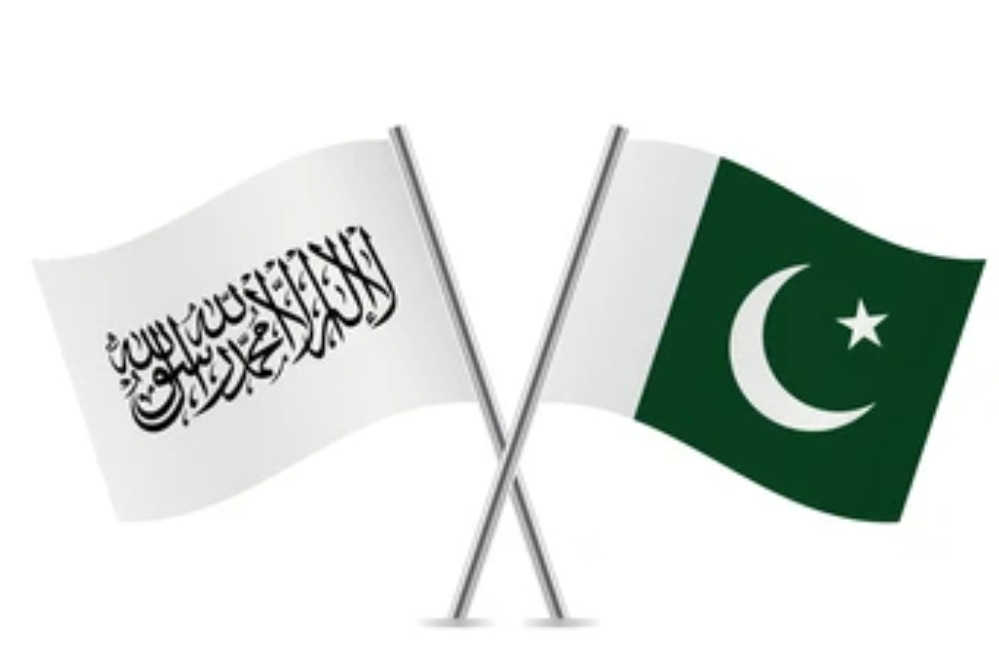 Ariana: Pakistan has emerged as the country most affected by the Islamic Emirate of Afghanistan’s return to power in 2021, according to a new report by the International Crisis Group (ICG), as cited by Pakistani daily Dawn. The Brussels-based independent think tank warns that relations between Kabul and Islamabad have sharply deteriorated, raising the risk of further military confrontation if militant attacks inside Pakistan continue. The report cautions that Pakistan may resort to additional cross-border military action against Afghanistan under such circumstances. Click here to read more (external link).
More Pakistan – Afghanistan News