
 Khaama: The third season of the Afghanistan Football Champions League kicked off today, Sunday, April 20th, in Kabul, with the participation of twelve teams from various provinces. The league officially commenced today, Sunday, April 20th, with the presence of officials from the Afghanistan Football Federation and the organization of two matches. Click here to read more (external link).
Taliban Distort Islam to Restrict Civic Space in Afghanistan – Study
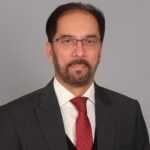
Ramizpoor
Michael Hughes: The Taliban’s archaic interpretation of Sharia has been a useful tool in crushing civil society despite the fact such discourse is in line with Islamic principles, a new research report from the Raoul Wallenberg Institute argued, as the radicals in Kabul look to eradicate opposing voices from the country.
The study by researcher M. Abul Ahrar Ramizpoor comes as the Taliban escalate crack downs on members of civil society in recent months, particularly targeting journalists. As part of the process the Taliban have often used religion to justify their actions. Ramizpoor explores the mindset behind this attitude and action toward civic space. Click here to read more.
High-profile Afghan Taliban religious scholar assassinated in Pakistan
 Ayaz Gul
VOA News
April 19, 2024
ISLAMABAD — Afghanistan’s Taliban government confirmed Friday that one of its leading religious scholars was assassinated by unknown assailants in neighboring Pakistan.
The deceased, identified as Mohammad Omar Jan Akhundzada, was leading evening prayers at a mosque in the southwestern Pakistani city of Quetta on Thursday when gunmen stormed the building and fatally shot him before fleeing, according to local police.
There were no immediate claims of responsibility for the deadly shooting.
Taliban spokesman Zabihullah Mujahid said Friday on social media platform X that Akhundzada was part of a government oversight committee of top Islamic scholars and taught at the central “jihadi” madrasa, or Isla mic seminary, in the southern Afghan city of Kandahar. Mujahid also tweeted a picture of the deceased man.
“We are saddened to learn that the country’s leading religious scholar … has been martyred,” Mujahid wrote. “We condemn the killings of religious scholars as a heinous crime by enemies of Islam,” he said without providing further details.
Multiple Afghan sources reported that the slain scholar was a senior adviser to the reclusive Taliban supreme leader, Hibatullah Akhundzada, who is based in Kandahar and governs Afghanistan from there through religious decrees stemming from his strict interpretation of Islam.
A senior Taliban official explained that the oversight committee comprises leading religious scholars and is responsible for reviewing all regulations before they are implemented to ensure that they conform to Islamic principles.
Quetta is the capital of Pakistan’s border province of Baluchistan. The city and surrounding areas host hundreds of thousands of Afghan refugees and have previously also witnessed deadly attacks on Taliban-affiliated personalities in the community.
Taliban chief Akhundzada himself was based in the Pakistani province and directed insurgent attacks from there against the United States-led foreign forces in Afghanistan until their withdrawal in August 2021, which paved the way for his fundamentalist group to reclaim control of the country.
Since then, several central Taliban religious figures and associates also have been assassinated inside Afghanistan, including the capital, Kabul.
Islamic State-Khorasan, a regional Islamic State affiliate and bitter rival of the Taliban, has claimed responsibility for many of the attacks.
Tolo News in Dari – April 19, 2024
Balkh health officials note surge in cancer cases
 Khaama: “In 1401, about 2,613 OPD cases were registered with us. During the last year, 1402, these figures were 4,912 cases,” said Ehsanullah Kaliwal, the head of the oncology department at Balkh Regional Hospital. Some doctors attribute the sharp increase in cancer cases in Balkh to various factors, including genetic predisposition, environmental pollution, indiscriminate use of medications, and high consumption of meat. Additionally, one doctor noted that cancer can also have hereditary roots. Click here to read more (external link).
Other Afghan Health News
Rashid Khan threatens BBL pullout after Australia postpones Afghanistan T20I series

Rashid Khan
Ariana: Afghanistan all-rounder Rashid Khan will reconsider participating in the 2025 edition of the Big Bash League (BBL), after Cricket Australia (CA) indefinitely postponed their three-match T20I series against Afghanistan, which was scheduled for August at a neutral venue. CA later clarified that they made the call after consultations with the Australian government because of “a marked deterioration in human rights for women and girls” in Afghanistan. Breaking his silence on CA’s stance, Rashid said he was ” really hurt” by Cricket Australia pulling out of the T20Is. Click here to read more (external link).
Afghans with disability urge Taliban to end ban on aid agency
 Akmal Dawi
VOA News
April 18, 2024
For years, Qari Wazir Mohammad and his six siblings received assistance from the Swedish Committee for Afghanistan, or SCA, enabling all seven of them to read Braille and perform daily tasks such as cooking and cleaning.
All born blind in a remote village of war-torn Ghazni province, the four brothers and three sisters faced extreme poverty and a lack of support for their disabilities.
Last year, the Taliban directed the SCA to halt humanitarian activities, including support programs for the disabled.
Taliban officials issued the order in protest of an Iraqi Christian refugee who burned a copy of the Quran in Sweden. That refugee, Salwan Momika, has since reportedly left Sweden, but the ban remains in place, depriving tens of thousands of disabled Afghans of the SCA’s critical assistance services.
“We have clarified our status as an independent NGO and our condemnation of the events in Sweden that led to our suspension,” Andreas Stefansson, secretary general of the SCA, told VOA in written comments.
The SCA
With a $40 million budget for 2023, the SCA, which remained active throughout several cycles of armed conflict in Afghanistan over the past four decades, had 7,000 local and 15 international staff servicing vulnerable communities nationwide.
“Many of our staff are the sole breadwinners of large extended families,” said Stefansson, adding that one-third of SCA employees were female.
Despite being forced to suspend its operations for nearly a year, the organization has continued paying salaries of many of its local employees.
Taliban restrictions
Since seizing power in 2021, the Taliban have relentlessly restricted the work of local and international aid agencies in Afghanistan.
Last year, the Taliban’s ban on Afghan women working for aid agencies led several international NGOs to temporarily suspend operations in protest.
Other restrictions have also been reported.
Humanitarian organizations in Afghanistan reported 1,775 incidents of bureaucratic and administrative impediments and restrictions imposed on their work in 2023, according to the United Nations.
The restrictions come amid an environment of prevalent need.
“An estimated 23.7 million people — more than half of the population — will require humanitarian assistance in 2024,” the U.N. secretary-general said in a report last month.
The situation in Afghanistan is expected to deteriorate further as Pakistan sends hundreds of thousands of refugees home. More than 3 million Afghans are still in Pakistan, facing forced return to a country already grappling with poverty and the aftermath of war.
Isolated under Taliban rule, Afghanistan has suffered significant reductions in donor funding.
Last year, the U.N.-led humanitarian appeal received about half of its needed $3.2 billion. As of April, this year’s appeal has received 7% of its needed funds.
Stefansson says his organization has been in dialogue with Taliban authorities to lift the ban.
Taliban officials have not commented on when or if the SCA’s operations in Afghanistan might resume.
“We implore leaders of the Islamic Emirate of Afghanistan to allow the Swedish committee to resume its activities,” said Qari Wazir Mohmmad of Ghazni. “Without their assistance, our lives are destroyed.”
Afghan children returning from Pakistan face grim reality, survey finds

Afghan girls (file photo)
Ayaz Gul
VOA News
April 18, 2024
ISLAMABAD — A survey released Thursday revealed that over the past seven months, nearly 250,000 children have returned to Afghanistan from neighboring Pakistan with almost nothing, and they urgently need food, shelter and access to education.
The study by Save the Children said that more than 520,000 Afghans have returned home since September 2023 after Pakistan asked all undocumented foreigners to leave the country or face deportation. Nearly half of all the returnees are children.
Despite attending school in Pakistan, 65% of the children now back in Afghanistan are not enrolled in school. The majority, 85%, told the surveyors they did not have the necessary documents to register and enroll in school.
The survey did not say how many girls were among the children questioned as they also have to deal with the Taliban government’s ban on teenage girls’ education beyond the sixth grade.
‘Crisis levels of hunger’
The study found that 99% of the families that returned and the communities hosting them in Afghanistan do not have sufficient food to last one to two months.
“About three-quarters of returnees and families in host communities reduced portion sizes or restricted the food consumption of adults so small children could eat on at least two days in the previous week,” said Save the Children in its study.
According to the findings of the survey, almost 40% of returnees and host families had to borrow food or depend on relatives and friends at least three days a week. Out of the number of respondents in total, 13% of returnees and 9% of host families had to rely on others for food every day.
It highlighted the dire conditions facing returnees in Afghanistan, where almost 8 million children “are facing crisis levels of hunger” due to years of conflict and multiple recent natural disasters such as earthquakes, floods, and ongoing drought.
‘Already overstretched resources’
The United Nations estimates that close to 16 million Afghans in the country face severe food insecurity at crisis and emergency levels.
“Families are returning to Afghanistan with virtually nothing,” said Arshad Malik, country director for Save the Children. “The return of so many people is creating an additional strain on already overstretched resources,” he said.
Malik said that the crisis-hit country is struggling to cope with the pressure of displacement. In addition to the returns from Pakistan, he added nearly 600,000 Afghans arrived from neighboring Iran last year. “Afghanistan is also now home to the second largest number of internally displaced people in the world – or roughly 1 in 7 people.”
He noted that many undocumented Afghan children were born in Pakistan, and Afghanistan is not the place they call home.
No basic necessities
A 15-year-old girl living with her grandfather after returning with her mother and three siblings told the surveyors that the family sold everything before leaving Pakistan. Her name was not mentioned to protect her identity.
“We need shelter, living essentials, winter clothing, shoes, blankets, food and medicine. Afghanistan is very cold for us, and it is challenging because we do not have winter clothing,” said the girl.
The survey showed that nearly one in six families lives in tents and most returnees have little or no means of supporting themselves, with nearly half of them saying there were no jobs available in Afghanistan.
Economic and humanitarian conditions have deteriorated in the country since the fundamentalist Taliban returned to power nearly three years ago. They have imposed sweeping restrictions on women’s access to education, employment, and public life.
The curbs on women’s rights and other controversial policies have deterred the international community from formally recognizing the Taliban government and resuming much-needed development assistance to Afghanistan. Humanitarian aid is still being provided to the country through the U.N. and other foreign non-governmental organizations.
Tolo News in Dari – April 18, 2024
Afghanistan Green Trend Exposes Senior Intelligence Officials of Taliban

Amrullah Saleh
Afghanistan International: The Afghanistan Green Trend (AGT), led by Amrullah Saleh, former Vice/President of Afghanistan, has publicly revealed the names, positions, and contact numbers of 49 senior officials from the Taliban’s General Directorate of Intelligence. On Thursday, AGT labeled these officials as “masked terrorists”. The disclosed list includes notable figures such as Mawlawi Abdullah Ghaznavi, the Chief of Staff of the Taliban’s intelligence chief; Dr Bashir, Director of Counterintelligence; Hafizullah Gohar, Head of Border and Foreign Intelligence; Mawlawi Mustaqim Rahib, Head of Intelligence at the Ministry of Defence; and Mufti Abdul Hadi, Head of Taliban’s Intelligence in Panjshir Province. Click here to read more (external link).